
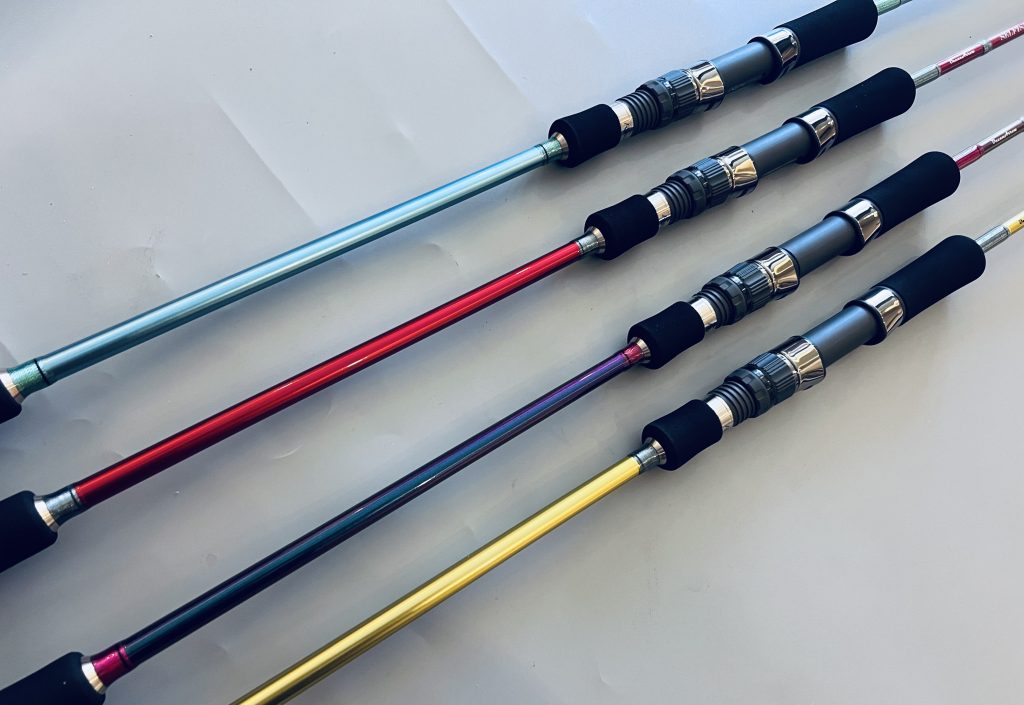
How to Develop a Custom Fishing Rod with a Chinese OEM Manufacturer
Developing a custom fishing rod is an important step for fishing tackle brands, wholesalers, distributors, and retailers that want to build their own product lines. Working with a Chinese fishing rod OEM manufacturer can help buyers explore product customization, branding, component selection, and packaging options.
However, a successful OEM project requires more than choosing a factory and sending a logo. Buyers need to define product specifications, evaluate samples, confirm production requirements, and establish quality control procedures before placing a bulk order.
This guide explains how to develop a custom fishing rod with a Chinese manufacturer, from the initial product concept to mass production and shipment.
1. Define Your Custom Fishing Rod Requirements
Before contacting a manufacturer, prepare a clear product brief describing the fishing rod you want to develop.
Your specifications should cover the following areas:
- Rod type: Spinning rod, casting rod, surf rod, telescopic rod, travel rod, or another specialized design.
- Material: Carbon fiber, fiberglass, or a composite construction.
- Length: The required rod length and number of sections.
- Power and action: The intended stiffness and bending characteristics.
- Target application: Freshwater fishing, saltwater fishing, lure fishing, or another intended use.
- Components: Guides, reel seat, handle material, grips, and decorative features.
- Branding: Logo placement, printing method, colors, and product labels.
- Packaging: Protective tubes, fabric bags, cartons, labels, and retail packaging.
The more clearly you define your requirements, the easier it will be for an OEM manufacturer to assess feasibility and prepare a meaningful quotation.
If you do not have finalized specifications, provide reference photographs, sketches, comparable products, or a sample that communicates your expectations.
2. Choose the Right Fishing Rod OEM Manufacturer
Not every fishing rod supplier offers the same level of customization. Some specialize in standard wholesale products, while others may support custom designs, private labeling, or more extensive OEM development.
When evaluating potential suppliers, consider these factors:
Product experience: Ask which fishing rod types and materials the manufacturer regularly produces.
Customization capability: Confirm whether the supplier can modify product specifications, colors, components, and packaging.
Sample development: Ask how samples are prepared, how many revisions are available, and whether sample costs are refundable against a bulk order.
Quality management: Request information about material checks, assembly controls, finished-product inspection, and defect handling.
Communication: A reliable supplier should be able to discuss technical requirements, explain limitations, and confirm important details in writing.
Production arrangements: Clarify which processes are performed in-house and which, if any, are outsourced.
Do not assume that every company advertising itself as a manufacturer owns all production equipment. Verify its actual capabilities before making decisions.
3. Select Materials and Components
Materials and components influence the fishing rod’s performance, appearance, cost, and intended use.
Carbon fiber or fiberglass?
Carbon fiber is often selected for lightweight designs and specific stiffness or sensitivity requirements. Fiberglass is commonly considered for designs that prioritize flexibility and impact tolerance. Composite constructions may be suitable when a combination of material characteristics is desired.
The best choice depends on the intended application, product design, target price, and performance requirements.
Confirm the main components
Discuss these details with your OEM supplier:
- Rod blank construction and material specifications.
- Guide frames and guide ring materials.
- Reel seat design and compatibility.
- Handle and grip materials.
- Decorative wraps and surface finishing.
- Logo printing and other branding details.
Ask the manufacturer to document the approved specifications so that samples and bulk production can be compared against the same reference.
4. Develop and Approve a Pre-Production Sample
Sample development is one of the most important stages of a custom fishing rod project.
The first sample helps you determine whether the supplier understands your design and can produce a rod that meets your requirements.
During sample evaluation, check:
- Overall appearance, dimensions, and weight.
- Material construction and surface finish.
- Guide alignment and attachment.
- Reel seat stability and handle quality.
- Joint fit and assembly.
- Power, action, and other agreed performance characteristics.
- Logo placement, colors, and packaging.
If the sample does not meet your expectations, provide specific feedback and request adjustments.
For example, instead of simply asking for a better finish, identify the exact area that needs improvement and provide photographs or marked-up drawings.
Once the sample is approved, retain a reference sample where practical and document all agreed changes. Avoid allowing unapproved substitutions during mass production.
5. Understand OEM Minimum Order Quantities and Costs
The minimum order quantity (MOQ) for custom fishing rods varies by manufacturer, product design, materials, components, packaging, and customization requirements.
There is no single MOQ that applies to every Chinese fishing rod OEM supplier.
A standard fishing rod with a printed logo may require a different order quantity from a product involving custom components, special materials, or new tooling.
When requesting a quotation, ask the supplier to separate the following costs where applicable:
- Unit product price.
- Sample development and shipping costs.
- Tooling or mold costs, if required.
- Custom printing and packaging costs.
- Inspection or testing costs.
- Export packaging and other agreed charges.
- Freight and applicable shipping services.
Request quotations for several realistic order quantities if your budget allows. This can help you understand how unit costs may change with production volume.
Do not compare quotations solely by unit price. Confirm that each supplier is quoting the same product specifications, components, packaging, and quality requirements.
6. Customize Your Fishing Rod Brand and Packaging
OEM customization allows businesses to develop a consistent product identity.
Depending on the manufacturer’s capabilities, customization may include:
Logo placement: Printing or applying your brand name to specified parts of the rod or packaging.
Color selection: Choosing approved colors for the rod blank, handle, decorative elements, and other components.
Product labeling: Adding model numbers, product descriptions, and relevant specifications.
Packaging design: Developing retail boxes, protective sleeves, rod bags, cartons, or other packaging.
Product range planning: Creating related models for different fishing applications or customer segments.
Before production, approve the final artwork, colors, labels, and packaging layout. Confirm that you have the necessary rights to use any logos, designs, or protected artwork supplied to the manufacturer.
For new brands, it is often practical to start with a manageable product range, validate customer demand, and expand after the initial products perform well.
7. Establish Quality Control Before Mass Production
Quality requirements should be agreed before the manufacturer begins producing the full order.
A practical quality control plan may include:
Incoming material checks: Confirm that materials and components match the agreed specifications.
Production checks: Monitor relevant assembly, finishing, guide installation, and branding processes.
Final product inspection: Check dimensions, appearance, components, and other specified characteristics.
Performance verification: Use appropriate tests where required by the product design and intended application.
Packaging inspection: Confirm that finished rods are protected and packed according to the approved requirements.
For larger orders, consider whether an independent pre-shipment inspection is appropriate.
Define the inspection scope, acceptance criteria, and handling of defective products in writing. Photographs and inspection reports can support communication, but they should not replace suitable physical checks when those checks are necessary.
For further guidance, read our related article, How to Check Fishing Rod Quality Before Bulk Production.
8. Plan Production Lead Time and International Shipping
The project timeline depends on sample development, material availability, customization complexity, production scheduling, inspection, and shipping arrangements.
Ask your supplier to provide an estimated timeline for:
- Initial specification review.
- Sample development and revisions.
- Sample approval.
- Material preparation.
- Bulk manufacturing.
- Quality inspection and packing.
- Shipment preparation.
Treat these as separate milestones rather than relying on one general delivery estimate.
Before shipment, confirm carton dimensions, gross weight, packaging method, shipping marks, and the export documents required for your transaction.
For international orders, coordinate with your freight forwarder to compare suitable transportation options. Shipping cost and transit time will depend on the shipment size, destination, service, and applicable logistics requirements.
9. Protect Your Design and Commercial Interests
OEM projects may involve product drawings, branding files, technical specifications, and other commercially sensitive information.
Before sharing detailed design materials, consider agreeing on appropriate confidentiality and intellectual property terms with the supplier.
Your purchase agreement should clearly identify:
- Approved product specifications and sample references.
- Branding and artwork ownership or usage rights.
- Whether substitutions require written approval.
- Quality requirements and inspection procedures.
- Production schedule and payment milestones.
- Procedures for handling defects or nonconforming products.
- Ownership and permitted use of any custom tooling, where applicable.
The appropriate terms depend on the transaction and relevant law. For significant custom development projects, professional legal advice may be worthwhile.
10. Prepare an Effective OEM Fishing Rod RFQ
A request for quotation (RFQ) should give the supplier enough information to assess the project without unnecessary back-and-forth communication.
Use the following checklist when contacting a Chinese fishing rod manufacturer:
- Product type and intended application.
- Target length, material, power, and action.
- Required components and technical specifications.
- Estimated order quantity.
- OEM logo and packaging requirements.
- Sample requirements and development expectations.
- Target market and any applicable product requirements.
- Expected delivery schedule and destination.
- Requested quality checks and documentation.
If some details are not finalized, identify them as open questions instead of inventing specifications.
A clear RFQ makes supplier responses easier to compare and helps both parties identify technical or commercial issues before committing to production.
Frequently Asked Questions
1. What is the difference between OEM and ODM fishing rods?
OEM generally refers to manufacturing products according to a buyer’s specified design or requirements. ODM generally refers to a supplier providing an existing or supplier-developed design that the buyer may customize or brand, depending on the agreement. Actual service definitions vary between manufacturers.
2. Can I order custom fishing rods with my own logo?
Many fishing rod suppliers offer private labeling or logo customization. Confirm available printing methods, placement, artwork requirements, MOQ, and any additional costs before approving the order.
3. What is the MOQ for custom fishing rods in China?
MOQ varies according to the product, factory, components, branding, packaging, and production requirements. Ask for written quotations at different order quantities rather than assuming a universal minimum.
4. Should I approve a sample before mass production?
Yes. Sample approval helps establish a clear reference for product specifications, appearance, components, and performance requirements. Document the approved version before starting bulk production.
5. How long does custom fishing rod production take?
The timeline depends on design complexity, sample revisions, material availability, factory scheduling, and order size. Request separate estimates for sample development, bulk production, inspection, and shipping.
6. How can I compare Chinese fishing rod OEM manufacturers?
Compare their relevant product experience, customization capabilities, sample quality, documented quality controls, communication, production arrangements, and quotation details. Verify important claims and confirm specifications in writing.
Conclusion
Developing a custom fishing rod with a Chinese OEM manufacturer requires clear specifications, careful supplier evaluation, sample approval, cost planning, and a documented quality control process.
By confirming product details before production and maintaining clear communication throughout the project, importers, wholesalers, and fishing tackle brands can make better sourcing decisions and reduce avoidable production risks.
Looking for a fishing rod supplier in China? Visit VLEFOOENA to explore supplier information and begin your sourcing process.


No reply content