China Professional Hair Clipper Manufacturing Co., Ltd.
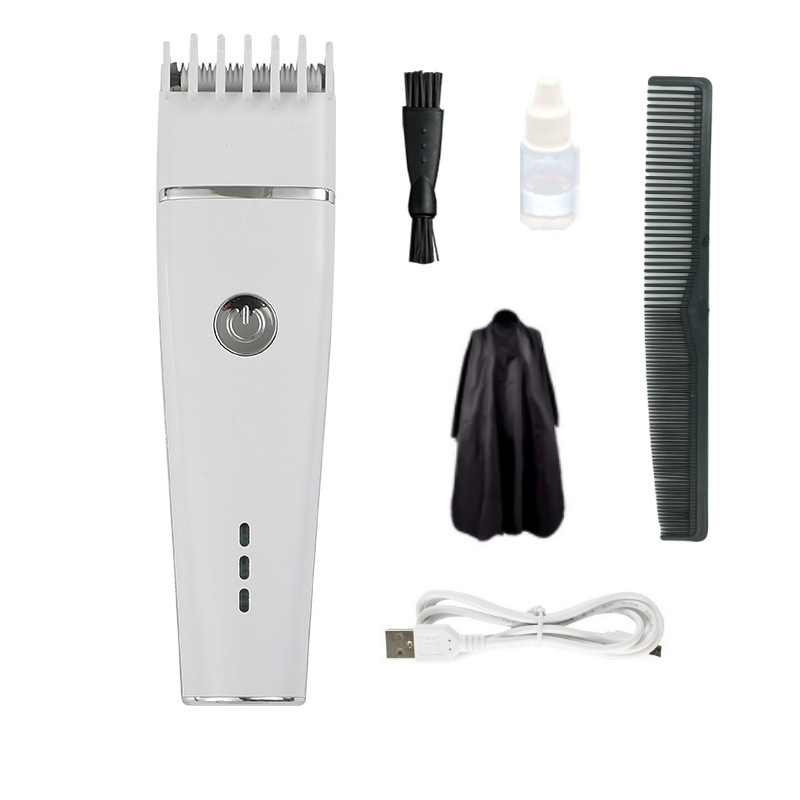
Finding the right hair clipper factory for OEM and private label production is an important step for brands, wholesalers, distributors, barbershop suppliers, and online retailers.
China has a large manufacturing base for rechargeable hair clippers, professional barber clippers, beard trimmers, and personal grooming products. However, not every supplier has the same production capability. Some specialize in standard products, while others can support customized housings, electronics, packaging, branding, and product development.
Choosing the right factory can help you control product quality, production costs, lead times, and long-term supply stability.
This guide explains how to evaluate a Chinese hair clipper factory before starting an OEM or private label project.
What Is the Difference Between OEM and Private Label?
Before contacting factories, it is important to understand the difference.
Private Label Hair Clippers
Private label usually means selecting an existing product from a manufacturer’s product range and adding your own brand.
Typical customization may include:
-
Logo
-
Product color
-
Packaging
-
User manual
-
Product labels
-
Barcode
-
Accessories
-
Retail box
This is usually faster and requires less development work.
OEM Hair Clippers
OEM production generally involves a higher level of customization.
Depending on the manufacturer, you may be able to customize:
-
Housing design
-
Motor configuration
-
Battery
-
Blade system
-
Charging interface
-
Control buttons
-
LED indicators
-
Accessories
-
Product dimensions
-
Packaging
-
Product functions
OEM projects normally require more communication, development time, testing, and investment than standard private-label products.
1. Start With a Clear Product Specification
Do not begin by simply asking a factory:
“How much is your hair clipper?”
Instead, prepare a product specification.
For example:
Specification |
Example Requirement |
|---|---|
Product |
Cordless rechargeable hair clipper |
Application |
Professional and home use |
Motor |
High-performance motor |
Battery |
Rechargeable lithium battery |
Charging |
USB-C |
Blade |
Stainless steel |
Guide combs |
Multiple cutting lengths |
Logo |
Custom logo |
Housing |
Custom color |
Packaging |
Custom retail box |
Quantity |
1,000 units |
Target market |
International |
This allows factories to provide much more accurate quotations.
2. Search for Manufacturers With the Right Product Experience
Not every electronics factory is suitable for hair clippers.
Look specifically for manufacturers with experience in:
-
Hair clippers
-
Hair trimmers
-
Beard trimmers
-
Electric grooming products
-
Rechargeable personal-care appliances
-
Barber equipment
A factory that has already produced similar products is usually easier to work with because it understands the technical requirements and common quality problems.
3. Verify That the Supplier Is Actually a Factory
One of the most important steps is determining whether the supplier is a manufacturer, trading company, or a combination of both.
Ask for information about:
-
Factory location
-
Production workshops
-
Assembly lines
-
Testing equipment
-
Quality-control department
-
R&D team
-
Production capacity
-
Employee numbers
-
Main products
-
Manufacturing processes
You can also request factory photographs or a video factory tour.
For larger projects, consider arranging an independent factory audit.
A factory audit can help verify whether the supplier’s claimed production capabilities match its actual facilities.
4. Check OEM Development Capability
If you want a completely customized hair clipper, the factory should have appropriate engineering capabilities.
Ask whether they have:
-
Industrial designers
-
Mechanical engineers
-
Electronics engineers
-
Mold-development capabilities
-
PCB development capabilities
-
Prototype-development capabilities
-
Product-testing equipment
For a simple logo customization project, advanced R&D capability may not be essential.
For a completely new hair clipper design, it becomes much more important.
5. Evaluate the Existing Product Platform
Many buyers do not need to develop an entirely new clipper.
Using an existing product platform can reduce:
-
Development costs
-
Mold costs
-
Development time
-
Production risks
-
Minimum order requirements
For example, you might select an existing cordless hair clipper and customize the housing color, logo, packaging, battery configuration, and accessories.
This can be a practical solution for brands entering the market for the first time.
6. Ask About Motor Specifications
The motor has a major influence on cutting performance.
Ask the manufacturer about:
-
Motor type
-
Motor speed
-
Torque
-
Noise
-
Vibration
-
Heat generation
-
Continuous operating performance
-
Expected service life
Do not evaluate the motor only by its advertised RPM.
A good hair clipper requires an appropriate combination of motor, blade, battery, and electronic control.
Request samples and test the product yourself before confirming mass production.
7. Check Battery Specifications
For cordless hair clippers, battery performance is especially important.
Ask about:
-
Battery type
-
Battery capacity
-
Rated voltage
-
Charging time
-
Working time
-
Protection system
-
Battery cycle performance
You should test actual operating time rather than relying entirely on the manufacturer’s marketing specifications.
For international markets, also confirm the applicable battery transportation and compliance requirements before shipment.
8. Examine Blade Quality
The blade directly affects cutting performance.
When evaluating a factory, ask about:
-
Blade material
-
Hardness
-
Manufacturing process
-
Blade coating
-
Corrosion resistance
-
Replaceability
-
Blade adjustment
-
Expected service life
A manufacturer should be able to provide technical information about the blade rather than simply saying that it is “high quality.”
For professional barber products, blade consistency is particularly important.
9. Ask for Samples
Samples are essential for an OEM or private-label project.
Ideally, obtain samples from several factories.
Evaluate:
Cutting Performance
Test different hair types and thicknesses.
Battery
Measure actual operating time after a full charge.
Motor
Check power, noise, vibration, and heat.
Blade
Check cutting smoothness and alignment.
Housing
Inspect the body for gaps, scratches, deformation, and assembly problems.
Accessories
Check guide combs, charging cable, cleaning brush, oil, and other included items.
Packaging
Inspect the retail box and protective materials.
A sample can reveal problems that are impossible to identify from product photographs.
10. Check Private Label Options
If you are launching a new brand, ask the factory exactly what can be customized.
Possible private-label services include:
-
Logo printing
-
Laser engraving
-
Product color
-
Button color
-
Packaging
-
User manual
-
Labels
-
Barcodes
-
Guide combs
-
Carrying case
-
Retail presentation
Ask whether there are additional setup charges for each customization.
11. Understand MOQ Requirements
Minimum order quantity is an important factor in private-label production.
A factory may have different MOQs for:
-
Standard products
-
Logo customization
-
Custom colors
-
Custom packaging
-
Custom accessories
-
Custom molds
-
Fully customized products
For example, a supplier may accept a relatively small order for a standard product but require a much larger quantity for a new custom housing.
Always ask for the MOQ before investing heavily in product development.
12. Calculate OEM Development Costs
A fully customized hair clipper can involve additional expenses.
Possible costs include:
-
Product design
-
Engineering
-
Prototype production
-
Mold development
-
PCB development
-
Testing
-
Packaging design
-
Certification testing
-
Tooling
A private-label project based on an existing product may require significantly less development investment.
If you are a new brand, using an existing platform with controlled customization can reduce the initial financial risk.
13. Compare Factory Pricing
Typical factory pricing for rechargeable hair clippers can vary significantly.
As a general reference:
Product Level |
Approximate Factory Price |
|---|---|
Basic rechargeable model |
US$5–10 |
Mid-range private-label model |
US$10–20 |
Professional model |
US$15–30 |
Premium model |
US$25–50+ |
Highly customized OEM product |
US$30–60+ |
These are general planning ranges, not fixed quotations.
The actual price depends on quantity, specifications, materials, battery, motor, blade, packaging, customization, and tooling.
14. Compare Suppliers Using Identical Specifications
When contacting several factories, give each one the same requirements.
For example:
Product: Cordless Hair Clipper
Battery: Specified rechargeable battery
Blade: Stainless steel
Charging: USB-C
Guide Combs: 6–8 pieces
Logo: Custom
Packaging: Custom retail box
Quantity: 1,000 units
Then compare:
-
Unit price
-
MOQ
-
Sample cost
-
Development cost
-
Production lead time
-
Packaging cost
-
Tooling cost
-
Quality-control process
-
Certification support
This prevents you from comparing completely different products.
15. Evaluate Production Capacity
A supplier may be able to produce samples perfectly but struggle with a large commercial order.
Ask:
-
What is the monthly production capacity?
-
How many assembly lines are available?
-
How many units can be produced per day?
-
What is the normal lead time?
-
What happens during peak season?
-
Can production capacity be increased?
If your brand grows quickly, the factory should have enough capacity to support larger orders.
16. Check Quality-Control Procedures
A professional hair clipper factory should have quality checks throughout production.
A typical process may include:
-
Incoming material inspection
-
Battery inspection
-
Motor inspection
-
Assembly inspection
-
Functional testing
-
Charging testing
-
Appearance inspection
-
Finished-product testing
-
Packaging inspection
-
Final random inspection
Ask the factory to explain its inspection standards.
For private-label products, you should also establish your own acceptance criteria before mass production.
17. Confirm Certification and Documentation
Certification requirements vary by destination market and product configuration.
Depending on the target country, buyers may need documentation concerning:
-
Electrical safety
-
Electromagnetic compatibility
-
Battery safety
-
Transportation
-
Environmental requirements
-
Product labeling
Do not assume that a certificate covers every model.
Check that the documentation corresponds to the exact product model and configuration you plan to purchase.
18. Check Packaging and Branding
Your packaging is part of your brand.
A professional private-label factory should be able to support:
-
Custom retail box
-
Product logo
-
User manual
-
Product labels
-
Barcode
-
Outer cartons
-
Protective inserts
-
Custom colors
Ask for a packaging sample before mass production.
The packaging should also be strong enough for international transportation.
19. Confirm Production Lead Time
Typical planning ranges may be:
-
Standard product: approximately 7–20 days
-
Logo/private-label order: approximately 15–30 days
-
Customized OEM project: approximately 30–60+ days
Actual production time depends on the product, quantity, customization, tooling, component availability, and factory workload.
If molds or new electronic components are required, the development period can be significantly longer.
20. Evaluate Communication
Communication is an underrated part of supplier selection.
Pay attention to whether the manufacturer:
-
Answers technical questions clearly
-
Provides complete specifications
-
Responds consistently
-
Explains production schedules
-
Documents changes
-
Provides samples on time
-
Communicates quality problems honestly
If communication is difficult before the order, managing a complex OEM project may become even harder after production begins.
21. Ask About After-Sales Support
Before signing an agreement, clarify:
-
Warranty period
-
Defective-product policy
-
Replacement policy
-
Spare parts
-
Technical support
-
Battery replacement
-
Blade replacement
-
Handling of production defects
For a private-label brand, after-sales support can directly affect your reputation.
22. Consider Spare Parts Availability
Professional users may need replacement components.
Potential spare parts include:
-
Blades
-
Batteries
-
Guide combs
-
Charging cables
-
Chargers
-
Motors
-
Switches
-
Protective caps
Ask whether spare parts can be purchased separately and how long they will remain available.
23. Start With a Small Production Order
If this is your first project with a factory, consider starting with a smaller commercial order when practical.
This allows you to evaluate:
-
Actual production quality
-
Delivery performance
-
Packaging
-
Defect rate
-
Communication
-
After-sales service
If the first order performs well, you can increase the order quantity later.
This approach can reduce the risk of committing a large amount of capital to an untested supplier.
A Practical Factory Selection Scorecard
You can score each supplier from 1 to 5.
Category |
Score |
|---|---|
Factory verification |
/5 |
Product quality |
/5 |
Sample performance |
/5 |
Motor quality |
/5 |
Battery quality |
/5 |
Blade quality |
/5 |
OEM capability |
/5 |
Private-label service |
/5 |
MOQ |
/5 |
Price |
/5 |
Production capacity |
/5 |
Lead time |
/5 |
Quality control |
/5 |
Certification support |
/5 |
Communication |
/5 |
After-sales service |
/5 |


No reply content