
China Professional Hair Clipper Manufacturing Co., Ltd.
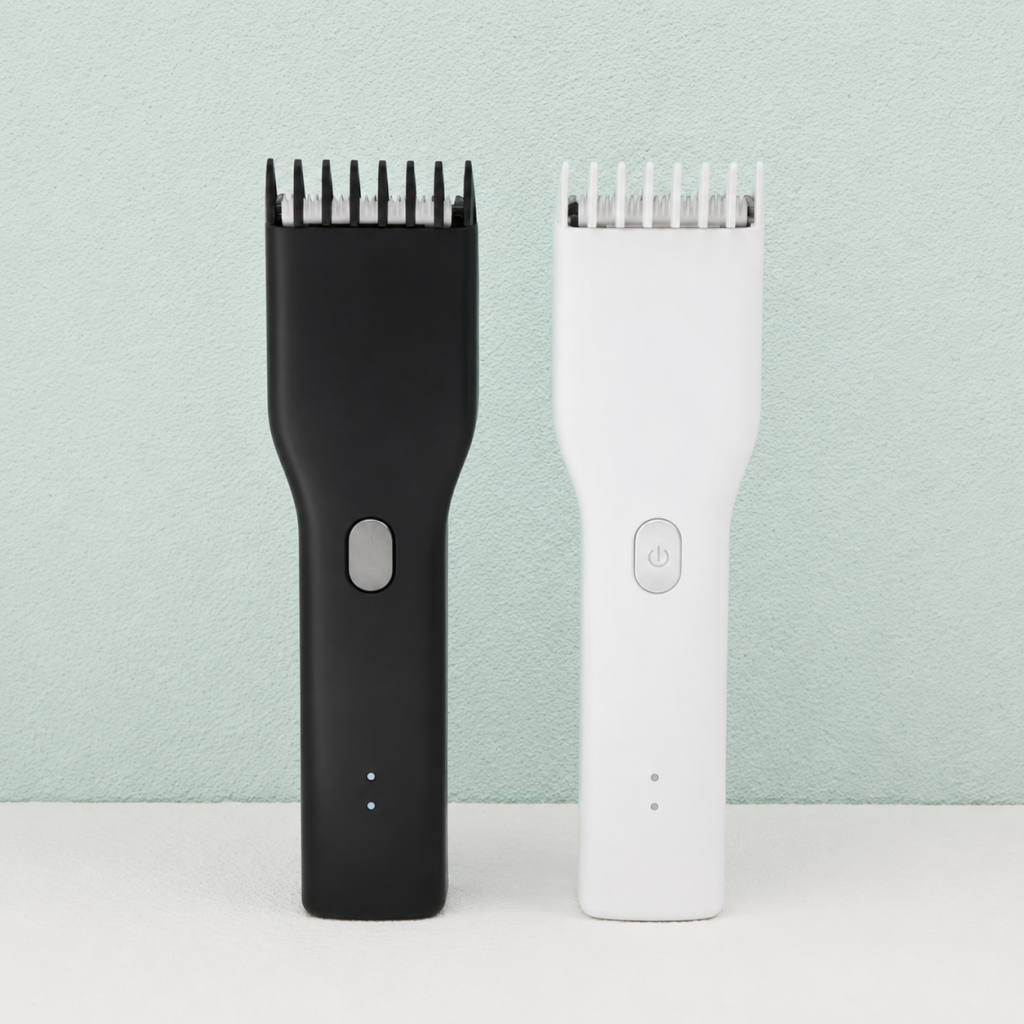
Finding the right hair clipper factory for OEM and private label production is an important step for brands, distributors, barbershop suppliers, and online retailers that want to sell hair clippers under their own brand.
China is one of the major manufacturing centers for personal grooming products, including cordless hair clippers, professional barber clippers, beard trimmers, hair trimmers, and rechargeable grooming devices. However, not every supplier that advertises itself as a manufacturer has the same engineering capability, quality-control system, production capacity, or customization experience.
For a new brand, choosing the wrong factory can result in inconsistent quality, delayed production, high minimum order quantities, expensive tooling, or products that do not match the approved sample.
This guide explains how to find, evaluate, and select a suitable Chinese hair clipper factory for OEM and private label production.
What Is the Difference Between OEM and Private Label?
Before contacting manufacturers, buyers should understand the difference between these production models.
Private Label Hair Clippers
Private label usually means the factory already has an existing hair clipper design, and the buyer sells it under a different brand.
Typical customization may include:
-
Logo
-
Product color
-
Retail packaging
-
User manual
-
Product labels
-
Accessories
-
Barcode
-
Marketing materials
Private label is generally faster and less expensive than developing a completely new product.
It is often suitable for startups and brands testing a new market.
OEM Hair Clippers
OEM production generally involves more extensive customization according to the buyer’s requirements.
Depending on the factory, OEM services may include:
-
Housing customization
-
Motor selection
-
Battery configuration
-
Blade configuration
-
Electronic functions
-
Display
-
Charging system
-
Product color
-
Packaging
-
Accessories
-
Product dimensions
The exact definition of OEM varies between manufacturers, so buyers should clearly define what they expect before signing an agreement.
ODM Hair Clippers
ODM goes one step further by involving the manufacturer’s product-development capabilities.
The factory may provide:
-
Product design
-
Engineering
-
Prototyping
-
Mold development
-
Electronics development
-
Testing
-
Mass production
ODM can be useful for brands that want a differentiated product but do not have their own engineering team.
Step 1: Define Your Hair Clipper Requirements
Before searching for factories, prepare a basic product specification.
Without a clear specification, different factories may quote completely different products, making price comparison difficult.
Your RFQ should include:
Product Type
For example:
-
Cordless hair clipper
-
Professional barber clipper
-
Beard trimmer
-
Hair trimmer
-
Grooming kit
-
Rechargeable clipper
Target Market
Specify where the product will be sold:
-
United States
-
European Union
-
United Kingdom
-
Middle East
-
Southeast Asia
-
Latin America
-
Africa
-
Australia
Different markets may have different compliance and labeling requirements.
Technical Requirements
Consider specifying:
-
Motor type
-
Motor speed
-
Battery capacity
-
Operating time
-
Charging time
-
Blade material
-
Cutting length
-
Display
-
Waterproof requirements
-
Noise requirements
-
Accessories
Branding
Specify whether you need:
-
Logo printing
-
Laser engraving
-
Custom color
-
Custom housing
-
Custom packaging
-
User manual
-
Product labels
-
Barcode
Quantity
Give the manufacturer an estimated order quantity.
For example:
-
100 units
-
500 units
-
1,000 units
-
5,000 units
-
10,000 units
This allows the factory to calculate a more realistic quotation.
Step 2: Search for Hair Clipper Manufacturers in China
There are several ways to find potential factories.
You can search through:
-
B2B marketplaces
-
Chinese manufacturing directories
-
Industry exhibitions
-
Manufacturer websites
-
Google
-
Business directories
-
Industry associations
-
Supplier referrals
-
Sourcing companies
Useful search phrases include:
hair clipper manufacturer China
hair clipper factory China
cordless hair clipper manufacturer
professional barber clipper factory
OEM hair clipper manufacturer
private label hair clipper supplier
Do not rely on only one search method.
A factory with a weak online presence may still have strong manufacturing capabilities, while a supplier with a professional website may primarily be a trading company.
Step 3: Check Whether the Supplier Is Actually a Factory
This is one of the most important steps.
Ask the supplier:
-
Where is your factory located?
-
How many production lines do you operate?
-
What products do you manufacture?
-
Do you have your own engineering team?
-
Do you develop molds internally?
-
How many employees are involved in production?
-
What is your monthly production capacity?
-
Which processes are outsourced?
-
Can you provide factory photos or videos?
-
Can you arrange a factory audit?
A genuine manufacturer should be able to explain its production process in detail.
You should also check whether the company’s business information is consistent across its website, quotation, invoices, certificates, and other documents.
Step 4: Evaluate OEM Capability
Not every hair clipper factory is capable of true OEM development.
Some suppliers only offer logo printing on existing products.
That may be perfectly suitable for a private-label project, but it is different from developing a customized product.
Ask whether the manufacturer can handle:
-
Industrial design
-
Product engineering
-
PCB development
-
Motor selection
-
Battery integration
-
Housing design
-
Mold development
-
Prototype production
-
Functional testing
-
Mass production
If you need a unique product, the manufacturer’s engineering capability can be more important than its initial quotation.
Step 5: Check Private Label Options
Private labeling is often the easiest way for a new brand to enter the market.
Ask what parts of an existing product can be customized.
For example:
Customization |
Possible Options |
|---|---|
Logo |
Printing / Laser engraving |
Color |
Standard / Custom |
Packaging |
Standard / Custom |
Manual |
Standard / Custom |
Label |
Standard / Custom |
Accessories |
Standard / Customized |
Product housing |
Existing / Modified |
Blade |
Standard / Customized |
Also ask whether customization affects MOQ.
A factory may accept 100 units for logo printing but require 1,000 or more units for a custom color.
Step 6: Request Samples Before Bulk Production
Never choose a factory based only on its catalog.
Request samples from your shortlisted manufacturers.
A sample should be tested for:
-
Cutting performance
-
Motor power
-
Battery runtime
-
Charging
-
Noise
-
Vibration
-
Heat
-
Blade alignment
-
Housing quality
-
Switch quality
-
Display
-
Accessories
-
Packaging
If possible, let professional barbers test the sample.
They can identify differences in cutting performance, ergonomics, vibration, and blade behavior that may not be obvious during a short home test.
Step 7: Compare the Battery Carefully
For cordless products, the battery deserves special attention.
Ask the factory to provide:
-
Battery type
-
Rated capacity
-
Voltage
-
Charging time
-
Operating time
-
Protection system
-
Battery supplier information where appropriate
-
Applicable transportation documentation
Do not rely only on the number printed on the product.
Test the actual runtime of the sample and confirm the battery specification used for mass production.
For international shipments, determine the applicable requirements for lithium batteries before arranging transportation.
Step 8: Evaluate Blade and Motor Quality
A professional hair clipper depends heavily on the interaction between its motor and blade.
Ask about:
Motor
-
Speed
-
Torque
-
Operating temperature
-
Continuous operating capability
-
Noise
-
Vibration
Blade
-
Material
-
Hardness
-
Coating
-
Adjustable mechanism
-
Cutting length
-
Replacement availability
A supplier should be able to explain why a particular motor and blade configuration is appropriate for your target market.
Step 9: Verify Quality Control
A reliable factory should have a documented quality-control process.
Typical inspections can include:
-
Incoming component inspection
-
Battery inspection
-
Motor inspection
-
Blade inspection
-
Assembly inspection
-
Charging test
-
Functional testing
-
Appearance inspection
-
Aging testing
-
Final inspection
-
Packaging inspection
Ask how defective products are handled.
You can also consider an independent pre-shipment inspection for larger orders.
Step 10: Check Certifications and Market Compliance
The required compliance documents depend on the country where the product will be sold.
Do not accept a simple statement such as:
“We have CE.”
Ask for the actual documentation.
Check:
-
Product model
-
Certificate holder
-
Test report
-
Applicable standards
-
Product configuration
-
Battery information
-
Charger information
The documents should correspond to the actual product you intend to import.
If you plan to sell in multiple markets, identify the applicable requirements for each market before production begins.
Step 11: Compare MOQ and Pricing
Ask each factory for pricing based on the same specification.
For example:
Quantity |
Target Product |
|---|---|
100 pcs |
Existing model + logo |
500 pcs |
Existing model + logo + packaging |
1,000 pcs |
Private label |
3,000 pcs |
Custom color + packaging |
5,000+ pcs |
Larger OEM project |
The exact MOQ depends on the factory.
Do not compare:
Supplier A: US$8
with:
Supplier B: US$12
until you confirm that both products use equivalent motors, batteries, blades, accessories, packaging, and quality standards.
Step 12: Ask About Tooling Costs
If you want a custom housing or completely new design, the factory may require tooling.
Ask:
-
Is a mold required?
-
How much does the mold cost?
-
Who owns the mold?
-
Can another factory use it?
-
How long will the mold last?
-
What happens if the project ends?
-
Is maintenance included?
-
Is the mold stored at the factory?
Ownership should be clearly stated in the commercial agreement.
Step 13: Check Production Lead Time
A realistic production schedule is essential for importers.
Ask for separate estimates for:
-
Sample development
-
Prototype approval
-
Tooling
-
Packaging design
-
Material procurement
-
Trial production
-
Mass production
-
Inspection
-
Final packaging
A standard private-label product may be produced faster than a completely new OEM model.
For planning purposes, buyers may encounter lead times ranging from approximately 2–4 weeks for relatively simple private-label orders to 1–4 months or more for new OEM development, depending on complexity.
Always obtain the factory’s actual schedule for your project.
Step 14: Check the Factory’s Communication
Communication is a practical way to evaluate a supplier.
Pay attention to whether the factory:
-
Answers technical questions clearly
-
Provides consistent specifications
-
Responds within a reasonable time
-
Understands your requirements
-
Provides drawings or specifications when needed
-
Explains production problems honestly
-
Documents changes
If communication is already difficult before the order, managing a customized product after payment may become more challenging.
Step 15: Discuss Intellectual Property Protection
If you are developing a unique product, intellectual property should be addressed before production.
Consider protecting:
-
Product designs
-
Drawings
-
CAD files
-
Packaging artwork
-
Brand logo
-
Product names
-
Custom molds
-
Electronic designs
For important projects, use written agreements covering confidentiality, ownership, and permitted use of your designs and tooling.
You should also register your brand and relevant intellectual-property rights in the markets where you plan to sell.
Step 16: Understand Payment Terms
Common B2B payment arrangements can include a deposit followed by the balance before shipment.
However, the exact payment structure should be negotiated according to the supplier, order size, product complexity, and business relationship.
Before payment, confirm:
-
Company legal name
-
Bank account beneficiary
-
Contract
-
Proforma invoice
-
Product specification
-
Quantity
-
Unit price
-
Payment schedule
-
Delivery terms
-
Warranty
-
Inspection requirements
Avoid sending a large payment before verifying the supplier and commercial documents.
Step 17: Evaluate After-Sales Support
A good OEM relationship continues after shipment.
Ask whether the factory can provide:
-
Replacement blades
-
Replacement batteries
-
Chargers
-
Guide combs
-
Spare components
-
Repair support
-
Warranty service
-
Technical support
This becomes particularly important when selling thousands of units under your own brand.
Step 18: Build a Supplier Evaluation Scorecard
Instead of selecting a supplier based on price alone, score each factory.
Evaluation Factor |
Weight |
|---|---|
Product quality |
20% |
OEM capability |
15% |
Manufacturing capability |
15% |
Price |
15% |
MOQ |
10% |
Compliance |
10% |
Lead time |
5% |
Communication |
5% |
After-sales support |
5% |
You can modify these percentages based on your business priorities.
For a premium barber brand, quality and engineering may deserve more weight.
For a startup testing a new market, MOQ and private-label flexibility may be more important.
Example OEM Project
Imagine a new grooming brand wants to launch a cordless professional hair clipper.
The buyer may start with:
Product: Cordless professional hair clipper
Target market: International retail
Initial quantity: 1,000 units
Battery: Around 2,000 mAh
Motor: Professional high-performance motor
Blade: Stainless steel or equivalent premium configuration
Branding: Laser logo
Packaging: Custom retail box
Accessories: Guide combs, cleaning brush, oil, charging cable
Requirements: Product testing and applicable market documentation
The buyer can then contact several manufacturers with the same RFQ.
After receiving samples, the buyer can compare:
-
Cutting performance
-
Battery runtime
-
Build quality
-
Noise
-
Heat
-
Packaging
-
Documentation
-
Price
-
Production schedule


No reply content