
China Surfboard and Snowboard Manufacturer Co., Ltd.

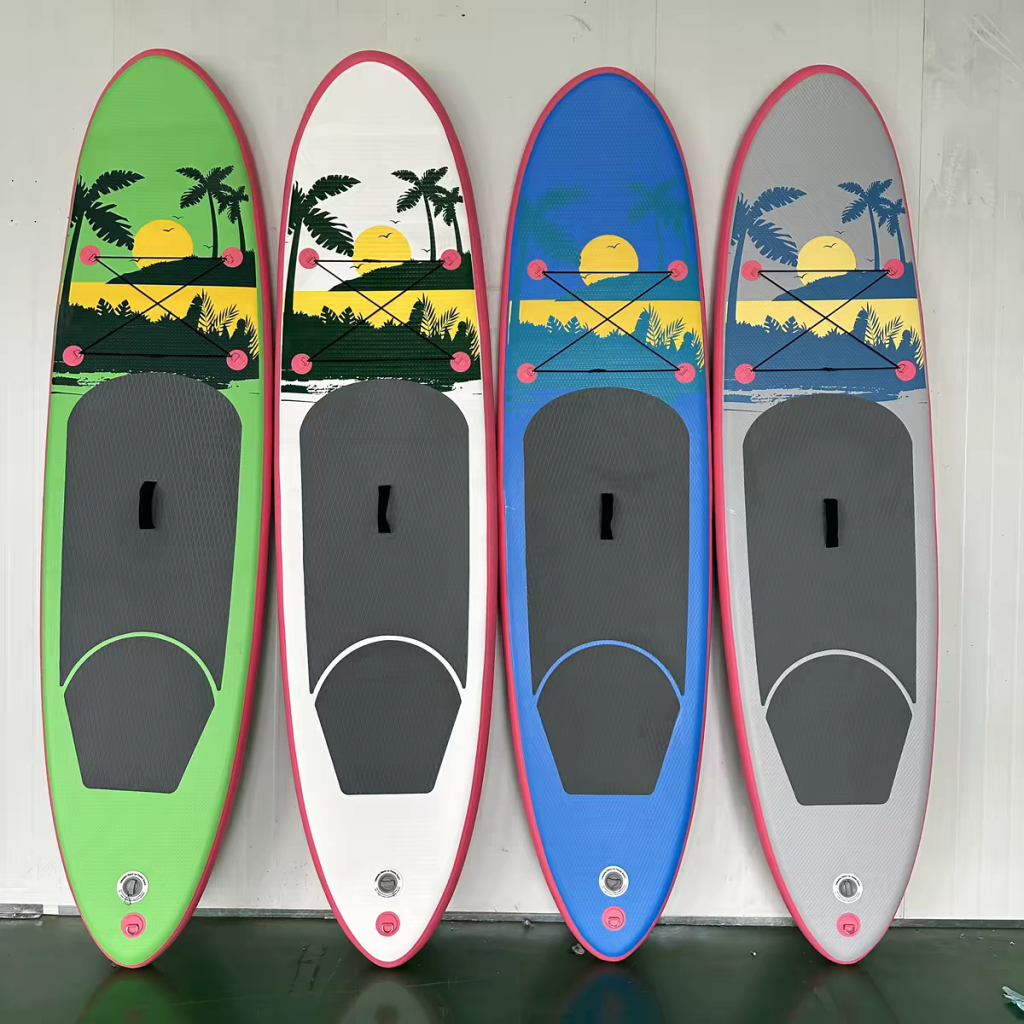

Finding a quality surfboard manufacturer in China requires more than searching for the lowest price. For importers, surf shops, wholesalers, distributors, online retailers, and private-label brands, the real challenge is identifying a factory that can produce boards with consistent construction, accurate dimensions, reliable finishing, and stable quality across repeat orders.
China has manufacturers and suppliers serving different segments of the surfboard market. Some focus on standard beginner boards, while others specialize in fiberglass or epoxy construction, foam boards, custom designs, OEM production, or water-sports equipment.
The right supplier depends on your product requirements, target customers, order quantity, and market.
This guide explains how buyers can verify a Chinese surfboard manufacturer before placing a bulk order.
1. Define the Surfboard You Actually Need
Before contacting manufacturers, establish the basic specifications.
A supplier cannot give you a meaningful quotation if the request is simply:
“I need good surfboards from China.”
Instead, describe the product.
Important specifications can include:
-
Surfboard type
-
Length
-
Width
-
Thickness
-
Volume
-
Weight target
-
Shape
-
Nose design
-
Tail design
-
Rocker
-
Rail shape
-
Core material
-
Construction method
-
Fiberglass specification
-
Resin type
-
Fin configuration
-
Traction pad
-
Color
-
Graphics
-
Logo
-
Accessories
-
Packaging
-
Target quantity
Clear specifications allow you to compare manufacturers on the same basis.
2. Decide What Type of Surfboard You Want
Different surfboards require different manufacturing knowledge.
Foam Surfboards
Foam boards are commonly associated with beginner and recreational use.
Important considerations include:
-
Foam quality
-
Soft-top construction
-
Deck durability
-
Bottom construction
-
Rails
-
Fin system
-
Water resistance
Epoxy Surfboards
Epoxy boards can offer a different combination of weight, durability, and performance characteristics.
Buyers should ask about:
-
Core
-
Resin
-
Fiberglass
-
Reinforcement
-
Lamination
-
Fin boxes
Fiberglass Surfboards
Traditional fiberglass construction requires careful control of shaping and lamination.
Inspect:
-
Resin application
-
Fiberglass consistency
-
Rail finishing
-
Surface quality
-
Delamination risk
-
Structural reinforcement
Performance Boards
Performance-oriented boards require greater attention to dimensions, rocker, rails, bottom contours, volume distribution, and overall shaping accuracy.
A factory experienced with basic recreational boards may not necessarily be the best choice for highly technical performance boards.
3. Identify the Manufacturer’s Actual Specialty
Look at the manufacturer’s product range.
Ask:
-
What models do you produce regularly?
-
Which products are your main business?
-
How much of your production is surfboards?
-
Do you manufacture in-house?
-
Which processes are outsourced?
-
Can you produce custom shapes?
-
Do you have experienced board shapers?
-
Can you provide OEM/ODM production?
The goal is to determine whether the factory’s actual capabilities match your product.
4. Verify the Factory Information
Before placing an order, collect the supplier’s basic information.
You should know:
-
Legal company name
-
Factory address
-
Manufacturing location
-
Main products
-
Years of manufacturing experience
-
Production capacity
-
Number of production lines
-
OEM experience
-
Export experience
Check whether the information is consistent across the supplier’s quotation, website, catalog, and company documentation.
If the factory address changes during negotiations without a clear explanation, ask questions before proceeding.
5. Request a Factory Video Tour
A factory video can help you understand the manufacturing environment.
Ask the supplier to show:
-
Shaping area
-
Lamination area
-
Assembly area
-
Finishing area
-
Quality-control area
-
Packaging area
-
Warehouse
If possible, request a live video tour rather than relying entirely on an edited promotional video.
For large orders, consider an independent factory audit.
6. Ask Who Makes the Board
Some suppliers may outsource part or all of their manufacturing.
Outsourcing is not automatically a problem.
The important issue is transparency.
Ask:
-
Which processes are performed in your factory?
-
Which components are purchased?
-
Who performs shaping?
-
Who performs lamination?
-
Who performs finishing?
-
Who handles final quality control?
Understanding the supply chain helps you evaluate production risks.
7. Order Samples Before Making a Large Purchase
A physical sample is one of the most useful verification tools.
Do not select a manufacturer solely because its catalog looks professional.
Order a sample and examine it carefully.
Check:
Dimensions
Measure length, width, and thickness.
Weight
Compare actual weight with the agreed specification.
Shape
Look for symmetry and consistency.
Surface
Check for scratches, bubbles, cracks, uneven finishing, and other defects.
Construction
Inspect lamination, rails, deck, bottom, and other structural areas.
Accessories
Confirm that fins, leash, traction pad, or other components match the quotation.
8. Test the Board in Real Conditions
If the product is designed for surfing, laboratory-style inspection is not enough.
Where appropriate, test the board in actual water conditions.
Evaluate:
-
Stability
-
Balance
-
Turning
-
Paddle performance
-
Weight
-
Handling
-
Durability
-
Comfort
The appropriate test depends on the type of board.
A beginner board should be evaluated differently from a high-performance shortboard.
9. Examine Construction Quality
Construction quality can have a major effect on durability.
For fiberglass or epoxy boards, inspect the lamination.
Look for:
-
Air bubbles
-
Uneven resin
-
Dry fiberglass
-
Delamination
-
Weak rails
-
Cracks
-
Surface imperfections
-
Poorly finished edges
For foam boards, check:
-
Deck construction
-
Soft-top bonding
-
Bottom surface
-
Rails
-
Fin attachments
-
Water resistance
A professional factory should be able to explain how it controls these issues.
10. Check the Shaping Accuracy
Surfboard shape is not just an aesthetic issue.
Dimensions and contours can influence performance.
For custom orders, check:
-
Length
-
Width
-
Thickness
-
Volume
-
Rocker
-
Rails
-
Nose
-
Tail
-
Bottom contour
Ask the manufacturer how it maintains consistency between boards.
For repeat orders, an approved master sample or detailed technical drawing can serve as a production reference.
11. Evaluate the Fin System
The fin system should be clearly specified.
Confirm:
-
Number of fins
-
Fin configuration
-
Fin box type
-
Included fins
-
Fin material
-
Installation quality
-
Replacement availability
A quotation should clearly state whether the fins are included in the product price.
12. Check the Accessories
Depending on your product configuration, accessories may include:
-
Fins
-
Leash
-
Traction pad
-
Board bag
-
Fin key
-
Repair kit
-
Screws
-
Other mounting hardware
Make sure all accessories are included in the purchase specification.
This avoids disputes when the goods are delivered.
13. Evaluate OEM and ODM Capability
For private-label brands, OEM and ODM services can be important.
Basic OEM customization may include:
-
Logo
-
Color
-
Graphics
-
Packaging
-
User instructions
-
Board bag
More advanced ODM services may include:
-
New board shape
-
Custom dimensions
-
New graphics
-
Custom construction
-
Custom accessories
Ask the manufacturer what it can actually develop in-house.
14. Understand the MOQ
Minimum order quantity varies between manufacturers.
A factory may have different MOQs for:
-
Standard models
-
Custom colors
-
Custom graphics
-
Private labels
-
Custom shapes
-
Custom packaging
For a new business, an existing board model with custom branding may be a lower-risk way to start.
After sales are established, you can consider developing a completely custom board.
15. Compare Quotations Based on Identical Specifications
Suppose three manufacturers quote different prices.
Do not immediately select the lowest quotation.
Create a comparison table.
Specification |
Supplier A |
Supplier B |
Supplier C |
|---|---|---|---|
Board type |
|||
Length |
|||
Width |
|||
Thickness |
|||
Volume |
|||
Core |
|||
Construction |
|||
Fiberglass |
|||
Resin |
|||
Fin system |
|||
Accessories |
|||
Packaging |
|||
MOQ |
|||
Lead time |
This makes price differences easier to understand.
16. Check Packaging Quality
Surfboards are large products that can be damaged during transportation.
Ask how the manufacturer protects:
-
Nose
-
Tail
-
Rails
-
Deck
-
Bottom
-
Fin boxes
For international transportation, appropriate inner and outer packaging can significantly reduce the risk of damage.
If you sell online, packaging becomes even more important because individual products may pass through several transportation stages.
17. Calculate the Landed Cost
Do not evaluate the supplier using the factory price alone.
The approximate landed cost can include:
Product Cost + Packaging + Inspection + Inland Transportation + International Freight + Insurance if applicable + Import Duties/Taxes + Handling Costs
The actual cost depends on the destination and shipping method.
A factory with a slightly higher unit price may still be cheaper overall if it provides better packaging or more favorable shipping dimensions.
18. Check Production Lead Time
Ask for a realistic production schedule.
Production time can depend on:
-
Product type
-
Quantity
-
Customization
-
Materials
-
Factory workload
-
Packaging requirements
-
Peak-season demand
Standard products may have shorter lead times than completely customized boards.
For custom orders, confirm when artwork, prototypes, samples, production, and packaging will be completed.
19. Review the Factory’s Quality-Control Process
Ask the manufacturer how it controls production quality.
A reasonable system may include:
Material Inspection
Check foam, fiberglass, resin, accessories, and other components.
Production Inspection
Check shaping, lamination, assembly, and finishing.
Final Inspection
Check dimensions, weight, appearance, construction, accessories, and packaging.
Pre-Shipment Inspection
For larger orders, the buyer can arrange an independent inspection before shipment.
The inspection requirements should be agreed upon in advance.
20. Confirm How Defects Are Handled
Ask what happens if products do not meet the agreed specifications.
Questions include:
-
What is considered a manufacturing defect?
-
How should defects be documented?
-
Will defective products be replaced?
-
Can the factory provide compensation or another solution?
-
How are repeat quality problems investigated?
The exact commercial solution should be agreed before production.
21. Evaluate Communication
Communication can become extremely important during custom production.
A reliable manufacturer should be able to explain:
-
Materials
-
Construction
-
Dimensions
-
Production schedule
-
Customization
-
Packaging
-
Quality problems
Pay attention to how the supplier responds when you ask technical questions.
If the factory cannot clearly explain its own product before receiving an order, that is worth considering carefully.
A Practical Verification Process
For buyers who have never imported surfboards from China, the following process is practical:
Step 1: Define the target product.
Step 2: Find several potential manufacturers.
Step 3: Verify their company and factory information.
Step 4: Request detailed specifications and quotations.
Step 5: Compare suppliers using identical requirements.
Step 6: Order samples.
Step 7: Inspect and test the samples.
Step 8: Evaluate OEM/ODM capability.
Step 9: Confirm MOQ and production lead time.
Step 10: Approve the final specification.
Step 11: Place a controlled initial order.
Step 12: Arrange inspection for larger orders.
Step 13: Evaluate customer feedback.
Step 14: Increase order volume after the supplier proves consistent.
Common Warning Signs
Be careful if a supplier:
-
Refuses to provide samples
-
Cannot explain its construction process
-
Gives unclear specifications
-
Avoids factory verification
-
Changes important materials without approval
-
Cannot provide a realistic production schedule
-
Offers an extremely low price without explaining the specifications
-
Refuses reasonable inspection requirements
-
Cannot explain its warranty or defect-handling process


No reply content