If you are looking for a custom 3D printer factory in China, choosing the right manufacturing partner is important for developing reliable additive manufacturing equipment that matches your target market, application, and technical requirements.
3D printers are widely used in education, product development, engineering, manufacturing, design, prototyping, and other applications. For importers, wholesalers, distributors, retailers, technology brands, educational suppliers, and private-label businesses, working directly with a professional Chinese factory can provide greater flexibility in printer design, printing technology, build volume, software, materials, branding, packaging, and production quantities.
This guide explains how international buyers can work with a Chinese custom 3D printer manufacturer and what information should be prepared before requesting a quotation.
Why Choose a Chinese Factory for Custom 3D Printers?
China has a mature manufacturing supply chain for 3D printing equipment, electronic components, mechanical parts, and related accessories.
Working directly with a suitable factory may provide advantages such as:
- Competitive factory pricing
- OEM and ODM production
- Custom product design
- Different printing technologies
- Custom build volumes
- Software and interface customization
- Private-label branding
- Customized packaging
- Bulk production capability
For businesses developing their own 3D printing product line, direct communication with a manufacturer can make the product development process more efficient.
What Types of 3D Printers Can Be Customized?
A professional 3D printer manufacturer may provide different solutions according to the buyer’s target market and application.
FDM 3D Printers
FDM 3D printers are commonly used for:
- Education
- Prototyping
- Product development
- DIY projects
- Engineering applications
Customization may include:
- Build volume
- Printing speed
- Nozzle configuration
- Heated bed
- Frame design
- Control system
Resin 3D Printers
Resin-based 3D printers can be used for applications that require detailed printed models.
Buyers may customize:
- Printing area
- Resolution
- Exposure system
- Product appearance
- Control interface
The suitable configuration depends on the intended application and target market.
Large-Format 3D Printers
Large-format printers can be designed for customers who require a larger printing area.
Possible applications may include:
- Industrial prototypes
- Engineering models
- Large product parts
- Architectural models
- Manufacturing development
The printer structure and mechanical system should be selected according to the required print size and application.
Industrial 3D Printing Equipment
Industrial applications may require more advanced configurations and stronger equipment.
Customization may include:
- Larger build volume
- Higher printing performance
- Specialized materials
- Advanced control systems
- Additional safety features
The exact requirements should be confirmed during the product development stage.
What Does Custom 3D Printer Manufacturing Include?
Custom manufacturing can involve many different parts of the product.
Custom Printing Technology
Different printing technologies are suitable for different applications.
When developing a custom 3D printer, buyers should consider:
- Required printing materials
- Product detail requirements
- Printing size
- Production speed
- Target application
- User experience
Selecting the right technology is an important first step in product development.
Custom Build Volume
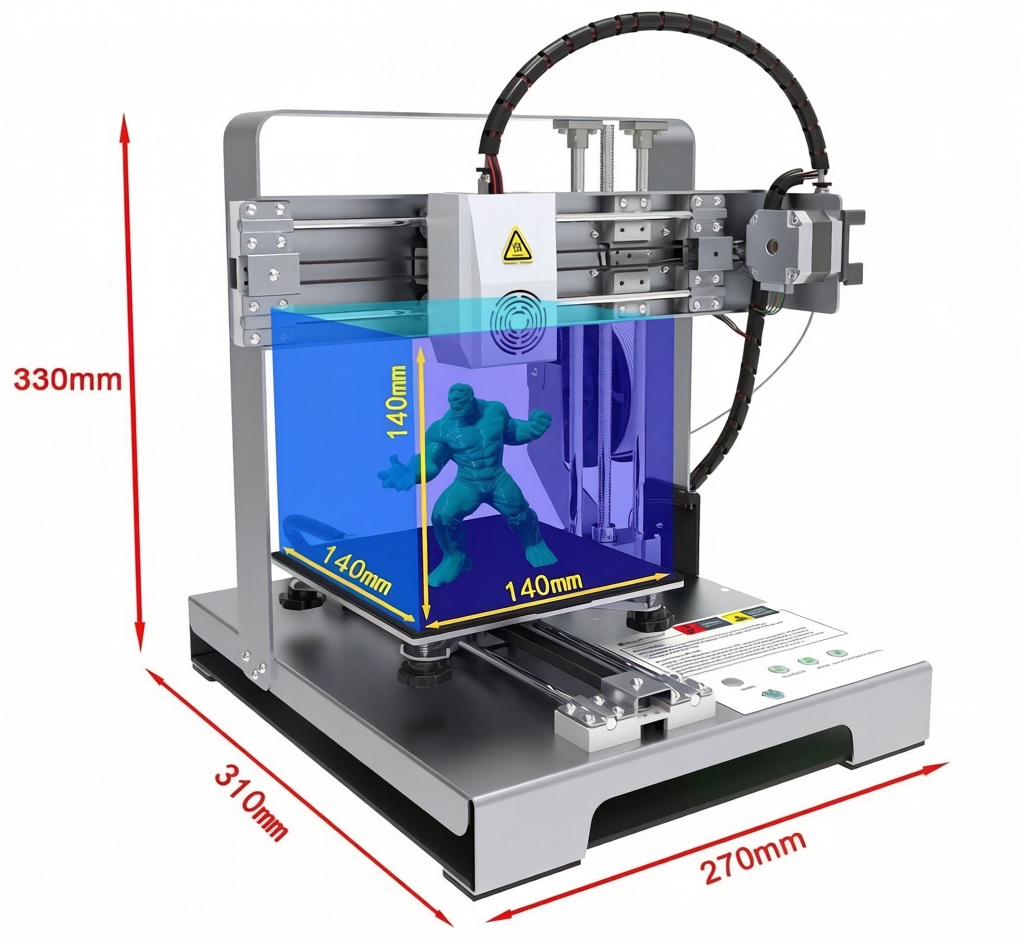
The build volume determines the maximum size of the object that can be printed.
Buyers may require:
- Compact desktop printers
- Medium-sized printers
- Large-format printers
- Special project configurations
The build volume should be selected according to the intended user and application.
Custom Product Appearance
The exterior design can be customized according to the brand’s product positioning.
Possible customization may include:
- Product shape
- Product color
- Housing design
- Control panel
- Display position
- Logo placement
A professional appearance can help a private-label product stand out in the target market.
Custom Software and Control Functions
For smart 3D printers, software and user interface functions can be important parts of the product.
Possible requirements may include:
- Touchscreen control
- User interface customization
- Multiple language options
- Remote control functions
- Printing status monitoring
- Software compatibility
Buyers should discuss software and control requirements with the factory before product development begins.
Custom Materials and Printing Compatibility
Different 3D printers may be designed for different printing materials.
Before selecting a product configuration, buyers should consider:
- Required filament or printing materials
- Printing temperature
- Heated platform requirements
- Nozzle requirements
- Material compatibility
The printer should be designed according to the intended materials and target application.
OEM and ODM 3D Printer Manufacturing
International buyers can usually choose between OEM and ODM cooperation.
OEM 3D Printers
Under an OEM model, the buyer provides the product requirements or design specifications.
The factory manufactures the 3D printers according to the buyer’s requirements.
This model is suitable for buyers who already have:
- Product designs
- Technical specifications
- Brand requirements
- Software requirements
- Product samples
ODM 3D Printers
Under an ODM model, the factory may provide existing product designs or assist with product development.
The buyer may customize:
- Product appearance
- Colors
- Build volume
- Printing functions
- Software interface
- Logo
- Packaging
ODM can be a suitable option for retailers, distributors, technology brands, educational suppliers, and new businesses.
How to Choose the Right Custom 3D Printer Factory
Before placing an order, buyers should carefully evaluate the manufacturer’s capabilities.
1. Check Relevant Product Experience
Ask whether the factory has experience producing the type of 3D printer you need.
Important questions may include:
- What printing technologies are available?
- Can the printer design be customized?
- Can the build volume be modified?
- Can the control system be customized?
- Can the factory provide samples?
The manufacturer’s experience should match your product requirements.
2. Confirm Technical Development Capability
3D printers combine mechanical, electronic, and software components.
Buyers should confirm the factory’s ability to support:
- Mechanical design
- Electronic systems
- Firmware
- Software functions
- Product testing
Clear technical communication can help reduce development problems.
3. Evaluate Quality Control
Quality control is important for 3D printing equipment.
Inspection may include:
- Product appearance
- Mechanical operation
- Printing performance
- Heating system
- Control system
- Software functions
- Safety features
- Packaging condition
Buyers should confirm the manufacturer’s quality control process before placing a large order.
What Information Should You Provide When Requesting a Quote?
To receive an accurate quotation, send the factory complete product information.
You can provide:
Printer type: FDM, resin, large-format, industrial, or another type
Printing technology: Required printing method
Build volume: Required printing dimensions
Printing materials: Required filament or material compatibility
Printing performance: Required speed, resolution, or other specifications
Functions: Touchscreen, remote control, monitoring, or other requirements
Design: Product appearance, colors, and reference images
Logo: Logo file and placement requirements
Quantity: Estimated order quantity
Packaging: Standard or customized packaging
Destination: Delivery country or target market
The more complete the information, the easier it is for the factory to evaluate your project and prepare a suitable quotation.
What Is the MOQ for Custom 3D Printers?
The minimum order quantity depends on the product model, customization level, software requirements, packaging, and production setup.
The MOQ may be affected by:
- Custom product design
- Special components
- Custom housing
- Software development
- Custom packaging
Standard models may have different order requirements from fully customized products.
New brands and smaller businesses should discuss their estimated order quantity with the factory before confirming the product development plan.
How Long Does Custom 3D Printer Production Take?
The production schedule depends on:
- Product design
- Technical requirements
- Prototype development
- Software customization
- Product testing
- Material availability
- Order quantity
A typical custom project may include:
- Product requirement discussion
- Technical specification confirmation
- Product design
- Prototype development
- Function testing
- Sample approval
- Order confirmation
- Mass production
- Quality inspection
- Packaging and shipment
Planning the project in advance can help reduce production delays.
Can 3D Printers Be Customized for Different Markets?
Yes. 3D printers can be developed according to different market requirements.
Customization may include:
- Product appearance
- Power plug type
- Voltage requirements
- Language settings
- Software interface
- User manuals
- Packaging
- Branding
Before production, buyers should clearly identify the target market and product requirements.
How Can You Control the Cost of Custom 3D Printers?
The final cost depends on several factors, including:
- Printing technology
- Build volume
- Mechanical structure
- Electronic components
- Software development
- Printing functions
- Custom design
- Packaging
- Order quantity
To control costs, buyers should first define the target market and required product functions.
Adding more advanced functions may increase development and production costs. A suitable balance between performance, reliability, functionality, quality, and market price is important for long-term product success.
What Should Be Checked Before Mass Production?
Before bulk production begins, buyers should confirm all important details.
The final sample should be checked for:
- Product appearance
- Build volume
- Printing performance
- Material compatibility
- Control system
- Software functions
- Product dimensions
- Logo placement
- Packaging
The approved sample and final technical specifications should be confirmed before mass production.
Can a Factory Provide Custom Packaging?
Yes. Customized packaging can be an important part of a private-label 3D printer project.
Possible packaging options include:
- Retail boxes
- Printed cartons
- Protective foam inserts
- User manuals
- Product labels
- Accessory packaging
Suitable packaging can help protect the printer during international transportation and improve its retail presentation.
Frequently Asked Questions
Can I customize the appearance of a 3D printer?
Yes. Depending on the product model and development requirements, the appearance, colors, housing design, surface finish, and logo placement may be customized.
Can I customize the build volume?
Depending on the product structure and technical requirements, the build volume may be customized for different applications.
Can I customize the software or control interface?
Depending on the factory’s development capability, software functions, interface design, and language options may be customized.
Can I choose the printing materials?
Yes. The printer should be configured according to the required printing materials and intended application.
Can I add my own logo?
Yes. Logos may be printed, labeled, molded, or applied using another suitable method depending on the product design.
Can I order samples before placing a bulk order?
Yes. Samples are commonly used to check the product appearance, printing performance, functions, software, and packaging before mass production.
Can small businesses order custom 3D printers?
The available order quantity depends on the product model and customization requirements. You can discuss your estimated quantity with the manufacturer.
What information is needed to get a quotation?
Send the printer type, printing technology, build volume, material requirements, functions, design, logo, estimated quantity, packaging requirements, and destination country.
How to Start Your Custom 3D Printer Project
If you are searching for a custom 3D printer factory in China, the first step is to prepare your product requirements.
You can send:
- Printer type
- Required printing technology
- Build volume
- Printing materials
- Performance requirements
- Software requirements
- Product design or reference images
- Preferred colors
- Logo file
- Estimated quantity
- Packaging requirements
- Destination country
After reviewing your requirements, the factory can evaluate the product design, discuss technical specifications, recommend suitable production methods, and provide a quotation.
Conclusion
Finding the right custom 3D printer factory in China can help importers, wholesalers, retailers, distributors, technology brands, educational suppliers, and private-label businesses develop 3D printing products that match their target market.
A reliable manufacturing process should include clear technical communication, professional product development, suitable mechanical and electronic systems, software support, product testing, quality control, custom branding, secure packaging, and efficient production.
If you are planning to develop a custom 3D printer, send us your printer type, printing technology, build volume, material requirements, functions, design, logo, quantity, and destination country. We can evaluate your requirements and help develop a suitable custom 3D printer solution.


No reply content