
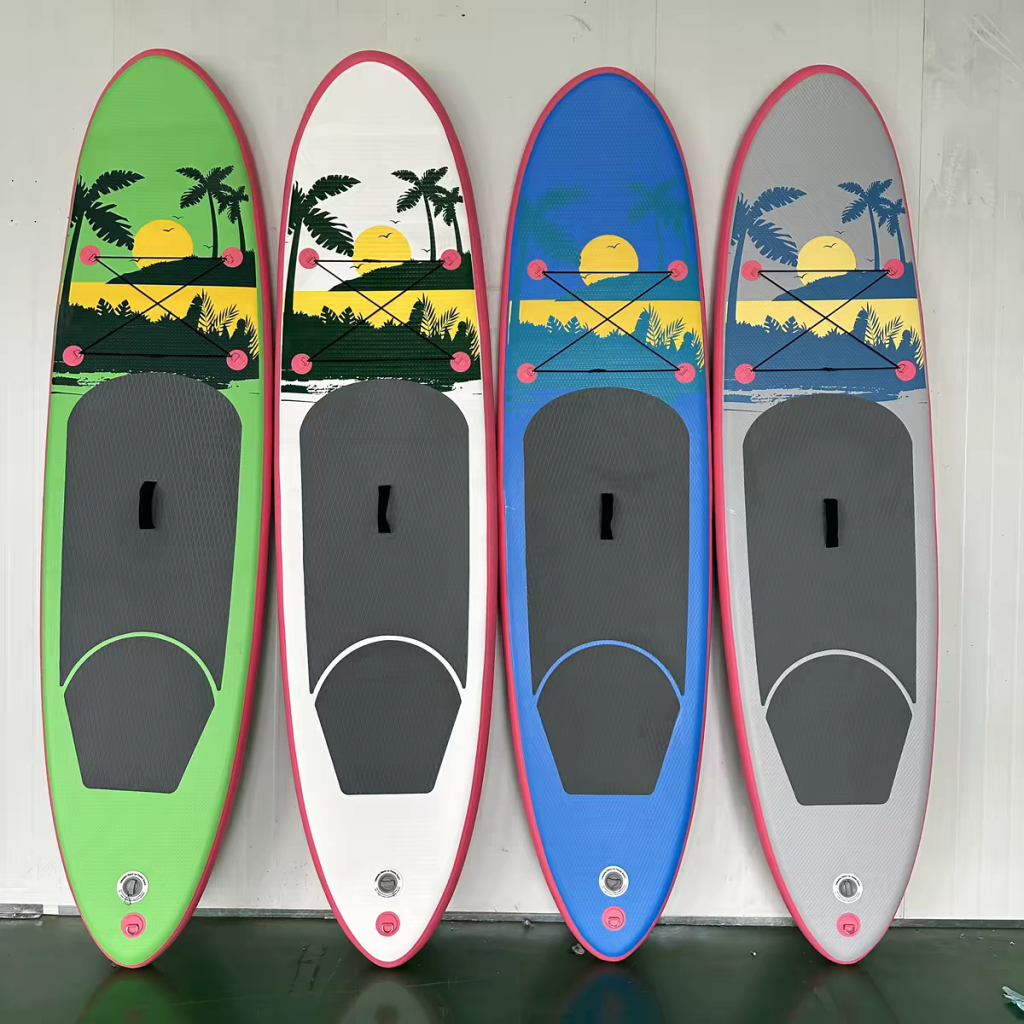
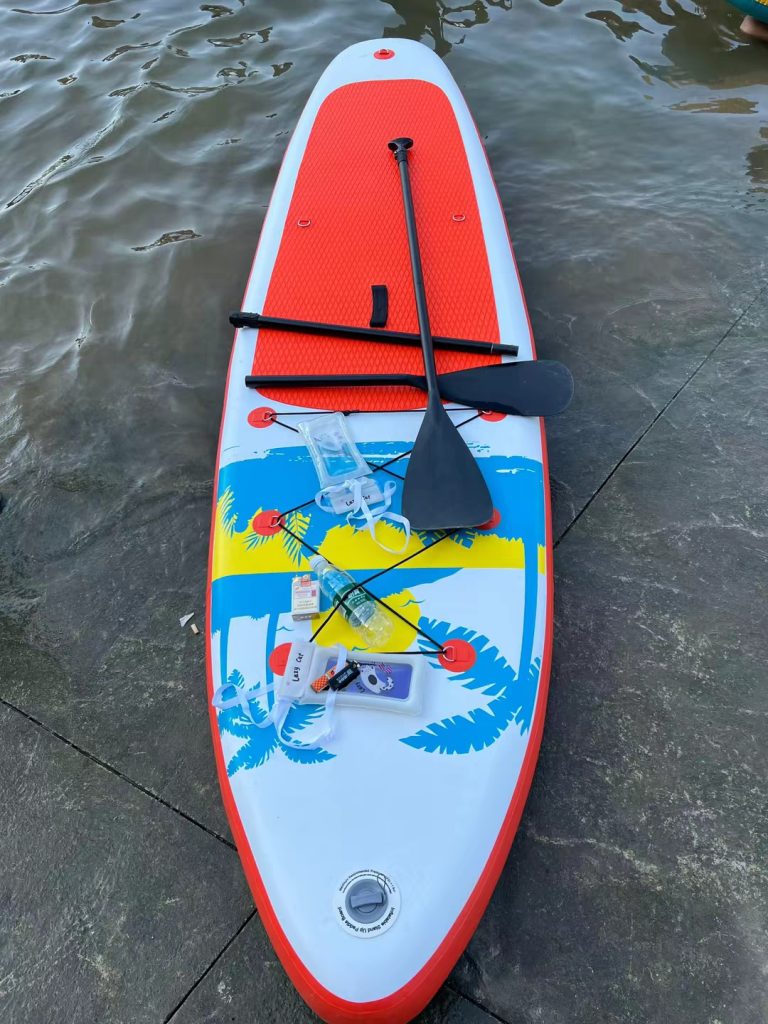
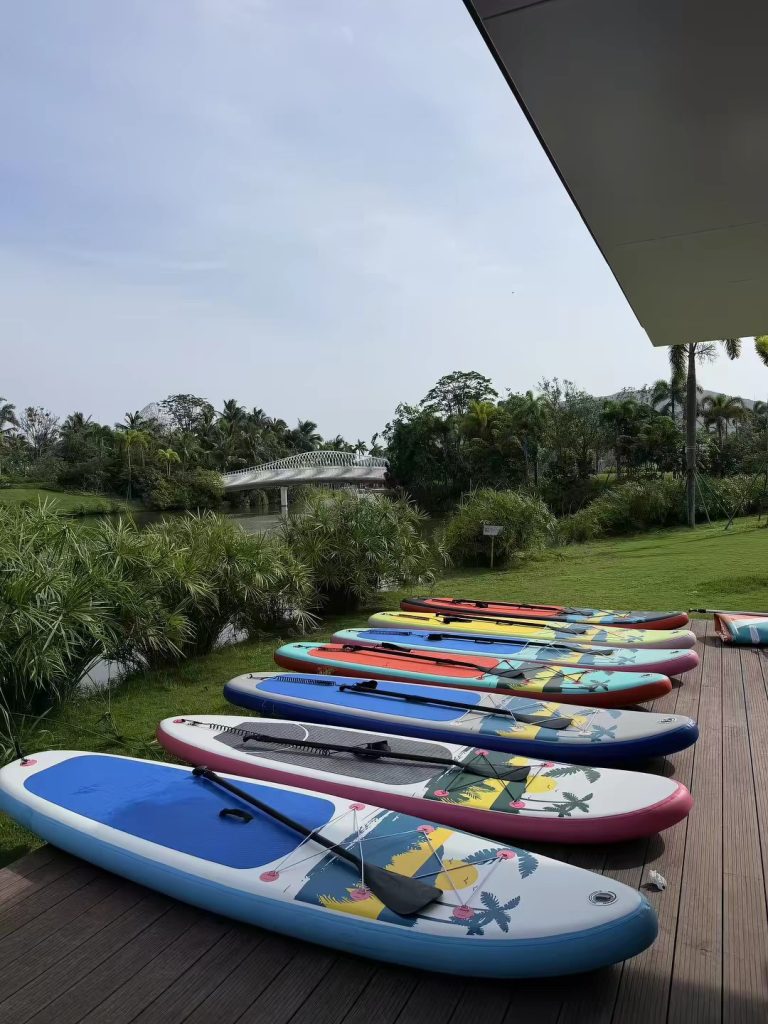
If you are planning to launch your own surfboard brand, finding the right surfboard factory in China for OEM and private label production can give you more control over product design, branding, packaging, and manufacturing costs.
However, not every surfboard supplier has the same OEM capabilities.
Some factories only add a logo to existing boards. Others can customize colors, graphics, dimensions, construction, packaging, and even develop completely new surfboard designs.
Choosing the right manufacturer depends on your product requirements, order quantity, target market, budget, and long-term business plans.
This guide explains how to find and evaluate a Chinese surfboard factory for OEM and private-label production.
1. Understand OEM and Private Label Surfboards
Before contacting factories, it is important to understand the difference between standard products, private label, OEM, and ODM.
Standard Product
You select an existing factory model with little or no customization.
This is usually the fastest and simplest option.
Private Label
You use an existing surfboard design and add your own:
- Logo
- Graphics
- Colors
- Packaging
- Brand information
This is suitable for businesses that want to launch a brand without developing a completely new board.
OEM
You provide your own specifications or design, and the factory manufactures the board according to your requirements.
Customization can include:
- Dimensions
- Shape
- Construction
- Materials
- Graphics
- Logo
- Hardware
- Packaging
ODM
The manufacturer provides an existing design or helps develop the product, which you then sell under your own brand.
For new businesses, private label or ODM can often be easier than developing a completely new product from scratch.
2. Decide How Much Customization You Need
Before searching for a factory, decide what you actually want to customize.
For example:
Basic Private Label
- Existing board
- Your logo
- Your graphics
- Standard packaging
Medium Customization
- Existing shape
- Custom colors
- Custom graphics
- Custom logo
- Custom packaging
- Custom accessories
Full OEM
- New dimensions
- New shape
- Custom rocker
- Custom rails
- Custom construction
- Custom materials
- Custom hardware
- Custom packaging
The more customization you require, the more development time and cost you may need.
3. Search for the Right Type of Chinese Factory
Use specific search terms rather than simply searching for “surfboard supplier.”
Useful keywords include:
- Surfboard OEM manufacturer China
- Surfboard private label factory China
- Custom surfboard manufacturer China
- Surfboard factory OEM
- Epoxy surfboard OEM China
- Foam surfboard OEM China
- Custom surfboard factory
- Surfboard manufacturer private label
You want to find manufacturers that specifically mention OEM, ODM, custom manufacturing, or private label.
4. Shortlist Multiple Manufacturers
Do not immediately choose the first supplier you find.
Create a shortlist of around 5–10 potential factories.
Record:
| Information | Supplier |
|---|---|
| Company | |
| Factory location | |
| Product types | |
| OEM | |
| ODM | |
| MOQ | |
| Sample cost | |
| Price | |
| Lead time | |
| Capacity | |
| Packaging | |
| Export experience |
This makes supplier comparison much easier.
5. Verify That the Supplier Has a Real Factory
A company describing itself as an “OEM manufacturer” does not automatically mean it operates its own complete production facility.
Ask for:
- Factory address
- Factory photos
- Production videos
- Production capacity
- Manufacturing process
- Equipment
- Quality-control process
For serious projects, request a live video factory tour.
Ask the supplier to show:
- Shaping area
- Foam preparation
- Lamination
- Curing
- Sanding
- Painting
- Graphics
- Final inspection
- Packaging
- Finished inventory
This can help you distinguish an actual manufacturer from a supplier that mainly outsources production.
6. Check the Factory’s Surfboard Experience
Ask:
How many years have you manufactured surfboards?
Also ask:
Which surfboard types do you specialize in?
What construction methods do you use?
How many boards do you produce monthly?
Which markets do you export to?
How many OEM projects have you completed?
Experience matters because surfboards require consistent control of shaping, materials, lamination, finishing, and hardware installation.
7. Check Whether They Can Manufacture Your Board Type
Do not assume that every surfboard factory can manufacture every type of board.
Ask whether they produce:
- Shortboards
- Longboards
- Funboards
- Fish boards
- Foam boards
- Epoxy boards
- Fiberglass boards
- SUP boards
- Custom performance boards
Choose a manufacturer with experience in the specific product you want.
8. Prepare a Detailed OEM Specification
One of the biggest mistakes buyers make is contacting factories with a vague request such as:
“I want a high-quality surfboard with my logo.”
This makes it difficult for manufacturers to provide accurate quotations.
Instead, prepare a specification sheet.
Include:
Basic Information
- Board type
- Length
- Width
- Thickness
- Volume
- Target user
Construction
- Core material
- Foam density
- Stringer
- Fiberglass
- Resin
- Lamination
Shape
- Nose
- Tail
- Rails
- Rocker
- Bottom contour
Hardware
- Fin system
- Fin boxes
- Leash plug
- Traction pad
Branding
- Logo
- Graphics
- Colors
Packaging
- Board bag
- Protective materials
- Carton
- Labels
The more specific your requirements are, the easier it is to compare factories.
9. Decide on Your Board Construction
Construction has a major impact on the product.
Possible options include:
PU/Fiberglass
Traditional construction with characteristics that many surfers are familiar with.
EPS/Epoxy
Often used for lightweight boards and various performance or recreational applications.
Foam
Commonly used for beginner and surf-school products.
Ask the factory to explain the advantages and limitations of each construction option for your target market.
10. Check the Core Material
Ask the manufacturer:
- What core material do you use?
- What is the foam density?
- What thickness is used?
- Is a stringer included?
- Can the core specification be customized?
Do not accept a vague answer such as:
“We use high-quality foam.”
Request actual specifications.
11. Check Fiberglass and Resin
Ask for exact information about:
- Fiberglass specification
- Number of layers
- Resin type
- Lamination process
- Curing process
Two boards can have the same dimensions but different durability and weight because of differences in construction.
This is why OEM buyers should document the construction specifications.
12. Check Shape Customization
A true OEM surfboard manufacturer should be able to discuss shape requirements.
Depending on the factory, customization may include:
- Length
- Width
- Thickness
- Volume
- Rocker
- Rails
- Tail
- Bottom contour
Ask whether the manufacturer can work from:
- Existing board
- Drawings
- CAD files
- Design files
- Physical reference sample
If you already have a successful board design, providing a reference can make the development process easier.
13. Ask About Prototype Development
For a completely new surfboard, you may need a prototype.
A typical development process can be:
Design → Prototype → Testing → Modification → Final Sample → Mass Production
Ask:
- Prototype cost
- Development time
- Number of revisions included
- Sample production time
- Whether development fees are refundable against a bulk order
Do not assume that the first prototype will be perfect.
14. Order Samples Before Mass Production
Samples are essential for OEM projects.
Test:
- Dimensions
- Weight
- Volume
- Shape
- Flex
- Rails
- Rocker
- Bottom contour
- Lamination
- Surface finish
- Hardware
- Graphics
If you plan to sell the board to professional surfers, conduct practical water testing whenever possible.
15. Compare Multiple Samples
If your budget allows, compare samples from several manufacturers.
Check:
| Item | Supplier A | Supplier B | Supplier C |
|---|---|---|---|
| Dimensions | |||
| Weight | |||
| Shape | |||
| Construction | |||
| Finish | |||
| Hardware | |||
| Graphics | |||
| Packaging |
The objective is not just to find the lowest quotation.
You want the factory that provides the best combination of quality, price, consistency, communication, and manufacturing capability.
16. Understand MOQ for OEM Surfboards
MOQ means Minimum Order Quantity.
OEM MOQ depends on the level of customization.
Typical situations include:
| Customization | MOQ Tendency |
|---|---|
| Existing model | Lower |
| Logo | Low to moderate |
| Custom graphics | Moderate |
| Custom color | Moderate |
| Custom shape | Higher |
| New product development | Higher |
Ask for separate MOQs for:
- Board
- Logo
- Graphics
- Color
- Packaging
- Accessories
- New development
17. Ask for Tiered OEM Pricing
Request pricing at different quantities.
For example:
- 50 boards
- 100 boards
- 300 boards
- 500 boards
- 1,000 boards
This allows you to see how production volume affects the unit price.
However, do not order a large quantity simply to receive a lower price.
Your inventory needs to match realistic sales demand.
18. Check Logo and Graphic Customization
Ask how your branding will be applied.
Possible methods include:
- Printed graphics
- Laminated graphics
- Decals
- Paint
- Specialized finishes
Confirm:
- Logo size
- Logo position
- Colors
- Artwork format
- Production method
Always approve the final artwork before mass production.
19. Check Custom Packaging
Private-label brands often need custom packaging.
Possible options include:
- Board bag
- Protective foam
- Bubble wrap
- Custom carton
- Printed labels
- Barcode
- Brand inserts
Ask for the cost of:
Board + logo + graphics + packaging
rather than only the board price.
20. Check Accessory Options
Depending on your product, you may want:
- Fins
- Leash
- Traction pad
- Fin key
- Board bag
- Repair accessories
Ask whether accessories are included in the standard quotation.
A supplier may quote the board separately from the accessories.
21. Check Production Capacity
Ask:
How many surfboards can you produce per month?
Also ask:
- Current production schedule
- Number of production workers
- Production lines
- Peak-season capacity
- Material availability
- Outsourced processes
A factory should be able to support your expected order volume.
22. Check Production Lead Time
A customized board can take longer than a standard product.
The process may include:
Design → Prototype → Approval → Material Preparation → Production → QC → Packaging → Shipment
Ask for:
- Prototype lead time
- Sample lead time
- Bulk production time
- Packaging time
Get the estimated schedule in writing.
23. Create a Quality Standard
Before mass production, define your quality requirements.
For example:
| Item | Requirement |
|---|---|
| Length | Approved specification |
| Width | Approved specification |
| Thickness | Approved specification |
| Weight | Defined tolerance |
| Graphics | Approved artwork |
| Logo | Approved position |
| Fin boxes | Correct position |
| Leash plug | Correct position |
| Surface | No major defects |
| Packaging | Approved design |
This gives the factory a clear production reference.
24. Check Production Consistency
One excellent sample does not prove that the factory can produce hundreds of identical boards.
For larger orders, inspect multiple finished boards.
Check:
- Dimensions
- Weight
- Shape
- Graphics
- Hardware
- Surface quality
- Packaging
Consistency is especially important for brands selling the same model repeatedly.
25. Check Quality-Control Procedures
Ask how the factory controls quality.
Possible inspection stages include:
Raw Materials
Checking:
- Foam
- Fiberglass
- Resin
- Hardware
Production
Checking:
- Shaping
- Lamination
- Curing
- Sanding
- Hardware installation
Final Inspection
Checking:
- Dimensions
- Weight
- Appearance
- Graphics
- Accessories
- Packaging
A manufacturer should be able to explain its actual QC process.
26. Check Shipping and Packaging
Surfboards are bulky products.
Packaging should protect:
- Nose
- Tail
- Rails
- Deck
- Bottom
- Fins
- Hardware
Ask the factory for:
- Package dimensions
- Gross weight
- Net weight
- Number of boards per carton
- Packaging method
These details are essential for calculating transportation costs.
27. Understand Freight Costs
Surfboards can have relatively high dimensional volume compared with their actual weight.
Therefore, transportation costs may depend heavily on:
- Board dimensions
- Carton dimensions
- Total volume
- Number of boards
- Destination
- Shipping method
For commercial orders, compare sea freight and air freight where appropriate.
28. Calculate Your Total OEM Cost
Your total cost may include:
Board + Customization + Packaging + Sample + Tooling + Inspection + Inland Transportation + International Freight + Duties + Taxes + Local Delivery
For example:
Suppose you order:
500 boards
Factory price:
$140 per board
Product cost:
$70,000
Additional costs:
- Customization: $2,000
- Packaging: $1,500
- Inspection: $500
- Freight: $6,000
- Import-related costs: $4,000
Estimated total:
$84,000
Estimated landed cost:
$168 per board
This is only an example. Actual costs depend on the board specifications and destination.
29. Check Intellectual Property Protection
If you provide your own design, graphics, or CAD files, clarify ownership before production.
Important areas include:
- Logo
- Brand
- Graphics
- CAD drawings
- Custom board designs
- Molds
- Packaging artwork
For serious OEM projects, use appropriate written agreements covering confidentiality and intellectual-property ownership.
30. Check Whether the Factory Can Scale
A good OEM supplier should be able to support your business as it grows.
For example:
First order: 100 boards
Second order: 500 boards
Later: 2,000+ boards
Ask whether the factory can maintain the same specifications when production increases.
A factory that produces a good prototype but cannot maintain consistency at larger volumes is not a suitable long-term partner.
31. Check Communication Quality
Communication is often underestimated.
Your factory should be able to clearly discuss:
- Materials
- Dimensions
- Production
- Packaging
- Quality
- Delivery
- Problems
Poor communication can create mistakes in:
- Logo placement
- Dimensions
- Colors
- Packaging
- Accessories
Choose a manufacturer that responds clearly and documents important specifications.
32. Common Mistakes When Choosing an OEM Factory
Mistake 1: Choosing the Cheapest Supplier
Low price may mean lower-quality materials or limited production capability.
Mistake 2: Not Ordering a Sample
You cannot properly evaluate the product without testing it.
Mistake 3: Giving Incomplete Specifications
Vague requirements lead to inconsistent quotations.
Mistake 4: Ignoring MOQ
Custom products may require higher MOQs.
Mistake 5: Not Defining Quality Tolerances
This can create disputes during mass production.
Mistake 6: Forgetting Packaging Costs
Custom packaging can add to the total cost.
Mistake 7: Ordering Too Much
Large inventory can create unnecessary financial risk.
Mistake 8: Not Protecting Your Design
Important OEM designs and branding should be properly documented and protected.
33. How to Choose Between Three OEM Factories
Suppose you have three suppliers:
| Factor | Factory A | Factory B | Factory C |
|---|---|---|---|
| Price | Low | Medium | High |
| Quality | Medium | High | High |
| OEM | Basic | Strong | Strong |
| MOQ | Low | Medium | High |
| Capacity | Medium | High | High |
| Communication | Medium | Good | Good |
| Lead Time | Long | Medium | Short |
Factory A may be suitable for a low-cost project.
Factory B may be the best balance for a growing brand.
Factory C may be suitable for a premium brand with larger volumes.
The right choice depends on your business strategy.
34. A Step-by-Step OEM Process
A practical process is:
Step 1 — Define the Product
Determine the board type, dimensions, materials, target customer, and price level.
Step 2 — Find Manufacturers
Shortlist several Chinese factories.
Step 3 — Send an RFQ
Provide the same specifications to each supplier.
Step 4 — Compare Quotes
Compare product specifications and total costs.
Step 5 — Verify the Factory
Check manufacturing capability and OEM experience.
Step 6 — Order Samples
Test the product.
Step 7 — Make Modifications
Adjust shape, materials, graphics, or construction if necessary.
Step 8 — Approve the Final Sample
Use the approved sample as a production reference.
Step 9 — Confirm Quality Standards
Document tolerances and inspection requirements.
Step 10 — Start Mass Production
Monitor production progress.
Step 11 — Inspect Finished Goods
Conduct pre-shipment inspection when appropriate.
Step 12 — Ship
Arrange international transportation.
35. Questions to Send to a Chinese Surfboard OEM Factory
You can send the following questions directly to potential suppliers:
- Are you a manufacturer or trading company?
- How many years have you manufactured surfboards?
- What surfboard types do you produce?
- Do you provide OEM and private-label services?
- What construction methods do you offer?
- What core materials are available?
- What fiberglass specifications do you use?
- What resin systems are available?
- Can you manufacture custom shapes?
- Can you work from CAD files or a physical sample?
- What is your MOQ?
- What is the sample cost?
- Can you customize logos and graphics?
- Can you customize packaging?
- What accessories can you provide?
- What is your monthly production capacity?
- What is the production lead time?
- What is your quality-control process?
- What is your warranty policy?
- What are your shipping terms?
- What are the carton dimensions and weight?
- Can you provide tiered pricing for different quantities?
36. What Makes a Good Surfboard OEM Factory?
A reliable OEM manufacturer should ideally offer:
- Experienced surfboard production
- Stable material sourcing
- Accurate shaping
- Consistent construction
- Good lamination
- Reliable finishing
- OEM customization
- Private-label support
- Reasonable MOQ
- Stable production capacity
- Clear quality standards
- Competitive pricing
- Protective packaging
- International export experience
- Responsive communication
The most important point is consistency.
Your first sample may look excellent, but your manufacturer should also be able to reproduce the same quality across hundreds or thousands of boards.
Conclusion
Finding a surfboard factory in China for OEM and private label production requires more than searching for the lowest quotation.
You need to evaluate:
Manufacturing experience → Construction → Materials → OEM capabilities → MOQ → Samples → Quality control → Production capacity → Packaging → Shipping → Total cost → After-sales support.
For a new brand, starting with an existing factory model and adding your logo, graphics, colors, and packaging can be a relatively simple way to enter the market.
If you require a unique product, you can move toward full OEM development with custom dimensions, construction, shaping, materials, and hardware.
The safest approach is:
Define your requirements → Shortlist factories → Send detailed RFQs → Compare quotations → Order samples → Test products → Approve specifications → Confirm quality standards → Place a controlled order → Inspect production → Arrange shipping.
A reliable OEM manufacturer should not only produce a good sample. It should also be capable of maintaining consistent quality, accurate specifications, stable production, and predictable delivery as your order volume increases.
FAQ
Can I put my own logo on surfboards manufactured in China?
Yes. Many Chinese surfboard factories provide private-label services, including logo printing, graphics, custom colors, packaging, and accessories.
What is the difference between private label and OEM surfboards?
Private label generally uses an existing factory model with your branding. OEM involves manufacturing according to your own specifications and can include custom dimensions, construction, materials, shape, graphics, and hardware.
What is the MOQ for private-label surfboards?
MOQ varies by factory. Existing models with a simple logo usually require less customization than completely new surfboard designs.
Can a Chinese factory make a completely custom surfboard?
Yes, some manufacturers can develop custom boards based on drawings, CAD files, existing boards, or detailed specifications. Development time and cost depend on the complexity.
How much does a custom OEM surfboard cost?
The price depends on board type, size, construction, materials, customization, quantity, and development requirements. Custom boards can range from approximately $150 to $500+ at factory level, with premium development potentially costing more.
Should I order a sample before placing an OEM order?
Yes. A sample allows you to check dimensions, weight, construction, shape, graphics, hardware, and finishing before mass production.
Can I customize surfboard packaging?
Yes. Depending on the factory, you may be able to customize board bags, cartons, labels, graphics, inserts, and other packaging materials.
Can I start with a small OEM order?
It depends on the factory and level of customization. Existing models with simple branding may have lower MOQs, while custom shapes and new product development usually require higher quantities.
How long does OEM surfboard production take?
The timeline depends on whether you use an existing model or develop a new product. Custom projects may require design, prototype development, sample approval, material preparation, mass production, inspection, and packaging.
How can I protect my surfboard design?
Clearly document ownership of your logo, graphics, CAD files, custom designs, tooling, and packaging artwork. For important projects, use appropriate written confidentiality and intellectual-property agreements.
What is the most important thing when choosing a surfboard OEM factory?
Look for a combination of product quality, manufacturing experience, OEM capability, production consistency, reasonable MOQ, competitive total cost, reliable lead time, and good communication rather than choosing purely based on the lowest unit price.


No reply content