
Custom Lighting Supplier in Zhongshan, China
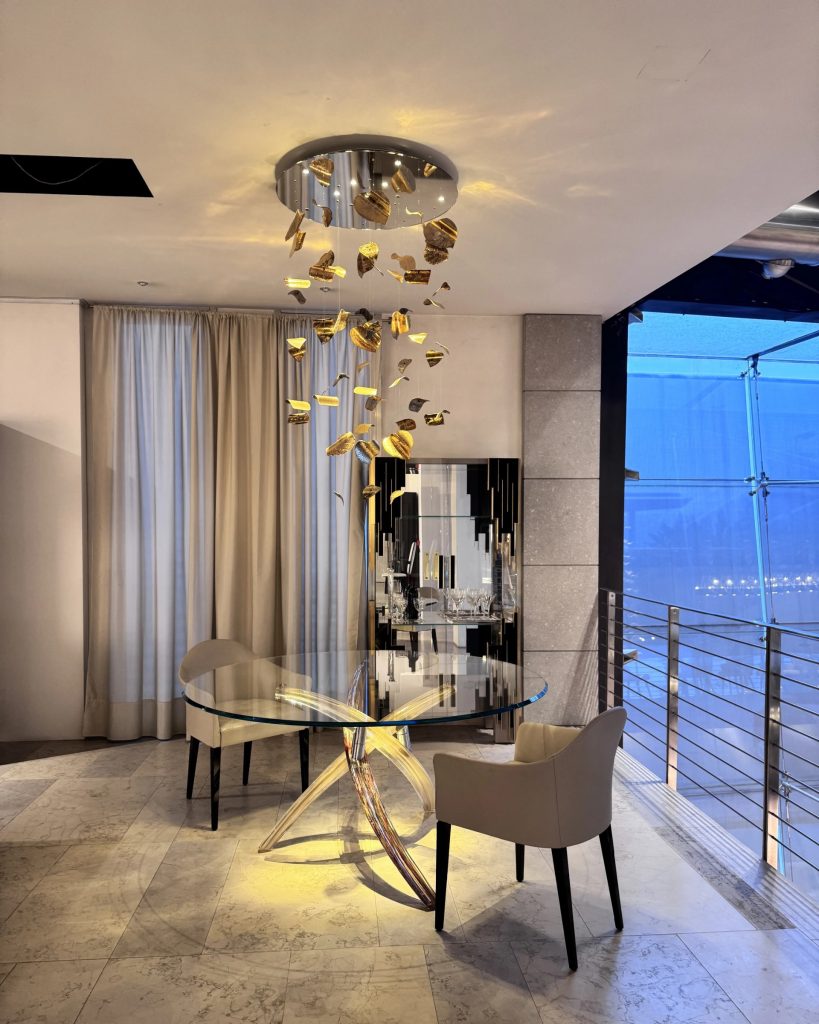
Finding the right indoor hanging light supplier is an important part of any lighting procurement project. Whether you are purchasing for a hotel, restaurant, residential development, retail store, interior design project, or lighting distribution business, the supplier you choose can directly affect product quality, project costs, delivery schedules, and customer satisfaction.
China has a large number of lighting manufacturers and suppliers, but not every supplier is suitable for every project. The right supplier should match your product requirements, order volume, target market, budget, customization needs, and delivery schedule.
This guide explains how to evaluate indoor hanging light suppliers and choose a reliable manufacturing partner.
1. Define Your Project Requirements First
Before searching for suppliers, clearly define what you need.
Important information includes:
-
Product type
-
Quantity
-
Application
-
Dimensions
-
Materials
-
Color
-
Surface finish
-
Light source
-
Voltage
-
Wattage
-
Color temperature
-
Dimming requirements
-
Installation method
-
Packaging
-
Target market
-
Required delivery date
For example, a hotel project may require hundreds of identical pendant lights with specific dimensions and finishes, while an online retailer may need multiple designs in smaller quantities.
Without clear requirements, it is difficult to compare suppliers accurately.
2. Determine Whether You Need Standard or Custom Products
The first major decision is whether you need catalog products or customized lighting.
Standard products
Standard pendant lights are already designed and manufactured by the supplier.
They are generally suitable when:
-
You need fast delivery
-
You have limited customization requirements
-
You want a lower development cost
-
You are testing a new product category
Custom products
Customized products are suitable when:
-
You have your own design
-
Your project requires specific dimensions
-
You need a unique appearance
-
You want private labeling
-
You need customized packaging
-
You are developing a lighting collection
Custom projects normally require more communication and longer development time.
3. Look for Actual Manufacturing Capability
A supplier’s website may show hundreds of products, but that does not necessarily mean it manufactures all of them.
Ask about:
-
Factory location
-
Production facilities
-
Manufacturing processes
-
Assembly capacity
-
Quality-control system
-
Engineering support
-
Monthly production capacity
-
OEM and ODM experience
If the project is large, consider arranging a factory audit or third-party verification.
A supplier that can clearly explain how your product is manufactured is generally easier to evaluate.
4. Examine the Product Catalog
A good supplier should have products relevant to your project.
Look at:
-
Product categories
-
Design styles
-
Materials
-
Available finishes
-
Product sizes
-
Lighting technologies
-
Customization options
If you need modern pendant lights, for example, a supplier specializing mainly in traditional decorative lighting may not be the best choice.
Supplier specialization can be important because experienced manufacturers usually understand the production problems associated with their main product categories.
5. Request Product Specifications
Product photographs are useful for initial evaluation, but they are not sufficient for professional procurement.
Request detailed specifications such as:
-
Product dimensions
-
Net weight
-
Gross weight
-
Material
-
Light source
-
Voltage
-
Wattage
-
Color temperature
-
Cable length
-
Ceiling canopy size
-
Packaging dimensions
These specifications help you compare products from different suppliers.
They are also important for calculating international shipping costs.
6. Evaluate Material Quality
Different materials produce different product costs and appearances.
Common materials for indoor hanging lights include:
-
Steel
-
Aluminum
-
Brass
-
Stainless steel
-
Glass
-
Wood
-
Fabric
-
Acrylic
Ask the supplier to specify the material rather than using vague descriptions such as “premium metal.”
For customized projects, request material samples if necessary.
This is particularly important when the project requires several hundred or thousands of units.
7. Check Surface Finishing
Surface finishing can significantly affect the appearance of indoor hanging lights.
Common finishes include:
-
Matte black
-
Gloss black
-
Brushed brass
-
Polished brass
-
Chrome
-
Bronze
-
Antique finish
-
Powder coating
Check whether the manufacturer can maintain consistent finishing between production batches.
For large projects, approve a physical sample before mass production.
8. Evaluate Electrical Components
Electrical components should be evaluated separately from the decorative design.
Ask about:
-
LED module
-
Lamp holder
-
Driver
-
Cable
-
Connector
-
Grounding
-
Input voltage
-
Frequency
-
Dimming compatibility
-
Maximum power
The electrical specifications must be suitable for the destination market.
If you are importing lighting products, provide the supplier with the destination country at the quotation stage so that the manufacturer can discuss the appropriate configuration and documentation.
9. Check Compliance Documentation
Lighting products may be subject to different requirements depending on the destination market.
Ask the supplier what relevant documentation it can provide for the actual product being purchased.
Possible documentation may include:
-
Test reports
-
Declaration documents
-
Electrical safety information
-
Product specifications
-
Material information
-
Quality-control records
Do not assume that a document provided for one model automatically applies to another model.
For customized products, compliance should be discussed before mass production.
10. Compare MOQ
MOQ is particularly important for small and medium-sized buyers.
Ask the supplier for the MOQ of:
-
Standard products
-
Customized products
-
Individual models
-
Individual colors
-
Private-label products
-
Customized packaging
A supplier may have a low MOQ for standard products but a much higher MOQ for customized versions.
Understanding these differences can prevent unexpected purchasing restrictions.
11. Compare Pricing Properly
Do not compare suppliers using price alone.
When comparing quotations, make sure the specifications are identical.
For example, compare:
-
Same material
-
Same dimensions
-
Same light source
-
Same electrical components
-
Same finish
-
Same packaging
-
Same quantity
-
Same trade terms
Otherwise, the cheapest quotation may not actually be the cheapest option.
12. Evaluate Production Lead Time
Delivery delays can create serious problems for construction and interior design projects.
Ask the supplier about:
-
Sample lead time
-
Standard production time
-
Custom production time
-
Packaging time
-
Peak-season production schedules
Also ask when the production clock starts.
For example, does the quoted lead time begin after:
-
Deposit payment?
-
Sample approval?
-
Artwork approval?
-
Material confirmation?
This detail should be clearly documented.
13. Request Samples
A sample allows you to evaluate the real product before committing to a large order.
Check:
-
Appearance
-
Dimensions
-
Material
-
Finish
-
Electrical components
-
Assembly
-
Installation
-
Packaging
If the sample is approved, keep it as a reference for future production.
For larger projects, the approved sample can become the basis for quality inspection.
14. Evaluate Packaging
Packaging is especially important for glass and decorative lighting.
Ask the supplier how the product will be protected during international transportation.
Possible packaging may include:
-
Foam inserts
-
Protective film
-
Individual cartons
-
Reinforced outer cartons
-
Pallets
-
Custom molded inserts
Ask whether the supplier has experience exporting similar lighting products.
A manufacturer that understands international transportation requirements can help reduce damage rates.
15. Check Export Experience
A good domestic manufacturer is not automatically a good international supplier.
Ask:
-
Which countries do you export to?
-
Have you supplied similar products internationally?
-
Can you provide export packaging?
-
Can you prepare shipping documents?
-
Can you work with international freight forwarders?
-
Can you support destination-market requirements?
Export experience can make the purchasing process much smoother.
16. Evaluate Communication
Communication is often underestimated during supplier selection.
Pay attention to whether the supplier:
-
Answers questions directly
-
Understands technical specifications
-
Provides clear quotations
-
Confirms changes in writing
-
Responds within a reasonable time
-
Explains problems honestly
If communication is poor during the quotation stage, managing a complex production order may become difficult later.
17. Ask About Quality Control
A reliable supplier should have a defined quality-control process.
Ask how it checks:
-
Raw materials
-
Production
-
Electrical components
-
Finished products
-
Packaging
For larger orders, consider arranging a pre-shipment inspection.
The inspection can verify:
-
Quantity
-
Appearance
-
Dimensions
-
Materials
-
Electrical specifications
-
Accessories
-
Packaging
-
Labels
18. Consider After-Sales Support
Ask about the manufacturer’s policy for defective products and replacement components.
Important questions include:
-
What is the warranty period?
-
How are defective units handled?
-
Can replacement components be supplied?
-
Can spare parts be purchased separately?
-
How quickly does the supplier respond to quality complaints?
For hotels and commercial projects, replacement components can be especially useful because maintaining the same product over several years may be important.
19. Compare Suppliers With a Scoring System
For important projects, use a supplier evaluation table.
Evaluation Factor |
Weight |
|---|---|
Product quality |
25% |
Manufacturing capability |
15% |
Price |
15% |
MOQ |
10% |
Lead time |
10% |
Customization |
10% |
Quality control |
5% |
Export experience |
5% |
Communication |
5% |
You can adjust the weights according to your project.
For a luxury hotel project, quality and customization may be more important than price.
For a high-volume retail product, price, MOQ, production capacity, and lead time may receive greater weight.
20. Common Supplier Selection Mistakes
Choosing the lowest price
The lowest price may come with lower specifications or weaker quality control.
Ordering without a sample
A photograph cannot show every manufacturing detail.
Ignoring packaging
Fragile lighting products require appropriate protection.
Failing to confirm specifications
Small differences in dimensions or electrical components can create major problems during installation.
Not checking production capacity
A supplier may be suitable for 100 units but struggle with a 5,000-unit order.
Not discussing compliance early
Certification and testing requirements should be considered before production.
21. A Practical Supplier Selection Process
A professional sourcing process can follow these steps:
Step 1: Define your product requirements.
Step 2: Find several potential indoor hanging light suppliers.
Step 3: Send the same RFQ to each supplier.
Step 4: Compare specifications and quotations.
Step 5: Verify manufacturing capabilities.
Step 6: Request samples.
Step 7: Evaluate quality and electrical specifications.
Step 8: Confirm customization and packaging.
Step 9: Negotiate commercial terms.
Step 10: Sign the purchase agreement.
Step 11: Approve the production sample.
Step 12: Conduct quality inspection.
Step 13: Arrange shipment.
This process makes supplier selection more systematic and reduces unnecessary purchasing risks.
22. Questions to Ask Before Choosing a Supplier
Before placing your first order, ask:
-
Are you the manufacturer or a trading company?
-
Where is your factory located?
-
What is your MOQ?
-
What is your sample lead time?
-
What is your bulk production lead time?
-
Can you provide OEM and ODM services?
-
Can you customize dimensions and finishes?
-
Can you provide relevant compliance documentation?
-
What packaging do you use for export?
-
What quality-control procedures do you follow?
-
Can I arrange a factory inspection?
-
Can I arrange a pre-shipment inspection?
-
What are your payment terms?
-
What is your warranty policy?
-
Can you provide replacement parts?


No reply content