
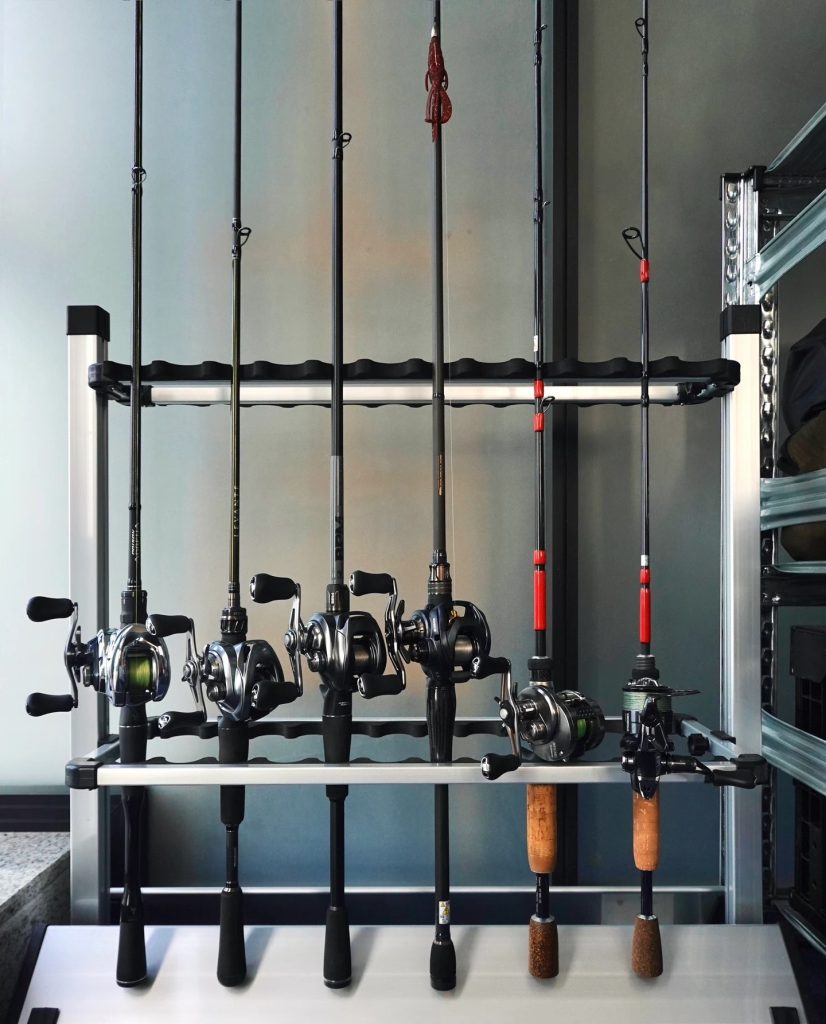
How to Import Fishing Rods from China for Wholesale: A Practical Guide for International Buyers
Importing fishing rods from China can be a practical option for fishing tackle distributors, sporting goods retailers, online sellers, wholesalers, and private-label brands. China has a large manufacturing base for fishing equipment, covering everything from basic fiberglass rods to carbon fiber spinning rods, casting rods, telescopic rods, travel rods, and customized OEM products.
But buying from China is not simply a matter of finding a low unit price.
An international buyer needs to consider product specifications, minimum order quantities, samples, packaging, payment terms, export documents, shipping costs, customs classification, destination taxes, and quality control. A quotation that looks inexpensive at the factory may become much more expensive after freight, customs charges, and other import costs are added.
This guide explains how to approach a fishing rod import from China step by step.
China’s Fishing Rod Export Market
China is already a major international supplier of fishing rods.
According to World Bank WITS data based on UN Comtrade, China’s exports of fishing rods under HS 950710 were approximately US$660.9 million in 2024, with reported exports of about 114.9 million pieces. The United States, Japan, Russia, Vietnam, Poland, Australia, and South Korea were among the major destination markets in the reported data.
This scale is important for buyers because it means international sourcing is not limited to a small number of manufacturers. Buyers can encounter factories specializing in different product categories, price levels, materials, and production volumes.
The challenge is therefore not simply finding a Chinese supplier. The challenge is finding a supplier whose products, production capability, quality standards, MOQ, and commercial terms match your market.
Step 1: Define the Fishing Rod Before Asking for a Quotation
One of the most common mistakes made by first-time importers is asking:
“How much is a fishing rod?”
That question is too broad.
A manufacturer cannot give a meaningful quotation without knowing what kind of rod you need.
At minimum, specify:
- Fishing rod type
- Length
- Number of sections
- Rod material
- Power
- Action
- Handle material
- Guide requirements
- Reel seat
- Target quantity
- Logo requirements
- Packaging requirements
- Destination country
For example, “2.4 m carbon fiber spinning rod” is much more useful than simply saying “fishing rod.”
If you are developing a private-label product, you should provide a product specification sheet or reference sample whenever possible.
Step 2: Decide Whether You Need Stock Products or OEM Fishing Rods
There are two different sourcing approaches.
Standard Products
Standard fishing rods are already developed by the manufacturer.
This option is generally easier for a new importer because the factory already has the tooling, components, production process, and packaging arrangements.
It can also be suitable for buyers who want to test market demand before investing in a completely customized product.
OEM or Custom Fishing Rods
OEM production is different.
You may want your own:
- Brand name
- Logo
- Rod color
- Handle design
- Product specifications
- Packaging
- Labels
- Accessories
Custom products normally require more communication and may have higher minimum order quantities or additional setup costs.
For a new fishing tackle brand, it can make sense to start with a proven rod design and customize selected elements rather than redesigning every component immediately.
Step 3: Ask for a Complete Commercial Quotation
Do not compare suppliers using the unit price alone.
Ask each supplier to provide the same information.
A useful quotation request should include:
| Item | Information to Request |
|---|---|
| Product | Exact model/specification |
| Unit price | Price per rod |
| MOQ | Minimum order quantity |
| Sample | Sample price and availability |
| Logo | Printing/customization cost |
| Packaging | Standard and custom options |
| Production | Estimated lead time |
| Payment | Deposit and balance terms |
| Shipping | Available shipping options |
| Carton | Size, quantity, gross weight |
| Documents | Export documentation available |
This allows you to compare suppliers on the same basis.
For example, Supplier A may quote US$8 per rod but require expensive custom packaging, while Supplier B may quote US$8.50 and include packaging that better suits your retail market.
The second supplier may therefore have a lower overall purchasing cost even though the unit price is higher.
Step 4: Order Samples Before Mass Production
A sample is particularly important for fishing rods because many quality problems cannot be identified from photographs.
Inspect the sample physically.
Check the rod blank for visible defects, surface marks, uneven finishing, or damage.
Check the guides to make sure they are correctly positioned and firmly attached.
Check the reel seat for smooth operation and proper fitting.
Check the handle for assembly quality and finishing.
For multi-section rods, repeatedly assemble and separate the sections to see whether the joints fit properly.
You should also compare:
- Actual length
- Actual weight
- Number of sections
- Power
- Action
- Printing
- Logo position
- Packaging dimensions
If you are going to place a large order, keep the approved sample as a reference for production.
Step 5: Confirm the MOQ
Minimum order quantity varies according to the manufacturer and product.
A standard model may have different MOQ requirements from a completely customized OEM fishing rod.
Ask specifically:
What is the MOQ for the standard model?
Then ask:
What is the MOQ if we add our logo?
And:
What is the MOQ for custom packaging?
These three quantities may not be the same.
A buyer ordering 200 rods for a market test should not assume that the manufacturer will automatically accept the same quantity for a fully customized product.
If your initial order is small, explain that it is a trial order and provide your expected future purchasing volume. A manufacturer may be more willing to discuss a smaller first order when there is a realistic long-term purchasing plan.
Step 6: Calculate the Real Import Cost
The factory price is only one part of the final cost.
A simplified import-cost calculation is:
Product cost + China domestic charges + export-related charges + international freight + insurance + destination customs charges + import taxes + local delivery = total landed cost
For example, suppose a buyer purchases 1,000 fishing rods.
The calculation might include:
- Fishing rods: US$8,000
- Export packing: US$300
- Inland transportation: US$200
- International freight: US$1,500
- Insurance: US$50
- Destination charges: US$400
- Import duty/tax: depends on destination
- Local delivery: US$300
The exact figures will vary significantly by country, route, shipment size, Incoterm, and current freight market.
Therefore, never calculate your selling price using the factory quotation alone.
Step 7: Understand the Fishing Rod HS Classification
Fishing rods are commonly classified internationally under HS heading 9507, with fishing rods represented by HS 950710 in the international trade data used by WITS.
However, importers should not assume that the same complete tariff code or duty rate applies in every country.
The final tariff classification and import requirements should be checked against the customs tariff system of the destination country.
For example, Singapore Customs advises importers to verify the applicable HS or product code, determine whether goods are controlled, and check the relevant duty and import requirements before importing.
This is important because a supplier’s description or an online HS-code database should not replace the destination country’s customs classification.
Step 8: Choose the Right Shipping Method
Fishing rods have an unusual logistics characteristic: they can be relatively light but physically long.
This means volumetric space and packaging dimensions can matter.
For small samples, courier or air shipment may be practical.
For larger wholesale orders, sea freight can become more economical, particularly when the shipment occupies significant carton volume.
Common options include:
Courier
Suitable for:
- Samples
- Small quantities
- Urgent shipments
The cost per kilogram can be relatively high, but delivery is convenient.
Air Freight
Suitable when:
- The shipment is time-sensitive
- The order is not large enough to justify sea freight
- The buyer needs faster replenishment
Sea Freight
Often considered for larger wholesale orders because the freight cost can be spread across more products.
The buyer should obtain the carton dimensions and total volume from the manufacturer before requesting a sea freight quotation.
Step 9: Pay Attention to Carton Dimensions
This is particularly important for fishing rods.
A manufacturer might tell you:
100 rods = 80 kg.
That information alone is not enough to calculate logistics cost.
You also need:
- Number of cartons
- Carton length
- Carton width
- Carton height
- Gross weight
- Net weight
- Total CBM
A long but lightweight product can consume considerable warehouse and transport space.
Therefore, ask the factory for the final packing list before confirming the shipping arrangement.
Step 10: Choose the Incoterm Carefully
International buyers should understand what is included in the quotation.
Common Incoterms include:
- EXW
- FOB
- CIF
- DAP
- DDP
For example, a FOB quotation generally does not mean that the supplier is responsible for the buyer’s destination customs clearance and local delivery.
A CIF quotation generally relates to transportation and insurance to the named destination port, but destination import procedures, duties, taxes, and local charges can still depend on the specific transaction and destination-country rules.
DDP is different because the seller or its logistics provider generally takes responsibility for a broader range of delivery obligations, subject to the agreed terms and local legal requirements.
Always ask:
What exactly is included in this price?
This single question can prevent major misunderstandings.
Step 11: Prepare the Import Documents
The exact documentation depends on the destination country and transaction.
Common commercial documents can include:
- Commercial invoice
- Packing list
- Bill of lading
- Air waybill
- Certificate of origin when required
- Other customs or product documents where applicable
The invoice should describe the products accurately.
Do not deliberately use an incorrect product description or undervalue the shipment simply to reduce apparent import costs. Incorrect customs declarations can create clearance, tax, penalty, or inspection problems.
Step 12: Check Destination-Country Customs Rules
Import regulations are not identical around the world.
A buyer in Europe may face different requirements from a buyer in the United States, India, Australia, the Middle East, or Southeast Asia.
Before shipment, confirm:
- Correct HS classification
- Applicable duty rate
- Import tax or VAT/GST
- Import permit requirements
- Product-specific restrictions
- Customs valuation requirements
- Required documents
- Local delivery and clearance charges
For example, Singapore Customs states that imported goods require customs declaration and that importers should check whether goods are controlled and determine applicable taxes and permits.
The same principle applies elsewhere: the importer should verify requirements with the customs authority or a qualified customs broker in the destination country.
Step 13: Protect the Order With a Clear Quality Specification
Before paying the production deposit, confirm the specification in writing.
Do not rely only on a product photograph.
A written specification can include:
- Model number
- Length
- Weight tolerance
- Material
- Sections
- Power
- Action
- Guide type
- Handle
- Reel seat
- Logo
- Packaging
- Quantity
For larger orders, the buyer can also agree on an inspection procedure.
This makes it easier to determine whether the finished products match the approved sample.
Step 14: Inspect Before Shipment
A pre-shipment inspection can help identify problems before the goods leave China.
Depending on the order, inspection can include:
Quantity inspection
Confirm the actual number of rods and cartons.
Appearance inspection
Check scratches, paint, printing, wrapping, and finishing.
Dimension inspection
Measure selected samples against the approved specifications.
Assembly inspection
Check guides, reel seats, handles, joints, and other components.
Packaging inspection
Confirm that individual packaging and master cartons are suitable for international transportation.
For a large private-label order, inspection is much easier to arrange before the shipment leaves the factory than after the goods arrive at the buyer’s warehouse.
How Much Does It Cost to Import Fishing Rods From China?
There is no single import price because the total depends on the product and destination.
A buyer should separate the cost into several categories:
1. Product cost
The manufacturer’s price multiplied by the quantity.
2. Customization
Logo, packaging, color changes, special components, or tooling.
3. China-side logistics
Factory-to-port transportation, warehouse handling, or other local charges.
4. International freight
Air or sea transportation.
5. Insurance
If insurance is purchased or required under the agreed commercial arrangement.
6. Destination charges
Port handling, customs broker fees, terminal charges, delivery, and other local expenses.
7. Import taxes
Duty, VAT, GST, or other taxes depending on the destination country.
This is why a buyer should calculate the landed cost per fishing rod, not simply the factory price per fishing rod.
Should You Import Fishing Rods by Air or Sea?
The answer depends mainly on quantity, urgency, weight, volume, and destination.
For samples or urgent small shipments, air freight may make sense.
For a larger wholesale order, sea freight may provide a lower transportation cost per unit.
However, fishing rods can be long, so carton dimensions should be provided to the freight forwarder before making the decision.
The best comparison is not simply:
Air = expensive, Sea = cheap.
Instead, compare:
Total transportation cost ÷ number of sellable rods
That gives you a more useful logistics cost per unit.
How to Reduce the Risk of Your First Fishing Rod Order
A practical first-order strategy is to avoid jumping directly into a very large customized order.
A safer sequence can be:
Product specification → supplier quotation → sample → sample approval → small trial order → quality inspection → larger repeat order
This process allows you to evaluate the supplier before committing a significant amount of capital.
It also gives you actual information about customer feedback, shipping damage, packaging performance, and market demand.
Common Mistakes When Importing Fishing Rods From China
Choosing the cheapest quotation without comparing specifications
A low price is meaningless if the product is not equivalent.
Ordering a large quantity without checking samples
Photos cannot reveal every assembly and finishing problem.
Ignoring packaging dimensions
Long products can create unexpected freight and storage costs.
Assuming the supplier knows your country’s customs rules
The importer should verify destination-country requirements independently.
Changing specifications after production begins
Late changes can cause additional costs and delays.
Paying without confirming the final specification
The commercial terms and product requirements should be documented before production.
Focusing only on unit price
The actual business result depends on landed cost and resale value.
How International Buyers Can Find Chinese Fishing Rod Suppliers
Buyers can use B2B platforms to discover manufacturers and compare different Chinese suppliers.
Vlefooena is designed to help international buyers discover Chinese manufacturers, suppliers, factories, and product information. Buyers looking for fishing rods can use the platform as an additional sourcing channel when researching potential suppliers.
When contacting a supplier through a B2B platform, provide the basic purchasing information rather than simply asking for a catalog.
A useful inquiry should contain:
Product: Carbon fiber spinning rods
Quantity: 1,000 pcs
Length: 2.4 m
Sections: 2
Target market: [country]
Logo: Required
Packaging: Custom retail packaging
Please provide MOQ, sample cost, OEM options, production lead time, packing details, and quotation.
A detailed inquiry usually produces a much more useful response than a one-line price request.
Frequently Asked Questions
1. What is the HS code for fishing rods?
Fishing rods are commonly classified under HS 950710 in international trade data. However, the complete tariff code can vary by destination country, so importers should confirm the final classification with the customs authority or customs broker in the importing country.
2. Can I order fishing rods from China with my own brand?
Yes. Many fishing rod manufacturers offer OEM or private-label services. Depending on the factory, customization may include logos, colors, specifications, handles, components, and packaging.
3. Should I order samples before a wholesale order?
Yes. A sample allows you to evaluate the actual construction, finish, components, dimensions, weight, packaging, and overall quality before committing to mass production.
4. What information should I send when asking for a quotation?
At minimum, provide the rod type, length, sections, material, quantity, target market, logo requirements, packaging requirements, and destination country.
5. Is sea freight cheaper than air freight for fishing rods?
It can be more economical for larger wholesale shipments, but the answer depends on the shipment’s volume, weight, destination, and current freight rates. Because fishing rods can be long, carton dimensions should be included when comparing shipping options.
6. Do I need to pay import duty on fishing rods?
It depends on the destination country’s tariff system, product classification, trade agreements, and applicable exemptions. Buyers should verify the duty and tax treatment before ordering.
7. Can a supplier in China handle shipping to my country?
Many suppliers can arrange transportation through freight forwarders. However, buyers should clarify whether the quotation is EXW, FOB, CIF, DAP, DDP, or another agreed Incoterm and confirm exactly which charges are included.
8. How can I avoid receiving low-quality fishing rods?
Start with samples, create a written product specification, approve a reference sample, confirm production requirements, and consider pre-shipment inspection for larger orders.
9. What should I check before paying the balance?
Check the production quantity, product specifications, packaging, inspection results, photographs or videos where appropriate, and shipping documents. For larger orders, an independent inspection can provide additional assurance.
10. Is importing fishing rods from China suitable for a small business?
It can be, but the buyer should consider MOQ, sample costs, freight, import taxes, storage, and market demand before placing a large order. A smaller trial order can provide useful market information before scaling up.
Final Takeaway
Importing fishing rods from China is not simply a factory-price negotiation. A successful order depends on controlling the entire purchasing process—from product specification and supplier selection to samples, quality control, shipping, customs clearance, and final landed cost.
China’s fishing rod export data shows the scale of the international market, but market size alone does not guarantee that any particular supplier will be suitable for your business.
For a new buyer, the most practical approach is to define the product carefully, compare suppliers using identical specifications, inspect samples, calculate the complete landed cost, verify destination-country import requirements, and establish quality standards before mass production.
For buyers searching for Chinese fishing rod manufacturers, suppliers, and OEM opportunities, Vlefooena can also be used as a sourcing channel to discover potential Chinese business partners.


No reply content