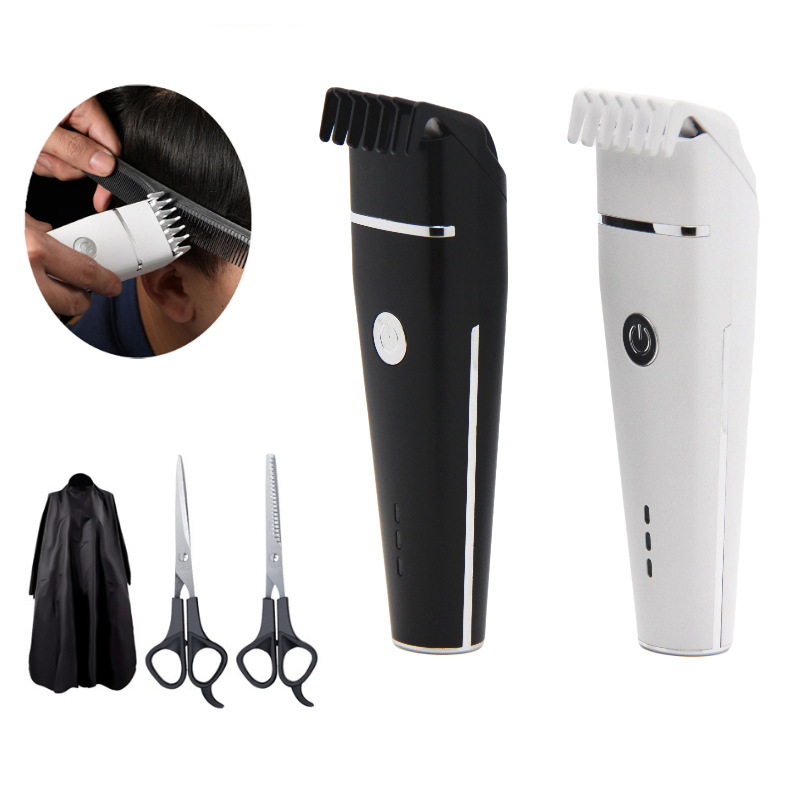
Importing hair clippers from China can be an attractive option for distributors, wholesalers, online retailers, barbershop suppliers, and private-label brands. China has a large manufacturing base for cordless hair clippers, professional barber clippers, beard trimmers, rechargeable trimmers, and other personal grooming products.
However, successful importing involves much more than finding a low factory price.
Buyers need to understand MOQ, product quality, OEM customization, battery requirements, shipping methods, import duties, customs clearance, lead times, and total landed costs before placing an order.
This guide explains the complete process of importing hair clippers from China and provides a practical checklist for international buyers.
1. Define the Hair Clipper You Want to Import
Before contacting manufacturers, decide what type of product you need.
Common products include:
- Cordless hair clippers
- Professional barber clippers
- Rechargeable hair clippers
- Beard trimmers
- T-blade trimmers
- Hair and beard grooming kits
- Pet grooming clippers
- Private-label hair clippers
Your target market determines the appropriate specifications.
For example, professional barbers may prioritize:
- High motor torque
- Sharp blades
- Long battery life
- Low vibration
- Durable construction
- Comfortable grip
Home users may care more about:
- Price
- Appearance
- Ease of use
- Lightweight design
- Charging convenience
Define your target customer before choosing a product.
2. Find Chinese Hair Clipper Manufacturers
You can find potential suppliers through:
- B2B marketplaces
- Chinese manufacturing directories
- Industry exhibitions
- Supplier websites
- Sourcing agents
- Industry networks
- Search engines
Useful search terms include:
hair clipper manufacturer China
professional hair clipper factory China
cordless hair clipper manufacturer
hair clipper OEM China
private label hair clippers China
Do not assume that every company listed online is a factory.
Shortlist several suppliers and verify their manufacturing capabilities before placing an order.
3. Verify the Manufacturer
Before making a payment, collect basic supplier information.
Ask for:
- Company name
- Factory location
- Business information
- Manufacturing experience
- Product catalogue
- Production capacity
- Factory photographs
- Production videos
- Quality-control procedures
- Product certifications
- Export experience
For larger orders, consider a factory inspection.
A live video tour can also help you see whether the supplier actually has production facilities.
Ask them to show:
- Production lines
- Assembly areas
- Testing equipment
- QC stations
- Packaging area
- Finished products
- Warehouse
4. Request Product Samples
Do not place a large order based only on product photos.
Request samples from several manufacturers.
Evaluate:
Motor
- Power
- Torque
- Noise
- Vibration
- Heat
Blade
- Sharpness
- Material
- Alignment
- Cutting performance
Battery
- Capacity
- Runtime
- Charging time
- Charging stability
Housing
- Material
- Surface finish
- Assembly quality
- Ergonomics
Accessories
- Guide combs
- Cleaning brush
- Blade oil
- Charging cable
- Protective cap
- Storage case
Testing samples is one of the most important steps in the importing process.
5. Understand Hair Clipper MOQ
MOQ means Minimum Order Quantity.
Different manufacturers may have different MOQs.
For example:
| Product Type | Typical MOQ Situation |
|---|---|
| Standard model | Lower MOQ |
| Logo customization | Low to moderate MOQ |
| Custom packaging | Moderate MOQ |
| Custom color | Moderate MOQ |
| Custom housing | Higher MOQ |
| New product development | Higher MOQ |
There is no universal MOQ for all Chinese hair clipper factories.
Always ask for separate MOQs for:
- Product
- Logo
- Color
- Packaging
- Accessories
- Custom mold
6. Start With a Controlled First Order
If you are a new importer, avoid buying an unnecessarily large quantity.
A controlled first order allows you to test:
- Product quality
- Customer demand
- Shipping process
- Customs clearance
- Packaging
- Supplier reliability
Once the product sells successfully, you can increase the order volume.
A larger order may reduce the unit price, but excessive inventory can create financial risk.
7. Understand Hair Clipper Pricing
The factory price depends on many factors.
Major cost factors include:
- Motor
- Battery
- Blade
- Housing
- Electronics
- Display
- Accessories
- Packaging
- Logo
- Order quantity
- Certification requirements
Indicative factory-level ranges can vary considerably:
| Product | Approximate Factory Price |
|---|---|
| Basic clipper | $5–$10 |
| Basic rechargeable clipper | $7–$15 |
| Mid-range cordless clipper | $12–$25 |
| Professional clipper | $18–$40 |
| Premium clipper | $30–$60+ |
These are general reference ranges rather than fixed quotations.
The exact price should be obtained from the manufacturer based on your required specifications.
8. Compare Equivalent Specifications
Do not compare prices based on photographs alone.
Suppose:
Factory A: $12
Factory B: $17
Factory C: $21
Factory A may use:
- Basic motor
- Smaller battery
- Standard blade
- Simple packaging
Factory C may include:
- High-torque motor
- Larger battery
- Premium blade
- Digital display
- Customized packaging
The $12 product is not necessarily cheaper when compared with the same specification.
Always create a comparison sheet.
9. Check Motor Quality
The motor determines much of the clipper’s cutting performance.
Ask the manufacturer for:
- Motor type
- Speed
- Torque
- Power
- Noise
- Vibration
- Operating temperature
- Expected service life
Professional products may require stronger and more stable motors than basic consumer models.
Test the clipper with different hair types if possible.
10. Check Blade Quality
Blade performance directly affects customer satisfaction.
Check:
- Blade material
- Blade hardness
- Sharpness
- Alignment
- Cutting length
- Adjustment mechanism
- Replacement availability
During testing, check whether the clipper:
- Cuts smoothly
- Pulls hair
- Vibrates excessively
- Becomes too hot
- Maintains performance during continuous use
11. Check Battery Performance
For cordless clippers, battery specifications are particularly important.
Ask about:
- Battery chemistry
- Capacity
- Voltage
- Operating time
- Charging time
- Battery protection
- Charging protection
Do not rely solely on the advertised capacity.
Test actual runtime.
For example, if the manufacturer claims two hours of operation, measure how long the sample actually operates under realistic conditions.
12. Pay Attention to Lithium Battery Shipping
Many cordless hair clippers contain lithium-ion batteries.
Battery products may have additional transportation requirements.
Before arranging shipment, ask for relevant battery information and documentation.
Depending on the shipment and destination, the carrier or freight forwarder may require specific documentation or packaging.
You should confirm:
- Battery type
- Battery capacity
- Watt-hour information
- Applicable test documentation
- Packaging requirements
- Shipping restrictions
Do not assume that every carrier accepts battery-containing products under exactly the same conditions.
13. Choose the Right Shipping Method
There are several common ways to ship hair clippers internationally.
Express Shipping
Best for:
- Samples
- Small orders
- Urgent shipments
Advantages:
- Fast
- Convenient
- Door-to-door options
Disadvantage:
- Higher cost per kilogram
Air Freight
Suitable for:
- Medium-sized shipments
- Time-sensitive orders
Advantages:
- Faster than sea freight
- Suitable for relatively urgent commercial shipments
Disadvantages:
- Higher cost than sea freight
Sea Freight
Suitable for:
- Large orders
- Bulk shipments
- Lower-cost transportation
Advantages:
- Competitive cost for larger shipments
Disadvantages:
- Longer transit time
14. Consider Door-to-Door Shipping
For smaller importers, door-to-door transportation can simplify the process.
Depending on the route and shipping arrangement, the service may include:
China pickup → Export customs → International transportation → Import customs → Local delivery
Some logistics solutions may also offer tax-inclusive or DDP arrangements.
However, you should always confirm exactly what is included.
Ask:
- Is customs clearance included?
- Are import duties included?
- Are import taxes included?
- Is destination delivery included?
- Are additional charges possible?
A low shipping quotation may exclude important destination costs.
15. Understand Incoterms
When buying from China, clarify the trade term used in the quotation.
Common terms include:
- EXW
- FOB
- CIF
- DAP
- DDP
For example, an EXW price generally does not represent the complete cost of transporting the goods internationally.
A DDP arrangement may provide a more comprehensive door-to-door solution, but you should confirm what taxes, customs clearance, and delivery charges are actually included.
Always make sure both the buyer and seller understand the same trade term.
16. Calculate the Total Landed Cost
Your real importing cost is more than the factory price.
A simplified formula is:
Product Cost + OEM + Packaging + Inspection + Inland Freight + International Freight + Duties + Taxes + Local Delivery = Landed Cost
For example:
1,000 hair clippers
Factory price:
$15 × 1,000 = $15,000
Other costs:
$4,500
Estimated total:
$19,500
Landed cost per unit:
$19.50
This $19.50 figure is more useful for calculating your actual profit margin than the $15 factory price.
17. Check Import Duties and Taxes
Import duties and taxes depend on the destination country and applicable customs classification.
Before ordering, determine:
- Applicable customs classification
- Import duty
- Import VAT/GST
- Customs clearance charges
- Brokerage fees
- Local delivery costs
Do not assume the factory knows your country’s exact tax requirements.
Your customs broker, freight forwarder, or relevant customs authority can help verify the applicable requirements.
18. Prepare the Correct Documents
Commercial shipments may require documents such as:
- Commercial invoice
- Packing list
- Shipping documents
- Product specifications
- Certificates where applicable
- Battery documentation where applicable
- Customs information
The exact documentation depends on the destination country, product configuration, and shipping method.
Make sure the information on the commercial documents matches the actual goods.
19. Check Packaging Before Shipment
Packaging needs to protect the hair clippers during international transportation.
Check:
- Retail box
- Inner protection
- Outer carton
- Carton strength
- Product labels
- Barcode
- User manual
- Accessories
Also request:
- Carton dimensions
- Gross weight
- Net weight
- Units per carton
This information is important for freight calculations.
20. Check Product Labeling
Depending on your target market, the product and packaging may need specific information.
Potential requirements can involve:
- Brand
- Model
- Manufacturer information
- Electrical information
- Battery information
- Safety information
- Importer information
- Required regulatory markings
Requirements vary by country.
Confirm the applicable rules before printing thousands of retail packages.
21. Check Certifications Before Importing
Certification and compliance requirements vary according to the destination market and product configuration.
Ask the manufacturer for relevant:
- Test reports
- Declarations
- Safety documentation
- EMC documentation where applicable
- Battery documentation
- Other market-specific compliance documents
Verify that the documentation relates to the exact product model you are importing.
A document for a different model may not be sufficient.
22. Consider Pre-Shipment Inspection
For larger orders, inspection before shipment can reduce risk.
An inspection can check:
- Product quantity
- Appearance
- Function
- Battery
- Motor
- Blade
- Accessories
- Packaging
- Labels
You can establish acceptable quality standards before production.
For example:
Product model: Approved sample
Battery: Must meet agreed specification
Accessories: Must be complete
Packaging: Must match approved artwork
Defect level: Must remain within the agreed acceptance standard
23. Check Production Lead Time
Production time depends on:
- Order quantity
- Product availability
- Customization
- Packaging
- Component availability
- Factory production schedule
Standard products are generally faster than completely customized products.
An OEM order may involve:
Artwork → Sample → Approval → Packaging → Production → Inspection → Shipment
Ask the factory to provide a realistic timeline for each stage.
24. Check the Manufacturer’s Warranty
Before ordering, clarify:
- Warranty period
- Covered defects
- Replacement policy
- Repair policy
- Spare parts
- Warranty claim procedure
For professional clippers, ask whether the manufacturer can supply replacement blades, batteries, charging cables, and other components.
25. Check Spare Parts Availability
Spare parts can reduce after-sales costs.
Useful replacement components include:
- Blades
- Batteries
- Guide combs
- Charging cables
- Switches
- Covers
- Screws
- Other internal components
If you are building a long-term brand, discuss spare-parts supply before the first bulk order.
26. Protect Your Brand During OEM Production
If you are creating your own brand, control your:
- Logo
- Packaging design
- Product artwork
- User manual
- Mold
- Customized product design
For larger OEM projects, use appropriate written agreements covering important intellectual-property and confidentiality matters.
Clearly document who owns custom molds and designs.
27. Avoid Common Importing Mistakes
Mistake 1: Choosing Only by Price
The cheapest product may have lower-quality components.
Mistake 2: Skipping Samples
You cannot properly evaluate product quality from photographs alone.
Mistake 3: Ignoring Battery Requirements
Battery-containing products can have additional transportation considerations.
Mistake 4: Forgetting Import Taxes
The factory quotation is not your final landed cost.
Mistake 5: Ordering Too Much
Large MOQs can create inventory risk.
Mistake 6: Not Confirming Packaging
Incorrect packaging can create delays and additional costs.
Mistake 7: Not Defining Quality Standards
Disputes are more likely when the product requirements are not documented.
28. A Simple Hair Clipper Importing Process
You can follow this workflow:
Step 1 — Define the Product
Determine the type, specifications, target market, and estimated order quantity.
Step 2 — Find Manufacturers
Create a list of potential Chinese factories.
Step 3 — Request Quotations
Send the same specifications to each supplier.
Step 4 — Compare Suppliers
Compare:
- Price
- MOQ
- Quality
- OEM
- Certifications
- Lead time
- Production capacity
Step 5 — Order Samples
Test several products.
Step 6 — Select the Manufacturer
Choose the supplier with the best overall value.
Step 7 — Confirm Specifications
Approve the final product specification.
Step 8 — Confirm Packaging
Approve packaging artwork and accessories.
Step 9 — Place the Order
Sign the appropriate purchase documentation and make payment according to agreed terms.
Step 10 — Production
Monitor production progress.
Step 11 — Inspection
Conduct inspection before shipment when appropriate.
Step 12 — Shipping
Choose the appropriate transportation method.
Step 13 — Customs Clearance
Complete import procedures in the destination country.
Step 14 — Local Delivery
Deliver the goods to your warehouse or fulfillment location.
29. Example Import Budget
Suppose you plan to import:
2,000 professional cordless hair clippers
Estimated product cost:
$16 × 2,000 = $32,000
Possible additional expenses:
| Cost | Example |
|---|---|
| Product | $32,000 |
| OEM/packaging | $2,000 |
| Inspection | $500 |
| Inland transportation | $500 |
| International shipping | $3,000 |
| Other import costs | $4,000 |
| Estimated total | $42,000 |
Estimated landed cost:
$42,000 ÷ 2,000 = $21 per unit
This is an illustration only. Actual costs depend heavily on the product, destination, shipping method, taxes, and order details.
30. How to Reduce Your Import Cost
Several strategies can help control costs.
Buy the Right Quantity
Larger orders can reduce unit prices, but do not create unnecessary inventory.
Use Existing Models
Existing products usually require less development than completely new designs.
Simplify Packaging
Start with practical packaging instead of expensive gift boxes if your market does not require them.
Consolidate Shipments
Combining goods may improve transportation efficiency.
Compare Shipping Methods
Calculate both cost and transit time.
Compare Multiple Manufacturers
Do not rely on one quotation.
Negotiate Based on Total Order Value
Discuss product price, accessories, packaging, MOQ, and shipping together.
31. How to Choose the Right Chinese Hair Clipper Manufacturer
A good manufacturer should provide:
- Stable product quality
- Transparent specifications
- Competitive pricing
- Reasonable MOQ
- OEM capabilities
- Quality control
- Production capacity
- Reliable lead times
- Appropriate documentation
- Spare parts
- Warranty support
- Good communication
The cheapest factory is not necessarily the best factory.
For long-term business, consistency is often more valuable than saving a small amount on the initial order.
32. Final Import Checklist
Before placing your order, make sure you have confirmed:
Product
- [ ] Model
- [ ] Motor
- [ ] Battery
- [ ] Blade
- [ ] Product dimensions
- [ ] Product weight
- [ ] Accessories
OEM
- [ ] Logo
- [ ] Color
- [ ] Packaging
- [ ] Manual
- [ ] Labels
Commercial
- [ ] MOQ
- [ ] Unit price
- [ ] Trade term
- [ ] Payment terms
- [ ] Production lead time
- [ ] Warranty
Quality
- [ ] Sample tested
- [ ] Quality standards confirmed
- [ ] QC procedure confirmed
- [ ] Inspection arranged if required
Shipping
- [ ] Carton dimensions
- [ ] Gross weight
- [ ] Shipping method
- [ ] Battery requirements
- [ ] Customs documents
- [ ] Import duties
- [ ] Taxes
- [ ] Local delivery
Conclusion
Importing hair clippers from China can be a practical way to source products for wholesale, retail, barber equipment businesses, and private-label brands.
However, successful importing requires careful planning.
The key areas are MOQ, product quality, manufacturer verification, OEM customization, battery requirements, shipping, customs clearance, import taxes, documentation, inspection, and total landed cost.
A reliable purchasing process looks like this:
Find manufacturers → Compare specifications → Order samples → Test quality → Confirm OEM requirements → Negotiate price → Place a controlled order → Inspect goods → Arrange shipping → Complete customs clearance.
Do not focus only on the factory price.
The real objective is to obtain a product with the right quality, cost, compliance, delivery time, and market positioning.
If you are importing hair clippers for the first time, starting with a proven existing model and a manageable MOQ can reduce risk. Once sales are established, you can move toward deeper OEM customization, larger orders, exclusive designs, and a stronger long-term relationship with the manufacturer.
FAQ
How much does it cost to import hair clippers from China?
Costs vary according to product specifications, order quantity, customization, shipping method, duties, taxes, and destination charges. Basic factory products can start at several dollars per unit, while professional and customized products can cost considerably more.
What is the MOQ for importing hair clippers from China?
MOQ varies by factory and product. Standard models may have relatively low MOQs, while custom colors, packaging, molds, and fully customized products generally require higher quantities.
Can I import hair clippers with my own logo?
Yes. Many Chinese manufacturers offer private-label and OEM services, including logo printing or engraving, custom colors, packaging, manuals, and accessories.
How do I check the quality before placing a large order?
Order samples and test motor performance, cutting ability, blade quality, battery runtime, charging, heat, vibration, appearance, accessories, and packaging. For larger orders, consider pre-shipment inspection.
Are cordless hair clippers difficult to ship internationally?
Cordless clippers containing lithium batteries may have additional transportation requirements. Confirm the battery specifications and required documentation with the manufacturer and your carrier or freight forwarder before shipping.
Which shipping method is best?
Express is generally suitable for samples and small urgent shipments. Air freight can work for time-sensitive commercial cargo, while sea freight is often more economical for larger shipments. The best option depends on weight, volume, destination, urgency, and battery requirements.
What is landed cost?
Landed cost is the estimated total cost of getting the goods to your destination, including product cost, customization, shipping, duties, taxes, customs-related charges, and local delivery.
Should I use DDP shipping?
DDP can simplify importing because it may combine transportation, customs clearance, and certain import charges into one service. However, you should confirm exactly what is included in the quotation before choosing DDP.
How can I reduce the cost of importing hair clippers?
You can control costs by selecting an existing model, optimizing the product configuration, negotiating based on volume, avoiding unnecessary packaging, comparing manufacturers, and choosing an appropriate shipping method.
What documents do I need to import hair clippers?
Requirements depend on the destination country and shipping method. Common commercial documents can include invoices, packing lists, shipping documents, product information, and applicable compliance or battery documentation.
Should I inspect the goods before shipment?
For larger orders, pre-shipment inspection is a useful risk-control measure. It can help verify quantity, appearance, functionality, packaging, accessories, and compliance with the agreed specifications.


No reply content