
China Surfboard and Snowboard Manufacturer Co., Ltd.
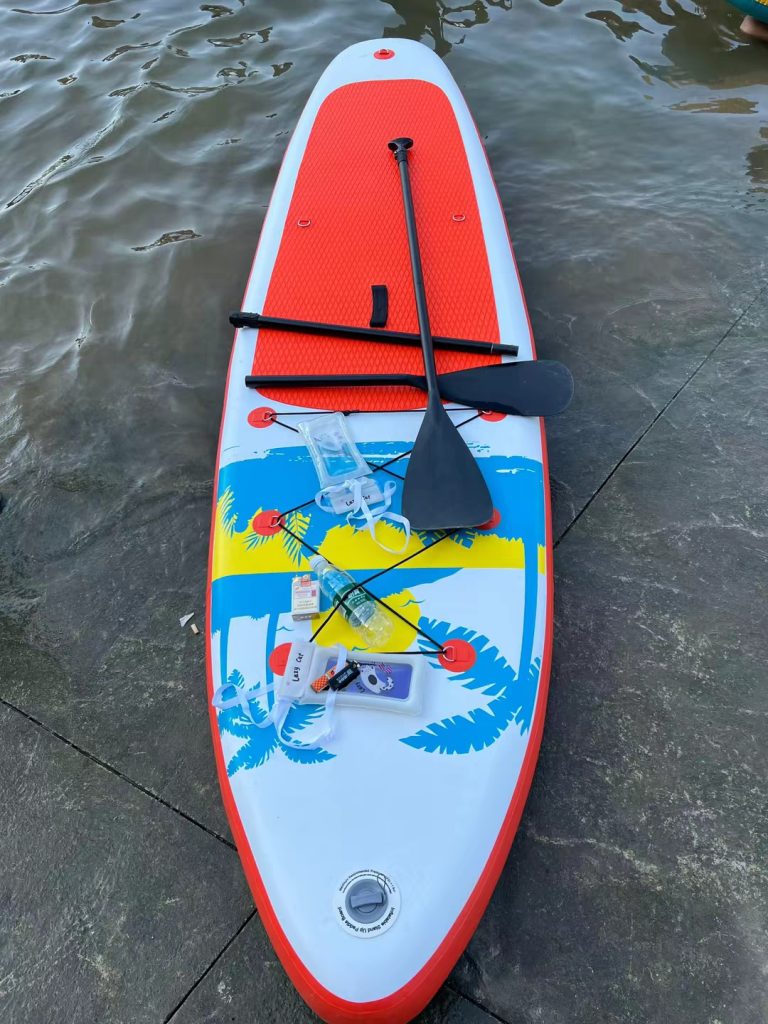


Importing surfboards from China can be an attractive option for retailers, distributors, surf schools, wholesalers, sporting-goods businesses, and private-label brands.
China has a large manufacturing base capable of producing different types of surfboards, including foam boards, fiberglass boards, epoxy boards, longboards, shortboards, funboards, and customized OEM products.
However, importing successfully requires more than finding a factory with a low price.
Buyers need to understand MOQ, product specifications, quality control, packaging, shipping, customs clearance, taxes, lead times, and total landed costs before placing an order.
This guide explains the process step by step.
1. Why Import Surfboards from China?
International buyers may choose Chinese manufacturers because they can offer:
-
Competitive factory pricing
-
OEM production
-
Private-label customization
-
Different construction options
-
Custom graphics
-
Custom packaging
-
Large production capacity
-
Flexible product development
However, the actual benefits depend on the manufacturer you select.
The right supplier should be evaluated based on both price and manufacturing capability.
2. Choose the Right Surfboard Type
Before contacting suppliers, define exactly what you want to import.
Common options include:
Type |
Typical Buyer |
|---|---|
Foam surfboard |
Beginners and surf schools |
Shortboard |
Performance surfers |
Longboard |
Recreational and traditional surfing |
Funboard |
Beginners and intermediate users |
Fish board |
Small-wave applications |
Epoxy surfboard |
Recreational and performance markets |
Fiberglass surfboard |
Traditional surfboard market |
Custom OEM board |
Private-label brands |
Do not ask a factory only for “surfboards.”
Give the manufacturer detailed specifications.
3. Define Your Target Market
Your target market should determine the product you import.
Consider:
-
Customer skill level
-
Typical wave conditions
-
Board size
-
Product price
-
Retail positioning
-
Climate
-
Distribution channel
-
Customer expectations
A surf school may prioritize durable foam boards, while a performance-oriented brand may require more precise shaping and lightweight construction.
4. Find Chinese Surfboard Manufacturers
Use specific search terms such as:
-
Surfboard manufacturer China
-
Surfboard factory China
-
Surfboard OEM China
-
Private label surfboard manufacturer
-
Custom surfboard factory
-
Epoxy surfboard manufacturer China
-
Foam surfboard factory China
Look for manufacturers that have actual experience producing the type of surfboard you need.
5. Shortlist Several Suppliers
Do not depend on one quotation.
Shortlist around 5–10 potential suppliers and compare:
-
Product range
-
Factory experience
-
MOQ
-
Unit price
-
Sample cost
-
OEM capability
-
Production capacity
-
Lead time
-
Packaging
-
Quality control
-
Export experience
Using multiple suppliers gives you a better understanding of the market.
6. Verify the Manufacturer
Before placing a significant order, verify the supplier.
Ask for:
-
Company information
-
Factory address
-
Factory photographs
-
Production videos
-
Production capacity
-
OEM experience
-
Quality-control procedures
For larger orders, consider a live factory video inspection or independent factory inspection.
Ask to see:
-
Raw materials
-
Shaping
-
Lamination
-
Sanding
-
Painting
-
Graphics
-
Final inspection
-
Packaging
-
Finished goods
7. Understand MOQ
MOQ means Minimum Order Quantity.
MOQ varies according to:
-
Existing model
-
Custom logo
-
Custom graphics
-
Custom color
-
Custom packaging
-
Custom shape
-
New product development
A typical purchasing structure might look like:
Product Type |
MOQ Tendency |
|---|---|
Existing model |
Lower |
Logo customization |
Low–Moderate |
Custom graphics |
Moderate |
Custom packaging |
Moderate |
Custom shape |
Higher |
New product development |
Higher |
Always ask the manufacturer for the exact MOQ for your project.
8. Can You Buy Small Quantities?
Sometimes.
If you are a new importer, ask whether the manufacturer can provide:
-
Sample orders
-
Small trial orders
-
Mixed models
-
Existing-stock products
-
Low-MOQ private label
However, lower quantities usually result in higher unit costs.
The manufacturer may also charge additional fees for customized products.
9. Compare Factory Prices
Surfboard prices vary significantly.
General factory-price reference ranges can be approximately:
Product |
Approximate Factory Price |
|---|---|
Basic foam board |
$40–$90 |
Beginner board |
$60–$120 |
Basic fiberglass board |
$80–$150 |
Epoxy board |
$100–$220 |
Mid-range performance board |
$150–$300 |
Premium/custom board |
$250–$500+ |
These are general reference ranges, not fixed quotations.
Your actual price depends on:
-
Size
-
Construction
-
Core
-
Fiberglass
-
Resin
-
Hardware
-
Graphics
-
Packaging
-
Quantity
10. Request a Detailed Quotation
Your RFQ should specify:
-
Board type
-
Length
-
Width
-
Thickness
-
Volume
-
Core material
-
Fiberglass
-
Resin
-
Construction
-
Fin system
-
Accessories
-
Graphics
-
Logo
-
Packaging
-
Quantity
-
Destination
Ask the supplier to quote all costs separately where possible.
11. Check the Core Material
Common core materials include:
-
EPS
-
PU
-
Other foam constructions
Ask for:
-
Core type
-
Foam density
-
Thickness
-
Stringer
-
Reinforcement
Material specifications are important when comparing different manufacturers.
12. Check Fiberglass
Ask the factory for the exact fiberglass specification.
Important factors include:
-
Fiberglass weight
-
Number of layers
-
Reinforcement
-
Lamination process
Do not compare prices if the factories are using different fiberglass specifications.
13. Check Resin
Ask which resin system is used.
For example:
-
Polyester
-
Epoxy
The resin system can affect construction characteristics, product positioning, and price.
14. Check Board Construction
Confirm the complete construction specification.
For example:
EPS + epoxy + fiberglass
is different from:
PU + polyester + fiberglass
The two products may have different:
-
Weight
-
Durability
-
Flex characteristics
-
Manufacturing costs
Always document the construction method.
15. Order Samples
Before a large order, order samples.
Check:
-
Dimensions
-
Weight
-
Shape
-
Rocker
-
Rails
-
Bottom
-
Lamination
-
Surface
-
Hardware
-
Graphics
If possible, test the board in actual surfing conditions.
16. Approve a Final Sample
For OEM orders, the final approved sample should become the production reference.
Keep records of:
-
Photos
-
Measurements
-
Weight
-
Construction
-
Graphics
-
Hardware
-
Packaging
This can help reduce disputes later.
17. Establish Quality Standards
Create a written inspection standard.
For example:
Item |
Requirement |
|---|---|
Length |
Approved specification |
Width |
Approved specification |
Thickness |
Approved specification |
Weight |
Defined tolerance |
Graphics |
Approved artwork |
Logo |
Approved position |
Fin boxes |
Correct position |
Leash plug |
Correct position |
Surface |
No major defects |
Packaging |
Approved specification |
Do this before mass production.
18. Inspect the Production
For larger orders, consider inspection before shipment.
Inspect:
Quantity
Make sure the number of boards is correct.
Dimensions
Check length, width, and thickness.
Weight
Check whether the boards are within the agreed tolerance.
Appearance
Look for:
-
Scratches
-
Dents
-
Cracks
-
Bubbles
-
Resin defects
-
Poor sanding
-
Uneven graphics
Hardware
Check:
-
Fin boxes
-
Fins
-
Leash plugs
-
Traction pads
Packaging
Check that the boards are properly protected.
19. Choose the Right Packaging
Surfboards are large and vulnerable to damage.
Packaging should protect:
-
Nose
-
Tail
-
Rails
-
Deck
-
Bottom
-
Fins
Possible materials include:
-
Foam protection
-
Bubble wrap
-
Board bags
-
Corner protection
-
Cartons
-
Pallets
Ask the factory to provide package dimensions before shipping.
20. Understand Shipping Volume
Surfboards are relatively lightweight compared with their physical dimensions.
Therefore, freight costs can be strongly influenced by volume.
Before ordering, obtain:
-
Carton length
-
Carton width
-
Carton height
-
Number of boards per carton
-
Gross weight
-
Total volume
These figures allow you to calculate transportation costs more accurately.
21. Sea Freight
Sea freight is often worth considering for commercial surfboard orders.
Advantages:
-
Lower cost for large shipments
-
Suitable for bulky cargo
-
Good for larger order quantities
Disadvantages:
-
Longer transit time
-
More complicated logistics
For large surfboards, compare the total sea-freight cost with other transportation options.
22. Air Freight
Air freight can be useful for:
-
Samples
-
Urgent orders
-
Small commercial shipments
The major disadvantage is cost.
Because surfboards are long and bulky, dimensional weight can have a significant impact.
23. Dimensional Weight
Some air-freight services calculate charges using dimensional weight.
A commonly used formula is:
Length × Width × Height ÷ 5000
However, the divisor can vary depending on the carrier and service.
Always confirm the actual calculation method with your freight provider.
24. LCL vs FCL Sea Freight
For sea transportation, buyers may consider:
LCL — Less than Container Load
Suitable when your cargo does not fill a container.
Advantages:
-
Suitable for smaller shipments
-
Lower initial cargo volume requirement
Disadvantages:
-
More handling
-
Potentially higher cost per cubic meter
FCL — Full Container Load
Suitable for larger orders.
Advantages:
-
Dedicated container
-
Less cargo handling
-
Potentially lower cost per unit at higher volumes
Disadvantages:
-
Requires more cargo
Calculate both options before choosing.
25. Calculate Your Landed Cost
Do not calculate profitability using only the factory price.
A more realistic formula is:
Landed Cost = Product Cost + Customization + Packaging + Inspection + Inland Freight + International Freight + Duties + Taxes + Customs Fees + Local Delivery
For example:
500 surfboards × $140:
$70,000 product cost
Additional expenses:
-
Customization: $2,000
-
Packaging: $1,500
-
Inspection: $500
-
Inland transportation: $700
-
International freight: $6,500
-
Import-related costs: $4,000
Estimated total:
$85,200
Estimated landed cost:
$170.40 per board
This is only an example. Actual costs depend on your product, shipping route, country, taxes, and supplier.
26. Don’t Forget Import Duties and Taxes
Import duties and taxes vary by destination.
Before ordering, check the applicable:
-
HS classification
-
Import duty
-
VAT/GST or equivalent
-
Customs fees
-
Brokerage fees
-
Other local charges
Do not assume that the factory price represents the final cost.
If you use a freight forwarder or customs broker, ask for a detailed breakdown of import-related charges.
27. Choose Suitable Incoterms
Your supplier may offer different trade terms, such as:
-
EXW
-
FOB
-
CIF
-
DAP
-
DDP
Each term determines which party is responsible for different parts of transportation and costs.
For example:
EXW generally leaves more transportation responsibility with the buyer.
FOB typically covers the seller’s responsibilities up to the agreed loading point.
DDP can include delivery to the agreed destination and import-related responsibilities, subject to the exact arrangement.
Always confirm exactly what is included in the quotation.
28. Compare Shipping Quotations Carefully
If you receive several freight quotations, check whether they include the same services.
Compare:
-
Origin charges
-
Port charges
-
Ocean freight
-
Destination charges
-
Customs clearance
-
Duties and taxes
-
Local delivery
-
Documentation fees
A cheaper quotation may exclude important charges.
29. Check Production Lead Time
A typical customized order can involve:
Design → Sample → Approval → Materials → Production → QC → Packaging → Shipping
Ask the factory for:
-
Sample lead time
-
Production lead time
-
Packaging time
-
Estimated shipping schedule
Do not promise your customers a delivery date until the complete timeline is understood.
30. Check Payment Terms
Confirm:
-
Deposit percentage
-
Balance payment
-
Payment method
-
Payment timing
-
Conditions for starting production
For customized products, the factory may require a deposit before purchasing materials.
The exact payment structure should be agreed before production.
31. Protect Your Brand
If you are importing private-label surfboards, protect your:
-
Brand name
-
Logo
-
Graphics
-
Product artwork
-
CAD files
-
Packaging design
For significant OEM projects, establish appropriate written agreements concerning confidentiality and intellectual-property ownership.
32. Check After-Sales Service
Ask the supplier what happens if you receive:
-
Damaged boards
-
Defective products
-
Incorrect graphics
-
Wrong specifications
-
Missing accessories
-
Packaging damage
Clarify:
-
Warranty
-
Replacement policy
-
Repair policy
-
Evidence requirements
-
Replacement shipping responsibilities
33. Common Importing Mistakes
Mistake 1: Choosing Only by Price
A cheap board may use different materials or have weaker quality control.
Mistake 2: Skipping Samples
You should verify the product before committing to a large order.
Mistake 3: Not Checking Packaging
A good board can still arrive damaged if it is poorly packed.
Mistake 4: Ignoring Dimensional Freight Costs
Large surfboards can create significant shipping costs.
Mistake 5: Not Calculating Landed Cost
Factory price is not your actual cost.
Mistake 6: Ordering Too Much
Large quantities can create excess inventory.
Mistake 7: Failing to Define Quality Standards
Unclear specifications can cause disputes.
Mistake 8: Not Confirming What Shipping Terms Include
Always clarify exactly which costs and responsibilities are included.
34. How Many Surfboards Should You Order?
There is no universal quantity.
Consider:
-
Sales forecast
-
Available capital
-
Warehouse space
-
MOQ
-
Unit-price discounts
-
Shipping costs
-
Product seasonality
-
Market demand
For a new brand, a smaller test order can reduce inventory risk.
Once the product is proven, increase the order volume gradually.
35. How to Reduce Import Costs
You can potentially reduce costs by:
Comparing Multiple Factories
Request comparable quotations.
Using Existing Designs
Existing models can reduce development costs.
Increasing Order Quantity Carefully
Larger orders may reduce unit costs.
Optimizing Packaging
Use protective but economical packaging.
Comparing Sea Freight Options
Compare LCL and FCL where appropriate.
Consolidating Shipments
Combining cargo may improve logistics efficiency.
Negotiating the Complete Order
Discuss:
-
Product
-
Logo
-
Packaging
-
Accessories
-
Shipping
instead of focusing only on the board price.
36. How to Select a Reliable Chinese Surfboard Factory
Evaluate each supplier based on:
Factor |
Importance |
|---|---|
Product quality |
Very High |
Manufacturing experience |
Very High |
OEM capability |
High |
Price |
High |
MOQ |
High |
Production capacity |
High |
Lead time |
High |
Packaging |
High |
Communication |
High |
Export experience |
High |
A factory with the lowest price may not be the best choice.
37. Recommended Import Process
A practical process is:
Step 1 — Define Your Product
Determine the board type, specifications, materials, and target price.
Step 2 — Find Manufacturers
Create a shortlist.
Step 3 — Request Quotations
Send identical specifications to each supplier.
Step 4 — Compare Suppliers
Evaluate price, quality, MOQ, capacity, OEM capability, and lead time.
Step 5 — Order Samples
Test the product.
Step 6 — Verify the Factory
Confirm manufacturing capability.
Step 7 — Approve the Sample
Document the final specification.
Step 8 — Place the Order
Start with a manageable quantity.
Step 9 — Inspect Production
Check quality before shipment.
Step 10 — Arrange Shipping
Choose the appropriate transportation method.
Step 11 — Complete Customs Clearance
Prepare the required import documents and pay applicable charges.
Step 12 — Receive and Inspect
Check the shipment when it arrives.
38. Documents You May Need
International shipments commonly involve documents such as:
-
Commercial invoice
-
Packing list
-
Bill of lading or air waybill
-
Purchase order
-
Shipping documents
-
Customs documentation
The exact requirements depend on the destination country, shipping method, product classification, and trade arrangement.
Confirm requirements with your customs broker or relevant authorities before shipment.
39. A Practical Import Cost Example
Suppose a retailer purchases:
300 epoxy surfboards
Factory price:
$160 per board
Product cost:
$48,000
Additional estimated costs:
Cost |
Example |
|---|---|
OEM customization |
$1,200 |
Packaging |
$900 |
Inspection |
$400 |
Inland transportation |
$500 |
International freight |
$4,500 |
Import-related costs |
$3,000 |
Estimated total |
$58,500 |
Estimated landed cost:
$58,500 ÷ 300 = $195 per board
If the retailer sells each board for $280, the initial difference is:
$280 − $195 = $85
However, this is not necessarily the final profit because operating expenses, marketing, warehouse costs, payment fees, returns, and other business expenses still need to be deducted.
40. Questions to Ask Before Importing
Send these questions to your supplier:
-
Are you a manufacturer or trading company?
-
How many years have you manufactured surfboards?
-
What surfboard types do you produce?
-
What construction methods are available?
-
What core material is used?
-
What fiberglass specification is used?
-
What resin is used?
-
What is the MOQ?
-
What is the sample cost?
-
Can you provide OEM/private-label production?
-
Can you customize the logo?
-
Can you customize graphics?
-
Can you customize packaging?
-
What accessories are available?
-
What is the production lead time?
-
What is your monthly capacity?
-
What quality-control procedures do you use?
-
What are the carton dimensions?
-
What is the gross weight?
-
What shipping terms do you offer?
-
What is the warranty policy?
-
What is the replacement policy?
41. Final Import Checklist
Before paying your supplier, confirm:
Supplier
-
[ ] Manufacturer verified
-
[ ] Factory experience checked
-
[ ] OEM capability verified
-
[ ] Production capacity checked
Product
-
[ ] Board type
-
[ ] Dimensions
-
[ ] Weight
-
[ ] Core
-
[ ] Fiberglass
-
[ ] Resin
-
[ ] Construction
-
[ ] Hardware
-
[ ] Graphics
-
[ ] Logo
Commercial
-
[ ] Unit price
-
[ ] MOQ
-
[ ] Sample cost
-
[ ] Packaging cost
-
[ ] Payment terms
-
[ ] Lead time
Logistics
-
[ ] Carton dimensions
-
[ ] Total volume
-
[ ] Gross weight
-
[ ] Shipping method
-
[ ] Freight cost
-
[ ] Incoterm
-
[ ] Customs clearance
-
[ ] Duties and taxes
-
[ ] Local delivery
Quality
-
[ ] Sample approved
-
[ ] Quality standard
-
[ ] Tolerances
-
[ ] Inspection plan
-
[ ] Warranty


No reply content