
Guangzhou Fishing Tackle Co., Ltd
China
How to Inspect Fishing Rod Quality Before Placing a Bulk Order
Buying fishing rods in bulk requires more than comparing prices and product photos. A rod may look attractive in a catalog but perform differently when assembled, loaded, transported, or used repeatedly. For importers, wholesalers, fishing tackle retailers, and private-label buyers, a structured quality inspection helps reduce defects, customer complaints, and unexpected costs.
Before confirming a large order, buyers should evaluate the rod’s materials, construction, components, finish, packaging, and consistency across samples. This guide explains practical checks that can be included in a supplier evaluation and pre-shipment inspection plan.
1. Start with a Clear Product Specification
A quality inspection is only useful when the buyer and supplier are checking against the same requirements. Before requesting samples or approving production, prepare a written specification for each rod model.
Depending on the product, the specification may include:
-
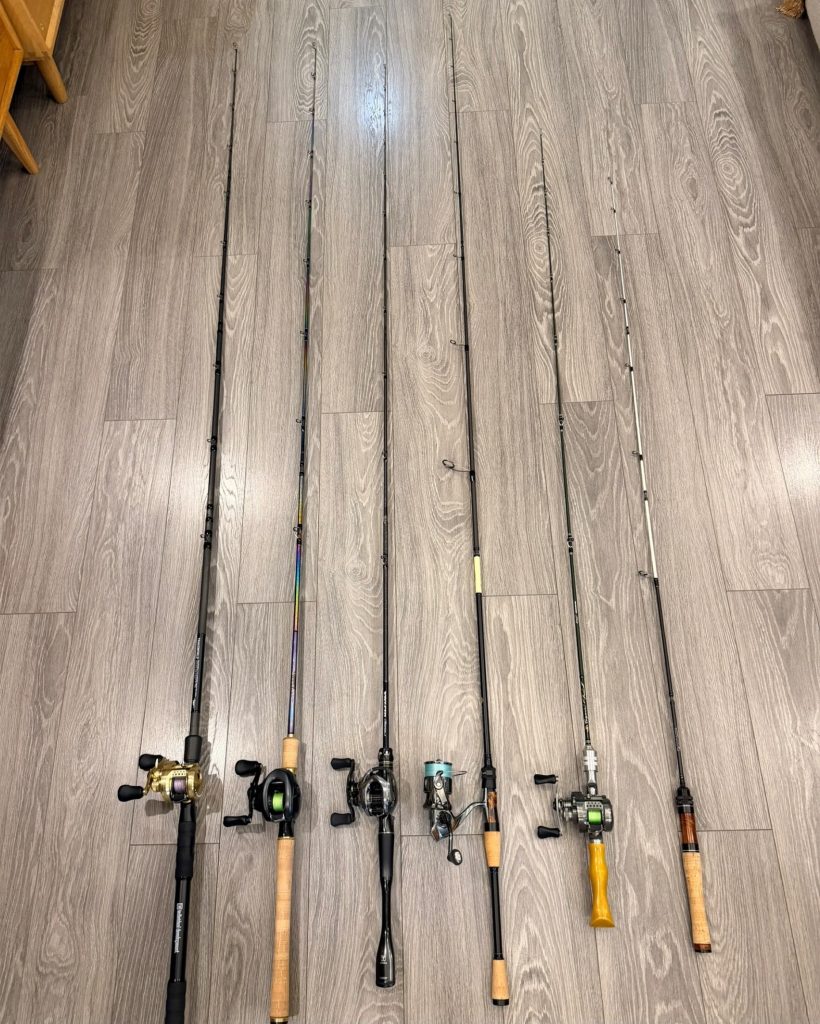
Rod type: spinning, casting, telescopic, surf, or other design
-
Intended fishing application
-
Overall length and section count
-
Closed length for telescopic or multi-section rods
-
Blank material and construction
-
Power and action, where applicable
-
Line rating and lure weight range, where applicable
-
Handle material and dimensions
-
Guide type, quantity, and placement
-
Reel seat design
-
Finish, color, logo, and decorative details
-
Included accessories and packaging requirements
Do not rely on descriptions such as “high quality” or “strong carbon rod” as the only acceptance criteria. Ask for measurable specifications or approved reference samples wherever possible.
2. Inspect the Rod Blank and Surface Finish
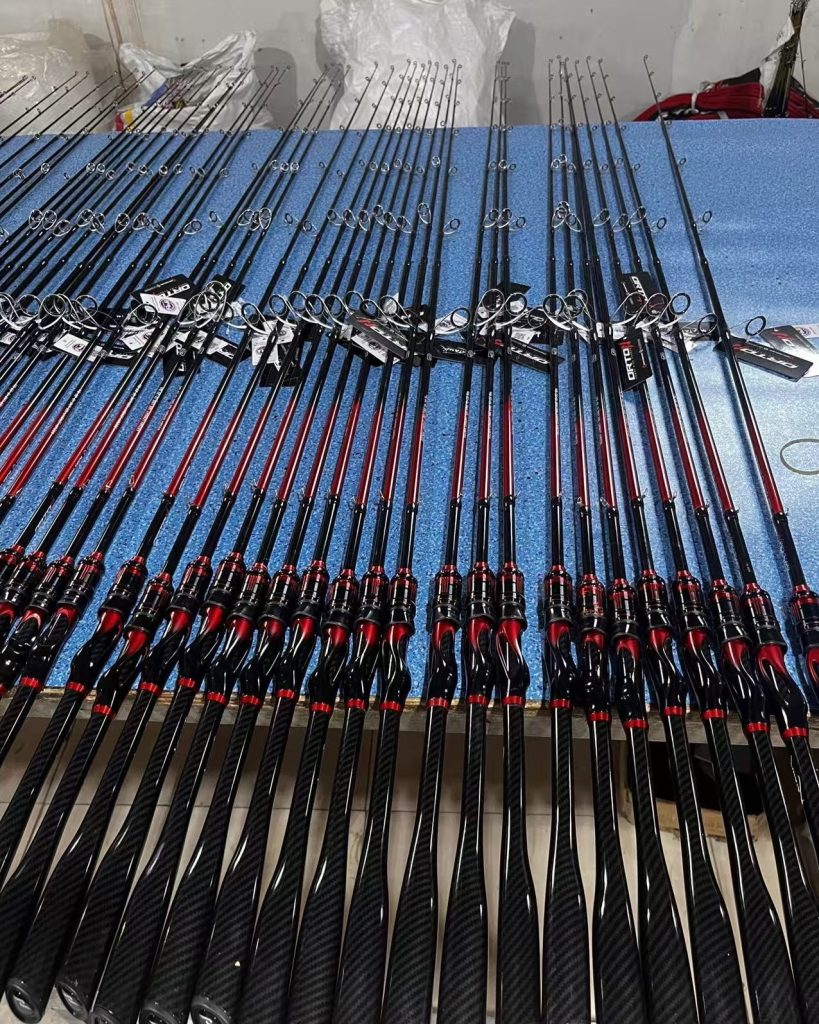
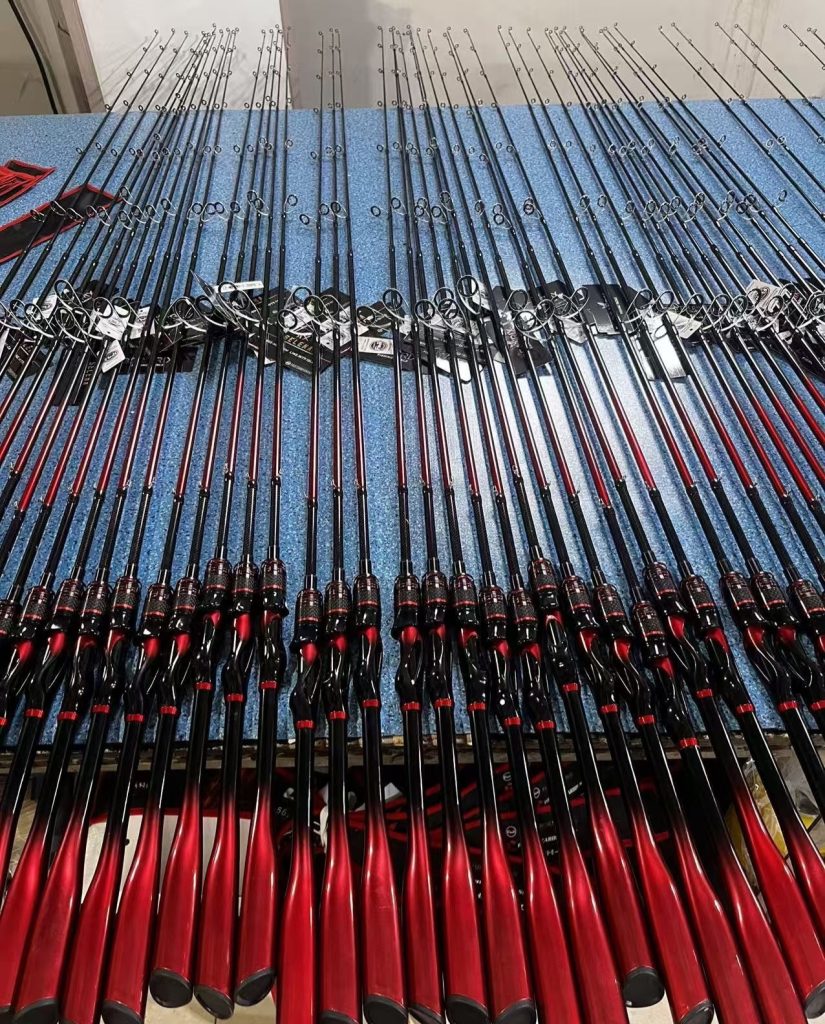
The blank is a major structural component of a fishing rod. During inspection, check the surface under good lighting and look for visible defects such as:
-
Cracks, chips, or exposed fibers
-
Deep scratches or dents
-
Uneven coating or obvious finish bubbles
-
Discoloration that differs from the approved sample
-
Rough or sharp edges around joints
-
Visible damage near ferrules or connection points
A visual inspection cannot establish the exact material composition or strength of a blank. If material grade or performance is important to the order, request supporting specifications and agree on suitable testing with the supplier.
For carbon-fiber rods, buyers should avoid assuming that a “carbon” label alone confirms a particular carbon content, modulus, or performance level. These details should be documented and verified according to the buyer’s requirements.
3. Check Guides, Reel Seats, and Handle Components
Small components can affect the user experience and may become sources of returns if they are loose, misaligned, or poorly finished.
Rod guides
Check that:
-
Guides are securely attached.
-
Guide frames show no visible bending or damage.
-
Guide rings have no obvious chips or sharp edges.
-
Wrapping is neat and consistent with the approved sample.
-
Guide alignment follows the agreed product design.
A simple visual check can identify obvious problems, but it does not replace a defined alignment or performance test where one is required.
Reel seat
Inspect the reel seat for secure fitting, smooth operation, and visible cracks or defects. If the buyer has a preferred reel model, test compatibility using that model or an agreed reference reel.
Handle and grip
Check the handle for secure attachment, consistent dimensions, clean finishing, and material defects. For EVA, cork, or other grip materials, look for cuts, uneven shaping, loose sections, or noticeable differences from the approved sample.
4. Test Assembly and Joint Fit
For multi-section rods, inspect how the sections connect. Joints should fit according to the product design without obvious looseness, damage, or excessive difficulty during assembly.
For telescopic rods, check that sections extend and retract smoothly and that the collapsed length matches the specification.
The buyer and supplier should agree on the inspection method before production. Avoid applying excessive force or using improvised tests that could damage a sample without producing meaningful results.
5. Compare Production Samples with the Approved Sample
A sample approval should become the reference for mass production. Keep a record of the approved sample, specification sheet, logo artwork, packaging design, and any agreed tolerances.
When production samples are available, compare them against the approved reference for:
-
Dimensions and weight
-
Color and surface finish
-
Guide placement and component details
-
Logo size, position, and clarity
-
Handle and reel seat design
-
Accessories and packaging
If a change is necessary, document it and obtain approval before the supplier applies it to the full order. This reduces the risk of disputes over whether a difference is acceptable.
6. Establish a Practical Inspection Plan
For bulk orders, buyers can agree on inspection stages with the supplier:
Before production: Confirm specifications, approved samples, artwork, and packaging requirements.
During production: Review selected components or production samples if the order size and risk justify an in-process inspection.
Before shipment: Inspect finished goods, packaging, quantities, labeling, and agreed product characteristics.
The inspection plan should state what will be checked, how defects will be classified, how samples will be selected, and what happens if the results do not meet the agreed requirements.
For larger or higher-risk orders, buyers may consider using an independent inspection service. The inspection scope should be defined in advance rather than relying on a general request to “check quality.”
7. Do Not Overlook Packaging and Transport Protection
Fishing rods can be vulnerable to bending, impact, abrasion, and pressure during handling and transport. Packaging should be evaluated as part of product quality.
Confirm:
-
Individual rod protection
-
Protection for tips, guides, and joints
-
Carton dimensions and packing quantity
-
Separation between rods to reduce rubbing
-
Outer-carton strength appropriate to the shipping method
-
Product labels, model identification, and barcode requirements
-
Whether the packaging matches the approved artwork
If the buyer plans to sell through retail stores or e-commerce channels, packaging requirements may differ from those for bulk warehouse delivery. Make these requirements clear before production begins.
8. Ask the Supplier for Evidence, Not Just Assurances
A supplier’s response to quality questions can help buyers understand its production and communication process. Consider asking:
-
Can you provide a specification sheet for the selected rod model?
-
Can you confirm which components and materials are included?
-
Can we approve a pre-production sample?
-
How do you check guide attachment, joint fit, and surface defects?
-
Can you share production or packaging photos for this order?
-
What is the procedure if an inspection identifies nonconforming goods?
-
Can the final packaging be confirmed before mass production?
The answers should be evaluated alongside samples, written specifications, and inspection results. A statement that a product is “strictly inspected” is not a substitute for an agreed inspection process.
9. Prepare a Simple Bulk-Order Quality Checklist
Use the following checklist when reviewing a sample or preparing a pre-shipment inspection:
-
[ ] Product model and specifications match the purchase order
-
[ ] Rod length and section count match the agreed requirements
-
[ ] Blank surface has no unacceptable visible damage
-
[ ] Guides and wrapping match the approved sample
-
[ ] Reel seat and handle are securely fitted
-
[ ] Joints assemble according to the agreed design
-
[ ] Logo, color, and finish are approved
-
[ ] Accessories and product quantity are correct
-
[ ] Individual and outer packaging meet requirements
-
[ ] Carton labels and shipping marks are correct
-
[ ] Inspection findings are recorded and resolved before shipment


No reply content