
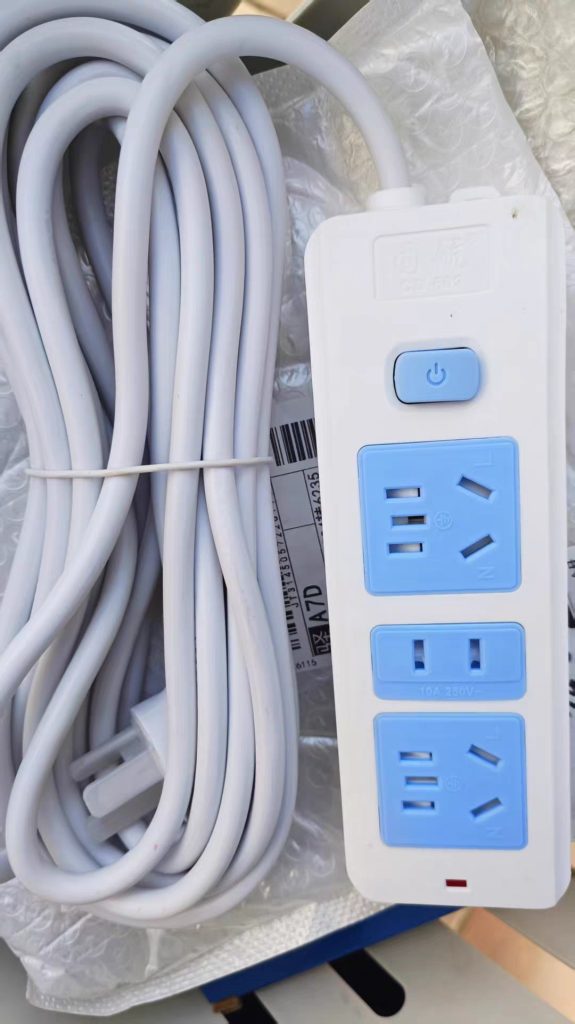
For importers, distributors, wholesalers, electrical contractors, and private-label brands, purchasing electrical sockets in bulk can provide significant cost advantages. However, choosing the lowest-priced supplier is not always the best way to reduce total purchasing costs.
Electrical sockets are safety-related products, so reducing costs should never mean using unsuitable materials, ignoring testing, or compromising product reliability.
A better purchasing strategy focuses on reducing unnecessary costs while maintaining consistent specifications, quality control, and compliance.
This guide explains practical ways to reduce bulk electrical socket purchasing costs without sacrificing product quality.
1. Compare Total Purchasing Cost Instead of Unit Price
The first mistake many buyers make is comparing only the unit price.
For example, one manufacturer may offer a socket at $2.00 while another quotes $2.20. At first glance, the first supplier appears cheaper.
However, the actual purchasing cost may also include:
- Packaging
- Tooling
- Sample costs
- Testing
- Certification-related expenses
- Shipping
- Inspection
- Defective products
- Replacement costs
- Payment fees
- Customs and import costs
Therefore, buyers should compare the total cost of obtaining a compliant product rather than simply selecting the lowest quotation.
A slightly higher unit price can sometimes result in a lower overall cost if the supplier provides better quality consistency and fewer defective products.
2. Standardize Your Product Specifications
Product standardization is one of the most effective ways to reduce purchasing costs.
If you purchase many similar socket models with different specifications, colors, materials, or packaging, production and inventory become more complicated.
Where commercially appropriate, consider standardizing:
- Socket dimensions
- Housing materials
- Colors
- Terminal components
- Packaging sizes
- Product labels
- Accessories
Standardization can simplify production and purchasing and may allow larger quantities of common components to be purchased more efficiently.
3. Increase Order Quantity Carefully
Manufacturers often provide different prices at different order quantities.
For example:
- 500 pieces
- 1,000 pieces
- 5,000 pieces
- 10,000 pieces
- 50,000 pieces
Larger orders may reduce production setup costs per unit and allow manufacturers to purchase materials more efficiently.
However, buying more does not automatically mean saving money.
If demand is uncertain, excessive inventory can create:
- Storage costs
- Cash-flow pressure
- Obsolete inventory
- Product model changes
- Packaging changes
- Market risk
The best order quantity should balance unit cost with realistic sales demand.
4. Negotiate Based on Annual Volume
Instead of negotiating every purchase separately, consider discussing your expected annual purchasing volume with the manufacturer.
For example, if your business expects to purchase 50,000 sockets annually, you can explain the estimated volume even if you cannot order all 50,000 pieces at once.
A long-term purchasing plan may help the manufacturer understand your potential business value.
You can negotiate:
- Unit pricing
- Annual volume discounts
- Packaging costs
- Sample costs
- Tooling arrangements
- Payment terms
- Production priority
The goal should be a sustainable supplier relationship rather than obtaining the lowest possible price on one order.
5. Use Existing Molds When Possible
Custom tooling can significantly increase the cost of a new electrical socket project.
If an existing manufacturer product meets your technical requirements, consider using the existing mold and customizing only the elements that are commercially necessary.
Possible low-cost customization options may include:
- Logo
- Color
- Packaging
- Label
- Model number
A completely new housing design may require new injection molds, engineering development, prototypes, and additional testing.
Before approving new tooling, ask whether an existing product can meet your requirements.
6. Reduce Unnecessary Customization
Customization can make a product more attractive, but every additional customization can increase costs.
For example, changing:
- Product color
- Plastic material
- Faceplate shape
- Packaging
- Screws
- Terminals
- Decorative components
may increase purchasing complexity.
For a new product, prioritize customizations that directly contribute to customer demand or brand value.
Unnecessary cosmetic changes can often be eliminated without affecting the product’s core function.
7. Choose Materials Based on Application
Using the most expensive material is not always necessary.
However, choosing an unsuitable low-cost material can create quality and safety problems.
The correct approach is to define material requirements according to:
- Product application
- Electrical requirements
- Temperature
- Mechanical strength
- Fire performance requirements
- Environmental conditions
- Applicable standards
For example, an indoor residential socket may have different requirements from an industrial or outdoor product.
Ask the manufacturer to clearly specify the materials used for the housing, terminals, contacts, and other important components.
8. Do Not Compromise Electrical Components
Some components should not be selected purely based on price.
Important components may include:
- Conductive contacts
- Terminals
- Wiring components
- Springs
- Screws
- Protective components
- USB charging modules
- Electronic components
Poor-quality components can increase the risk of:
- Excessive heating
- Poor electrical contact
- Premature failure
- Loose connections
- Product returns
Instead of asking the manufacturer to “make it cheaper,” ask which design or production changes can reduce unnecessary costs while maintaining the required performance.
9. Improve Packaging Efficiency
Packaging can represent a significant part of international purchasing and shipping costs.
Large or inefficient packaging can increase:
- Carton volume
- Warehouse requirements
- Freight charges
- Handling costs
Ask the manufacturer to optimize:
- Individual packaging
- Inner cartons
- Master cartons
- Carton dimensions
- Product arrangement
- Pallet loading
For export orders, packaging should protect the sockets adequately while avoiding unnecessary empty space.
A smaller master carton does not automatically mean better packaging; protection and transport stability still need to be considered.
10. Reduce Product Variations
Having too many product variations can increase procurement complexity.
For example, selling 20 socket models with five colors each creates many separate SKUs.
This can lead to:
- Higher inventory requirements
- More packaging versions
- More labels
- More production changeovers
- More quality-control requirements
- More complicated forecasting
If your market allows it, reducing low-volume SKUs can improve purchasing efficiency.
11. Plan Orders in Advance
Urgent production can increase costs.
Manufacturers may need to:
- Rearrange production schedules
- Purchase materials quickly
- Pay higher transportation costs
- Work around existing production orders
Advance forecasting gives the manufacturer more time to plan production and materials.
For regular buyers, provide estimated demand forecasts when possible.
Even a rough forecast can help both sides prepare for future orders.
12. Reduce Defective Products
The cheapest unit price becomes expensive if a significant percentage of the products are defective.
Quality problems can create:
- Rework
- Returns
- Replacement costs
- Customer complaints
- Lost sales
- Additional freight
- Reputation damage
Therefore, quality control is also a cost-control strategy.
Before mass production, define:
- Product specifications
- Approved sample
- Material requirements
- Inspection criteria
- Packaging standards
- Defect classification
A clear quality standard helps prevent disagreements after production.
13. Approve a Final Production Sample
Before mass production, buyers should approve a final sample or “golden sample” that represents the agreed product specification.
The approved sample can define:
- Appearance
- Dimensions
- Color
- Material
- Logo
- Function
- Packaging
- Accessories
Future production can then be compared with the approved specifications.
This reduces the risk of receiving products that are technically or visually different from what was originally ordered.
14. Consider Long-Term Supplier Relationships
A stable relationship with a qualified manufacturer may provide purchasing advantages over time.
A long-term supplier can become familiar with:
- Your specifications
- Quality requirements
- Packaging
- Forecasts
- Branding
- Inspection procedures
This can reduce repeated communication and development work.
However, buyers should still periodically review pricing and supplier performance to ensure the relationship remains competitive.
15. Negotiate Payment Terms Carefully
Payment terms can affect your actual purchasing cost and cash flow.
Depending on the supplier and transaction, buyers may discuss:
- Deposit percentage
- Balance payment
- Payment timing
- Letter of credit
- Trade assurance arrangements
- Credit terms for established relationships
Do not accept unfavorable payment conditions simply to obtain a slightly lower unit price.
A purchasing strategy should consider both product cost and cash-flow requirements.
16. Optimize Shipping and Carton Loading
For international buyers, logistics can significantly affect the final product cost.
Electrical sockets are relatively compact, but inefficient carton dimensions can still increase shipping costs.
Work with the manufacturer to optimize:
- Carton dimensions
- Units per carton
- Pallet configuration
- Container loading
- Shipping schedule
If you purchase multiple compatible products from the same manufacturer, consolidated shipping may also improve logistics efficiency.
17. Avoid Over-Specifying Products
Buyers sometimes request specifications that are significantly higher than their actual market requirements.
Over-specification can increase:
- Material costs
- Testing costs
- Manufacturing complexity
- Product development costs
The correct strategy is to meet the applicable requirements of the target market and intended application without adding unnecessary specifications.
Technical decisions should be based on product requirements rather than simply choosing the highest specification available.
18. Compare Manufacturers on Quality-to-Price Ratio
When evaluating suppliers, create a simple comparison table.
| Factor | Manufacturer A | Manufacturer B | Manufacturer C |
|---|---|---|---|
| Unit Price | Compare | Compare | Compare |
| MOQ | Compare | Compare | Compare |
| Materials | Compare | Compare | Compare |
| Quality Control | Compare | Compare | Compare |
| Testing | Compare | Compare | Compare |
| Certification | Verify | Verify | Verify |
| Lead Time | Compare | Compare | Compare |
| Packaging | Compare | Compare | Compare |
| OEM Capability | Compare | Compare | Compare |
| Defect Rate | Monitor | Monitor | Monitor |
| Overall Cost | Calculate | Calculate | Calculate |
This prevents buyers from selecting a supplier based on price alone.
19. Questions to Ask a Low-Cost Supplier
If a manufacturer’s quotation is significantly lower than competitors, ask:
- Are the product specifications exactly the same?
- Are the materials the same?
- Are the electrical components the same?
- Is the packaging included?
- Are testing costs included?
- Does the certification apply to the exact model?
- Is the MOQ different?
- Is the quoted price based on a larger order quantity?
- Are there additional tooling costs?
- Is the production lead time the same?
A large price difference should be investigated rather than automatically treated as a bargain.
20. A Practical Cost-Reduction Strategy
A good purchasing strategy can follow these steps:
Step 1 — Define Requirements
Clearly specify the socket type, electrical requirements, target market, materials, and packaging.
Step 2 — Compare Multiple Manufacturers
Request comparable quotations from several qualified suppliers.
Step 3 — Compare Equivalent Products
Make sure the specifications are genuinely comparable.
Step 4 — Request Samples
Evaluate product quality before committing to large quantities.
Step 5 — Identify Cost Drivers
Ask the manufacturer which factors have the greatest impact on price.
Step 6 — Optimize Non-Critical Costs
Review packaging, cosmetic customization, order quantities, and other avoidable expenses.
Step 7 — Maintain Safety and Compliance
Never reduce costs by removing necessary safety features, testing, or compliance requirements.
Step 8 — Negotiate Long-Term Pricing
Use realistic annual volume forecasts to negotiate sustainable pricing.
Step 9 — Inspect Production
Verify that mass production matches the approved specifications.
FAQ
How can I get a lower price when buying electrical sockets in bulk?
You can negotiate based on realistic order volume, standardize products, use existing molds, optimize packaging, reduce unnecessary customization, plan orders in advance, and establish long-term purchasing arrangements.
Should I always choose the cheapest electrical socket manufacturer?
No. The lowest unit price may result in higher total costs if the product has poor quality, high defect rates, inadequate documentation, or unsuitable materials.
Does a larger order always reduce costs?
Not necessarily. Larger orders may reduce unit prices, but excessive inventory can create storage and cash-flow costs. Order quantities should be based on realistic demand.
Can I reduce costs by using cheaper materials?
Material changes should only be made after evaluating their suitability for the product, application, and applicable requirements. Cost reduction should not compromise electrical safety or required performance.
How can packaging reduce purchasing costs?
Efficient packaging can reduce material consumption, carton volume, storage requirements, and transportation costs while still providing adequate protection during shipping.
Is OEM customization more expensive?
It can be, particularly when new tooling, engineering development, custom components, or testing are required. Using an existing product platform and limiting customization can reduce development costs.
Conclusion
Reducing bulk electrical socket purchasing costs does not mean simply asking a manufacturer for the lowest possible price.
The most effective strategy is to reduce unnecessary costs while maintaining product quality, safety, and compliance.
Standardizing products, increasing order quantities carefully, using existing molds, optimizing packaging, planning purchases in advance, reducing unnecessary customization, and establishing long-term supplier relationships can all improve purchasing efficiency.
At the same time, buyers should continue to control materials, electrical components, testing, certifications, and quality inspections.
The goal should not be the cheapest socket.
The goal should be the best total cost for a reliable, compliant, and consistent product.


No reply content