
Custom CNC Machining Parts Manufacturer in Dongguan China
China
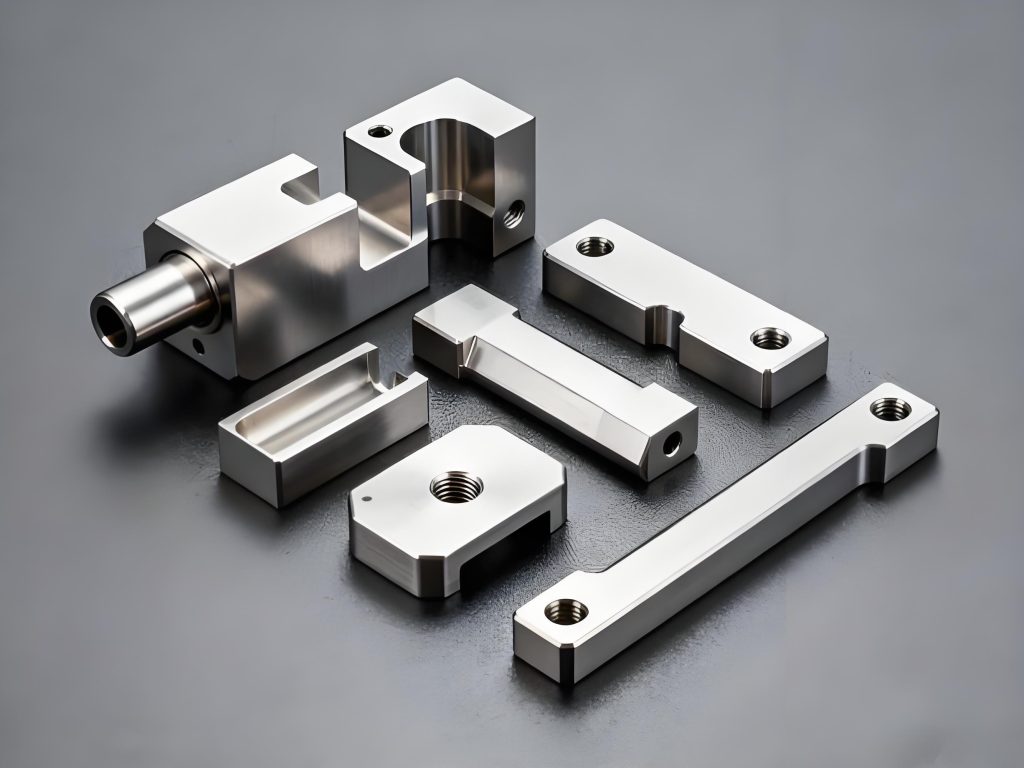
CNC machining is rarely cheap — and for good reason. Between precision equipment, skilled labor, raw material volatility, and tight tolerances, the costs add up quickly. For procurement managers, engineers, and product developers operating on lean budgets, a single complex component can eat through an entire prototyping or production allocation.
But here’s what many buyers don’t realize: you don’t have to choose between cost and quality. By strategically sourcing CNC machined parts from reliable Chinese suppliers, it’s entirely possible to reduce machining costs by up to 50% — without compromising dimensional accuracy, surface finish, or delivery timelines.
This article breaks down exactly how that’s achievable, where the savings come from, and what pitfalls to avoid.
Why CNC Machining Costs Are So High in Western Markets
Before diving into the “how,” it’s worth understanding the “why.” In North America and Western Europe, typical CNC machining rates range from $65 to $120 per hour, depending on complexity, machine type, and order volume. Several structural factors drive these rates:
| Cost Driver | Impact |
|---|---|
| Labor costs | CNC operators and programmers in the US/EU earn 3–5× what their Chinese counterparts earn |
| Facility overhead | Real estate, utilities, and compliance costs are significantly higher |
| Supply chain fragmentation | Raw material sourcing often involves multiple intermediaries |
| Lower production volume | Many Western job shops run smaller batches, reducing economies of scale |
| Equipment depreciation | High capital costs spread across fewer billable hours |
None of these factors reflect part quality — they’re simply structural cost realities of manufacturing in high-wage economies.
Where the 50% Savings Actually Come From
Sourcing from China isn’t about “cheap labor” in the way it was 20 years ago. Today’s cost advantage is far more sophisticated, built on industrial density, vertical integration, and process maturity. Here’s the breakdown:
1. Integrated Supply Chains
In manufacturing hubs like Shenzhen, Dongguan, and Suzhou, a single industrial park can contain everything needed for a finished CNC part: raw material warehouses, heat treatment facilities, anodizing shops, and inspection labs — all within a 10-kilometer radius. This proximity eliminates logistics markups and lead-time penalties that Western shops often pass on to customers.
Real-world impact: A buyer ordering aluminum 6061-T6 parts might pay a 15–20% premium in the US just for material procurement and handling. In China’s Pearl River Delta, that same material is available same-day from dozens of certified stockists.
2. Higher Equipment Utilization Rates
Top-tier Chinese CNC facilities routinely run three shifts, six to seven days a week. Machine utilization rates of 80–90% are common, compared to 50–65% in many Western job shops. This means fixed costs — equipment depreciation, facility overhead, software licenses — are spread across far more billable hours, directly lowering the effective hourly rate.
3. Process Specialization at Scale
Chinese suppliers often specialize narrowly — one shop might focus exclusively on 5-axis aerospace brackets, another on high-volume automotive housings. This specialization drives:
-
Faster setup times (fixtures are standardized)
-
Lower scrap rates (operators repeat the same processes daily)
-
Optimized tooling strategies (bulk tool purchasing reduces consumable costs)
4. Raw Material Cost Advantages
China is the world’s largest producer of aluminum, steel, brass, and titanium. Domestic mills sell directly to machining houses at prices that Western job shops simply cannot match, even before factoring in import tariffs.
5. Competitive Quoting Culture
In China’s CNC machining sector, quoting is fast, detailed, and competitive. A well-prepared RFQ sent to five qualified suppliers can yield quotes within 24 hours — and the natural competition keeps margins honest. In many Western markets, quoting itself can take 3–5 business days, with less price pressure.
The Critical Caveat: “Reliable” Is Everything
The 50% figure is real — but it only applies when you’re working with qualified, vetted suppliers. Sourcing blindly from unverified platforms can lead to:
-
Dimensional inaccuracies requiring expensive rework
-
Wrong material grades substituted without disclosure
-
Poor surface finish that fails cosmetic or functional requirements
-
Communication breakdowns causing project delays
-
No recourse for rejected parts
The key is knowing how to identify and qualify reliable partners. Here’s what to look for:
Supplier Vetting Checklist
| Criterion | What to Verify |
|---|---|
| Equipment inventory | Do they own the machines they claim? (Ask for photos, brand names — Mazak, DMG Mori, Haas, Brother) |
| Quality certifications | ISO 9001:2015 is the baseline; IATF 16949 for automotive; AS9100 for aerospace |
| Inspection capability | CMM reports, surface roughness testers, hardness testers on-site |
| Sample history | Request photos or case studies of similar parts they’ve produced |
| Communication | Do they respond within 24 hours? Can they read and interpret GD&T drawings accurately? |
| Payment terms | Avoid suppliers demanding 100% upfront; 30% deposit / 70% before shipment is standard for new relationships |
A Realistic Cost Comparison
Let’s put numbers to this. Consider a custom aluminum 6061 bracket with the following specs:
-
Dimensions: 150 × 100 × 40 mm
-
Tolerances: ±0.02 mm on critical features
-
Surface finish: Ra 1.6 on mating faces, bead blast overall
-
Quantity: 50 pieces
-
Secondary ops: Deburring, anodizing (Type II, black)
| Cost Component | US Supplier (Estimate) | Chinese Supplier (Estimate) | Savings |
|---|---|---|---|
| Setup & programming | $180 | $90 | 50% |
| Machine time (50 pcs) | $1,100 | $520 | 53% |
| Material (6061-T6) | $140 | $75 | 46% |
| Deburring & finishing | $200 | $90 | 55% |
| Anodizing | $180 | $95 | 47% |
| Shipping & import | $60 | $140 | — |
| Total | $1,860 | $1,010 | ~46% |
Even after accounting for international shipping and potential import duties, the total savings land right around 45–50%. At higher volumes or with simpler geometries, the savings percentage increases further.
How to Maximize Your Savings Without Sacrificing Quality
Beyond choosing the right supplier, your own design and procurement decisions play a major role in cost. Here’s how to stack the deck in your favor:
Design for Manufacturability (DFM)
-
Avoid unnecessary tight tolerances. Every feature held to ±0.01 mm adds setup and inspection time. If ±0.05 mm will function equally well, specify that instead.
-
Standardize hole sizes and thread types. Non-standard taps cost time and money.
-
Minimize deep pockets and thin walls. These require slower feed rates and specialized tooling.
-
Specify standard surface finishes. “As-machined” (Ra 3.2) is significantly cheaper than a polished Ra 0.8 finish unless functionally required.
Order Strategically
-
Consolidate orders. Combining multiple part numbers into a single PO reduces setup overhead and shipping costs per unit.
-
Plan ahead. Air freight is expensive. If you can wait 3–4 weeks for ocean + local delivery, you’ll save 60–70% on shipping alone.
-
Request material certifications upfront. Getting a mill test report (MTR) with the shipment is far cheaper than auditing material after delivery.
Communicate Clearly
-
Provide complete 2D drawings with GD&T, not just 3D STEP files. Chinese suppliers rely heavily on 2D drawings for inspection planning.
-
Specify critical vs. non-critical dimensions explicitly. This allows the shop to prioritize inspection effort where it matters most.
-
Share your end-use application. A good supplier will suggest cost-saving alternatives (e.g., “This feature could be milled instead of turned, saving 20% setup time”) — but only if they understand the part’s function.
Common Objections — Answered
“What about intellectual property protection?”
Use NDAs (many Chinese suppliers are accustomed to signing them), and work with suppliers who serve export markets — they have a strong commercial incentive to protect customer IP. For highly sensitive designs, consider splitting the assembly across multiple suppliers so no single shop sees the complete product.
“Isn’t shipping a nightmare?”
For most CNC parts, shipping is straightforward. DDP (Delivered Duty Paid) terms shift all logistics and customs clearance responsibility to the supplier. Transit times from China to the US West Coast are typically 3–5 days by air, 18–25 days by sea.
“What if the parts are wrong?”
This is where the supplier vetting process pays off. Qualified suppliers will provide First Article Inspection (FAI) reports and CMM data before shipping full production. Payment terms that hold 30–40% until after inspection also provide leverage.
The Bottom Line
Reducing CNC machining costs by 50% through Chinese suppliers isn’t a fantasy — it’s a well-established procurement strategy used by Fortune 500 manufacturers, automotive Tier 1 suppliers, and hardware startups alike. The savings come from structural advantages: integrated supply chains, high equipment utilization, material access, and competitive dynamics.
The risk isn’t in the geography. The risk is in who you choose to work with. Vet thoroughly, communicate clearly, design smart, and the math speaks for itself.
Your next step: Audit your current CNC spend. Identify 2–3 parts with the highest machining cost per unit. Send those drawings to three qualified Chinese suppliers for comparative quotes. You’ll likely have your answer — and your savings — within a week.


No reply content