
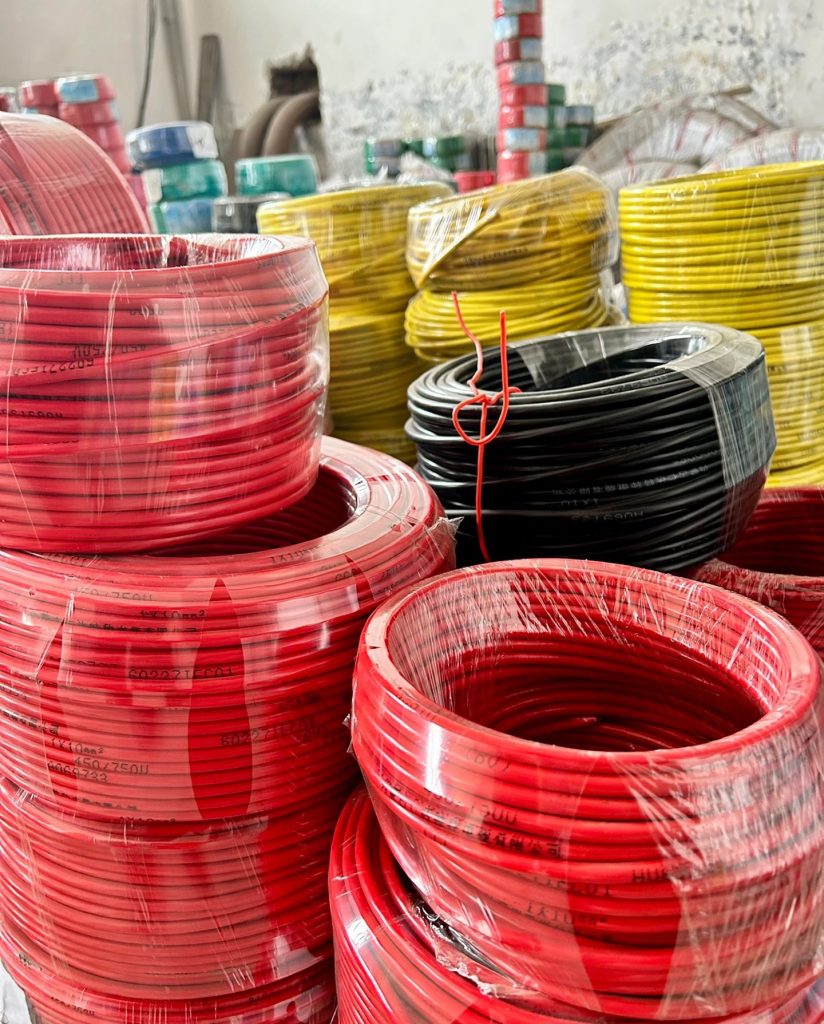
A good electrical wire quotation starts with a good inquiry.
Many buyers contact manufacturers with a short message such as:
“I need electrical wire. Please send me your price.”
The supplier may reply with a general price list, ask several follow-up questions, or provide a quotation that cannot be compared with offers from other manufacturers.
The problem is usually not the supplier. The buyer simply has not provided enough information.
For importers, distributors, contractors, and wholesalers, a well-prepared RFQ can make the sourcing process much faster. It also gives manufacturers enough information to calculate a quotation based on the actual product rather than making assumptions.
What Is an Electrical Wire RFQ?
RFQ means Request for Quotation.
An RFQ is a purchasing inquiry that tells a supplier what you want to buy and asks for the commercial terms.
For electrical wire, a useful RFQ normally includes:
- Product type
- Conductor material
- Wire size
- Insulation material
- Voltage rating
- Applicable standard
- Color
- Quantity
- Packaging
- Destination
- Required delivery time
- Preferred shipping term
The more technically specific the product, the more important these details become.
Why a Short Price Request Often Produces a Poor Quotation
Imagine two buyers send the following messages.
Buyer A
Please quote 2.5 mm² copper wire.
Buyer B
Please quote 2,000 kg of 2.5 mm² copper building wire with PVC insulation, 450/750V, according to [required standard], blue color, standard export packaging. Destination: [country/port]. Please provide MOQ, FOB price, CIF price, production lead time, available certificates, and sample information.
The second inquiry gives the manufacturer much more useful information.
The supplier can identify the product, estimate the production requirements, and calculate the commercial terms more accurately.
That is the purpose of an RFQ.
Step 1: Identify the Exact Wire
Start with the product name, but do not stop there.
For example:
BV wire
or
BVR flexible copper wire
or
H07V-U building wire
The product designation should be followed by the technical requirements.
If you do not know the exact product name, describe the application instead.
For example:
We need single-core copper wire for building electrical installations in [country].
Then explain the required voltage, conductor size, quantity, and applicable local requirements.
A manufacturer may be able to suggest a suitable product based on the application.
Step 2: Specify the Conductor
Copper wire can have different conductor constructions.
Your RFQ should make clear whether you need:
- Solid copper
- Stranded copper
- Flexible copper
- Tinned copper
Also specify the conductor size.
Examples include:
- 1.5 mm²
- 2.5 mm²
- 4 mm²
- 6 mm²
- 10 mm²
- 16 mm²
If several sizes are required, list them separately.
For example:
| Product | Size | Quantity |
|---|---|---|
| Copper wire | 1.5 mm² | 500 kg |
| Copper wire | 2.5 mm² | 1,000 kg |
| Copper wire | 4 mm² | 1,000 kg |
| Copper wire | 6 mm² | 500 kg |
This is much easier for a supplier to quote than putting all quantities into one sentence.
Step 3: State the Insulation and Voltage
Do not assume that every manufacturer will interpret the product name in exactly the same way.
Include the insulation material and rated voltage.
For example:
PVC insulation, 450/750V
If your project requires another insulation material or voltage rating, state it clearly.
For specialized cables, you may also need to provide requirements for:
- Temperature rating
- Sheath material
- Fire performance
- Flexibility
- Environmental conditions
The manufacturer’s quotation should correspond to your stated requirements.
Step 4: Tell the Supplier Which Standard You Need
Electrical wire standards can differ between markets.
Depending on your application and destination, you may need to specify an applicable standard such as:
- IEC
- BS
- VDE
- UL
- ASTM
- Local national standard
Do not simply ask the supplier to provide “international standard.”
If you already have a customer specification, engineering document, or existing product standard, attach it to the inquiry.
If you are uncertain, explain the destination market and application and ask the supplier which standard their proposed product complies with.
The proposed standard should then be checked against the requirements of your project and market.
Step 5: Quantity Is One of the Most Important Numbers
A manufacturer cannot give you a useful wholesale quotation without knowing approximately how much you intend to purchase.
Tell the supplier:
- Trial quantity
- Current order quantity
- Expected monthly quantity
- Expected annual quantity, if relevant
For example:
Initial order: 1,000 kg
Expected monthly demand: 3,000–5,000 kg
This information may help the manufacturer understand whether you are looking for a one-time purchase or a potential long-term supply arrangement.
Ask for Multiple Quantity Prices
If you are still deciding how much to order, ask for several price levels.
For example:
Please quote for 500 kg, 1,000 kg, 2,000 kg, and 5,000 kg.
This can show how the manufacturer’s pricing changes with quantity.
It also helps you calculate whether increasing the order is commercially useful.
Step 6: Tell the Supplier Your Destination
The destination is essential when you want a delivered quotation.
At minimum, provide the destination country.
For freight calculations, provide the destination port or city when possible.
For example:
Destination: Guayaquil, Ecuador
You can then request:
- EXW
- FOB
- CIF
or another appropriate Incoterm.
Make sure the suppliers are quoting under the same trade term when you compare their offers.
Step 7: Explain Your Packaging Requirements
Electrical wire can be packaged in different ways.
You may require:
- Rolls
- Coils
- Cartons
- Wooden drums
- Pallets
- Customized packaging
If the product will be resold, you may also require:
- Private-label packaging
- Customer logo
- Barcode
- Product labels
- Customized cable printing
Mention these requirements before the supplier calculates the final price.
Otherwise, a later packaging change may result in a revised quotation.
Step 8: Ask About MOQ
Do not simply ask:
What is your MOQ?
Ask about the MOQ for the exact specification.
For example:
Please confirm the MOQ for each wire size and whether the MOQ changes for customized color, printing, or packaging.
This is important because a standard product and an OEM product may have very different minimum quantities.
Step 9: Ask About Price Validity
For copper wire, price validity can be important because raw-material costs can change.
Ask:
How long is the quoted price valid?
You can also ask whether the quotation is based on a fixed copper price or whether the price will be adjusted before production.
For larger orders, this should be clearly understood before you place the purchase order.
Step 10: Ask for the Production Lead Time
Ask the supplier for a specific estimated production time.
For example:
Please confirm the production lead time after receipt of deposit and final specification approval.
This wording is useful because customized products may not start production immediately after the initial inquiry.
If you have a deadline, tell the supplier.
For example:
Required shipment date: before [date].
The manufacturer can then tell you whether the requested schedule is realistic.
Step 11: Request the Right Documents
Depending on your market and application, you may need:
- Technical datasheet
- Certificate
- Test report
- Product specification
- Packing information
- Company information
- Sample
Do not request every possible certificate without knowing whether it is relevant.
Instead, explain your destination market and required standard.
For example:
Please provide the available test reports and certificates applicable to this product and the [destination] market.
A Practical Electrical Wire RFQ Example
Here is a simple example that an importer can send to a manufacturer:
Subject: RFQ – 2.5 mm² Copper Electrical Wire
Hello,
We are looking for a manufacturer/supplier of copper electrical wire for wholesale distribution.
Product: BV copper wire
Conductor: Copper
Size: 2.5 mm²
Insulation: PVC
Rated voltage: 450/750V
Standard: [required standard]
Color: Blue
Initial quantity: 1,000 kg
Potential repeat order: 3,000–5,000 kg/month
Packaging: Standard export packaging
Destination: [country/port]Please provide:
- MOQ
- Price for 500 kg / 1,000 kg / 2,000 kg
- FOB price
- CIF price, if available
- Production lead time
- Packaging details
- Available certificates and test reports
- Sample availability
- Payment terms
- Price validity
Please also confirm whether you are the manufacturer of this product.
Thank you.
This type of RFQ gives a supplier enough information to start a meaningful commercial discussion.
What If You Need Several Products?
If you are buying several types of electrical wire, do not send ten separate messages unless there is a specific reason.
Create one RFQ table.
For example:
| Product | Size | Color | Quantity |
|---|---|---|---|
| BV | 1.5 mm² | Red | 500 kg |
| BV | 2.5 mm² | Blue | 1,000 kg |
| BV | 4 mm² | Yellow | 1,000 kg |
| BVR | 6 mm² | Black | 500 kg |
Then ask the manufacturer to quote each line separately.
This allows you to see which products are driving the total cost.
How Many Suppliers Should You Contact?
There is no fixed number that works for every project.
For a new sourcing project, contacting several relevant suppliers can give you a better understanding of:
- Market pricing
- MOQ
- Production capacity
- Product availability
- Lead times
- Packaging options
- Commercial terms
The important point is to send the same core specification to each supplier.
Otherwise, you may end up comparing completely different products.
How to Compare the Replies
Do not copy only the unit price into your spreadsheet.
Record:
Product specification
Quantity
MOQ
Unit price
Packaging
Lead time
Certification
Incoterm
Payment terms
Price validity
Shipping cost
This will show whether a supplier’s low unit price actually represents a lower overall purchasing cost.
When a Supplier Does Not Answer Your RFQ Clearly
Sometimes a supplier replies:
“Best price $X/kg.”
That may not be enough.
Ask them to confirm:
Is this price based on the exact specification and quantity in our RFQ?
Then ask them to provide the missing information.
A professional purchasing process should leave as few assumptions as possible.
Do Not Put Sensitive Commercial Information in the First Message
Your initial RFQ normally does not need to reveal every detail about your business.
You generally need to provide enough information for the manufacturer to quote the product.
You can discuss:
- Target market
- Estimated volume
- Project schedule
- Product requirements
as the relationship develops.
For customized or confidential projects, consider whether a suitable confidentiality agreement is needed before sharing sensitive technical information.
Turn an RFQ Into a Real Supplier Conversation
A good RFQ is not just a request for a number.
The supplier’s response can tell you a lot.
For example, does the manufacturer:
- Understand the technical specification?
- Ask sensible questions?
- Identify missing information?
- Provide complete commercial terms?
- Explain MOQ clearly?
- Provide relevant documentation?
- Respond within a reasonable time?
The quality of the first response can help you decide what additional information to verify before moving forward.
Send Your Electrical Wire RFQ Through Vlefooena
If you are looking for electrical wire manufacturers or wholesale suppliers in China, Vlefooena can help you discover relevant suppliers.
Before sending an inquiry, prepare your:
Product specification
Quantity
Destination
Required standard
Packaging requirements
Delivery schedule
Then send the same RFQ to suitable suppliers so their quotations can be compared more easily.
For buyers who are ready to place a bulk order, a detailed RFQ can turn a general supplier search into a much more focused purchasing conversation.
FAQ
What information should I include in an electrical wire RFQ?
Include the product type, conductor material, wire size, insulation, voltage rating, standard, color, quantity, packaging, destination, required delivery time, and preferred trade term.
Why do suppliers ask so many questions after receiving my RFQ?
Usually because important product or commercial information is missing. Electrical wire can have many different specifications, so manufacturers need enough information to determine exactly what you want.
Should I tell the supplier my target price?
It is not always necessary in the first inquiry. You can first request quotations based on your exact specification and quantity. If the offers are outside your expected purchasing range, you can then discuss pricing and order volume.
How can I get a better wholesale quotation?
Give the supplier a clear specification and realistic quantity. You can also ask for price levels at several quantities and discuss repeat-order expectations.
Should I request FOB or CIF?
You can request either, depending on your purchasing needs. If you are comparing suppliers, use the same Incoterm for each quotation so the prices are easier to compare.
Can I send the same RFQ to multiple manufacturers?
Yes. In fact, using the same product specification can make supplier comparison much easier. Make sure each supplier receives the same key requirements.
How long should I wait for an RFQ response?
Response time varies by supplier and time zone. If the quotation is urgent, state your required response date in the inquiry. If you receive an incomplete quotation, follow up with the specific information you still need.
Should I ask for a sample in the first RFQ?
If the product is new to you or technically important, you can ask whether samples are available. You do not necessarily need to order a sample immediately; first confirm the basic specification and commercial terms.
What if I do not know the exact cable specification?
Explain the application, destination market, voltage requirement, approximate quantity, and any existing sample or technical document. Ask the supplier to recommend a suitable specification, then verify that recommendation against your project’s requirements.
Can I ask a supplier for a quotation in USD?
Yes. If you are purchasing internationally, specify the currency you want the quotation in. Also confirm whether shipping, insurance, taxes, and other charges are included.
Final Thoughts
A detailed RFQ saves time for both the buyer and the manufacturer.
Instead of asking only for a price, explain exactly what you need: the wire specification, quantity, destination, packaging, standard, and delivery requirements.
Then ask suppliers to provide their MOQ, price, lead time, certificates, payment terms, and shipping conditions.
The result is not simply a more detailed quotation. It gives you a much better basis for comparing suppliers and identifying which manufacturers are able to handle your specific purchasing requirements.
If you are ready to source electrical wire from China, prepare your RFQ and send your requirements to relevant suppliers through Vlefooena.


No reply content