China solar power generation and energy storage manufacturing
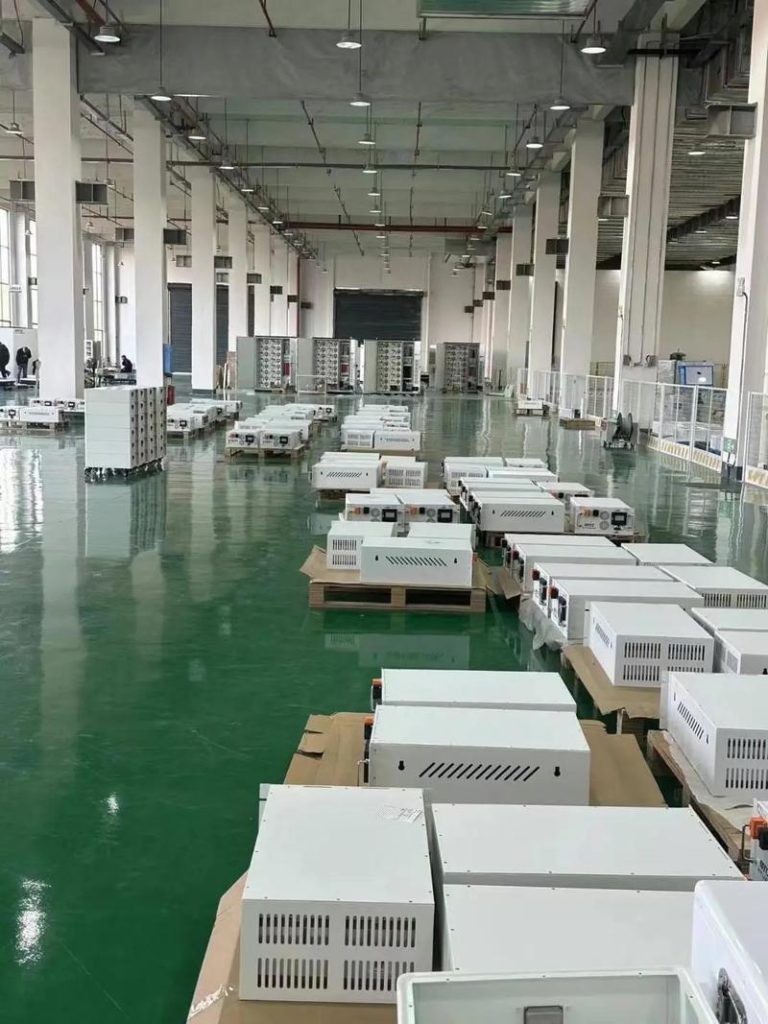
A home solar power storage cabinet—integrating photovoltaic charging, lithium battery storage, BMS, inverter/PCS, and intelligent energy management—is not a commodity product. It is a life-safety device installed in or near a family residence. A single design flaw in the battery pack, a misconfigured BMS, or a missing system-level certification can result in thermal runaway, fire propagation, customs rejection, and immense liability.
China is the world’s largest and most vertically integrated manufacturing base for residential energy storage systems, spanning LFP cells, BMS, inverters, and cabinet integration. But the gap between a professional, certifiable manufacturer and a trading company that assembles cabinets from unverified components is wide. This guide gives you a complete, professional framework to identify, vet, and partner with the right Chinese manufacturer—without naming or promoting any specific brand.
1. Define Your Application Before You Search
Residential solar storage cabinets are not one-size-fits-all. Before contacting any factory, you must define your technical scenario in writing.
Key Specification Parameters
Parameter
|
Typical Range for Households
|
How to Determine
|
Usable capacity
|
5 kWh – 30 kWh (single cabinet); up to 80+ kWh stacked
|
Sum critical loads (kWh/day) × target autonomy days; apply 90% DOD to nominal
|
Continuous power
|
3 kW – 10 kW (single-phase); up to 40 kW (three-phase villa)
|
Peak simultaneous load + 20% headroom
|
Battery chemistry
|
LFP (Lithium Iron Phosphate) only
|
NMC is not recommended for residential due to thermal safety
|
Cycle life
|
4,000 – 6,000 cycles to 80% DOD at 25°C
|
LFP industry baseline
|
Round-trip efficiency
|
93% – 96% (DC-coupled); 88% – 92% (AC-coupled)
|
Impacts solar self-consumption economics
|
Installation
|
Wall-mount (≤10 kWh); floor cabinet/stackable (10–30 kWh)
|
Space, wall structural load, indoor/outdoor
|
Ingress protection
|
IP55 (indoor); IP65 (semi-outdoor/balcony/garage)
|
Climate and siting
|
Operating temp
|
Discharge: -20°C ~ 60°C; Charge: 0°C ~ 55°C
|
Cold-climate sites need self-heating BMS gating
|
Communication
|
Wi-Fi, CAN bus, RS485, Modbus, optional Ethernet
|
For EMS, APP, and PCS compatibility
|
Common Residential Configurations
-
Small household (5–10 kWh): Wall-mount cabinet, 3–6 kW inverter, for daily PV self-consumption and short-term backup.
-
Villa / high-consumption (10–30 kWh): Floor-standing or stackable cabinet, 8–15 kW inverter, for whole-home backup and peak-valley arbitrage.
-
Large villa / three-phase (30–100 kWh): Modular stackable system, 20–40 kW, 380–400V three-phase output.
-
Off-grid remote residence: Integrated PV-inverter-storage with intelligent 3-mode operation (self-consumption / grid-tie / off-grid standby).
2. Verify the Manufacturer: Separate Real Factories from Trading Companies
The residential ESS market contains numerous intermediaries presenting themselves as manufacturers. Use this verification framework before sending any deposit.
Hard Verification Checklist
Verification Dimension
|
What to Check
|
Red Flag
|
Business license (SAMR)
|
Verify on China’s National Enterprise Credit Information Publicity System (gsxt.gov.cn); confirm manufacturing scope
|
Refuses to share license; scope only lists “trading” or “sales”
|
Registered capital
|
Adequate registered capital for a manufacturing entity
|
Very low registered capital is almost certainly a trading company
|
Bank account match
|
Wire beneficiary must match business license entity exactly
|
Personal account or different legal entity
|
Production site
|
Real factory with in-house BMS R&D, automated module assembly line, and aging test facilities
|
Registered address is a commercial office; “partners handle manufacturing”
|
Vertical integration
|
In-house key-component integration (cells procurement channel, BMS development, PCS/inverter integration)
|
Pure assembly workshop, no core technology
|
Third-party factory audit
|
SGS, TÜV, Intertek, or BV on-site audit (1,000+ point checklist)
|
Refuses or stalls on audit requests
|
Independent testing lab
|
In-house or CNAS-certified laboratory for performance and safety testing
|
No actual testing capability; relies entirely on external final inspection
|
Production Capability Indicators
A genuine residential ESS manufacturer should demonstrate:
-
Own LFP cell supply chain – Direct procurement channel from tier-1 cell makers, with batch traceability and material certs.
-
Self-developed BMS – Hardware and firmware designed in-house or through deep integration; supports cell-level monitoring, balancing, thermal management, and multi-layer protection (over-charge/discharge/current/temperature).
-
PCS/inverter integration – Either in-house inverter production or deep, validated integration with major PCS brands.
-
Aging test capacity – Burn-in racks capable of running every cabinet through a full charge-discharge cycle before shipment.
-
R&D team – Demonstrated capability for EMS algorithm development, communication protocol adaptation, and custom structure design.
3. Certification Requirements: The Non-Negotiable Compliance Stack
This is the most critical and most misunderstood aspect of sourcing residential storage from China. A certificate claim is not the same as a certificate that matches your specific model.
System-Level Certifications (North America)
Standard
|
What It Covers
|
Status
|
UL 9540
|
Complete energy storage system (battery + BMS + enclosure + inverter interface) evaluated as a unit
|
Mandatory for US residential; verify on UL Product iQ database
|
UL 9540A
|
Large-scale fire propagation test method; generates data for AHJ to set separation requirements
|
Required by most US jurisdictions; request the actual test report
|
UL 1973
|
Stationary battery safety — electrical, mechanical, environmental, and abuse testing at pack level
|
Required
|
UL 1741 SA/SB
|
Inverter grid-support compliance; required by utilities before interconnection
|
Required for grid-tied systems
|
IEEE 1547-2018
|
Distributed energy resource interconnection performance
|
Required
|
UN 38.3
|
Transport safety test (altitude, thermal, vibration, shock, short circuit, impact, overcharge, forced discharge)
|
Mandatory for any freight movement
|
⚠️ Critical warning: Many Chinese factories claim “IEC 62619 certified” and imply this satisfies US requirements. It does not. IEC 62619 is a cell/module-level standard. UL 9540 is a system-level standard. North American Authorities Having Jurisdiction (AHJs) — fire marshals and building inspectors — will require a UL 9540 system listing before approving installation. Always request the UL file number and cross-check it on UL’s database for the exact model you are ordering.
System-Level Certifications (European Union & International)
Standard
|
What It Covers
|
Market
|
CE (using EN 60335-2-24)
|
Electrical safety, EMC, Machinery Directive, ErP
|
EU mandatory
|
IEC 62619
|
Industrial/stationary secondary lithium battery safety
|
EU, UK, Australia, global
|
IEC 62933
|
Integrated ESS safety, adopted in 72 countries
|
International
|
VDE-AR-E 2510-50
|
German national grid connection standard
|
Germany (DSO requirement)
|
IEC 62133-2
|
Portable secondary lithium cell safety baseline
|
Global
|
RoHS
|
Restriction of hazardous substances — independent mandatory regulation
|
EU
|
UN 38.3
|
Transport safety
|
Global
|
Certification Verification Protocol
-
Request the original test report from an accredited lab (UL, TÜV Rheinland, TÜV SÜD, Intertek, SGS, VDE).
-
Verify the certificate number on the issuing body’s public database. The model number on the certificate must exactly match the model you are ordering.
-
Demand the UL 9540A test report (not just a claim) — this document details thermal propagation behavior that AHJs use to set installation separation.
-
Confirm certificate validity — check issue date, expiration, and that the factory’s business license name matches the certificate holder.
-
Beware of “certificate pending” — a factory claiming “UL 9540 in process” cannot ship a compliant product to the US until the listing is granted.
4. Technical Evaluation: What Separates a Professional Manufacturer
4.1 LFP Cell Quality
-
Grade A cells only – Insist on documentation proving A-grade LFP cells from a named tier-1 cell manufacturer.
-
Cycle life verification – Request third-party test data showing ≥4,000 cycles to 80% DOD at 25°C.
-
Cold-weather performance – For installations below freezing, the BMS must gate charging below 0°C or integrate a self-heating film. Charging LFP below 0°C causes lithium plating — permanent capacity loss and a safety hazard.
4.2 BMS Architecture
A professional manufacturer’s BMS must provide:
-
Cell-level monitoring – Voltage and temperature sensing per cell (or per cell group, with tight tolerance)
-
Active or passive balancing – Maintains SoC consistency across the pack
-
Multi-layer protection – Over-voltage, under-voltage, over-current, short-circuit, over/under-temperature
-
Communication protocols – CAN bus, RS485, Modbus RTU; optional Ethernet/Modbus TCP for system integration
-
SoC/SoH accuracy – Within ±3% state-of-charge estimation
-
Fault isolation – Rapid disconnect capability upon detecting thermal runaway onset
-
Cybersecurity – For Wi-Fi/cloud-connected systems, request documentation on encryption and authentication
4.3 Inverter/PCS Integration
-
Conversion efficiency ≥95% for the bidirectional PCS
-
Pure sine wave output with THD < 3%
-
Switching time to off-grid mode: <20 ms (millisecond-level seamless switching for critical loads)
-
MPPT efficiency ≥99% for PV charging optimization
-
Compatibility – Confirm communication protocol compatibility with mainstream PV inverters and grid standards
4.4 EMS and Intelligence
Modern residential cabinets should offer:
-
Intelligent EMS – Dynamically prioritizes PV self-consumption, peak-valley arbitrage, and off-grid backup
-
Wi-Fi/4G remote monitoring – Real-time data via mobile APP or cloud platform
-
Remote firmware upgrade – OTA capability for BMS and EMS
-
Multi-mode operation – Self-consumption / grid-tie / off-grid standby with automatic switching
4.5 Mechanical and Environmental Design
-
IP65 enclosure for semi-outdoor installation (balcony, garage, courtyard)
-
Fire safety – Multiple electrical protections, optional fire-suppression interface
-
Structural integrity – A 15 kWh wall-mounted LFP cabinet weighs 120–160 kg; the installation wall requires proper structural blocking
-
Thermal management – Natural cooling or forced air; operating range must suit the installation climate
-
Stackability – Modular design allowing capacity expansion from 5 kWh to 30+ kWh
5. Factory Audit: The Highest-ROI Step
A one-day third-party factory audit ($1,800–$3,500) is the single highest-return investment you can make before wiring any deposit. The audit should cover:
Comprehensive Audit Framework (1,000+ Point Checklist)
Audit Area
|
Key Inspection Points
|
Administrative policies
|
Business license, legal entity, export history, litigation records
|
Quality management
|
ISO 9001 certification, documented QMS, CAPA process, defect tracking
|
Production process
|
Line configuration, capacity vs. claimed output, machinery calibration, traceability
|
Materials management
|
Incoming inspection, supplier approval process, raw material certificates, storage conditions
|
In-house testing lab
|
Burn-in racks, performance testing, safety testing, equipment calibration
|
Finished product
|
AQL inspection, 24-hour+ burn-in data, packing, and logistics management
|
Employee training
|
Qualification records, safety protocols, ongoing training programs
|
Environmental compliance
|
Permits, waste disposal, emissions
|
Supply chain documentation
|
Batch numbers, production dates, shipping records
|
Two-Day Audit Agenda (Recommended)
Day 1 Morning: Legal review — business license, registered capital, court records, past export volumes
Day 1 Afternoon: Production line walk — cell module assembly, BMS integration, PCS assembly, aging test area, final inspection
Day 1 Evening: Warehouse — raw materials aging, finished goods staging, bill of materials traceability
Day 2 Morning: Lab review — in-house testing frequency, calibration records, burn-in data logs
Day 2 Afternoon: Commercial — 90-day production plan, quality escape rate, warranty claims log
Red Flags During Audit
-
Business license registration <3 years for a factory claiming decades of experience
-
Production line count doesn’t match claimed capacity
-
No in-house testing laboratory or burn-in facilities
-
BMS described as “purchased module” with no integration capability
-
Sales team unwilling to introduce the factory manager
-
Vague answers about cell procurement source
-
No CNAS or equivalent laboratory accreditation
6. Sample Testing: Verify Before You Commit
Never proceed to bulk production without rigorous sample testing.
Required Sample Tests
Test
|
Standard
|
Acceptance Criteria
|
Capacity verification
|
IEC 62619 / UL 1973
|
≥95% of rated capacity at 0.2C, 25°C
|
Cycle life
|
IEC 61960
|
≥4,000 cycles to 80% DOD
|
Round-trip efficiency
|
Manufacturer’s specification
|
≥93% DC-coupled
|
Thermal runaway propagation
|
UL 9540A method
|
No propagation to adjacent modules; <150°C temp spike
|
Overcharge protection
|
UL 1973 / IEC 62619
|
BMS disconnects at ≥120% rated voltage
|
Short-circuit protection
|
UL 1973
|
BMS isolates within specified time
|
IP rating verification
|
IEC 60529
|
IP65 maintained after dust/water test
|
Cold-climate charge inhibit
|
Custom
|
BMS gates charging below 0°C (for cold-climate markets)
|
72-hour continuous burn-in
|
Manufacturer’s specification
|
No fault, temperature rise within limits, capacity stable
|
Commission blind testing — send a randomly selected production sample to an independent accredited lab (SGS, TÜV, Intertek) under your own account, without informing the factory of the submission. This is the only way to verify that the unit you receive matches the unit that was certified.
7. Contract and IP Protection
Essential Contract Clauses
Clause
|
Requirement
|
Tooling/mold ownership
|
All tooling, BMS firmware, and design IP you pay for belongs to you; return procedure specified
|
IP protection
|
Chinese-law NNN (Non-Disclosure, Non-Use, Non-Circumvention) agreement signed before tech pack sharing
|
Quality benchmark
|
Sealed Gold Sample becomes legal benchmark for bulk acceptance; AQL 2.5 for Major, AQL 1.0 for Critical defects
|
Defect penalties
|
Liquidated damages for defect rates exceeding threshold
|
Delivery penalties
|
1% of order value per week of delay beyond agreed ETD
|
Payment terms
|
30% deposit, 70% against B/L copy after passing FRI — never 100% upfront
|
Certification responsibility
|
Manufacturer bears responsibility for valid certifications on the exact model supplied; indemnifies buyer for non-compliance
|
Subcontracting disclosure
|
Written disclosure and approval required for any subcontracting
|
Governing law
|
Chinese law with arbitration in a recognized Chinese arbitration body for enforceability
|
8. Cost Structure and Negotiation
Real Cost Components
Cost Layer
|
What It Includes
|
Development & tooling
|
BMS firmware development, structural molds, custom enclosure tooling
|
Unit cost (EXW/FOB)
|
Cells, BMS, PCS/inverter, enclosure, assembly, testing
|
Certifications
|
UL 9540, IEC 62619, CE, UN 38.3 testing and listing fees
|
Sample testing
|
Independent lab verification
|
Factory audit
|
Third-party on-site audit
|
Ocean freight & insurance
|
Container shipping (ESS requires hazardous material handling)
|
Import duties
|
Varies by destination (US: 0–25% depending on HTS classification and Section 301)
|
Customs broker & compliance
|
Broker fees, ISF filing, documentation
|
Last-mile delivery
|
To your warehouse or installation partner
|
Negotiation Levers
-
Order volume – Bulk orders (10+ units) typically unlock 10–25% discounts
-
Standard vs. custom – Standard models (5/10/15/20 kWh) are significantly cheaper than fully customized structures
-
Payment terms – 30% deposit + 70% against B/L is standard; never pay 100% upfront
-
Certification sharing – If the manufacturer already holds UL 9540 for a very similar model, certification costs for your OEM variant may be reduced
-
Off-season ordering – Production slots in Q1 (Jan–Mar) often offer better pricing
9. Common Pitfalls to Avoid
Pitfall
|
Consequence
|
Mitigation
|
IEC 62619 mistaken for UL 9540
|
US customs clearance denial; AHJ rejects installation
|
Verify UL 9540 system listing on UL Product iQ for your exact model
|
Trading company disguised as factory
|
15–25% markup, no production control, finger-pointing on defects
|
On-site audit; match bank account to business license
|
Grade B or recycled cells
|
Premature capacity fade, safety risk, failure to meet cycle life claim
|
Demand A-grade cell documentation; blind-test samples
|
No cold-weather BMS gating
|
Lithium plating below 0°C; permanent damage in northern climates
|
Specify self-heating or charge-inhibit below 0°C
|
Insufficient fire propagation test
|
UL 9540A failure; AHJ requires excessive separation distances
|
Request UL 9540A report before ordering
|
Communication protocol incompatibility
|
System won’t integrate with existing PV inverter
|
Confirm CAN/RS485/Modbus compatibility list with your PCS brand
|
Wall structural inadequacy
|
120–160 kg cabinet pulls drywall; installation failure
|
Specify structural blocking requirement to your installer
|
Skipping sample burn-in
|
Batch-wide reliability issues discovered post-installation
|
Require 72-hour minimum continuous burn-in with data logs
|
Weak OEM/ODM IP protection
|
Manufacturer sells your design to competitors
|
Sign Chinese-law NNN agreement before sharing tech pack
|
10. After-Sales and Service Network
A residential ESS is a 10–15 year asset. Your manufacturer’s after-sales capability is as important as the product itself.
Minimum Service Standards
-
Warranty: Minimum 5 years for the complete system; 10 years for LFP cells is becoming industry standard
-
Response time: ≤48-hour remote response; ≤72-hour on-site for critical failures (domestic China)
-
Spare parts: Guaranteed supply for minimum 10 years after model discontinuation
-
BMS firmware updates: OTA capability with security update commitment
-
Technical support: Bilingual documentation, remote diagnostics, installation training for your team
For Export Markets
-
Local service partners or authorized repair centers in your target market
-
Complete customs documentation including certificates, test reports, UN 38.3 summaries
-
English/dual-language manuals with safety warnings and maintenance guidelines
-
Regional compliance – VDE-AR-E 2510-50 for Germany, G99 for UK, etc.
11. The 10-Point Pre-Order Checklist
Before signing any contract or releasing deposits:
-
✅ Business license verified via SAMR system; manufacturing scope confirmed; bank account matches
-
✅ Factory audited by third party (SGS/TÜV/Intertek/BV) using 1,000+ point checklist
-
✅ Certifications verified on issuing body’s public database for the exact model you’re ordering (UL 9540 + UL 9540A for US; CE + IEC 62619 + VDE for EU)
-
✅ A-grade LFP cells with traceable procurement from named tier-1 supplier
-
✅ Self-developed BMS with architecture documentation, communication protocols, and protection schemes
-
✅ Blind sample testing commissioned at independent accredited lab; all tests passed
-
✅ Gold Sample sealed and stored as legal benchmark
-
✅ Manufacturing contract signed with IP protection, quality benchmarks, delivery penalties, Chinese-law governance
-
✅ After-sales policy documented: 5–10 year warranty, ≤48-hour response, spare parts guarantee for 10 years
-
✅ Reference customers contacted in your target market with similar order profiles
Final Thoughts
Sourcing a home solar power storage cabinet manufacturer in China is a high-stakes undertaking that rewards rigor and punishes shortcuts. The Chinese ESS industry is technologically mature, with genuine manufacturers offering LFP chemistry, sophisticated BMS architectures, intelligent EMS, and UL/IEC-compliant systems. But it also contains trading companies, assembly workshops, and certification gamers who can devastate your brand with a single non-compliant shipment.
The professional buyer’s approach is unambiguous:
-
Define your specifications precisely before contacting any factory.
-
Verify, don’t trust — business license, production site, certifications on the issuer’s database.
-
Audit the factory with a third-party 1,000+ point checklist.
-
Test samples blindly at independent labs.
-
Contract with Chinese-law IP protection and payment leverage (30/70, never 100% upfront).
-
Demand UL 9540 system-level certification (for North America) — not just IEC 62619 cell-level.
-
Plan for the 10–15 year lifecycle — warranty, spare parts, firmware updates, service network.
The cost of due diligence — factory audit ($1,800–$3,500), sample blind testing ($3,000–$8,000), certification verification, legal contract review — is $5,000–$15,000. Compared to the cost of a recalled shipment, a customs-seized container, or a residential fire caused by an uncertified system, this is the cheapest insurance you will ever buy.
Your home solar storage cabinet is a long-term energy asset installed where families live and sleep. Choose your manufacturer as if your brand’s survival depends on it — because it does.
FAQ
Q: What is the typical minimum order quantity (MOQ) for residential solar storage cabinets from Chinese manufacturers?
A: For standard models (5/10/15/20 kWh wall-mount or floor cabinets), ODM manufacturers typically support flexible small-batch trials to accommodate market testing by smaller brands. For fully customized structures — non-standard voltage platforms, bespoke enclosures, proprietary BMS firmware — even larger manufacturers often require lower MOQs but with significantly higher per-unit tooling amortization.
Q: How long does the entire process take from first contact to receiving goods?
A: A realistic timeline is 4–6 months: 2–3 weeks for factory vetting and quotation, 6–10 weeks for sampling and revisions (including BMS firmware customization), 2–4 weeks for tooling if new molds are required, 30–45 days for bulk production plus 72-hour burn-in, and 14–35 days for ocean freight depending on destination.
Q: Are there specific regions in China known for better ESS manufacturing capabilities?
A: Yes. The most concentrated and mature clusters for residential ESS are the Yangtze River Delta region, the Pearl River Delta region, and Shandong/Liaoning regions. These regions offer mature LFP cell supply chains, BMS R&D talent pools, and PCS/inverter integration expertise. Factories in these clusters typically have stronger compliance records due to higher exposure to international buyers and stricter local enforcement.
Q: Can a factory “cheat” on certifications, and how do I detect it?
A: Yes, certification gaming occurs. Factories may present a certificate for a similar-but-not-identical model, claim “UL 9540 pending,” or show an IEC 62619 certificate as if it satisfies North American system-level requirements. Detection: (1) Request the original test report — not a PDF screenshot; (2) Verify the certificate number on the issuing body’s database (UL Product iQ, TÜV, Intertek); (3) Confirm the model number on the certificate exactly matches your ordered model; (4) Request the UL 9540A test report showing thermal propagation results; (5) Commission blind testing of a production sample at an independent lab.
Q: What happens if my inspection fails — do I lose my deposit?
A: A well-drafted manufacturing agreement ensures your deposit covers development and material procurement, not finished goods. If bulk fails AQL inspection or blind testing reveals non-conformance with the sealed Gold Sample, the manufacturer is obligated to rework or replace at their cost. Your 70% final payment (released only after passing Final Random Inspection) is your primary leverage. If the manufacturer refuses remediation, the contract’s dispute resolution mechanism (typically arbitration in a Chinese arbitration body under Chinese law) provides recourse. Never release final payment before independent inspection passes.
Q: How do I ensure my OEM/ODM design won’t be copied and sold to my competitors?
A: Implement a three-layer IP defense: (1) Register your trademark in China via CNIPA before contacting factories; (2) Sign a Chinese-law NNN (Non-Disclosure, Non-Use, Non-Circumvention) agreement drafted by a China-focused IP lawyer, specifying liquidated damages; (3) For highly novel designs, consider component segregation — source the BMS from one factory, the enclosure from another, and perform final integration through a separate assembly partner, ensuring no single entity possesses the complete blueprint.
Q: What should I budget for the “hidden costs” beyond unit price when importing 1,000+ kWh of residential ESS?
A: Beyond the unit cost, budget an additional 25–45% for: tooling amortization, certification costs (UL 9540 listing: $15,000–$50,000 per model; IEC 62619: $5,000–$15,000), independent lab testing ($3,000–$8,000 per model), factory audit ($1,800–$3,500), ocean freight with hazardous material handling, import duties (varying by destination market and trade policy), customs broker fees, and cargo insurance. Always model your full landed cost before setting retail or distributor pricing.


No reply content