
China Guangzhou custom curtains OEM
China
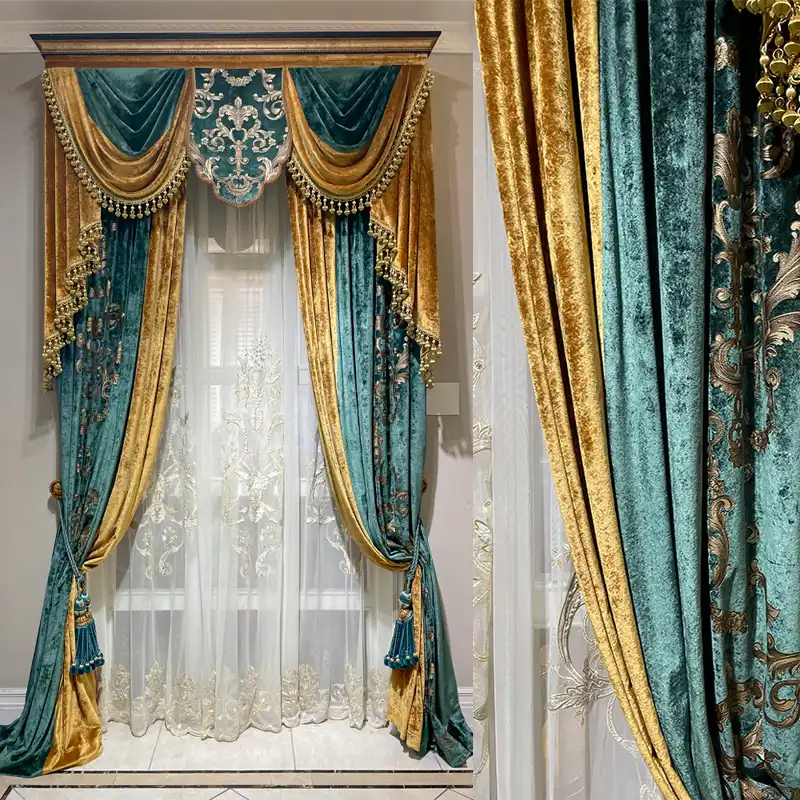
Sourcing curtains from China can give overseas buyers access to a wide range of fabrics, manufacturing capabilities, customization options, and competitive production costs. However, successful sourcing is not simply a matter of finding a supplier with the lowest quotation.
Curtains are textile products with many variables. Fabric composition, GSM, dimensions, color, lining, header style, sewing quality, shrinkage, packaging, and shipping requirements can all affect the final product and total cost.
For wholesalers, retailers, e-commerce brands, hotels, interior designers, and importers, the most reliable approach is to treat curtain sourcing as a structured purchasing process.
This guide explains how overseas buyers can source curtains from China, from defining product requirements and finding suppliers to requesting samples, comparing quotations, checking quality, negotiating orders, and arranging international shipping.
Why Source Curtains from China?
China has an extensive textile and home-furnishing supply chain.
For curtain buyers, this can provide several advantages.
Wide Product Selection
Chinese manufacturers and suppliers can produce many types of curtains, including:
-
Blackout curtains
-
Sheer curtains
-
Polyester curtains
-
Linen-blend curtains
-
Velvet curtains
-
Thermal curtains
-
Hotel curtains
-
Custom curtains
-
Stage curtains
-
Motorized curtain products
The exact range depends on the supplier.
Custom Manufacturing
Many factories support customized production.
Buyers may be able to specify:
-
Curtain dimensions
-
Fabric
-
Fabric weight
-
Color
-
Pattern
-
Header style
-
Lining
-
Stitching
-
Label
-
Packaging
This is particularly useful for private-label brands and commercial projects.
OEM and Private Label
For brands that want to sell curtains under their own name, Chinese suppliers may provide:
-
Custom labels
-
Woven labels
-
Printed labels
-
Custom packaging
-
Product inserts
-
Customized cartons
-
Custom colors
-
Custom product specifications
Different Production Scales
Depending on the factory, buyers can find suppliers for relatively small wholesale orders as well as large commercial projects.
The challenge is selecting a supplier whose production model matches the order.
Step 1: Define Your Curtain Requirements
Before contacting suppliers, prepare a clear product specification.
This is one of the most important steps in the sourcing process.
A supplier cannot provide a meaningful quotation if the buyer only says:
“I need 1,000 curtains. Please send your best price.”
The supplier needs to know what is actually being purchased.
At minimum, define:
-
Product type
-
Quantity
-
Width
-
Finished length
-
Fabric
-
Fabric composition
-
GSM, if important
-
Color
-
Header style
-
Lining
-
Packaging
-
Branding
-
Destination country
For example:
Product: Blackout curtain
Material: 100% polyester
Size: 140 × 240 cm
Color: Beige
Header: Grommet
Lining: Blackout lining
Quantity: 1,000 pieces
Logo: Woven label
Packaging: Individual retail packaging
Destination: United States
This specification gives suppliers enough information to calculate a more useful quotation.
Step 2: Decide What Type of Curtain You Need
Different applications require different specifications.
Residential Curtains
For residential products, buyers often focus on:
-
Appearance
-
Fabric feel
-
Color
-
Light control
-
Size
-
Retail packaging
-
Price
Hotel Curtains
Hotels may require:
-
Blackout performance
-
Fire-retardant materials where applicable
-
Consistent dimensions
-
Large quantities
-
Project-specific colors
-
Long-term supply
-
Installation compatibility
E-Commerce Curtains
Online sellers often need:
-
Attractive appearance
-
Accurate dimensions
-
Consistent color
-
Durable packaging
-
Private labeling
-
Product photography
-
Competitive landed cost
Wholesale Curtains
Wholesalers may prioritize:
-
Price
-
MOQ
-
Product variety
-
Stable supply
-
Packaging
-
Lead time
-
Repeat-order consistency
Understanding the final application helps narrow the supplier search.
Step 3: Find Chinese Curtain Suppliers
There are several ways to identify potential suppliers.
You can search for terms such as:
-
China curtain manufacturer
-
China curtain supplier
-
Curtain factory in China
-
Custom curtain manufacturer
-
Wholesale curtain supplier
-
OEM curtain manufacturer
-
Private label curtain manufacturer
You can also search by specific product:
-
China blackout curtain manufacturer
-
China sheer curtain supplier
-
China hotel curtain manufacturer
-
China velvet curtain factory
-
China linen curtain supplier
The goal at this stage is not to immediately choose one supplier.
Build a shortlist first.
A reasonable initial shortlist might contain several suppliers with relevant experience.
Manufacturer, Supplier or Trading Company?
Not every company selling Chinese curtains is a factory.
You may encounter:
Direct Manufacturer
The company operates its own production facility.
Potential advantages include:
-
Better production control
-
Direct communication with production
-
More customization options
-
Potentially better pricing at larger quantities
Trading Company
A trading company may source products from several factories.
This can also be useful when the buyer wants:
-
Multiple product categories
-
Multiple factories
-
Consolidated purchasing
-
Sourcing assistance
Sourcing Company
A sourcing company may help identify factories, negotiate prices, inspect goods, and coordinate logistics.
The important point is not simply whether a company is a manufacturer.
The real question is:
Can the company reliably deliver the product you need?
Step 4: Verify the Supplier
Before making a significant payment, verify the supplier.
Start with basic company information.
Check:
-
Legal company name
-
Business registration information
-
Company address
-
Website
-
Product specialization
-
Factory location, if applicable
-
Export experience
-
Contact information
If the supplier claims to be a manufacturer, ask for evidence of production capability.
Depending on the situation, this could include:
-
Factory photographs
-
Production-line videos
-
Factory address
-
Production equipment
-
Sample room
-
Previous production examples
-
Factory inspection
For larger orders, an independent factory inspection may be appropriate.
Step 5: Request Product Samples
Do not rely entirely on photographs.
Curtains contain many quality variables that are difficult to evaluate from a screen.
A physical sample allows you to check:
Fabric
Inspect:
-
Composition
-
Thickness
-
GSM
-
Hand feel
-
Surface consistency
-
Color
-
Pattern
Sewing
Look at:
-
Seam straightness
-
Stitch consistency
-
Thread trimming
-
Hemming
-
Header construction
-
Reinforcement
Dimensions
Measure the sample yourself.
If the finished size is important, do not assume the supplier’s stated dimensions are automatically correct.
Blackout Performance
If the product is marketed as blackout, evaluate its actual light-blocking performance.
Color
Compare the sample with the approved color reference under appropriate lighting.
Step 6: Compare Fabric Specifications
Two curtains can look similar but have very different costs and performance.
For example, two products may both be described as polyester curtains.
However, they may differ in:
-
Fiber composition
-
Fabric weight
-
Weave
-
Density
-
Finishing
-
Lining
-
Coating
-
Shrinkage
-
Colorfastness
For larger orders, buyers should request specific technical information rather than accepting broad descriptions.
If fabric composition matters to your market, consider requesting appropriate testing or documentation.
Step 7: Understand Curtain MOQ
MOQ means minimum order quantity.
There is no universal MOQ for Chinese curtains.
Indicative ranges may look like:
Order Type |
Typical Indicative MOQ |
|---|---|
Standard ready-made curtains |
50–200 pcs |
Custom-size curtains |
100–500 pcs |
Custom color/fabric |
300–1,000+ pcs |
OEM/private label |
500–2,000+ pcs |
Hotel/project orders |
Negotiated |
These are general purchasing references, not guaranteed industry standards.
The actual MOQ depends on:
-
Fabric
-
Color
-
Size
-
Order quantity
-
Customization
-
Packaging
-
Production process
-
Factory policy
If your order is small, ask whether existing fabric and colors can be used to reduce the MOQ.
Step 8: Request a Detailed Quotation
A professional RFQ should contain enough information for suppliers to quote the same product.
Ask suppliers to provide:
-
Unit price
-
MOQ
-
Sample price
-
Sample lead time
-
Bulk production lead time
-
Packaging cost
-
Carton quantity
-
Carton dimensions
-
Gross weight
-
Payment terms
-
Trade terms
-
Shipping options
For example, you could request:
1,000 pcs of 140 × 240 cm blackout curtains
with:
-
100% polyester fabric
-
Beige
-
Grommet header
-
Blackout lining
-
Individual packaging
-
Custom logo label
Then ask for both:
-
EXW price
-
FOB price
If shipping is required, request the shipping quotation separately or ask for a complete delivered quotation.
Step 9: Compare the Total Cost
The cheapest factory price does not necessarily mean the cheapest sourcing solution.
Your total landed cost may include:
Product Cost
-
Packaging
-
Inspection
-
Inland transportation
-
Export charges
-
International freight
-
Insurance, if applicable
-
Import duties
-
Taxes
-
Destination charges
The exact components depend on the trade terms and destination.
For example, an EXW quotation and a DDP quotation should not be compared directly because they represent different cost responsibilities.
Step 10: Understand Curtain Pricing
Indicative factory-level prices may fall into broad ranges such as:
Product |
Approximate Range |
|---|---|
Basic polyester curtain |
$2–$6/pc |
Standard blackout curtain |
$4–$10/pc |
Sheer curtain |
$2–$7/pc |
Linen-blend curtain |
$6–$18/pc |
Velvet curtain |
$7–$20+/pc |
Custom/OEM curtain |
$5–$30+/pc |
These are broad reference ranges rather than current quotations.
Actual prices can change significantly according to:
-
Fabric
-
GSM
-
Dimensions
-
Lining
-
Header
-
Color
-
Order quantity
-
Customization
-
Packaging
-
Production complexity
For this reason, buyers should use actual RFQs to determine the final purchase price.
Step 11: Evaluate OEM and Private Label Options
If you are building your own curtain brand, ask suppliers what OEM services they actually provide.
Possible services include:
-
Custom product development
-
Custom dimensions
-
Custom colors
-
Custom fabrics
-
Logo labels
-
Packaging
-
Product inserts
-
Carton markings
Do not assume that “OEM available” means full product development.
Ask specifically what can be changed.
For example:
Can you customize the fabric?
Can you reproduce a specified color?
Can you make our required dimensions?
Can you manufacture according to our technical drawing?
Can you produce branded packaging?
The more customized the product, the more important sample approval becomes.
Step 12: Check Quality Control
Quality control should be discussed before production rather than after problems occur.
A curtain inspection may cover:
Fabric
-
Color
-
Stains
-
Holes
-
Weaving defects
-
Fabric composition
-
Weight
Dimensions
-
Width
-
Length
-
Panel consistency
Sewing
-
Seams
-
Hems
-
Stitching
-
Loose threads
-
Header construction
Appearance
-
Color consistency
-
Pattern alignment
-
Wrinkles
-
Finishing
Packaging
-
Correct labels
-
Correct quantity
-
Packaging integrity
-
Carton markings
For large orders, consider defining acceptance criteria before mass production.
Step 13: Confirm Certifications and Compliance
Curtain compliance requirements depend on the destination market and product application.
Depending on the market, buyers may need to consider:
-
Textile labeling requirements
-
Fiber-content requirements
-
Chemical restrictions
-
Formaldehyde-related requirements
-
Flame-retardancy requirements
-
Colorfastness
-
Relevant textile certifications or testing
Some buyers may also request standards such as OEKO-TEX where appropriate.
However, a certificate should always be checked for its actual scope.
Do not assume that a certificate for one fabric or product automatically applies to every product sold by the supplier.
Step 14: Negotiate With the Supplier
Negotiation should not focus only on reducing the unit price.
You can also negotiate:
-
MOQ
-
Sample cost
-
Packaging
-
Payment terms
-
Lead time
-
Spare pieces
-
Inspection
-
Shipping terms
-
Repeat-order pricing
For example, instead of demanding a lower price immediately, ask:
“If we increase the order from 1,000 to 3,000 pieces, what price can you offer?”
This gives the supplier a clear basis for adjusting the quotation.
Step 15: Confirm Payment Terms
Payment terms should be clearly documented before production.
Common arrangements may include:
-
Deposit + balance before shipment
-
Letter of credit for suitable transactions
-
Other negotiated commercial terms
For new suppliers, buyers should carefully verify the beneficiary information before transferring funds.
If the bank account suddenly changes during an order, confirm the change through an independent communication channel.
Step 16: Approve the Final Production Sample
For customized products, the approved sample should become the reference for mass production.
Keep records of:
-
Sample photographs
-
Dimensions
-
Fabric information
-
Color reference
-
Packaging
-
Label artwork
-
Approved specifications
The more detailed the approved specification, the easier it is to identify deviations during production.
Step 17: Consider a Pre-Shipment Inspection
For a small sample order, buyers may inspect the goods themselves.
For larger commercial orders, a third-party inspection can be useful.
An inspection may check:
-
Quantity
-
Dimensions
-
Appearance
-
Fabric
-
Sewing
-
Packaging
-
Labels
-
Carton markings
-
Random samples from the production lot
The inspection criteria should be agreed before the inspection takes place.
Step 18: Arrange Shipping from China
Curtains are generally suitable for several international shipping methods.
Sea Freight
Best suited to larger wholesale shipments.
It usually offers a lower transportation cost per unit but takes longer.
Air Freight
Useful when delivery speed is more important.
However, transportation costs can be significantly higher.
Express
Usually appropriate for samples and small urgent shipments.
DDP
Door-to-door DDP solutions may be available through suppliers or logistics providers.
Before accepting a DDP quotation, confirm whether the price includes:
-
Export customs clearance
-
International transportation
-
Import customs clearance
-
Duties
-
Taxes
-
Final delivery
A clear quotation prevents misunderstandings later.
Step 19: Check Carton Dimensions and Shipping Weight
Curtains can be relatively lightweight, but packaging dimensions can affect transportation costs.
Before shipment, request:
-
Number of cartons
-
Carton dimensions
-
Gross weight
-
Net weight
-
CBM
For larger orders, these figures help calculate the expected freight cost.
This is particularly important when comparing different packaging solutions.
Step 20: Avoid Common Sourcing Mistakes
Mistake 1: Choosing Only by Price
The cheapest quotation may use a different fabric or specification.
Mistake 2: Skipping Samples
A product photograph cannot fully show fabric quality and sewing.
Mistake 3: Not Defining Dimensions
Different suppliers may interpret curtain size differently.
Mistake 4: Ignoring Packaging
Poor packaging can create damage during international transportation.
Mistake 5: Comparing Different Trade Terms
EXW, FOB, CIF and DDP prices represent different cost responsibilities.
Mistake 6: Ordering Too Much Too Early
For a new supplier, a smaller initial order can reduce risk.
Mistake 7: Not Documenting Specifications
Verbal agreements are difficult to verify later.
Mistake 8: Assuming All Certificates Are Equivalent
Check the actual product scope and testing information.
How Many Chinese Curtain Suppliers Should You Compare?
For an initial sourcing project, comparing several qualified suppliers is usually more useful than contacting dozens of companies without a clear evaluation system.
A practical approach is:
Stage 1: Identify 8–10 potential suppliers.
Stage 2: Remove suppliers that cannot meet your basic specifications.
Stage 3: Request quotations from 3–5 qualified suppliers.
Stage 4: Order samples from the strongest candidates.
Stage 5: Compare product quality, price, MOQ, lead time, communication, and total landed cost.
Stage 6: Select the supplier that provides the best overall fit.
This process creates a more meaningful comparison than simply collecting the largest number of quotations.
China Curtain Sourcing Checklist
Before placing your first order, check:
-
[ ] Product type confirmed
-
[ ] Dimensions confirmed
-
[ ] Fabric composition confirmed
-
[ ] Fabric weight confirmed where necessary
-
[ ] Color approved
-
[ ] Header style confirmed
-
[ ] Lining confirmed
-
[ ] Quantity confirmed
-
[ ] MOQ confirmed
-
[ ] Sample approved
-
[ ] Unit price confirmed
-
[ ] Packaging confirmed
-
[ ] Branding confirmed
-
[ ] Production lead time confirmed
-
[ ] Quality standards confirmed
-
[ ] Relevant compliance requirements checked
-
[ ] Payment terms confirmed
-
[ ] Trade terms confirmed
-
[ ] Shipping cost calculated
-
[ ] Supplier information verified
-
[ ] Inspection arrangements confirmed where necessary
Example Curtain Sourcing Plan
Imagine an overseas retailer wants to import 2,000 blackout curtains.
The retailer could use the following process:
Product Requirements
-
100% polyester
-
140 × 240 cm
-
Beige
-
Blackout lining
-
Grommet header
-
Individual retail packaging
-
Private-label logo
Supplier Search
Identify several Chinese curtain manufacturers and suppliers.
Initial Evaluation
Remove companies that cannot meet:
-
Required dimensions
-
MOQ
-
Fabric requirements
-
Branding requirements
Sample Stage
Order samples from three suppliers.
Evaluation
Compare:
-
Fabric
-
Blackout performance
-
Sewing
-
Dimensions
-
Color
-
Packaging
Commercial Comparison
Compare:
-
Unit price
-
MOQ
-
Lead time
-
Payment terms
-
Packaging
-
Shipping
Verification
Verify the selected supplier and production capability.
Production
Approve the final sample and begin mass production.
Inspection
Conduct pre-shipment inspection if appropriate.
Shipping
Arrange sea freight or another suitable shipping method according to the order size and delivery requirements.
This structured process reduces the chance of selecting a supplier based solely on an attractive initial quotation.
How to Build a Long-Term China Curtain Supply Chain
For buyers who expect repeat orders, supplier selection should be viewed as a long-term decision.
After several orders, track:
-
Defect rate
-
On-time delivery
-
Product consistency
-
Communication
-
Price stability
-
Fabric availability
-
Packaging quality
-
Response to complaints
A good long-term supplier should become increasingly predictable.
For growing brands, the relationship may eventually expand into:
-
Exclusive designs
-
Custom fabrics
-
Private-label packaging
-
Forecast-based production
-
New product development
-
Annual purchasing agreements


No reply content