
China Customized OEM Arts & Crafts Gift Manufacturer
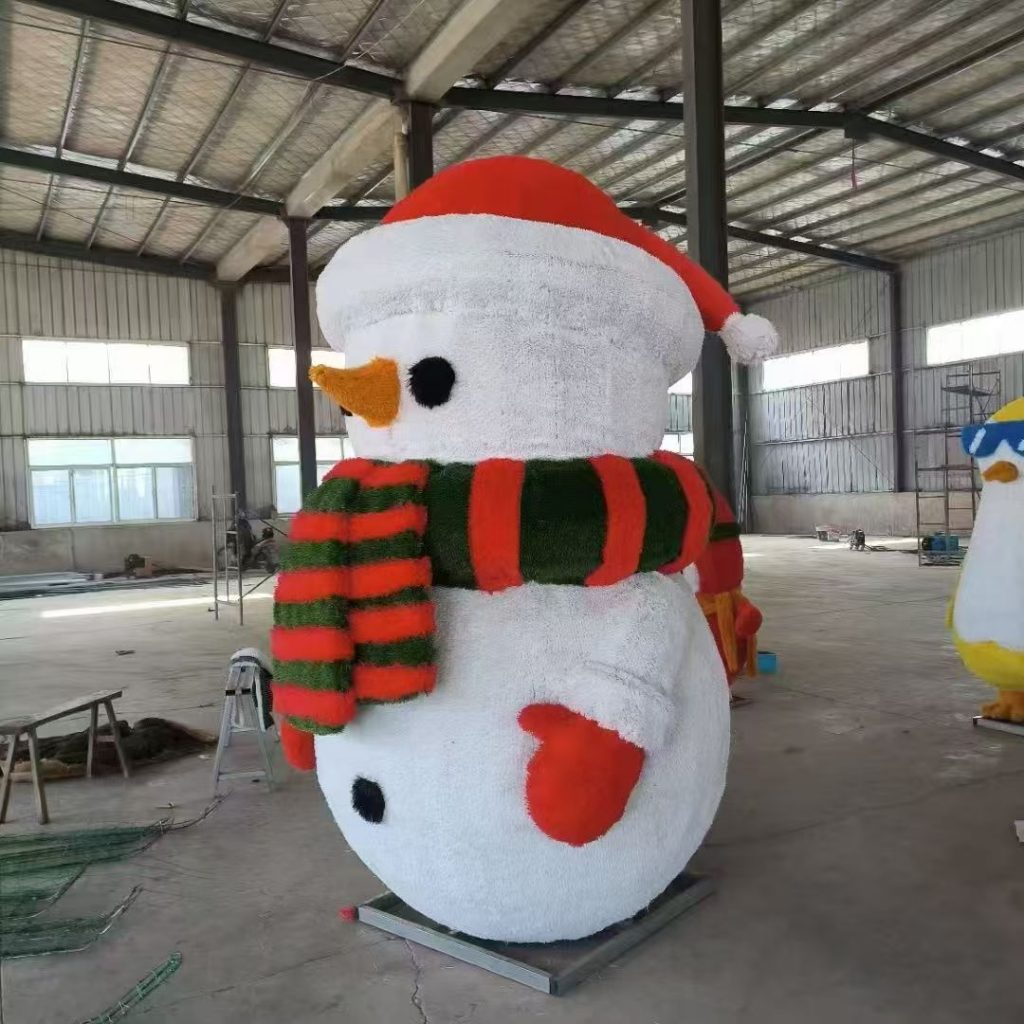
Sourcing Christmas ornaments and figurines from China is a seasonal, high-stakes game. The products are deceptively simple—a glass bauble, a resin Santa, a fabric stocking—but behind each sits a supply chain of raw materials, surface treatments, electronic components (for lighted items), and a compliance stack that varies sharply by destination market. A single misstep in factory selection, certification, or timing can mean your container arrives in January—or worse, gets seized at customs in December.
This guide gives you a complete, professional framework to identify, vet, and partner with the right Chinese manufacturer for Christmas hanging ornaments and tabletop figurines/decorations. No brand names, no promotional recommendations—just the operational truth of how to do this right.
1. Understand the Product Categories Before You Search
“Christmas ornaments and figurines” is not one product line. It spans multiple manufacturing specialties, each with its own material science, production process, and compliance profile. Treating them as a single category is the #1 reason buyers end up with a factory that is excellent at baubles but terrible at electronic lighted figurines.
Core Product Segments
Segment
|
Typical Materials
|
Key Production Process
|
Manufacturing Hub
|
Hanging ornaments (baubles, balls, shapes)
|
Glass, plastic (PVC, PS, acrylic), metal, resin, wood, fabric
|
Blow molding, injection molding, electroplating, spraying, laser cutting
|
Zhejiang (Yiwu), Guangdong
|
Tabletop figurines (Santa, snowman, reindeer, nativity)
|
Resin, PVC, ceramic, wood, plush, metal
|
Sculpting, mold making, painting, assembling
|
Fujian (Quanzhou), Guangdong, Zhejiang
|
Lighted ornaments & figurines
|
Resin/plastic + LED modules + wire + batteries
|
Injection molding + electronic assembly + UL/CE compliance
|
Guangdong (Shenzhen, Dongguan)
|
Fabric & textile decor (stockings, tree skirts, hanging fabric ornaments)
|
Polyester, cotton, felt, non-woven
|
Cutting, sewing, embroidery, printing
|
Zhejiang, Jiangsu
|
Paper & cardboard decor (gift tags, hanging paper ornaments)
|
Paper, cardboard
|
Printing, die-cutting, gluing
|
Zhejiang (Wenzhou, Yiwu)
|
Natural material decor (wood, rattan, pinecone, dried florals)
|
Wood, rattan, plant fibers
|
Carving, weaving, drying, preserving
|
Zhejiang, Fujian
|
Why This Matters for Factory Selection
A factory that excels at injection-molded plastic baubles will likely struggle with hand-painted resin figurines. A workshop mastering ceramic figurines may have zero capability for electroplating glass ornaments. Match your specific product type to a factory’s core competency—this single decision determines 70% of your outcome.
2. China’s Christmas Decor Manufacturing Landscape
Zhejiang Province (Yiwu, Ningbo, Taizhou, Wenzhou)
The dominant hub. Industry estimates credit the Yiwu region with producing approximately 60–80% of the world’s Christmas decorations across 500+ specialized factories and a dedicated holiday zone inside the Yiwu International Trade City market (60,000+ vendors total).
Strengths:
-
Unparalleled raw material access (PVC, PP, resin, textiles, paper)
-
Lowest FOB prices for basic ornaments ($0.10–$0.60/pc for glass/plastic baubles)
-
MOQs as low as 300–1,000 pcs per design
-
Massive labor pool for labor-intensive hand painting and assembly
-
Mature export logistics via Ningbo port
Considerations:
-
Quality consistency can be variable on complex items; third-party QC strongly recommended for orders >$50K
-
Compliance infrastructure is lighter than Guangdong; ~30% hold basic BSCI certification
-
Peak-season congestion at Ningbo port
Best for: Private-label basics, high-volume standard ornaments, fabric/textile decor, cost-sensitive programs
Guangdong Province (Shenzhen, Dongguan, Huizhou, Shantou)
The hub for compliant, complex, and electronic-integrated decorations.
Strengths:
-
Deep electronics supply chain (Shenzhen) for LED modules, controllers, sensors
-
Higher concentration of BSCI/Sedex-certified factories (≈65%)
-
72% have in-house labs for safety/EMC testing
-
Defect rates of 1–3% (vs. 3–8% in Zhejiang for complex items)
-
Strong R&D teams; 55% offer customization depth
-
Full REACH, RoHS, CA Prop 65, CPSC documentation
Considerations:
-
8–12% higher FOB prices than Zhejiang for comparable basic items
-
LED string lights: $1.80–$3.00/set
-
MOQ discounts less aggressive
Best for: Lighted ornaments, electronic figurines, smart/app-controlled decor, retailer-compliant programs (Walmart, Target, Amazon, Aldi, Lidl)
Fujian Province (Quanzhou)
Specialized in resin crafts and bamboo/wicker eco-decor.
Strengths:
-
World-class resin sculpture and hand-painting workshops
-
Mature export history to US/EU retailers
-
Strong capability for mid-to-premium figurines
Best for: Resin Santa/snowman/reindeer figurines, nativity sets, decorative sculptures
Other Regions
Jiangsu (Suzhou) for niche metal laser-cut ornaments; Shandong for glass-blown baubles; Hebei for felt and textile accessories. None holds more than 5% market share for core Christmas volume but serves specialized niches.
3. The Seasonal Timing Reality: Why Your July Order Is the One That Arrives
This is the most critical—and most ignored—aspect of Christmas decor sourcing. The holiday season is immovable, but production and shipping capacity is finite. Missing the window means missing the season entirely.
The 2026 Production Calendar
Window
|
Production Status
|
Lead Time
|
Action
|
January–March
|
Off-peak, full capacity
|
35–45 days
|
Ideal for new product development, sampling, mold making
|
April–June
|
Pre-peak, ramping up
|
35–45 days
|
Place orders for Q4 delivery
|
July
|
Peak season begins
|
45–60 days
|
Critical cutoff for reliable pre-Christmas arrival
|
August–September
|
Peak, capacity constrained
|
55–70 days
|
High risk of delays; Ningbo port congestion
|
Late September
|
Last safe sail date
|
30–40 days ocean transit
|
Cargo MUST be on vessel by late September
|
October 1
|
Golden Week factory shutdown
|
7–14 days downtime
|
Effectively stops all production
|
November–December
|
Emergency only
|
Air freight only
|
5–8× ocean cost; often impossible for volume
|
The Hard Deadline
For reliable pre-Christmas retail stock, you must place orders in June–August. Cargo must be ready to sail by late September. After the October 1 Golden Week shutdown, ocean transit of 30–40 days makes pre-Christmas arrival mathematically impossible.
⚠️ Real-world consequence: A US importer placing a 500,000-unit ornament order in September will almost certainly miss Black Friday. Plan backwards from your on-shelf date, not forwards from today.
4. Factory Verification: Separating Real Manufacturers from Trading Companies
The Christmas decor space is saturated with intermediaries posing as factories. A trading company adds 15–40% markup and has no production control. Here’s how to verify.
Hard Verification Checklist
Verification Dimension
|
What to Check
|
Red Flag
|
Business license
|
Verify via China’s National Enterprise Credit Information Publicity System (gsxt.gov.cn); confirm business scope includes “manufacturing” (生产)
|
Scope only lists “trading” (贸易) or “sales” (销售)
|
Registered capital
|
Adequate registered capital for a manufacturing entity
|
Very low registered capital (<¥1M) for a claimed factory
|
Production site
|
Minimum 2,000–5,000 m² for stable capacity; conduct on-site inspection
|
Registered address is a commercial office building
|
Production line
|
Actual manufacturing lines: injection molding, painting, assembly, packaging
|
“Partners handle manufacturing” or vague answers
|
In-house mold workshop
|
Five-axis CNC, EDM, mold maintenance capability
|
No mold-making capacity = pure assembler
|
Independent QC team
|
Dedicated quality department with documented inspection procedures
|
QC is just final packing inspection
|
Bank account
|
Wire beneficiary must match business license entity exactly
|
Personal account or different legal entity
|
Third-party audit
|
SGS, TÜV, Intertek, or BV on-site audit (1,000+ point checklist)
|
Refuses or stalls on audit requests
|
Export history
|
Customs export records, bill of lading references
|
Cannot provide any export evidence
|
Client references
|
3+ verifiable references from brands in your target market
|
Only provides “confidential” references or none
|
Quality System Indicators
A quality-focused manufacturer typically demonstrates:
-
ISO 9001 quality management certification
-
BSCI or Sedex social compliance audit (critical for EU/US retailers)
-
Segmented QC process: raw material incoming inspection → semi-finished product spot check → finished product full inspection → pre-shipment re-inspection
-
In-house testing: colorfastness, tensile strength, drop test, small parts test, paint adhesion, salt spray (for metal), functional testing (for electronic items)
-
Traceability: Batch numbers, production dates, material certificates
5. MOQ and Pricing: Real Numbers
Based on current market conditions, here are realistic reference points. Treat as directional—actual quotes vary with material costs, order size, and season.
Product Type
|
Typical MOQ (per design/colorway)
|
FOB Price Band (USD)
|
Glass/plastic baubles
|
300–1,000 pcs
|
$0.10–$0.60/pc
|
Resin figurines (small, <15cm)
|
300–1,000 pcs
|
$0.50–$3.00/pc
|
Resin figurines (large, >30cm)
|
200–500 pcs
|
$3.00–$8.00/pc
|
Fabric hanging ornaments
|
500–2,000 pcs
|
$0.30–$1.50/pc
|
LED lighted ornaments
|
500–2,000 sets
|
$0.80–$3.00/set
|
Music box figurines
|
300–1,000 pcs
|
$1.50–$6.00/pc
|
Acrylic/crystal ornaments
|
500–1,000 pcs
|
$0.50–$2.50/pc
|
Wooden ornaments
|
500–1,000 pcs
|
$0.40–$2.00/pc
|
Custom mold development
|
N/A
|
$200–$1,500 per mold (injection); $100–$800 per resin mold
|
Sampling (per round)
|
N/A
|
$50–$250 per sample set
|
Hidden cost components to include in your model:
-
Custom mold fees (one-time, amortized across order volume)
-
Custom color/dye surcharges (small-batch dye runs: $30–$150 setup)
-
Electroplating/coating surcharges for metallic finishes
-
Safety testing ($400–$1,500 per material/design for target market)
-
Custom packaging (printed boxes, inserts, hang tags)
-
Third-party inspection ($300–$500 per inspection)
-
Ocean freight (Shanghai/Ningbo/Shenzhen → LA/Long Beach: $6–$14/carton; → Felixstowe/Hamburg: $7–$16/carton)
-
Import duties (see Section 6)
6. Compliance & Certification: The Non-Negotiable Stack
This is where most first-time importers fail. A product that doesn’t meet destination market compliance will be seized at customs, rejected by retailers, or trigger recalls.
United States
Product Type
|
Required Certifications
|
Non-electronic ornaments (glass, plastic, resin, wood, fabric)
|
CPSIA (lead ≤100 ppm substrate, ≤90 ppm surface coating; phthalates ≤0.1% each); ASTM F963-23 (physical/mechanical, flammability, heavy elements); CPC (Children’s Product Certificate) + test report
|
Christmas toys, plush toys, figurines for children
|
ASTM F963-23 + CPSIA + CPC; 16 CFR 1303 (lead paint); 16 CFR 1307 (phthalates); tracking label per CPSIA Section 103
|
LED light strings & lighted ornaments
|
UL 588 (de-facto mandatory for retail/Amazon clean customs); FCC Part 15 (electromagnetic); RoHS
|
Products with button batteries
|
UL 4200A + GCC certificate
|
Remote-control/wireless decorations
|
FCC certification
|
Art & craft kits
|
ASTM F963 + LHAMA (chronic hazard labeling)
|
⚠️ Critical: UL 588 is not federal law, but it is the de-facto gate for US retail, Amazon, and clean customs release. Unlisted lights are the #1 rejection risk. If your supplier cannot provide a valid UL 588 test report from an accredited lab for your exact model, do not proceed.
European Union
Product Type
|
Required Certifications
|
Non-electronic ornaments
|
REACH (Annex XVII: lead, phthalates, PAHs, formaldehyde, nickel); CE marking; EN71-1 (mechanical), EN71-2 (flammability), EN71-3 (chemical) if toy-applicable
|
Toys and children’s figurines
|
Toy Safety Directive 2009/48/EC; EN71-1/-2/-3 test reports; CE Declaration of Conformity; EU Representative
|
Electrical/LED decorations
|
CE-LVD (low voltage), CE-EMC (electromagnetic), CE-RoHS (10 restricted substances), CE-RED (wireless); EN 60598 for luminaires
|
Battery-operated items
|
CE-Battery directive; battery compliance
|
General
|
WEEE registration, packaging law (EPR), battery law (EPR)
|
United Kingdom
Product Type
|
Required Certifications
|
All electrical items
|
UKCA-LVD, UKCA-EMC, UKCA-RoHS
|
Toys
|
UKCA Toy Safety (BS EN71)
|
General
|
UK Responsible Person (UKRP)
|
Canada
Product Type
|
Required Certifications
|
Toys
|
CCPSA (SOR/2011-17) physical & chemical
|
Electrical items
|
CSA C22.2; ISED (wireless)
|
General
|
MSDS for chemicals
|
Key Compliance Principles
-
Model-specific certificates: A generic “CE mark” or “UL certified” claim without a test report for your exact model is legally insufficient. Customs will reject it.
-
Accredited labs only: US requires CPSC-accredited labs; EU requires ISO 17025-accredited labs. Reports from non-accredited labs are worthless.
-
Certificate age: A test report older than 2 years may not cover material/design changes. Require fresh testing for new colorways or components.
-
Labeling requirements: Children’s products require tracking labels (manufacturer, address, production date, batch number). EU requires CE mark, manufacturer info, EU Rep info, age grading, and warnings on packaging.
-
California Proposition 65: For US sales into California, compliance with Prop 65 chemical warnings is essential—many Chinese factories now build this into their standard compliance package.
7. The Sampling & Approval Protocol
Never proceed to bulk production without a rigorous sampling process. A typical program follows this sequence:
Sample Development Stages
-
Proto Sample (15–21 days) – Tests design concept and basic construction. May use substitute materials.
-
Pre-Production (PP) Sample (7–14 days after proto approval) – Made with actual bulk materials on actual production line. This becomes your “Gold Sample”—the legal benchmark for bulk acceptance.
-
Color Approval – Provide physical color standards (Pantone references) and require factory to match within tolerance (Delta-E ≤ 2.0).
-
Size Set / Production Trial – 3–5 units across your size/color range to verify consistency.
-
Sealed Sample – Lock away 2–3 pairs of approved PP samples in controlled environment as legal reference.
-
Top of Production (TOP) Sample – Pulled from first mass production run to confirm consistency.
What to Test on Samples
Test Category
|
Specific Tests
|
Material safety
|
Heavy metal migration (EN71-3, CPSIA), phthalates, lead content, formaldehyde, PAHs
|
Mechanical safety
|
Small parts (choke hazard), sharp points/edges, tensile strength of attachments (hooks, ribbons), pull strength of glued joints
|
Flammability
|
Burn rate per ASTM F963 / EN71-2
|
Colorfastness
|
Rub testing (dry/wet), light exposure, wash fastness
|
Durability
|
Drop test, impact test, fatigue test for movable parts
|
Electronic (if applicable)
|
UL 588 functional test, electrical safety, battery compartment security
|
Paint adhesion
|
Cross-cut tape test, salt spray (metal items)
|
Packaging
|
Shipping carton drop test, barcode scannability
|
Commission blind testing: send a randomly selected production sample to an independent accredited lab (SGS, TÜV, Intertek, BV) under your own account, without informing the factory of the submission. This is the only way to verify that the unit you receive matches the unit that was certified.
8. Quality Control During Production
Even with a vetted factory, you need independent checkpoints:
During Production Inspection (DUPRO)
-
Timing: When 20–30% of goods are completed
-
Purpose: Catch material substitution, color deviation, or systematic process errors early
-
Cost: $300–$450 per inspection
Final Random Inspection (FRI)
-
Timing: When 80%+ goods finished and packed
-
Standard: AQL 2.5 for Major defects, AQL 1.0 for Critical defects
-
Sampling: MIL-STD-105E / ISO 2859-1
-
Cost: $300–$500 per inspection
-
Leverage: Withhold final 70% payment until FRI passes
Container Loading Supervision
-
Purpose: Verify correct SKU mix, quantity, carton condition
-
Cost: $200–$350 per container
Critical defects (e.g., lead exceeds limit, small parts detach creating choke hazard, electrical short) = reject batch
Major defects (e.g., color mismatch, paint flaw, glue visible) within AQL 2.5 = accept with penalty
Minor defects (e.g., minor cosmetic blemish) within AQL 4.0 = accept
9. Contract & IP Protection
Essential Contract Clauses
Clause
|
Requirement
|
Tooling/mold ownership
|
All molds, tooling, and design IP you pay for belongs to you; return procedure specified
|
IP protection
|
Chinese-law NNN (Non-Disclosure, Non-Use, Non-Circumvention) agreement signed BEFORE tech pack sharing
|
Quality benchmark
|
Sealed Gold Sample is legal benchmark; AQL 2.5 Major, AQL 1.0 Critical
|
Defect penalties
|
Liquidated damages for defect rates exceeding threshold
|
Delivery penalties
|
1% of order value per week of delay beyond agreed ETD
|
Payment terms
|
30% deposit, 70% against B/L copy after FRI passes—never 100% upfront
|
Certification responsibility
|
Manufacturer bears responsibility for valid certifications on exact model supplied; indemnifies buyer for non-compliance
|
Material substitution prohibition
|
Explicit ban with penalties; requires advance written approval for any material change
|
Subcontracting disclosure
|
Written disclosure and approval required for ANY subcontracting
|
Governing law
|
Chinese law with arbitration in recognized Chinese arbitration body
|
IP Protection for Original Designs
-
Register your trademark in China via CNIPA before contacting factories
-
Sign Chinese-law NNN agreement drafted by a qualified China IP lawyer
-
Component segregation (for novel designs): source molding from one factory, painting/assembly from another, final integration from a third—no single entity has the complete blueprint
10. Logistics & Cost-to-Land
Duty & Tariff Map (US, 2026)
Product
|
HTS Code
|
Base Duty
|
China-Specific Surcharge
|
Glass/plastic ornaments
|
9505.10.10 / .25
|
0% (Free)
|
+7.5% Section 301 List 4A
|
LED light strings
|
9405.31.00
|
8%
|
+7.5% Section 301 List 4A
|
Artificial trees
|
9505.10.25
|
0% (Free)
|
+7.5% Section 301 List 4A
|
Wreaths/garlands
|
9505.10 / 6702
|
0%–4.5%
|
+7.5% Section 301
|
Figurines/nativity
|
9505.10.30 / .25
|
0% (Free)
|
+7.5% Section 301
|
Note: The China-specific surcharge in 2026 is 7.5% (Section 301 List 4A). The IEEPA “reciprocal” tariffs were struck down by the Supreme Court in February 2026. Confirm live rates with your customs broker—policy has shifted repeatedly.
EU Duty Rates
-
Ornaments: Typically 0–3% under HS 9505
-
Lighted decorations: 3–5% under HS 9405
-
Plus VAT (19–27% by member state, recoverable if VAT-registered)
-
Plus EPR obligations (WEEE, packaging, battery)
Complete Landed Cost Example
For 5,000 resin Santa figurines (mid-range, $1.80 FOB/pc) shipped to Los Angeles:
Cost Component
|
Total (USD)
|
Per-Piece
|
Tooling amortization
|
$1,200
|
$0.24
|
FOB production (5,000 × $1.80)
|
$9,000
|
$1.80
|
Safety testing (CPSIA/ASTM)
|
$1,200
|
$0.24
|
Inspection (DUPRO + FRI)
|
$750
|
$0.15
|
Ocean freight (60 cartons)
|
$660
|
$0.13
|
US import duty (7.5% of FOB+ freight)
|
$727
|
$0.15
|
Customs broker & ISF
|
$250
|
$0.05
|
Cargo insurance
|
$90
|
$0.02
|
Total Landed Cost
|
$13,877
|
$2.78/pc
|
With a target retail of $9.99–$14.99, your DTC gross margin is 72–81%—healthy. But this only works if FOB stays at $1.80. Hidden costs (material substitution, re-testing, air freight for delays) can push landed cost to $3.50+/pc, compressing margin to 65% or below.
11. The 10-Point Pre-Order Checklist
Before signing any contract or releasing deposits:
-
✅ Business license verified via SAMR system; manufacturing scope confirmed; bank account matches
-
✅ Factory audited by third party (SGS/TÜV/Intertek/BV) using 1,000+ point checklist
-
✅ Production capability matched to your specific product type (ornament material, process)
-
✅ Certifications verified on issuing body’s database for the exact model (UL 588 for US lights; EN71/ASTM F963 for toys; CE/RoHS/REACH for EU)
-
✅ Gold Sample sealed and stored as legal benchmark
-
✅ Blind sample testing commissioned at independent accredited lab; all tests passed
-
✅ Manufacturing contract signed with IP protection, quality benchmarks, delivery penalties, Chinese-law governance
-
✅ Compliance documentation complete: test reports, Declarations of Conformity, CPC certificates, labeling files
-
✅ Timeline confirmed against the September sail-date deadline
-
✅ Reference customers contacted in your target market with similar order profiles
12. Common Pitfalls to Avoid
Pitfall
|
Consequence
|
Mitigation
|
Choosing cheapest quote
|
Substandard materials (recycled PVC, lead-exceeding paint), high defect rate
|
Request material certs; compare 3–5 quotes; never select on price alone
|
Missing the September sail date
|
Container arrives in January; entire season lost
|
Place orders by July; build 2–4 week buffer
|
Trading company disguised as factory
|
15–40% markup, no production control, finger-pointing
|
On-site audit; match bank account to business license
|
Using IEC report as UL substitute
|
US customs rejection, Amazon removal
|
Require UL 588 from accredited lab for exact model
|
Generic CE mark without EN71 report
|
EU customs seizure
|
Require model-specific EN71 test report + DoC
|
Skipping blind testing
|
Material substitution passes factory QC but fails destination compliance
|
Commission independent lab testing under your own account
|
Inadequate small-parts testing
|
Choking hazard; CPSC recall; $100M+ penalty exposure
|
Enforce ASTM F963 small parts test; require CPC
|
No mold ownership clause
|
Factory holds your molds hostage; cannot switch vendors
|
Contractual ownership + physical retrieval right
|
Weak IP protection
|
Design copied and sold to competitors within 60 days
|
Chinese-law NNN + CNIPA trademark + component segregation
|
Underestimating peak-season lead time
|
August order cannot ship before Golden Week
|
Plan 60–70 days production for peak season orders
|
No cargo insurance
|
Ocean loss/damage becomes 100% your cost
|
Insure at 0.3–0.5% of shipment value
|
Voltage/frequency mismatch
|
Lighted items incompatible with local grid
|
Confirm 110V/60Hz (North America), 220V/50Hz (EU), 220V/60Hz (Japan) before production
|
13. After-Sales & Long-Term Partnership
A Christmas decor program is seasonal but recurring. Your manufacturer should provide:
-
Minimum 1-year warranty on defects (2 years for electronic items)
-
Reorder efficiency: Tooling retained; reorder lead time 30–45 days (off-peak)
-
Spare parts: Replacement hooks, batteries, LED modules available for minimum 3 years
-
Responsive communication: ≤4 hour response during development; dedicated account manager
-
Continuous innovation: New designs presented annually; market trend intelligence shared
-
Capacity reservation: Priority production slot booking for next season by Q1
Final Thoughts
Sourcing Christmas ornaments and figurines from China is a discipline that rewards preparation and punishes improvisation. The Chinese Christmas decor industry is mature, vast, and globally dominant—but it demands that buyers respect its seasonal rhythms, verify factory claims independently, and build compliance into the product from day one.
The right manufacturer is not the cheapest quote. It is the one that:
-
Has proven expertise in your specific ornament type (glass, resin, fabric, lighted, etc.)
-
Operates a real factory with in-house production, mold-making, and QC infrastructure
-
Holds all required certifications for your target market—verified on the issuer’s database for your exact model
-
Demonstrates compliance discipline through BSCI/Sedex audits and segmented quality processes
-
Respects timelines with enough buffer to hit the September sail-date deadline
-
Stands behind its products with documented warranties and responsive after-sales
The cost of due diligence—factory audit ($1,800–$3,500), blind sample testing ($800–$2,000), certification verification, legal contract review—is $3,000–$8,000. Compared to the cost of a seized container, a missed season, or a CPSC recall with penalties up to $100 million per violation, this is the cheapest insurance you will ever buy.
Your Christmas ornaments are not just products—they are the emotional centerpiece of millions of households’ holiday celebrations. Choose your manufacturer as if your brand’s survival depends on it. Because it does.
FAQ
Q: What is the realistic minimum order quantity (MOQ) for custom Christmas ornaments from Chinese manufacturers?
A: For standard designs, MOQs range from 300–1,000 pieces per design/colorway for baubles and small figurines. Lighted ornaments typically require 500–2,000 sets MOQ. Fully custom designs requiring new molds start at 2,000+ units to amortize tooling costs. Some Yiwu factories offer lower MOQs (500–1,000 total) for standard items, but per-unit costs will be 15–25% higher than at 5,000+ units. For micro-batches under 500 pieces, consider stock designs with custom coloring/logos rather than fully custom molding.
Q: How long does the entire process take from first contact to receiving goods?
A: A realistic timeline is 3–5 months: 2–3 weeks for factory vetting and quotation, 6–10 weeks for sampling and revisions (including mold development if needed), 35–55 days for bulk production, and 30–40 days for ocean freight. Peak season (August–October) adds 15–20 days to production. For a reliable pre-Christmas arrival, you must place orders by July at the latest.
Q: Which certifications are absolutely mandatory for exporting Christmas ornaments to the US and EU?
A: For the US: CPSIA compliance (lead ≤100 ppm substrate, phthalates ≤0.1%), ASTM F963-23 test report, and CPC certificate for any item that could be considered a children’s product. For lighted ornaments: UL 588 (de-facto mandatory). For the EU: CE marking with EN71 test reports (if toy-applicable), REACH compliance, RoHS (for electrical items), and WEEE/packaging EPR registration. A generic “CE mark” without model-specific EN71 reports is legally insufficient and will be rejected by customs.
Q: How do I verify that a manufacturer is using compliant, safe materials (no lead, no phthalates)?
A: Request material test reports from an accredited lab (CPSC-accredited for US, ISO 17025 for EU) for the exact materials and model you’re ordering—not a generic factory certificate. The reports must show: lead content ≤100 ppm (substrate) / ≤90 ppm (paint), phthalates ≤0.1% each, heavy metal migration within EN71-3 limits. For ultimate verification, commission blind testing: submit a random production sample to an independent lab under your own account without informing the factory. This is the only way to ensure the unit you receive matches the unit that was certified.
Q: What happens if my bulk shipment doesn’t match the approved Gold Sample?
A: Your manufacturing contract should specify that the sealed Gold Sample is the legal benchmark for bulk acceptance. If Final Random Inspection (AQL 2.5) reveals material substitution, defect rates exceeding thresholds, or non-conformance with the Gold Sample: (1) Immediately notify the factory in writing with photographic/video evidence; (2) Withhold the final 70% balance payment (your primary leverage); (3) Demand a Corrective and Preventive Action (CAPA) plan within 5 business days; (4) Require rework or replacement at manufacturer’s expense; (5) If the manufacturer refuses, initiate dispute resolution per contract (typically arbitration in a Chinese arbitration body under Chinese law). Payment withholding is legally justified only if you can prove non-conformance against the sealed sample.
Q: How do I avoid my original ornament designs being copied and sold to competitors?
A: Implement a three-layer defense: (1) Register your trademark in China via CNIPA before contacting factories; (2) Sign a Chinese-law NNN agreement (Non-Disclosure, Non-Use, Non-Circumvention) drafted by a qualified China IP lawyer—a standard Western NDA is effectively unenforceable in Chinese courts; (3) For truly novel designs, use component segregation: source mold-making from one factory, painting/electroplating from another, final assembly from a third. No single entity possesses the complete blueprint, eliminating the incentive for IP theft.
Q: Can I really get my ornaments delivered in time if I start sourcing in September?
A: Realistically, no—not via ocean freight. By September, you’re past the reliable sail-date window. Your only option would be air freight (5–8× ocean cost) or accepting a post-Christmas arrival. The hard deadline is: cargo must sail by late September to arrive before Christmas. After the October 1 Golden Week shutdown, ocean transit of 30–40 days makes pre-Christmas arrival mathematically impossible. If you’re starting in September, either reduce your order to air-freight-friendly volume or defer your launch to next season and use the time for proper development.
Q: What’s the true landed cost difference between sourcing from Zhejiang vs. Guangdong?
A: For basic plastic baubles, Zhejiang FOB is typically 8–12% lower than Guangdong. However, when you factor in the higher QC costs in Zhejiang (third-party inspection is almost mandatory for orders >$50K due to variable quality), potential rework expenses, and compliance documentation gaps, the effective landed cost gap narrows to 3–5%. For lighted ornaments or electronic figurines, Guangdong’s higher FOB is justified by superior compliance infrastructure, lower defect rates (1–3% vs. 3–8%), and in-house testing labs—making Guangdong the better value despite higher unit prices. Choose Zhejiang for private-label basics where price is paramount; choose Guangdong for retailer-compliant electronic/lighted items.


No reply content