
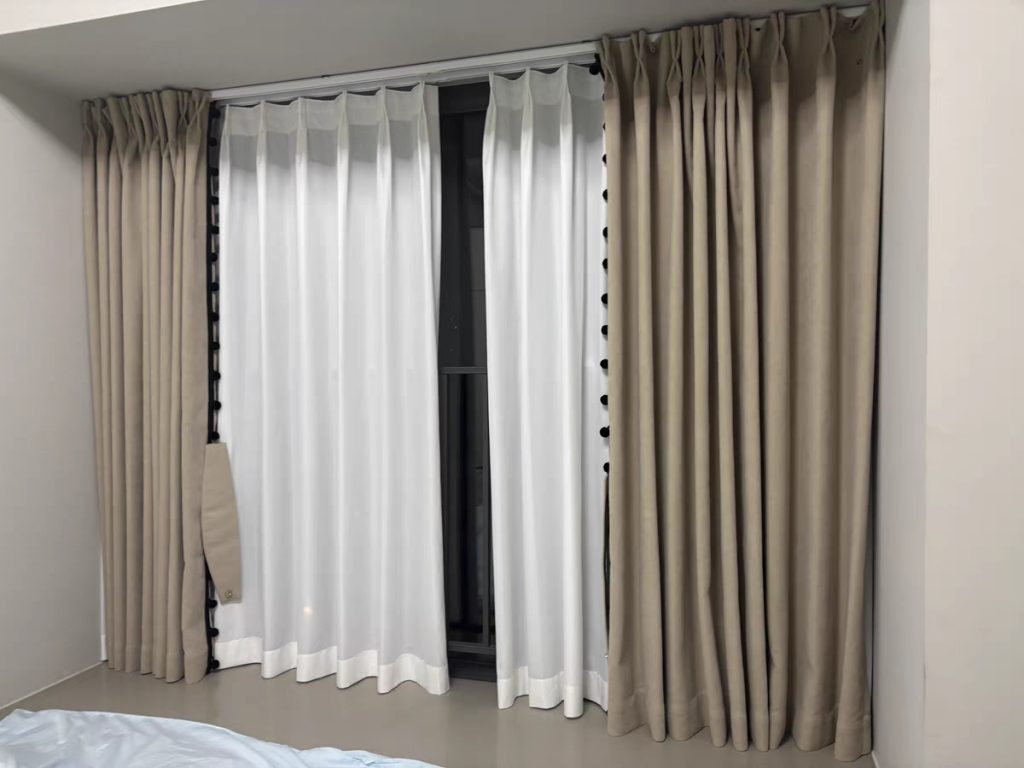
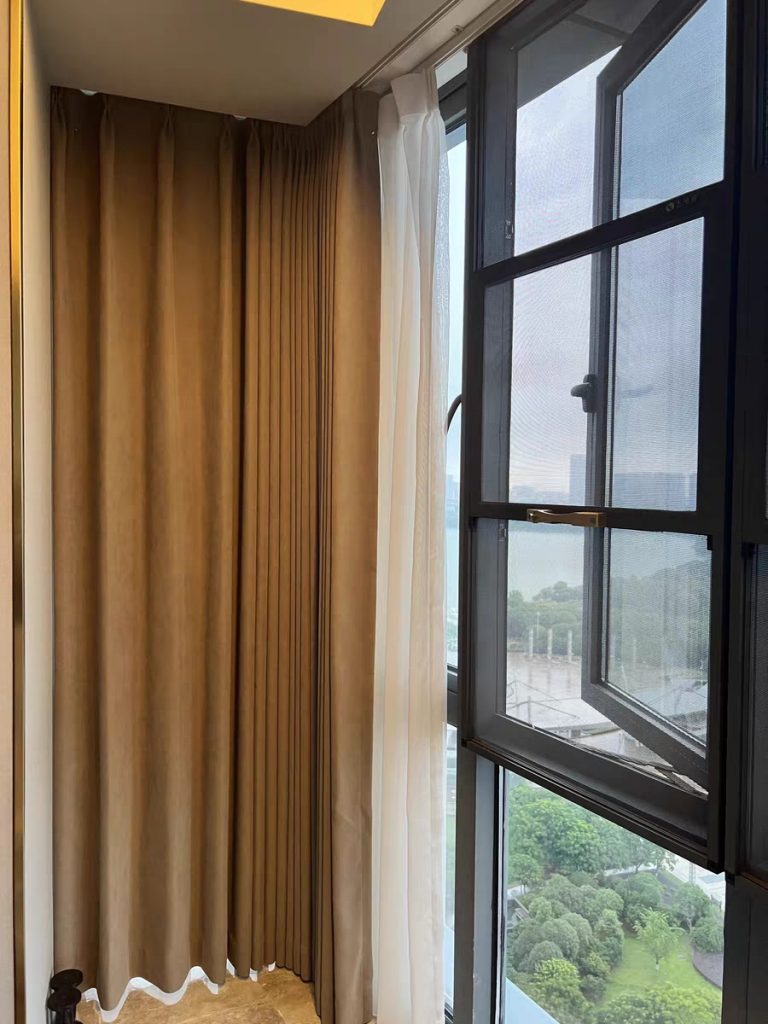
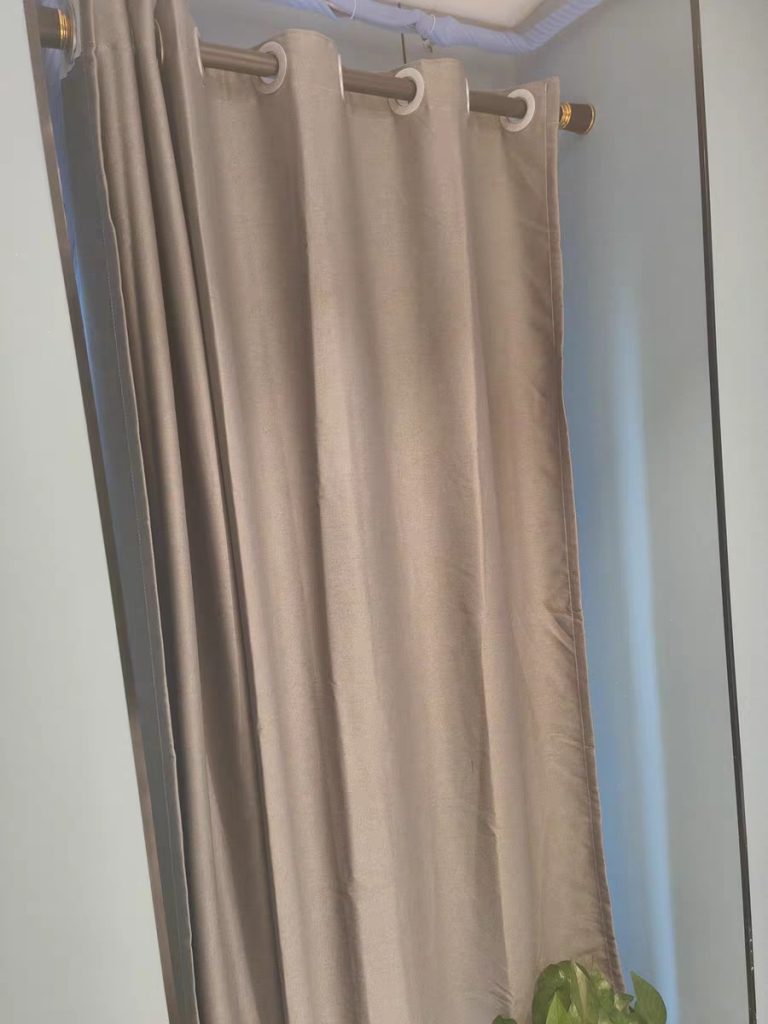
When a hotel project requires hundreds or even thousands of curtains, buying ready-made products is usually not enough. Different rooms may require different sizes, fabrics, blackout levels, colors, lining options, tracks, and installation methods.
For this reason, many hotel developers, contractors, interior designers, and wholesalers choose to work directly with a custom curtain supplier in China.
However, ordering custom curtains is different from buying standard products. The more complete your specifications are before requesting a quotation, the easier it is for the supplier to calculate the correct price and production schedule.
This guide explains what hotel buyers should prepare before placing a custom curtain order from China.
1. Start With the Hotel Project Requirements
Before contacting a curtain manufacturer, prepare the basic information about the project.
Useful information includes:
- Hotel type and number of rooms
- Number of windows
- Window width and height
- Curtain quantity
- Required delivery date
- Installation location
- Preferred fabric
- Required color
- Blackout requirements
- Curtain style
- Track or rod requirements
- Packaging requirements
If the project contains several room types, separate the requirements by room.
For example:
| Room Type | Window Size | Curtain Type | Quantity |
|---|---|---|---|
| Standard Room | 2.4 × 2.2 m | Blackout + Sheer | 120 sets |
| Deluxe Room | 2.8 × 2.4 m | Blackout + Sheer | 60 sets |
| Suite | 3.2 × 2.6 m | Blackout + Decorative | 20 sets |
This information gives the manufacturer a much clearer picture of the order.
2. Choose the Right Curtain Fabric
Fabric selection can significantly affect the final price and performance of hotel curtains.
For hotel projects, buyers commonly consider:
- Blackout fabric
- Dimout fabric
- Sheer fabric
- Linen-look fabric
- Polyester fabric
- Flame-retardant fabric
- Sound-reducing fabrics
- Custom woven fabrics
The best choice depends on the room and project requirements.
For guest bedrooms, blackout performance may be particularly important. For lobby areas, restaurants, conference rooms, and public spaces, appearance and durability may have greater importance.
If the hotel has a specific interior design, sending a fabric sample, color reference, Pantone reference, or design image can help the supplier understand the required finish.
3. Confirm the Curtain Dimensions
One of the most important parts of a custom curtain order is measurement.
The supplier needs to know whether the dimensions you provide are:
- Window dimensions
- Finished curtain dimensions
- Wall-to-wall dimensions
- Ceiling-to-floor dimensions
- Track dimensions
These measurements should not be mixed.
For example, if a buyer tells the supplier that the window is 2 meters wide, this does not automatically mean that the finished curtain should also be 2 meters wide.
The curtain may require additional fullness depending on the selected style.
For this reason, hotel buyers should confirm the required fullness ratio and finished dimensions before production.
4. Decide the Curtain Fullness
Curtain fullness determines how much fabric is used across the curtain width.
Common fullness requirements may include approximately:
- 1.5×
- 2×
- 2.5×
- 3×
The correct ratio depends on the design, fabric, curtain heading, and project requirements.
A hotel buyer should confirm the desired appearance with the supplier before production rather than leaving the decision entirely to the factory.
A simple technical drawing can also help avoid misunderstandings.
5. Discuss Blackout Requirements
Not every hotel project requires the same level of light blocking.
For bedrooms, buyers may request a higher blackout performance. Other areas may only require light filtering.
When requesting a quotation, specify whether you need:
- Standard blackout
- High blackout
- Dimout
- Room-darkening
- Decorative curtains combined with blackout lining
If the hotel has strict performance requirements, ask the supplier whether samples or test reports are available before approving mass production.
6. Confirm the Curtain Heading and Hardware
The curtain heading affects both appearance and installation.
Depending on the project, options may include:
- Pinch pleat
- Double pinch pleat
- Ripple fold
- Wave curtain
- Grommet
- Rod pocket
- Custom heading
Hardware should also be discussed.
A hotel project may require:
- Curtain tracks
- Motorized tracks
- Manual tracks
- Curtain rods
- Hooks
- Brackets
- Accessories
If the supplier is responsible for the complete system, provide the installation requirements at the quotation stage.
7. Ask for a Detailed OEM Quotation
Do not compare suppliers only by the final total price.
A professional quotation should make it clear what is included.
For example:
| Item | Specification |
|---|---|
| Fabric | Custom polyester blackout |
| Finished Size | 280 × 250 cm |
| Fullness | 2× |
| Heading | Ripple fold |
| Lining | Blackout lining |
| Hardware | Manual track |
| Packaging | Individual polybag |
| Quantity | 200 sets |
You should also confirm whether the quotation includes packaging, hardware, sampling, labels, and other accessories.
This makes it much easier to compare different suppliers accurately.
8. Request a Sample Before Mass Production
For a large hotel project, approving a sample before production is an important step.
The sample can be used to check:
- Fabric color
- Fabric texture
- Blackout performance
- Curtain weight
- Stitching
- Pleat appearance
- Finished dimensions
- Hardware compatibility
- Packaging
If possible, approve a physical sample rather than relying only on photographs.
Once the sample is approved, keep the approved specification as the reference for mass production.
9. Confirm the Production Schedule
Custom curtains require production time, particularly when the project involves custom fabric, special colors, large quantities, or custom hardware.
Before placing the order, ask the supplier to confirm:
- Sample production time
- Sample approval time
- Bulk production time
- Quality inspection time
- Packaging time
- Shipping time
This is especially important when the hotel has a fixed opening date.
Do not calculate the delivery date based only on factory production time. International transportation and customs clearance may also require additional time.
10. Discuss Shipping Before Ordering
The shipping method depends on the order size, destination, deadline, and budget.
For hotel curtain projects, buyers may consider:
- Air freight
- Sea freight
- Express shipping
- Door-to-door shipping
For larger orders, sea freight may be considered because the total volume can be significant.
When requesting shipping costs, provide the supplier with the destination city and country, approximate quantity, and required delivery schedule.
The supplier can then provide a more accurate logistics quotation.
11. Use One Specification Sheet for the Entire Project
For large projects, one of the easiest ways to reduce mistakes is to create a project specification sheet.
It can include:
- Room number
- Room type
- Window size
- Curtain size
- Fabric code
- Color
- Fullness
- Heading
- Lining
- Hardware
- Quantity
- Special requirements
For example:
Room 301–350
Blackout curtain
Fabric: BK-08
Color: Beige
Finished size: 280 × 250 cm
Fullness: 2×
Heading: Ripple fold
Quantity: 100 sets
This type of document gives both the buyer and supplier a single reference during production.
12. What Should You Send a Chinese Curtain Supplier?
If you want a faster quotation, you do not need to write a very long message.
A clear inquiry can contain:
We are sourcing custom curtains for a hotel project.
Project location: [Country / City]
Number of rooms: [Number]
Estimated quantity: [Quantity]
Curtain type: [Blackout / Sheer / Both]
Approximate size: [Width × Height]
Fabric requirement: [Fabric]
Color: [Color]
Fullness: [Ratio]
Hardware: [Required / Not required]
Delivery destination: [City / Country]
Then ask the supplier for:
- Product price
- Sample cost
- MOQ
- Production time
- Packaging details
- Shipping cost
- Payment terms
- OEM options
This gives the supplier enough information to prepare a useful quotation.
FAQ
What is the MOQ for custom hotel curtains from China?
MOQ depends on the fabric, design, customization level, and supplier. Some manufacturers can accept relatively small sample orders, while larger custom projects may have different production requirements.
Can I order curtains with my own hotel design?
Yes. Many curtain manufacturers can produce customized sizes, colors, fabrics, headings, labels, packaging, and other specifications according to the project requirements.
Can the supplier provide samples?
Many manufacturers can provide samples before bulk production. Sample requirements and costs should be confirmed before ordering.
How long does custom curtain production take?
Production time depends on quantity, fabric availability, customization, and factory workload. For a hotel project, ask the supplier for a specific production schedule before placing the order.
Can I buy curtains and curtain tracks together?
This depends on the supplier. If you need a complete curtain system, specify the track or hardware requirements when requesting the quotation.
Can custom curtains be shipped directly to my hotel?
Depending on the logistics arrangement, the supplier may be able to arrange international shipping to the project destination. Confirm the shipping method, destination, freight cost, and customs responsibilities before payment.
What information should I provide for a hotel curtain quotation?
At minimum, provide the approximate quantity, curtain dimensions, fabric type, color, curtain style, blackout requirement, destination, and expected delivery date. More detailed specifications usually result in a more accurate quotation.
Final Thoughts
Ordering custom curtains from China does not need to be complicated, but the project specifications should be clear before production begins.
For hotel projects, the most important points are dimensions, fabric, fullness, blackout requirements, curtain heading, hardware, quantity, packaging, production schedule, and shipping destination.
If you already have drawings, window measurements, fabric references, or a hotel room schedule, sending these documents to the supplier can make the quotation process much faster and reduce the risk of misunderstandings.
For a large project, it is also useful to start with a sample, approve the specifications, and then proceed with bulk production based on the approved sample.


No reply content