
China Cable and Wire Manufacturing Co., Ltd.
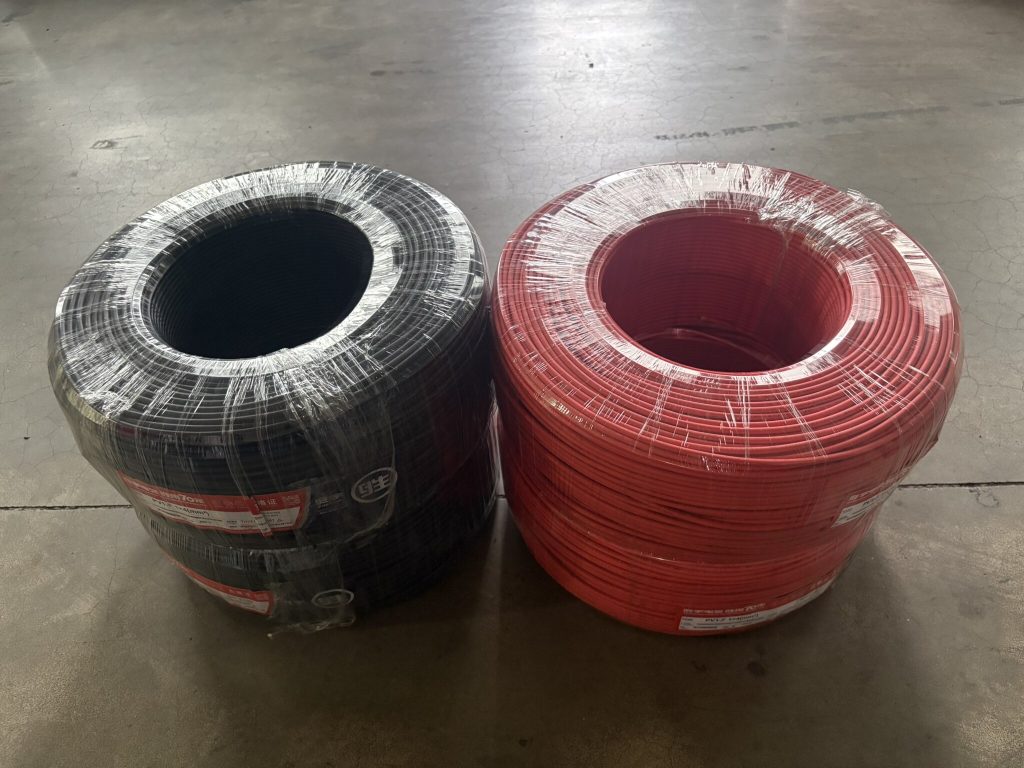
Copper purity is an important consideration when purchasing electrical wire from China, especially for importers buying in bulk.
However, copper purity should not be evaluated simply by looking at the color of the conductor or accepting a supplier’s statement that the wire is “high purity copper.”
A professional purchasing process should connect the material specification with the applicable product standard, electrical performance, documentation, sampling, and inspection.
This is particularly important when purchasing large quantities for construction projects, electrical distribution, industrial applications, or resale.
Why Copper Purity Matters
Copper is widely used as an electrical conductor because of its electrical and thermal properties.
The material used in the conductor can affect important characteristics such as:
-
Electrical conductivity
-
Electrical resistance
-
Weight
-
Mechanical properties
-
Processing performance
-
Long-term application performance
For buyers, the important question is not simply whether the wire looks like copper.
The buyer needs to confirm that the conductor meets the specification required for the intended application.
1. Start With the Product Specification
Before discussing testing, define exactly what you are buying.
A copper wire RFQ should identify the required:
-
Conductor material
-
Conductor construction
-
Cross-sectional area
-
Conductor diameter
-
Electrical resistance
-
Applicable product standard
-
Insulation specification
-
Quantity
-
Packaging
-
Testing requirements
If the specification is unclear, it is difficult to determine whether the finished product meets the purchasing requirement.
A supplier should quote against a clearly defined specification rather than simply the general description “copper wire.”
2. Do Not Judge Copper Purity by Color Alone
A common mistake is to examine the appearance of copper and assume that color proves material purity.
Visual inspection can be useful for identifying obvious surface problems, but it cannot reliably establish the chemical composition of the conductor.
Copper may have a particular appearance, but visual appearance alone is not a laboratory material analysis.
Therefore, buyers should treat visual inspection as only one part of quality control.
3. Check the Manufacturer’s Technical Documentation
Before placing a large order, ask the manufacturer what technical documentation is available for the product.
Depending on the product and project requirements, documentation may include:
-
Product specification sheet
-
Material information
-
Test reports
-
Inspection records
-
Batch information
-
Applicable compliance documents
-
Manufacturer’s quality records
The documents should correspond to the actual product being purchased.
Buyers should also check whether the documentation identifies the product model, specification, batch, or other information that allows the document to be connected to the shipment.
4. Electrical Resistance Is an Important Check
For electrical wire, conductor resistance is an important technical characteristic.
A wire can meet a specified physical size while still requiring evaluation of its electrical performance.
Depending on the applicable standard, resistance may be measured under defined conditions.
The buyer should therefore identify the required resistance specification before production.
This is often more useful than trying to judge copper quality from appearance alone.
5. Verify the Conductor Cross-Sectional Area
Another important check is the conductor size.
The buyer should verify whether the actual conductor corresponds to the ordered specification.
Depending on the wire construction, inspection may involve:
-
Measuring conductor dimensions
-
Checking strand construction
-
Checking the number of strands
-
Checking individual strand dimensions
-
Comparing calculated and measured values
For stranded conductors, the physical construction can be more complicated than simply measuring one outside diameter.
The inspection method should therefore match the product design.
6. Understand the Difference Between Copper Purity and Finished Wire Quality
Copper purity is only one aspect of electrical wire quality.
A finished wire can contain a suitable copper conductor but still have problems involving:
-
Insulation
-
Conductor size
-
Resistance
-
Surface defects
-
Marking
-
Packaging
-
Dimensional tolerances
-
Mechanical properties
For this reason, a purchasing inspection should evaluate the finished product rather than focusing on copper purity alone.
A good inspection plan should cover both the conductor and the complete wire.
7. Ask What Standard Applies to the Product
The appropriate testing and acceptance criteria depend on the specific wire.
Before ordering, identify the applicable standard for the product and destination market.
The standard may define requirements relating to:
-
Conductor construction
-
Electrical resistance
-
Dimensions
-
Insulation
-
Mechanical performance
-
Marking
-
Testing procedures
Do not ask a supplier to “meet international standards” without identifying the actual requirement.
A specific standard provides a much clearer basis for inspection.
8. Use Laboratory Testing When Material Composition Must Be Confirmed
When the purchasing requirement specifically concerns chemical composition or copper purity, laboratory analysis can provide more useful evidence than visual inspection.
Depending on the testing objective, an appropriate laboratory or inspection service may use material-analysis methods suitable for determining elemental composition.
For a high-value order, buyers can discuss the testing method with an independent inspection company or qualified laboratory before sampling.
The important point is that the testing method should be appropriate for the question being asked.
If the objective is to confirm chemical composition, a simple visual inspection is not enough.
9. Consider Third-Party Inspection for Large Orders
For a significant purchase, buyers may consider arranging third-party inspection before shipment.
An inspection can potentially cover:
-
Product quantity
-
Product dimensions
-
Conductor construction
-
Electrical testing
-
Visual quality
-
Packaging
-
Marking
-
Documentation
-
Sampling
The exact inspection scope should be agreed before the inspector visits the factory.
For material-composition requirements, the buyer should specifically confirm whether the selected inspection service can perform or arrange the required material analysis.
10. Request a Pre-Production Sample
A sample can help establish what the buyer expects before mass production begins.
The sample should represent the actual specification to be ordered.
After approval, keep a record of:
-
Product specification
-
Sample photographs
-
Packaging
-
Marking
-
Test information
-
Agreed tolerances
-
Other important requirements
For larger orders, the purchase contract should clearly identify the agreed product specification.
This reduces the risk of receiving a product that differs from the approved sample.
11. Check the Manufacturer’s Quality-Control Process
Instead of asking only:
Is your copper pure?
Ask the manufacturer how it controls the conductor material and finished wire.
Useful questions include:
-
How is incoming copper material inspected?
-
How is conductor size controlled?
-
How is electrical resistance tested?
-
How are production batches identified?
-
What tests are performed before shipment?
-
Can test records be provided?
-
How are non-conforming products handled?
These questions can reveal much more about a manufacturer’s quality system than a simple statement about copper purity.
12. Be Careful With “99.99% Copper” Claims
Buyers may encounter descriptions such as:
99.99% copper
Such a statement should not automatically be treated as proof that the finished electrical wire meets the buyer’s requirements.
The buyer should ask:
-
What exactly does the percentage refer to?
-
Is it the raw copper material?
-
Is it supported by a test report?
-
What standard applies to the finished conductor?
-
Does the finished wire meet the required electrical characteristics?
The correct specification depends on the product and application.
Avoid accepting a material claim without understanding how it relates to the actual finished product.
13. Check the Actual Batch
For a large production order, a test performed on one sample does not necessarily prove that every piece in the shipment is identical.
This is why batch identification and sampling procedures are important.
A purchasing inspection can define:
-
Sampling quantity
-
Sampling location
-
Acceptance criteria
-
Testing method
-
Rejection criteria
For high-value orders, buyers should discuss an appropriate inspection plan with a qualified inspection company.
14. Copper Weight Is Not the Same as Copper Purity
Another common misunderstanding is assuming that a heavier wire automatically contains purer copper.
Weight can be affected by:
-
Conductor size
-
Conductor construction
-
Insulation
-
Sheath
-
Manufacturing tolerances
-
Packaging
Therefore:
Weight ≠ purity
A heavier finished wire does not automatically mean that its copper conductor is of higher purity.
Material composition and finished-product weight should be evaluated separately.
15. Compare Suppliers Using the Same Quality Requirements
If you are comparing several Chinese manufacturers, give each supplier the same quality specification.
For example, ask all suppliers to provide:
-
Same conductor material
-
Same conductor size
-
Same construction
-
Same applicable standard
-
Same insulation requirement
-
Same testing requirement
-
Same quantity
-
Same packaging
-
Same trade term
This creates a much more meaningful comparison.
A supplier offering a lower price for a different specification is not necessarily offering a better deal.
16. Put the Quality Requirements Into the Purchase Agreement
Important quality requirements should not exist only in email conversations.
For a commercial order, the agreed specification should be reflected in the appropriate purchasing documents or contract.
The documentation can identify:
-
Product specification
-
Applicable standard
-
Testing requirements
-
Sampling requirements
-
Packaging
-
Marking
-
Acceptance criteria
-
Quantity
-
Delivery terms
This gives both parties a clearer reference if a quality dispute occurs.
17. A Practical Copper Wire Inspection Checklist
Before accepting a bulk shipment, buyers can organize their inspection around several categories.
Material
-
Conductor material confirmed
-
Required material specification documented
-
Appropriate material testing arranged when necessary
Electrical performance
-
Resistance checked according to the applicable requirement
-
Required electrical characteristics verified
Dimensions
-
Conductor size checked
-
Overall dimensions checked where applicable
-
Insulation thickness checked where required
Appearance
-
Surface condition
-
Insulation defects
-
Marking
-
Color
-
Packaging condition
Documentation
-
Test information
-
Product specification
-
Batch information
-
Inspection records


No reply content