
China Cable and Wire Manufacturing Co., Ltd.
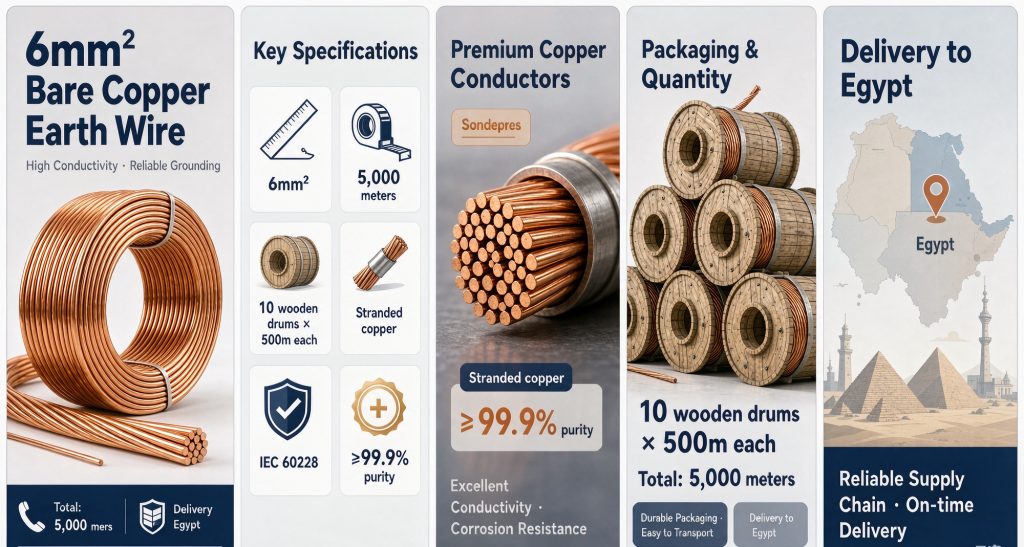
When importing copper electrical wire from China, product quality should be checked before the goods leave the factory.
For international wholesalers, electrical distributors, construction contractors and project buyers, receiving wire that does not meet the agreed specifications can lead to installation problems, customer complaints, financial losses and delayed projects.
However, checking copper wire quality involves more than looking at its appearance. Buyers should verify conductor material, cross-sectional area, electrical resistance, insulation thickness, product markings and relevant test documentation.
This guide provides a practical copper wire inspection checklist to help international buyers evaluate products before shipment.
1. Confirm the Copper Conductor Material
The conductor is one of the most important components of electrical wire.
Before production, buyers should confirm whether the required conductor is copper, aluminum or another specified material.
For copper building wire, important inspection points include:
-
Conductor material
-
Solid or stranded construction
-
Conductor cross-sectional area
-
Conductor diameter, where applicable
-
Surface condition
-
Electrical resistance
-
Compliance with the agreed product standard
Do not rely only on the product description or color of the conductor.
For important commercial orders, consider requesting material documentation and appropriate laboratory test results.
2. Check the Copper Wire Cross-Sectional Area
The conductor cross-sectional area is normally expressed in square millimeters (mm²).
Common building wire sizes include:
-
1.5mm²
-
2.5mm²
-
4mm²
-
6mm²
-
10mm²
-
16mm²
-
25mm²
The specified conductor size affects electrical resistance, current-carrying performance and the intended application.
Buyers should confirm that the supplied product meets the specified conductor requirements.
For stranded conductors, inspection may involve checking the number and diameter of individual strands and calculating the total metallic cross-sectional area.
For solid conductors, appropriate dimensional measurements can be used.
Importantly, conductor diameter alone does not always establish compliance with the required cross-sectional area. Electrical resistance testing and applicable standard requirements should also be considered.
3. Measure Electrical Resistance
Electrical resistance is an important indicator of copper conductor performance.
If resistance is higher than the permitted limit, the wire may not meet the required electrical specifications.
Buyers should confirm:
-
Conductor resistance
-
Measurement temperature
-
Test method
-
Conductor length
-
Applicable standard
-
Maximum permitted resistance
Copper conductor resistance is affected by conductor material, dimensions, temperature and construction.
For a professional inspection, resistance should be measured using suitable calibrated testing equipment and corrected or evaluated according to the applicable standard.
A qualified laboratory can help verify whether the product meets the agreed technical requirements.
4. Inspect PVC Insulation Thickness
PVC insulation protects the conductor and provides electrical insulation.
During inspection, buyers should check:
-
Insulation material
-
Insulation thickness
-
Uniformity
-
Surface appearance
-
Cracks or damage
-
Compatibility with the specified product standard
Insulation thickness requirements vary according to wire type, rated voltage and applicable standard.
A suitable measuring instrument or laboratory method should be used rather than relying only on visual inspection.
Buyers should also confirm that the insulation is evenly distributed around the conductor.
5. Check the Wire Surface and Appearance
Visual inspection is a basic but useful part of quality control.
Look for:
-
Scratches
-
Cuts
-
Cracks
-
Uneven insulation
-
Surface contamination
-
Deformation
-
Exposed conductor
-
Inconsistent product color
For copper conductors, check for unusual corrosion, contamination or visible damage.
For insulated wires, the outer surface should be consistent with the approved sample and agreed specifications.
Visual inspection cannot replace electrical and mechanical testing, but it can identify obvious manufacturing or packaging problems.
6. Verify Product Markings and Identification
Electrical wire markings help buyers identify the product and confirm whether it matches the purchase order.
Depending on the applicable standard and product requirements, markings may include:
-
Manufacturer identification
-
Product designation
-
Conductor size
-
Rated voltage
-
Applicable standard
-
Batch or production identification
-
Other required technical information
Check that markings are legible and consistent with the approved specifications.
For OEM orders, also verify the customized brand name, printing position and packaging labels.
Do not assume that printed markings alone prove product compliance. Supporting technical documents and test results are also necessary.
7. Review Relevant Product Test Reports
Before shipment, buyers should request relevant technical documents.
Depending on the product and destination market, these may include:
-
Conductor resistance test reports
-
Insulation thickness test results
-
Voltage withstand test results
-
Dimensional inspection records
-
Material information
-
Product datasheets
-
Applicable conformity documents
When reviewing test reports, check:
-
Product model and specification.
-
Manufacturer identification.
-
Test date.
-
Testing organization.
-
Test methods and applicable standards.
-
Results and acceptance criteria.
-
Whether the tested product matches the actual order.
If certification is required by the destination market, verify its validity and scope with the issuing organization or relevant authority.
A report for one product model should not automatically be treated as evidence for every product manufactured by the same supplier.
8. Check Packaging and Reel Specifications
Packaging quality is important during storage and international transportation.
Incorrect packaging can lead to damaged insulation, tangled wires or missing product identification.
Inspect the following:
-
Coil or reel condition
-
Packaging strength
-
Wire length per package
-
Product labels
-
Net weight
-
Gross weight
-
Shipping marks
-
Moisture protection
-
Export packaging
For wooden reels, check that the reel structure is suitable for the cargo weight and handling requirements.
For customized orders, compare the finished packaging with the approved artwork or sample.
9. Conduct a Pre-Shipment Inspection Before Delivery
A pre-shipment inspection can help identify problems before the goods are dispatched.
For large orders, buyers may arrange an independent inspection company or qualified testing organization.
A practical inspection procedure can include:
Step 1: Document verification
Compare the production specifications with the purchase order and approved technical documents.
Step 2: Quantity inspection
Check the number of coils, reels, cartons or drums.
Step 3: Visual inspection
Examine the conductor and insulation condition.
Step 4: Dimensional inspection
Check conductor dimensions and insulation thickness according to the relevant standard.
Step 5: Electrical testing
Verify electrical resistance and other required electrical performance indicators.
Step 6: Packaging inspection
Check product labels, packaging and shipping marks.
Step 7: Inspection report
Record the inspection results and any non-conformities before shipment approval.
The inspection scope and sampling method should be agreed upon before production or shipment.
10. Common Copper Wire Quality Problems Buyers Should Avoid
International buyers should pay particular attention to the following issues.
Incorrect conductor size
The actual conductor may not meet the ordered specification.
Higher-than-permitted electrical resistance
This may indicate that the conductor does not satisfy the applicable electrical requirements.
Insufficient insulation thickness
The insulation may fail to meet the specified product standard.
Poor insulation surface quality
Cracks, scratches and uneven surfaces may indicate manufacturing or handling problems.
Incorrect product markings
The printed information may not match the purchase order or required standard.
Inconsistent packaging
Some reels or coils may have incorrect lengths, labels or packaging specifications.
Incomplete documentation
Missing or inconsistent test reports may make product verification difficult.
A clear purchase agreement and documented inspection requirements can help reduce these risks.
11. Copper Wire Quality Inspection Checklist for Importers
Use the following checklist before approving a shipment.
Inspection Item |
What to Verify |
|---|---|
Conductor material |
Copper as specified |
Wire size |
Required mm² |
Construction |
Solid or stranded |
Conductor resistance |
Meets applicable limits |
Insulation material |
Approved material |
Insulation thickness |
Meets product standard |
Surface appearance |
No unacceptable defects |
Product markings |
Correct and legible |
Product quantity |
Matches purchase order |
Test reports |
Relevant and traceable |
Packaging |
Approved requirements |
Shipping marks |
Correct destination information |
This checklist can be adapted according to the product type and destination-market requirements.
12. What Buyers Should Confirm Before Approving Mass Production
Quality control should begin before production, not only when the goods are ready for shipment.
Before confirming a large order, buyers should agree on:
-
Final product specifications
-
Applicable technical standards
-
Approved product samples
-
Inspection procedures
-
Testing requirements
-
Packaging requirements
-
Acceptable quality criteria
-
Delivery schedule
-
Documentation requirements


No reply content