
Custom Lighting Supplier in Zhongshan, China
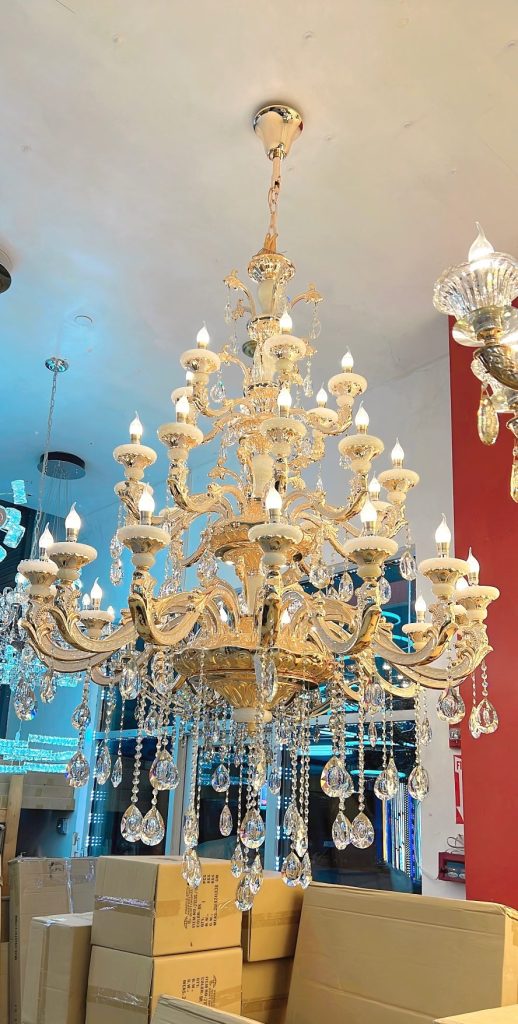
When sourcing indoor pendant lights from China, buyers usually have four important questions: What is the MOQ? How much does the product cost? How long will production take? Can the manufacturer customize the design?
These questions directly affect purchasing decisions, inventory planning, project schedules, and profitability.
Whether you are a lighting importer, distributor, retailer, interior designer, hotel contractor, or private-label brand, understanding these factors before placing an order can help you select the right indoor pendant light manufacturer and avoid unexpected costs.
1. What Determines the MOQ for Indoor Pendant Lights?
MOQ means Minimum Order Quantity. It is the smallest quantity a manufacturer is willing to produce or sell under specific conditions.
There is no universal MOQ for indoor pendant lights because it depends on the product and customization requirements.
For standard products, manufacturers may accept relatively small orders.
For fully customized products, the MOQ is usually higher because the factory may need to purchase special materials, prepare production equipment, develop packaging, or arrange customized components.
MOQ can be affected by:
-
Product design
-
Material
-
Product size
-
Color
-
Surface finish
-
Electrical components
-
Packaging
-
Logo requirements
-
Tooling
-
Production process
For example, changing the color of an existing product may require less preparation than developing a completely new pendant light.
2. Standard Pendant Lights vs. Custom Pendant Lights
Buyers should distinguish between standard products and customized products.
Standard products
Standard products already exist in the manufacturer’s catalog.
Advantages include:
-
Lower development cost
-
Faster sampling
-
Shorter production time
-
Lower purchasing risk
-
Potentially lower MOQ
They are suitable for distributors and retailers who do not need a unique design.
Custom products
Custom products are developed according to the buyer’s requirements.
They may involve:
-
New dimensions
-
New materials
-
Custom colors
-
New structures
-
Custom lighting components
-
Private labeling
-
Custom packaging
Customization provides greater differentiation but usually requires more time and investment.
3. How Is the Price of Indoor Pendant Lights Calculated?
The factory price depends on multiple factors.
The major cost components can include:
Materials + Components + Labor + Manufacturing + Packaging + Quality Control + Factory Overhead + Profit
Materials often account for a significant portion of the final price.
For example, a pendant light using solid brass and high-quality glass will generally have a different cost structure from a simple steel fixture.
Other factors include:
-
Product dimensions
-
Weight
-
Design complexity
-
LED components
-
Driver
-
Cable
-
Lampshade
-
Surface treatment
-
Packaging
-
Order quantity
Therefore, asking only “What is your cheapest price?” may not produce a useful comparison.
4. Why Larger Orders Usually Receive Better Pricing
Manufacturers can often achieve better production efficiency when producing larger quantities.
For example, production setup, material purchasing, packaging preparation, and quality-control costs can be distributed across more units.
However, the exact price reduction depends on the manufacturer’s cost structure.
When requesting a quotation, ask for multiple quantity levels.
For example:
-
100 units
-
300 units
-
500 units
-
1,000 units
-
3,000 units
This allows you to understand the manufacturer’s price structure.
5. Ask for a Detailed Quotation
A professional quotation should clearly identify the product specifications.
The quotation should ideally include:
-
Product model
-
Dimensions
-
Material
-
Finish
-
Light source
-
Electrical specifications
-
Unit price
-
MOQ
-
Sample price
-
Packaging
-
Production lead time
-
Payment terms
-
Trade terms
If the supplier gives you only a price without specifications, ask for clarification before comparing it with other manufacturers.
A lower quotation may simply represent a different product configuration.
6. Understand Sample Costs
Samples are important when sourcing indoor pendant lights.
A manufacturer may charge separately for:
-
Sample production
-
Special materials
-
Tooling
-
Shipping
-
Customized packaging
Sample pricing can be higher than the eventual bulk unit price because the factory cannot benefit from mass-production efficiency.
Ask the manufacturer whether the sample fee can be refunded or deducted from a future bulk order.
The policy varies by supplier, so it should be confirmed in writing.
7. What Is the Typical Production Lead Time?
Production lead time depends on the product and order size.
A standard product may require less preparation than a customized pendant light.
Lead time can be affected by:
-
Raw material availability
-
Product complexity
-
Order quantity
-
Customization
-
Tooling
-
Packaging
-
Factory production schedule
-
Peak seasons
Instead of asking simply:
“How many days?”
provide the manufacturer with your expected quantity and specifications.
For example:
“We need 1,000 units with customized packaging and an OEM logo. What is the realistic production lead time after sample approval?”
This will produce a more useful answer.
8. Sample Lead Time and Bulk Production Lead Time Are Different
Buyers should not confuse these two timelines.
Sample lead time
This is the time required to produce and prepare the sample.
Bulk production lead time
This begins after the buyer has approved the sample and production specifications.
For customized products, the overall timeline may look like:
Design → Quotation → Sample → Revision → Final approval → Material preparation → Mass production → Inspection → Shipment
Each stage can add time to the project.
9. How Customization Affects Price
Customization can significantly change the product cost.
Common customization options include:
-
Product dimensions
-
Color
-
Material
-
Surface finish
-
Cable length
-
Ceiling canopy
-
Lampshade
-
LED module
-
Driver
-
Logo
-
Packaging
A simple modification may have little impact on the price.
A completely new design may require engineering, tooling, prototypes, testing, and special materials.
Therefore, buyers should provide as much technical information as possible before requesting a final quotation.
10. Custom Dimensions
Pendant lights are often customized for specific interior spaces.
For example, a restaurant may need a longer suspension system, while a hotel may require a particular fixture diameter.
Important dimensions can include:
-
Fixture diameter
-
Fixture height
-
Lampshade diameter
-
Cable length
-
Ceiling canopy diameter
-
Mounting-hole spacing
All dimensions should be documented using consistent measurement standards.
For large projects, technical drawings are strongly recommended.
11. Custom Colors and Finishes
Color customization is common in lighting projects.
Possible finishes include:
-
Black
-
White
-
Gold
-
Brass
-
Bronze
-
Silver
-
Chrome
-
Matte
-
Gloss
-
Brushed
-
Antique
Color should ideally be confirmed using a physical sample or recognized color reference.
A computer screen can display colors differently depending on the device and settings.
For large orders, an approved finish sample can help reduce batch-to-batch variation.
12. Custom Electrical Specifications
Electrical customization requires special attention.
The buyer should confirm:
-
Input voltage
-
Frequency
-
Wattage
-
Light source
-
Color temperature
-
Dimming
-
Driver
-
Cable
-
Grounding
-
Connector
The electrical configuration should be appropriate for the destination market.
If the buyer does not have technical expertise, the manufacturer should provide clear product specifications and documentation for review.
13. OEM Logo and Packaging
Lighting brands often require private-label services.
OEM services may include:
-
Logo
-
Product label
-
Model number
-
User manual
-
Warranty information
-
Retail box
-
Barcode
-
Shipping carton
Packaging requirements should be confirmed before production because customized packaging may have its own MOQ and production lead time.
14. How Packaging Affects the Final Cost
Pendant lights can be fragile or structurally vulnerable during transportation.
Packaging may include:
-
Inner foam
-
Protective film
-
Individual carton
-
Outer carton
-
Corner protection
-
Pallets
-
Customized inserts
For glass products, stronger protective packaging may increase the product cost but reduce transportation damage.
The cheapest packaging option is not always the most economical option.
15. MOQ for Private-Label Products
Private-label orders can have different MOQs from standard products.
For example, the manufacturer may accept a small quantity of standard products but require a higher quantity for customized packaging.
Ask whether the MOQ applies separately to:
-
Product
-
Color
-
Model
-
Logo
-
Retail packaging
-
Carton design
This is especially important if you want to order several different models under one brand.
16. How to Negotiate With a Manufacturer
Good negotiation is based on complete information rather than simply asking for the lowest price.
Instead of saying:
“Give me your best price.”
provide:
-
Quantity
-
Product specifications
-
Target market
-
Packaging requirements
-
Branding requirements
-
Expected repeat orders
Then ask:
“What price can you offer for 500, 1,000, and 3,000 units?”
This gives the manufacturer enough information to calculate realistic production costs.
17. Compare Manufacturers Based on Total Value
When comparing suppliers, evaluate more than unit price.
Consider:
Factor |
Supplier A |
Supplier B |
Supplier C |
|---|---|---|---|
Unit price |
|||
MOQ |
|||
Sample cost |
|||
Sample lead time |
|||
Production lead time |
|||
Materials |
|||
Customization |
|||
Packaging |
|||
Quality control |
|||
Compliance support |
|||
After-sales service |
A supplier offering a slightly higher unit price may provide significantly better quality and service.
18. Payment Terms
Payment terms can affect your cash flow.
Common arrangements may involve:
-
Deposit before production
-
Balance before shipment
-
Payment against agreed milestones
The exact arrangement depends on the supplier, order size, relationship, and contract.
For customized products, payment terms should be confirmed before production begins.
All important commercial conditions should be included in the purchase agreement.
19. Quality Control Before Shipment
Before paying the final balance, buyers should consider inspecting the goods.
Quality inspection may check:
-
Quantity
-
Appearance
-
Dimensions
-
Materials
-
Electrical components
-
Accessories
-
Packaging
-
Labels
-
Carton markings
For large orders, third-party inspection can provide an additional layer of protection.
If the products are manufactured according to an approved sample, the inspection should compare the production goods with the agreed specifications.
20. A Practical Sourcing Process
A professional sourcing process can be organized as follows:
Step 1: Define product requirements.
Step 2: Identify qualified indoor pendant light manufacturers.
Step 3: Send a detailed RFQ.
Step 4: Compare MOQ, price, lead time, and capabilities.
Step 5: Request samples.
Step 6: Test and approve the sample.
Step 7: Confirm the final specifications and contract.
Step 8: Begin mass production.
Step 9: Conduct quality inspection.
Step 10: Arrange shipment.
This process reduces misunderstandings and gives buyers greater control over the project.
21. Questions to Ask Before Placing an Order
Before selecting an indoor pendant light manufacturer, ask:
-
What is the MOQ?
-
What is the sample cost?
-
How long does sample production take?
-
What is the bulk production lead time?
-
Can you provide OEM or ODM services?
-
Can you customize dimensions?
-
Can you customize colors and finishes?
-
Can you customize electrical components?
-
Can you provide customized packaging?
-
What quality-control procedures do you use?
-
What compliance documents can you provide?
-
What payment terms do you offer?
-
Can you arrange pre-shipment inspection?
-
What is your warranty policy?
-
Can you support repeat orders?


No reply content