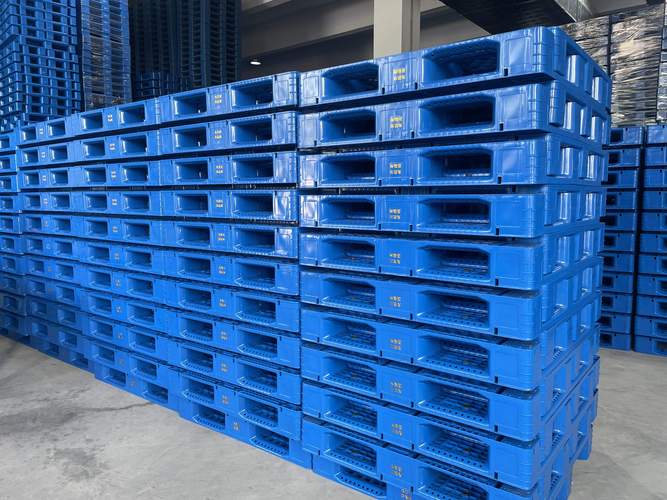
You’re staring at two quotes on your desk. Both are plastic pallets. Both are 1200×1000mm. Both claim to handle “heavy loads.”
But one is 40% cheaper—and the other’s manufacturer is insisting it’ll “last three times longer.”
Which one do you choose? And more importantly, which one is actually right for your operation?
The answer almost always comes down to one thing: how the pallet was made. Specifically, whether it was produced through injection molding or blow molding.
These aren’t just manufacturing buzzwords. They’re two fundamentally different processes that produce two fundamentally different products—with very different price tags, load capacities, and lifespans.
As a manufacturer that runs both injection and blow molding lines under one roof, we’re in a unique position: we have no incentive to push you toward one or the other. We just want to match you to the right process for your needs.
Here’s the complete breakdown.
The 30-Second Version (For When You’re in a Rush)
| |
Injection Molded
|
Blow Molded
|
Best for
|
Racking, heavy loads, long-term reuse
|
Floor stacking, export, medium-duty
|
Dynamic load
|
1,000–1,500 kg
|
500–1,000 kg
|
Racking load
|
800–1,500 kg
|
300–500 kg (not recommended)
|
Lifespan
|
5–8+ years
|
2–4 years
|
Unit price
|
$$–$$$
|
$–$$
|
Customization
|
High (steel insert, anti-slip, RFID)
|
Low–Medium (basic sizes/shapes)
|
If that table already answered your question, you can stop here. But if you want to understand why these differences exist—and how to avoid buying the wrong one—read on.
How Each Process Actually Works
Injection Molding: Precision Under Pressure
Think of injection molding like making ice cubes in a silicone tray—except the “tray” is a massive steel mold, and instead of water, you’re injecting molten plastic at 1,200+ tons of pressure.
The process:
-
Plastic pellets (HDPE, PP, or blended resin) are heated to ~200°C until molten.
-
The melted plastic is injected into a precision-machined steel mold under extreme pressure.
-
The mold cools, the pallet solidifies, and it’s ejected as a single, seamless piece.
What this gives you:
-
Wall thickness can be precisely controlled—thicker exactly where needed
-
Complex internal rib structures for maximum strength-to-weight ratio
-
Smooth surfaces on both top and bottom (critical for conveyors and racking)
-
Ability to embed steel reinforcement bars inside the mold before injection
Blow Molding: Air-Powered Strength
Blow molding is closer to how glass bottles are made. Imagine inflating a balloon inside a mold until it presses against every wall.
The process:
-
A heated tube of plastic (parison) is extruded and clamped between two mold halves.
-
Compressed air is blown into the parison, inflating it until it takes the shape of the mold cavity.
-
The hollow pallet cools and is removed.
What this gives you:
-
A naturally hollow, double-wall structure that absorbs impact exceptionally well
-
No seams or weld points (the entire pallet is one continuous piece)
-
Thicker outer “skins” with air pockets inside—great for shock absorption
-
Lower mold costs (the tooling is simpler and cheaper to produce)
Head-to-Head Comparison
1. Load Capacity: The #1 Decision Factor
Load Type
|
Injection Molded
|
Blow Molded
|
Dynamic load (forklift moving)
|
1,000–1,500 kg
|
500–1,000 kg
|
Static load (at rest, on floor)
|
4,000–6,000 kg
|
2,000–3,000 kg
|
Racking load (on beams, no support)
|
800–1,500 kg
|
300–500 kg ⚠️
|
Edge racking (2-point support)
|
500–800 kg
|
Not recommended
|
⚠️ Critical warning: Blow molded pallets are not designed for selective racking systems. Their hollow structure deflects under concentrated beam pressure. If your operation involves pallet racking, injection molded is the only safe choice.
2. Durability & Lifespan
Factor
|
Injection Molded
|
Blow Molded
|
Impact resistance
|
Excellent (reinforced ribs)
|
Superior (hollow walls flex, not crack)
|
Cold storage performance
|
Excellent (with virgin blend)
|
Good (flexes but can become brittle)
|
Chemical resistance
|
High
|
High
|
Expected lifespan
|
5–8 years (heavy use)
|
2–4 years (medium use)
|
Repairability
|
Low (replace when cracked)
|
Low (same)
|
Here’s the paradox: blow molded pallets handle impact better (dropping from a height, rough forklift handling), but injection molded pallets last longer overall under sustained load and racking conditions.
3. Design & Customization Flexibility
Feature
|
Injection Molded
|
Blow Molded
|
Steel reinforcement
|
✅ Fully encapsulated steel bars
|
❌ Not possible
|
Anti-slip deck surface
|
✅ Molded-in texture/grip
|
⚠️ Limited (smooth surface only)
|
Conveyor compatibility
|
✅ Precision dimensions, smooth base
|
⚠️ Can warp; less dimensionally stable
|
Color options
|
✅ Unlimited (multi-color zones)
|
⚠️ Limited (single color per run)
|
RFID/embedded tracking
|
✅ Molded-in cavities for tags
|
⚠️ Difficult to embed
|
Ventilated deck
|
✅ Fully customizable
|
⚠️ Limited vent patterns
|
4. Cost Breakdown
Cost Element
|
Injection Molded
|
Blow Molded
|
Mold cost
|
$15,000–$50,000+ (complex steel)
|
$3,000–$10,000 (simpler tooling)
|
Unit price (1,000 pcs, standard size)
|
$28–$45
|
$16–$28
|
Tooling amortization (per unit)
|
$2–$8 (high upfront, low per-unit)
|
$0.50–$2 (low upfront, moderate per-unit)
|
Total cost of ownership (3-year)
|
Lower for heavy-duty cycles
|
Lower for light-to-medium cycles
|
Which One Should YOU Choose?
Here’s the decision framework we use with our own clients:
✅ Choose Injection Molded If:
-
Your pallets go into selective racking or push-back racking systems
-
You need steel reinforcement for high racking loads (1,000+ kg on beams)
-
Your warehouse runs automated conveyors or AS/RS systems
-
You’re in food, pharma, or electronics and need smooth, easy-clean surfaces
-
You want color-coded pallets for SKU or zone identification
-
Your pallets stay in circulation for 5+ years (closed-loop system)
-
You need RFID or tracking technology embedded
✅ Choose Blow Molded If:
-
Your loads are floor-stacked (no racking)
-
You ship export/one-way and want the lowest possible unit cost
-
Your operation involves rough handling (dropping, throwing, outdoor yards)
-
You need impact absorption more than precision dimensions
-
Your budget is tight and you’re buying high volume (5,000+ units)
-
You’re replacing wooden pallets for basic transport and storage
🔄 The Hybrid Approach (What Smart Operations Actually Do)
Many of our largest clients don’t pick one—they run a mixed fleet:
Use Case
|
Pallet Type
|
Why
|
Inbound receiving → racking → picking
|
Injection molded, 3-runner
|
Racking safety + long lifespan
|
Outbound shipping to customers
|
Blow molded, 9-leg nestable
|
Lowest cost + nestable for return
|
Cold storage picking
|
Injection molded, steel-reinforced
|
Racking load + freeze resistance
|
Yard storage (bagged goods, bulk)
|
Blow molded, double-wall
|
Impact resistance + cost-effective
|
The Budget Reality: When “Cheaper” Costs More
Let’s run a real numbers comparison for a distribution center moving 800 kg dynamic loads, floor-stacked (no racking):
Metric
|
Blow Molded (Mid-Grade)
|
Injection Molded (Light-Duty)
|
Unit price
|
$20
|
$30
|
Lifespan (cycles)
|
~200 trips
|
~500 trips
|
Cost per trip
|
$0.10
|
$0.06
|
Replacements over 3 years
|
3× = $60
|
1× = $30
|
Total 3-year cost
|
$80/pallet
|
$60/pallet
|
In this scenario, the “cheaper” blow molded pallet actually costs 33% more over three years—because it needs to be replaced three times instead of once.
But flip the scenario: if you’re shipping export one-way where the pallet is never returned, the blow molded at $20 wins every time. Context is everything.
Why Working with a Dual-Process Manufacturer Matters
Most suppliers only offer one process. That creates a built-in bias: they’ll recommend what they make, not what you need.
When you work with a manufacturer that runs both injection and blow molding lines, you get:
Advantage
|
Single-Process Supplier
|
Dual-Process Manufacturer
|
Recommendation bias
|
❌ Sells what they have
|
✅ Recommends what fits your use case
|
Mixed fleet optimization
|
❌ Can’t supply both
|
✅ One supplier, consolidated shipping
|
Cross-process R&D
|
❌ Limited
|
✅ Learns best practices from both lines
|
Volume pricing across types
|
❌ Separate vendors
|
✅ Combined volume discounts
|
Still Not Sure Which Is Right?
The fastest way to find out: send us your load specs and we’ll spec it for free.
We’ll ask three questions:
-
What’s your max dynamic load per pallet?
-
Are your pallets going into racking, floor stacking, or both?
-
What’s your target lifespan and annual volume?
Based on that, we’ll tell you—honestly—whether injection, blow, or a hybrid approach is your best bet. And if you don’t need the more expensive option, we’ll tell you that too.
👉 Get a free process recommendation and quote from our engineering team.
No upsell. No bias. Just the right pallet for the job.



No reply content