Introduction
Solar energy storage systems are more than just batteries—they are complex, integrated solutions combining advanced electronics, intelligent control systems, and precise thermal management. For global buyers, understanding the key technologies behind modern solar energy storage systems is essential for evaluating manufacturers, ensuring system reliability, and planning long-term projects.
As a solar energy storage manufacturer in China, we focus on combining advanced technology with practical production experience to deliver high-quality systems for residential, commercial, and industrial applications. This article provides an in-depth look at the technologies that make modern energy storage systems efficient, safe, and durable.
1. Battery Technology
1.1 Lithium-Ion Batteries
Most modern solar energy storage systems use lithium-ion batteries due to their high energy density, long cycle life, and safety advantages.
- Lithium Iron Phosphate (LiFePO₄): Widely used for residential and commercial systems. Offers thermal stability, long lifespan, and safer performance.
- Nickel Manganese Cobalt (NMC): Higher energy density, suitable for applications requiring compact designs. Often used in hybrid or modular commercial systems.
Key considerations for manufacturers:
- Cell selection consistency
- Thermal management
- Cycle testing for reliability
1.2 Battery Modules
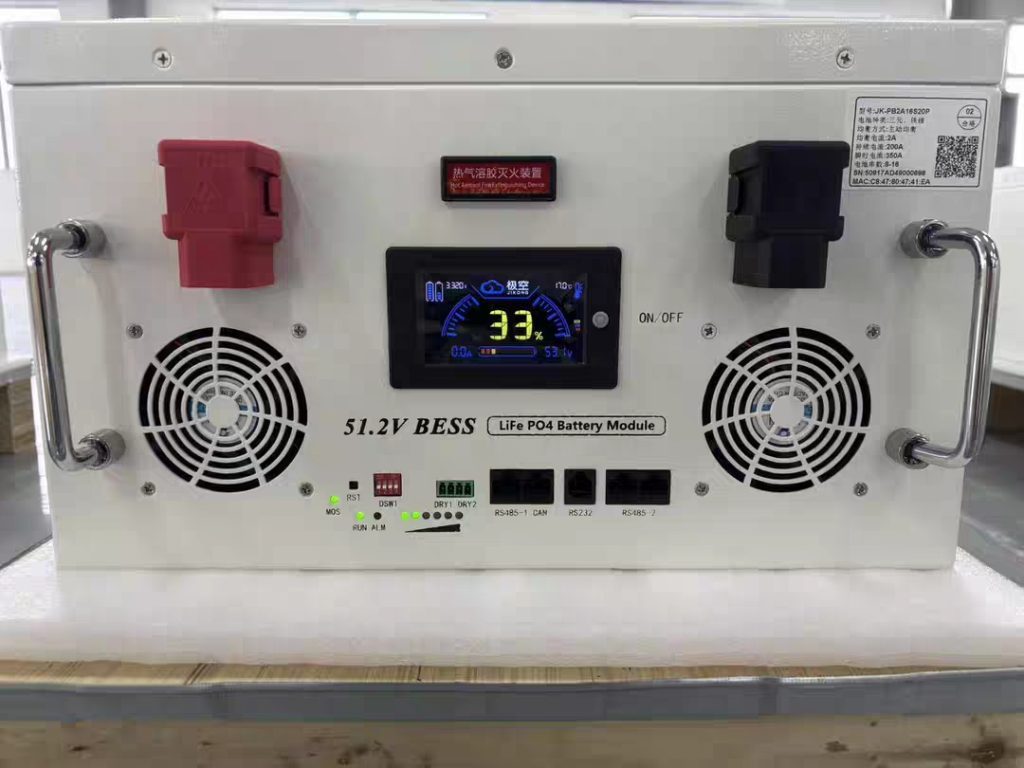
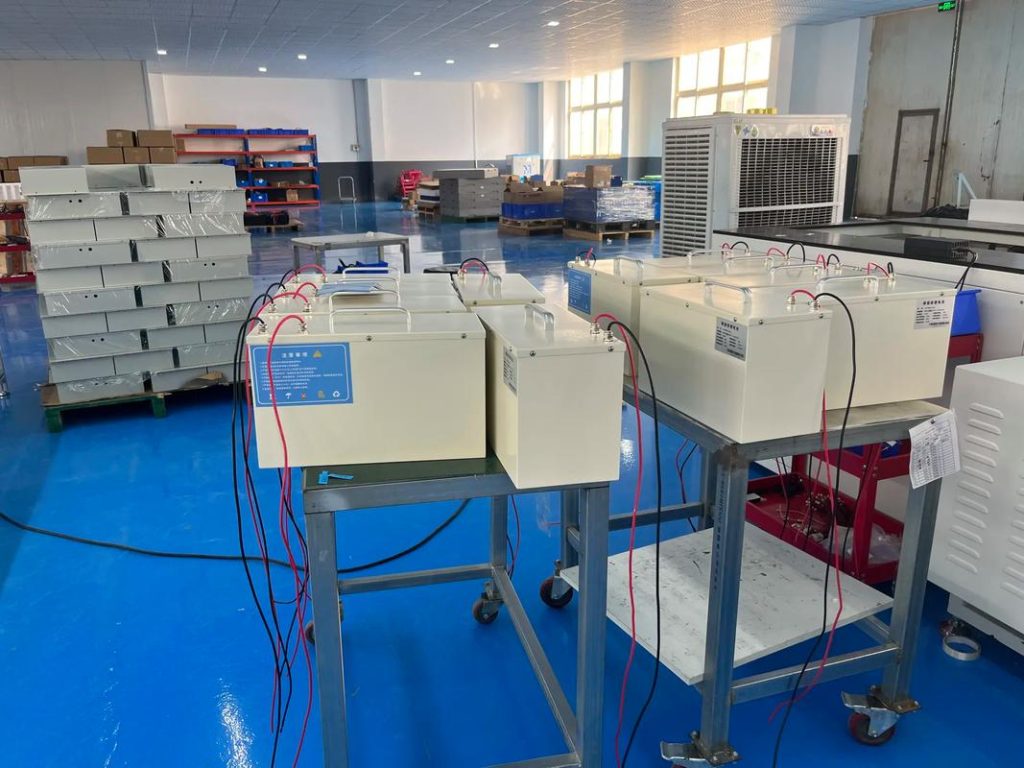
Battery modules are designed by assembling multiple cells into a structural unit. This includes:
- Electrical connections and wiring
- Thermal interface materials
- Structural reinforcements
- Safety devices such as fuses and disconnects
Proper module design ensures consistent performance and protects against cell imbalance or failure.
2. Battery Management System (BMS)
The BMS is a core technology for modern energy storage systems. It monitors and controls battery operation to ensure safety and maximize performance.
Functions include:
- Voltage, current, and temperature monitoring
- State of charge (SOC) and state of health (SOH) calculation
- Overcharge, over-discharge, and short-circuit protection
- Cell balancing to prevent uneven degradation
- Communication with inverters and energy management systems
For overseas buyers, a reliable BMS from a manufacturer ensures compliance with safety standards and longevity of the system.
3. Inverters and Power Electronics
Inverters are critical for converting stored DC power to usable AC electricity. Modern systems often integrate:
- Hybrid inverters: Can manage both solar input and battery output
- Grid-tied inverters: Synchronize with the utility grid for export or net metering
- Off-grid inverters: Support standalone systems for remote locations
Key technologies for inverter performance:
- High-efficiency conversion (95%+ efficiency)
- Low total harmonic distortion (THD)
- Integrated safety protection for overload, short-circuit, and reverse polarity
4. Energy Management Systems (EMS)
An EMS provides intelligent monitoring and control for energy storage systems. Features include:
- Real-time monitoring of energy production, storage, and consumption
- Remote control via apps or cloud platforms
- Load optimization and peak-shaving for commercial applications
- Data logging and reporting for performance analysis
Chinese manufacturers increasingly integrate EMS solutions into their products, offering buyers turnkey energy storage systems.
5. Thermal Management and Safety
Heat is one of the main factors affecting battery life and safety. Manufacturers use multiple technologies to maintain optimal temperature:
- Passive cooling: Ventilation and conductive materials
- Active cooling: Fans or liquid cooling for high-capacity systems
- Temperature sensors: Monitored by BMS for automatic adjustment
Safety also relies on:
- Fire-resistant enclosures
- Pressure relief devices
- Insulation and grounding
These measures prevent overheating, short circuits, and other hazards.
6. Structural and Mechanical Design
Modern energy storage systems require robust enclosures that protect batteries and electronics while facilitating installation:
- Cabinet or rack design: Modular, scalable, and transport-friendly
- Vibration and shock protection: Especially for commercial and industrial installations
- Corrosion-resistant materials: Important for outdoor or coastal applications
Chinese manufacturers combine engineering standards with scalable production, allowing buyers to request custom dimensions, materials, or configurations.
7. Testing and Certification Technologies
Before leaving the factory, every energy storage system undergoes rigorous testing:
- Functional and performance tests (charge-discharge cycles)
- Safety and protection verification (overvoltage, short-circuit, fire safety)
- Environmental stress tests (temperature, humidity, vibration)
- Compliance with international standards (IEC, UL, CE, ISO)
A manufacturer with in-house testing facilities can guarantee higher quality and shorter lead times.
8. OEM & ODM Technology Integration
For buyers looking to customize or brand their own systems, Chinese manufacturers can integrate key technologies into OEM or ODM solutions, including:
- Custom battery capacities and voltages
- Branded BMS interfaces and software
- Pre-configuration for specific markets
- Integration with smart home or industrial energy platforms
This makes Chinese manufacturers attractive partners for international companies seeking ready-to-deploy energy storage products.
Conclusion
Modern solar energy storage systems rely on a combination of advanced battery technology, intelligent management, power electronics, thermal and mechanical engineering, and rigorous testing. Choosing the right manufacturer in China ensures access to these technologies along with production reliability, scalability, and customization options.
For global buyers, working directly with a Chinese solar energy storage manufacturer provides:
- Consistent product quality
- Flexible system design
- OEM/ODM support
- Long-term partnership potential
Understanding these technologies is critical not only for sourcing the right system but also for building a competitive and reliable energy storage solution for homes, businesses, and off-grid projects.


No reply content