
Introduction
When sourcing kitchen furniture, design and appearance are important—but materials and manufacturing processes ultimately determine durability, safety, and long-term performance. Many quality issues in kitchen furniture originate not from design mistakes, but from improper material selection or poorly controlled production processes.
As a custom kitchen furniture factory in China, we believe transparency is essential. Buyers who understand how kitchen furniture is made are better equipped to evaluate quality, compare suppliers, and avoid costly mistakes.
This article explains the most commonly used materials in custom kitchen furniture and provides a clear overview of the manufacturing process inside a professional Chinese factory.
Why Materials Matter in Kitchen Furniture
The kitchen is a high-demand environment. Cabinets and furniture are exposed to:
- Moisture and humidity
- Heat from cooking
- Frequent opening and closing
- Heavy storage loads
Choosing the right materials ensures:
- Structural stability
- Moisture resistance
- Long service life
- Easy maintenance
Different markets and project types require different material solutions.
Common Materials Used in Kitchen Furniture Manufacturing
Cabinet Carcass Materials
The cabinet carcass is the internal structure that supports the entire kitchen system.
Plywood
Plywood is widely used in mid- to high-end kitchen furniture due to its strength and moisture resistance. It consists of multiple layers of wood veneer pressed together.
Advantages:
- High structural stability
- Good moisture resistance
- Long lifespan
It is commonly used for export markets with higher durability requirements.
Multi-Layer Board
Multi-layer board is similar to plywood but may use different wood compositions. It offers a good balance between cost and performance.
Suitable for:
- Residential projects
- Apartments and villas
- Long-term use environments
MDF (Medium Density Fiberboard)
MDF is a smooth and uniform material, ideal for painted or lacquered finishes.
Advantages:
- Excellent surface quality
- Suitable for complex door designs
However, MDF requires proper edge sealing and moisture protection.
Moisture-Resistant Particle Board
With appropriate treatment, particle board can be used in cost-sensitive projects. It is commonly used in standardized apartment kitchens.
Key requirement:
- High-quality edge banding to prevent moisture absorption
Door Panel Materials
Door panels define the visual style of kitchen furniture.
Solid Wood
Solid wood offers a natural appearance and premium feel. It is typically used in villa or high-end residential projects.
Considerations:
- Higher cost
- Sensitivity to climate changes
Wood Veneer
Veneer panels combine natural wood aesthetics with better stability. Thin wood layers are applied over a stable core material.
Lacquered Panels
Lacquered MDF doors allow for a wide range of colors and finishes, including matte and high-gloss.
They are popular in modern and minimalist kitchen designs.
PVC and Melamine
These surfaces are durable, cost-effective, and easy to clean, making them suitable for apartments and rental properties.
Countertop Compatibility
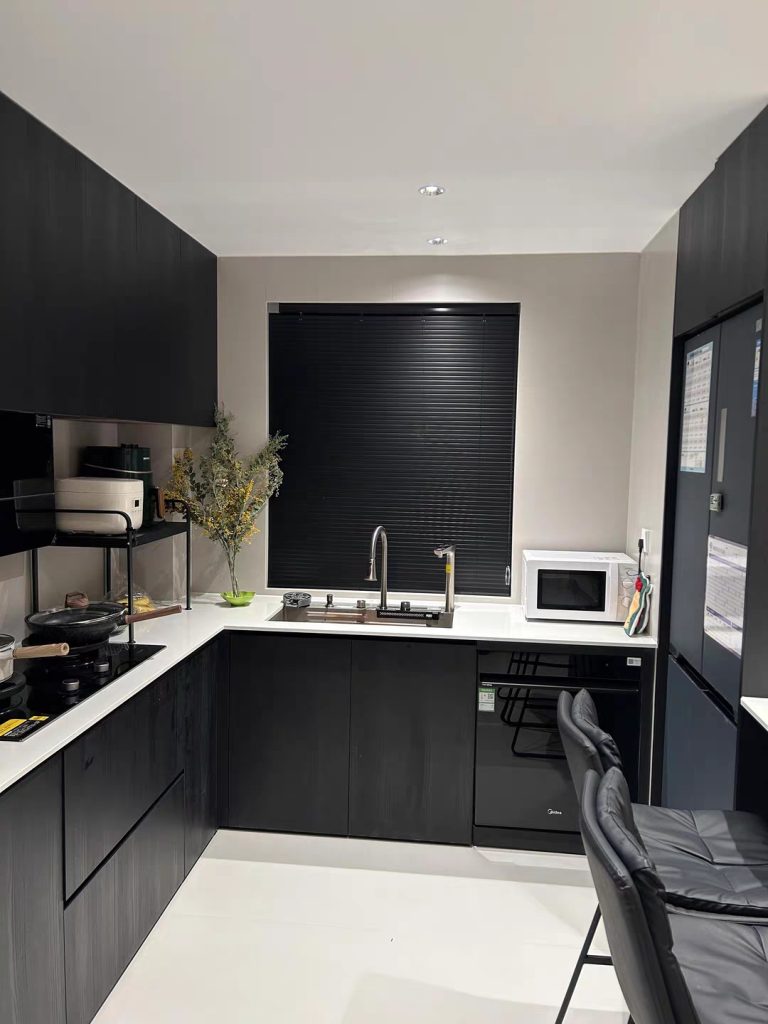
While countertops are sometimes sourced separately, kitchen furniture must be designed to integrate properly with:
- Quartz
- Granite
- Marble
- Solid surface
Accurate cabinet dimensions and load-bearing design are critical.
The Kitchen Furniture Manufacturing Process in China
Step 1: Design and Technical Preparation
Once design confirmation is complete, technical drawings are prepared. These drawings include:
- Cabinet dimensions
- Panel thickness
- Drilling positions
- Hardware specifications
Accurate preparation ensures smooth production.
Step 2: CNC Cutting and Drilling
Advanced CNC machines are used to cut panels and drill holes with high precision. This ensures:
- Consistent dimensions
- Accurate hardware alignment
- Reduced installation errors
CNC production is essential for custom kitchen furniture.
Step 3: Edge Banding
Edge banding seals exposed panel edges to:
- Prevent moisture penetration
- Improve appearance
- Increase durability
Professional factories use automated edge banding machines for consistent results.
Step 4: Surface Finishing
Surface finishing depends on material selection and design requirements. Common processes include:
- Spray painting
- Lamination
- Veneer pressing
- UV coating
Environmental conditions such as temperature and humidity are carefully controlled during finishing.
Step 5: Cabinet Assembly
Cabinet components are assembled or semi-assembled to verify:
- Structural integrity
- Alignment accuracy
- Hardware functionality
Any issues are corrected before packing.
Step 6: Quality Inspection
Quality inspections are conducted at multiple stages:
- Incoming material inspection
- In-process checks
- Final inspection before packing
This multi-step approach reduces defects and ensures consistency.
Quality Control Standards in Custom Kitchen Furniture
A professional factory focuses on:
- Material consistency
- Surface quality
- Color matching
- Hardware performance
- Load-bearing strength
Documentation and inspection records help maintain stable quality over long-term cooperation.
Packaging for International Shipping
Kitchen furniture is typically packed in flat-pack form to reduce shipping costs and damage risk. Export packaging includes:
- Protective foam
- Reinforced cartons
- Clear labeling
Proper packaging simplifies installation and minimizes transit damage.
Common Material and Production Mistakes to Avoid
Buyers should be cautious of:
- Unsealed panel edges
- Inconsistent board thickness
- Poor surface finishing
- Low-quality hardware
- Insufficient moisture protection
Understanding the manufacturing process helps buyers identify reliable suppliers.
How Buyers Can Evaluate a Kitchen Furniture Factory
Key evaluation points include:
- Material transparency
- Production equipment
- Quality control procedures
- Sample consistency
- Communication efficiency
Factories that clearly explain their materials and processes are more likely to deliver stable quality.
Conclusion
Materials and manufacturing processes form the foundation of reliable kitchen furniture. By understanding how custom kitchen furniture is made inside a professional factory in China, buyers can make informed decisions, reduce risks, and achieve better long-term results.
A transparent production process, proper material selection, and strict quality control are essential for successful kitchen furniture projects.


No reply content