Introduction: The Economic Pulse of Southeast Asia
As we navigate the trade landscape of 2026, the corridor between China and Vietnam has solidified its position as the busiest and most strategic manufacturing loop in the world. Vietnam is currently China’s largest trading partner in ASEAN, with bilateral trade volumes surpassing $260 billion in 2024 and continuing to break records this year.
For businesses moving raw materials from Guangdong or electronics from Zhejiang to the industrial parks of Bac Ninh and Binh Duong, logistics is the heartbeat of their operation. However, shipping in 2026 is far more complex than it was five years ago. It requires a sophisticated understanding of the RCEP 3.0 framework, the “2026 Special Consumption Tax” updates in Vietnam, and the rise of autonomous “Smart Ports.” As a freight forwarder on the front lines, I present this definitive guide to navigating this vital trade lane.
1. The Policy Engine: RCEP and ACFTA in 2026
The Regional Comprehensive Economic Partnership (RCEP) and the ASEAN-China Free Trade Area (ACFTA) are the dual engines driving this route. In 2026, we have reached a “Year 5” milestone for many tariff categories, meaning nearly 90% of goods traded between China and Vietnam now qualify for zero or near-zero duties.
The “Rules of Origin” Advantage
The most significant benefit for our clients in 2026 is the Cumulative Rule of Origin.
- The Strategy: Raw materials sourced from anywhere within the RCEP bloc (e.g., fabrics from China) can be processed in Vietnam and still qualify as “Vietnamese Origin” for re-export to Japan or Korea.
- The Forwarder’s Tip: The Form E (ACFTA) and the RCEP Certificate of Origin are your most powerful cost-saving tools. In 2026, the Vietnam Customs Service has fully digitized these filings. Ensuring your forwarder has a direct API link to the VNACCS/VCIS (Vietnam Automated Cargo and Port Consolidated System) is the difference between 4-hour clearance and 4-day delays.
2. Choosing Your Mode: The 2026 Performance Matrix
The unique geography of the China-Vietnam border allows for a “Tri-Modal” strategy that few other trade lanes can match.
A. Ocean Freight: The Scalability Champion
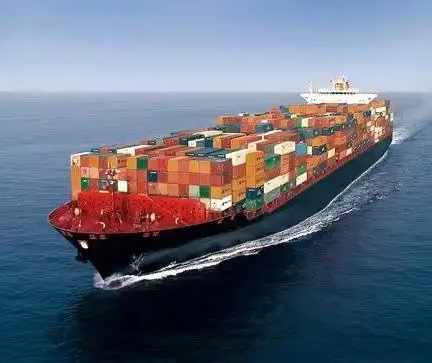
Ocean freight remains the primary choice for the “New Three” exports—EVs, lithium batteries, and solar panels.
- Key Routes: Direct sailings from Shanghai, Ningbo, and Shenzhen to Haiphong (North) and Ho Chi Minh City (South) are now faster than ever.
- 2026 Rates: In early 2026, sea freight rates for a 40GP to Haiphong have stabilized at an impressive $225–$250, making it some of the best value in Southeast Asia.
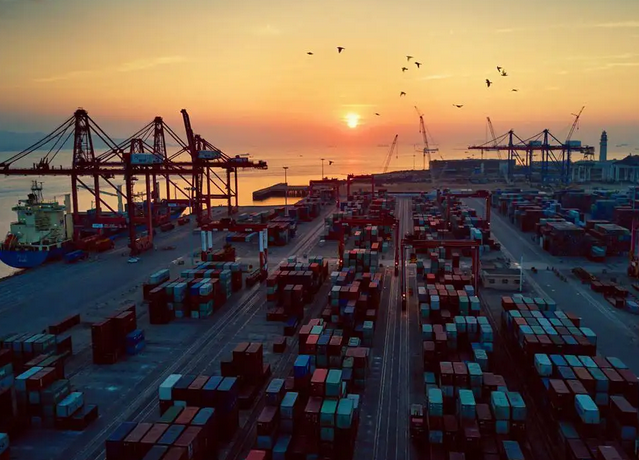
- Smart Ports: Ports like Lach Huyen (Haiphong) and Cai Mep (Vung Tau) now feature automated gantry cranes, significantly reducing “dwell time” for containers compared to the congested terminals of 2023.
B. Cross-Border Trucking: The “Middle Ground”
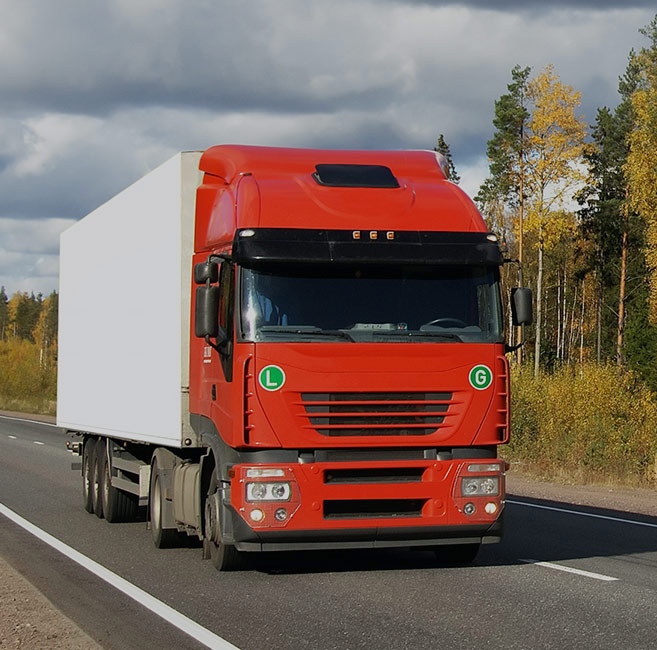
One of the most popular services in 2026 is the Nanning-Hanoi and Kunming-Lao Cai trucking lines.
- Speed: Goods can move from a factory in Dongguan to a warehouse in Hanoi within 24–36 hours.
- Reliability: It avoids the port congestion that often plagues the Year-End rush. For high-fashion or industrial spare parts, trucking offers a predictable “door-to-door” timeline that sea freight cannot match.
C. Air Freight: For High-Tech Sovereignty
With Vietnam’s “Silicon North” housing giants like Samsung and Foxconn, air freight from SZX (Shenzhen) or CAN (Guangzhou) to HAN (Noi Bai) is vital.
- Current Market: As of February 2026, air freight rates (≥1,000 kg) hover around $1.40 per kg. It is the preferred choice for semiconductors and the burgeoning pharmaceutical trade.
3. Navigating 2026 Customs & Regulatory Updates
Vietnam’s regulatory environment is undergoing a major shift in 2026. As your forwarder, it is our job to keep you compliant with the latest Decrees.
The 2026 Special Consumption Tax (SCT)
Starting January 1, 2026, Vietnam has implemented new SCT brackets on specific luxury goods and health-related products. If you are shipping electronics or high-end consumer goods, your Customs Valuation must be flawless. Vietnam Customs has transitioned to a “Risk-Based Audit” system—importers with high compliance scores can now use Electronic Indirect Consultation, which bypasses physical price-verification meetings.
The “Circular 121” Impact
Effective February 2026, Circular 121 has updated the procedures for manufacturing and export-oriented enterprises (EPEs). There are now stricter requirements for “Post-Destruction Reporting” of scrap and stricter audits on raw material usage norms. We provide a specialized “Compliance Audit” for our manufacturing clients to ensure their “Liquidations” (Settlement Reports) match their physical exports.
4. The “Lunar New Year” (CNY) Planning Factor
A critical operational reality for 2026: Chinese New Year falls on February 17th.
Because both China and Vietnam celebrate the Lunar New Year (Tet), the entire region enters a “Logistical Vacuum” for nearly two weeks.
- The Surge: Rates typically spike 30% in mid-January.
- The Solution: We advise all our clients to pull their Q1 production forward and book their space by mid-December. In 2026, we are seeing a trend where factories are restarting with only 40% labor capacity post-holiday, so “Buffering” your inventory in a Vietnam Bonded Warehouse is a vital strategy for Q1 stability.
5. E-commerce Logistics: The B2C Revolution
The rise of platforms like TikTok Shop and Shopee has made the China-Vietnam B2C lane the most competitive in the world.
- Low-Value Shipments: We manage the “Micro-Parcel” consolidation in our Shenzhen hubs, utilizing the De Minimis rules to clear thousands of small packages daily.
- Last-Mile Integration: In 2026, we have integrated our tracking directly with local Vietnamese carriers like Giao Hang Nhanh (GHN) and Viettel Post, providing a seamless “Factory-to-Consumer” experience with full transparency.
6. Sustainable Logistics: The Green Corridor
As Vietnam moves toward its “Net Zero” goals, we are seeing the emergence of the Green Shipping Corridor.
- Eco-vessels: Preferential berthing is increasingly given to vessels using sustainable fuels.
- Digital Documentation: The move away from paper Bill of Ladings to e-BLs isn’t just about speed; it’s about reducing the carbon footprint of the trade lane. In 2026, we help our corporate clients track their “Carbon-per-TEU” for their ESG reports.
7. How to Choose the Right Forwarder for Vietnam
If you are vetting a partner for this route, look for these three pillars:
- Dual-Registration: Do they have a legal entity in both China and Vietnam? (Crucial for handling local VAT invoices and “Red Invoices” in Vietnam).
- Customs “Green Channel” Access: Do they have a track record of low inspection rates with the Lang Son or Haiphong customs bureaus?
- Multimodal Flexibility: Can they switch from Sea to Trucking instantly if a typhoon hits the South China Sea?
Conclusion: Bridging the Dragon and the Lotus
Logistics between China and Vietnam is no longer just a transaction; it is a high-stakes game of data accuracy and regulatory agility. As the supply chain continues to shift south, the businesses that win will be those with the most transparent and compliant logistics partners.
As your freight forwarder, my mission is to make the border “disappear.” We handle the complexity of the HS codes, the volatility of the sea rates, and the strictness of the customs audits so that you can focus on what you do best: growing your business in the world’s most exciting trade region.
Quick Reference: 2026 Shipping Guide
|
Mode |
Transit Time |
Cost Level |
Best Suited For |
|---|---|---|---|
|
Sea FCL (Haiphong) |
3–5 Days |
$ |
Construction, Raw Materials, Solar |
|
Sea FCL (HCMC) |
8–13 Days |
$ |
Consumer Goods, Furniture |
|
Cross-Border Truck |
1–3 Days |
$$ |
Urgent Industrial Parts, Fashion |
|
Air Freight |
3–12 Hours |
$$$$ |


No reply content