

Introduction: The Pulse of Northeast Asian Trade
In the global supply chain landscape of 2026, few routes are as dynamic and vital as the corridor connecting China and South Korea. As neighbors separated only by the Yellow Sea, these two economic giants have built a relationship that is both deeply integrated and highly complex. For businesses moving goods across this border, logistics is the invisible engine driving their success.
As a professional freight forwarder, I have seen this trade lane evolve from simple commodity shipping to a high-speed, high-tech operation. In 2025, bilateral trade reached a staggering 2.14 trillion yuan, with electromechanical products and “new three” (EVs, lithium batteries, and solar) leading the charge. This article serves as a comprehensive strategic guide for anyone looking to master the logistics of shipping from China to South Korea.
1. The Strategic Impact of RCEP and Trade Policies
The year 2026 marks a mature phase for the Regional Comprehensive Economic Partnership (RCEP). For our clients, RCEP is not just a trade agreement; it is a cost-reduction tool.
Tariff Elimination and “Rules of Origin”
One of the most significant advantages of RCEP is the harmonization of the Rules of Origin. Previously, navigating different FTAs between China and Korea was a headache. Today, goods can be consolidated with parts from across ASEAN and still qualify for preferential tariffs in Korea.
The Forwarder’s Tip: Always ensure your Certificate of Origin (CO) is issued correctly under RCEP. In 2026, even a minor discrepancy in HS Codes can lead to a 40% surcharge at Korean Customs. We provide “Pre-Clearance Documentation Audits” to prevent these costly errors.
2. Choosing Your Shipping Mode: Speed vs. Cost
The geographical proximity of China and Korea allows for a unique “tri-modal” logistics strategy.
A. Ocean Freight: The Backbone of Stability
Despite the rise of air and rail, ocean freight remains the primary choice for bulk cargo and large-scale manufacturing.
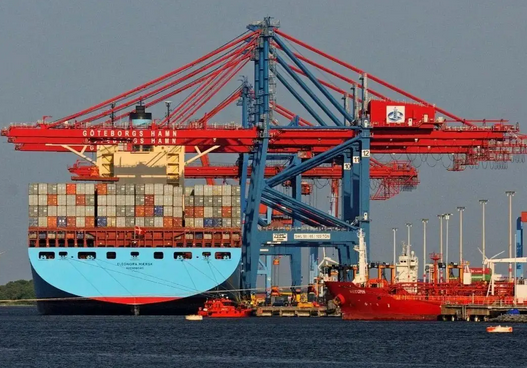
- Key Hubs: Routes from Qingdao, Shanghai, and Ningbo to Busan and Incheon are now optimized with AI-driven scheduling.
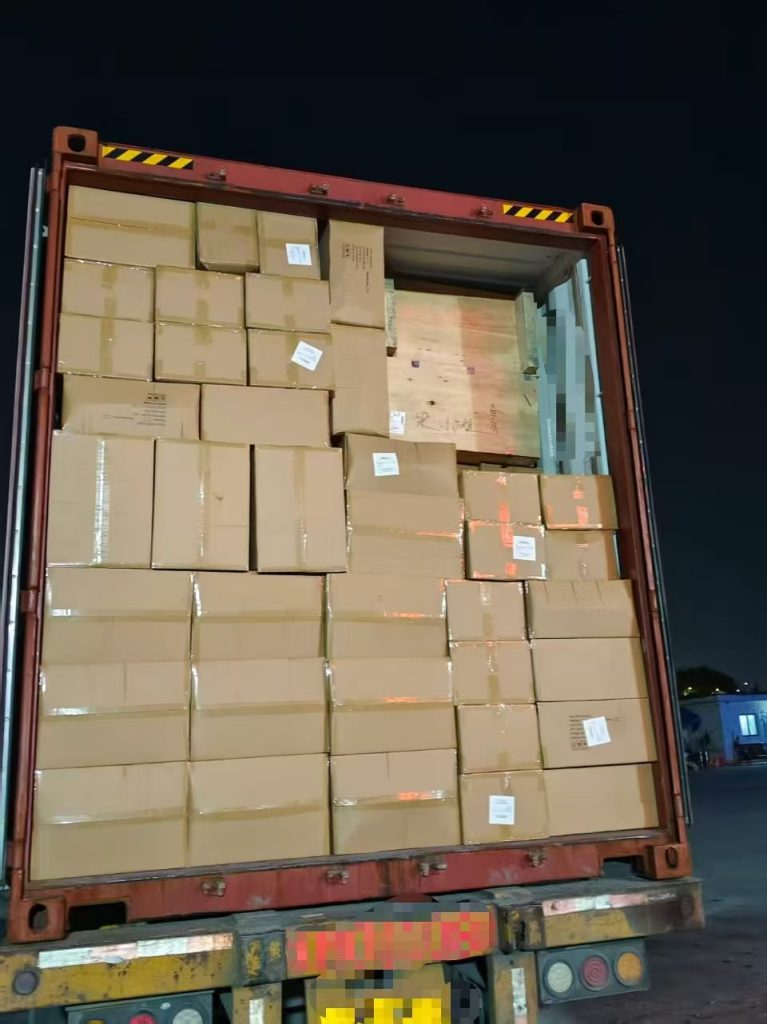
- FCL vs. LCL: For high-volume electronics or auto parts, Full Container Load (FCL) offers the best security. For e-commerce startups, our Less than Container Load (LCL) services from Weihai to Incheon can be as cheap as $10 per CBM (as of Feb 2026).
B. Air Freight: For the High-Tech Elite
With South Korea’s hunger for Chinese semiconductors and medical devices, air freight from hubs like Shenzhen (SZX) and Shanghai (PVG) to Incheon (ICN) is booming.
- Transit Time: Same-day or next-day delivery.
- Market Trend: In early 2026, air freight rates for large volumes (≥1,000 kg) have stabilized around $1.50 per kg, making it a viable option for high-value fashion and electronics.
C. The “Sea-Air” Hybrid (The Ferry Advantage)
Perhaps the most “secret” weapon in a forwarder’s arsenal is the China-Korea Ferry service. Ships from Weihai and Qingdao function as mobile bridges.
- Why use it? It offers the speed of air (1–2 days door-to-door) at roughly 30% of the cost. This is the gold standard for the “Cross-border E-commerce” (CBEC) boom.
3. Mastering Korean Customs: Compliance is King
South Korea’s Customs Service (KCS) is famously efficient but strictly compliant. In 2026, we have seen an increase in “Super-fake” luxury item seizures and stricter inspections on AI-integrated electronics.
The KC Certification Hurdle
The KC (Korea Certification) mark is non-negotiable for electronics, toys, and appliances. Shipping goods without this mark often results in immediate destruction or forced return-to-sender. A seasoned forwarder doesn’t just ship; they consult on certification readiness before the cargo leaves the warehouse.
E-commerce and the PCCC
For B2C shipping (AliExpress, Temu, etc.), every Korean buyer must provide a Personal Customs Clearance Code (PCCC). As forwarders, we use API integrations to verify these codes in real-time, ensuring that thousands of small parcels clear Incheon customs within hours, not days.
4. Risk Management in 2026: Typhoons and Geopolitics
Logistics in the Yellow Sea isn’t always smooth sailing.
- Weather Patterns: Heavy fog in Spring and Typhoons in Autumn can disrupt schedules. We utilize Real-time Location Intelligence to re-route cargo dynamically.
- The “CNY” Effect: With the 2026 Chinese New Year falling in mid-February, capacity is currently at a premium. Forward-thinking businesses book their space at least 3 weeks in advance.
5. The Digital Transformation of Freight Forwarding
The industry has moved beyond paper spreadsheets. In 2026, a “good” forwarder is a “tech-enabled” forwarder.
- Blockchain Documentation: We are moving toward paperless “Smart Bills of Lading” to reduce fraud and speed up the transfer of ownership.
- AI Route Optimization: We use AI to predict port congestion in Busan, allowing us to choose the most efficient terminal for offloading, saving our clients an average of 1.5 days in drayage time.
6. Sustainable Logistics: The Green Corridor
As South Korea implements its 2026 “Green Port” initiatives, sustainability has moved from a “nice-to-have” to a requirement. We are increasingly using:
- Electric Heavy-Duty Trucks for port-to-warehouse transport in China.
- Eco-friendly Packaging solutions that meet Korean recycling standards, reducing disposal fees for the final importer.
7. How to Select Your Forwarding Partner
If you are looking for a partner on the China-Korea route, look for three things:
- Dual-Market Presence: Do they have their own offices in both China (e.g., Shenzhen/Qingdao) and Korea (e.g., Seoul/Incheon)?
- Customs Expertise: Can they handle “Problematic Items” like liquids, batteries, or branded goods legally?
- Financial Stability: In an era of carrier consolidation, you need a forwarder with strong credit lines and established carrier relationships (Maersk, MSC, HMM).
Conclusion: Bridging the Yellow Sea
Shipping from China to South Korea is about more than just moving boxes; it’s about managing data, compliance, and time. Whether you are a large manufacturer shipping 50 containers a month or an e-commerce seller moving 500 parcels a day, the right logistics strategy can be the difference between a profit and a loss.
As your freight forwarding partner, we don’t just bridge the gap between two countries—we bridge the gap between your product and your customer’s doorstep.
Quick Comparison Table: 2026 Shipping Guide
|
Mode |
Transit Time |
Cost (Relative) |
Best For |
|---|---|---|---|
|
Sea Freight (FCL) |
3–5 Days |
$ |
Bulk manufacturing, Furniture, Heavy machinery |
|
LCL Consolidation |
5–8 Days |
$$ |
Small/Medium Business inventory |
|
Ro-Ro Ferry |
1–2 Days |
$$$ |
Fashion, E-commerce, High-turnover goods |
|
Air Freight |
5–12 Hours |
$$$$ |


No reply content