
Custom CNC Machining Parts Manufacturer in Dongguan China
China
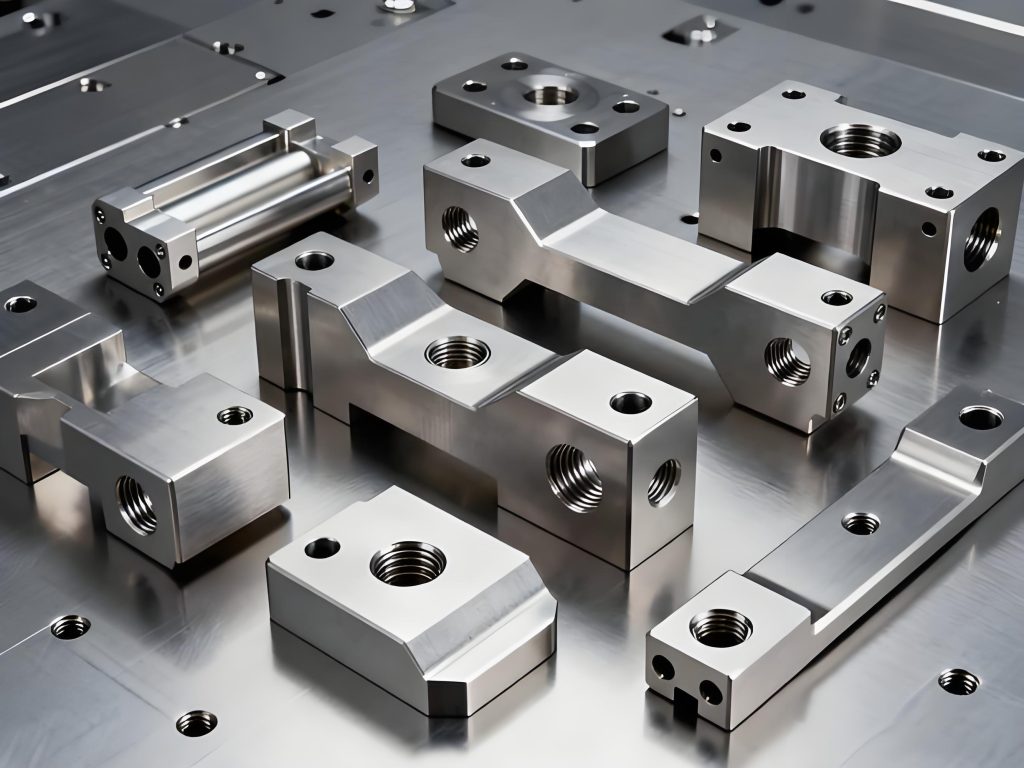
In hardware development, speed isn’t a luxury — it’s a survival metric. Whether you’re racing to get a functional prototype into an investor’s hands, replacing a failed batch of components on an assembly line, or validating a design iteration before the competition launches, lead time is everything. Every day lost is a day of engineering payroll burned, a day of market opportunity missed, and a day your competitors get closer to the finish line.
The traditional assumption among procurement teams is that sourcing CNC machined parts from China means committing to 30–45 day lead times, tied to ocean freight schedules and port congestion. But that assumption is outdated — and it’s costing companies time and agility.
Today, a growing tier of specialized Chinese CNC suppliers can take your CAD file on a Monday and deliver finished, inspected, production-ready parts to your door by the following Wednesday. That’s a true 7-to-10-day turnaround, end to end.
This article explains exactly how that timeline works, what’s realistic to expect, where the bottlenecks hide, and how to structure your RFQ so your parts show up on time — not “soon.”
What “7 Days” Actually Means
Clarity matters. In the CNC machining world, “7-day lead time” can mean different things depending on who you’re talking to. Here’s the honest breakdown:
| Timeline Definition | What It Covers | Typical Total |
|---|---|---|
| 7 Days to Ship | From drawing approval (PO confirmed) to parts handed off to international courier (DHL / FedEx / UPS) | 7 days ex-works |
| 7-10 Days Door-to-Door | Includes 3–4 days air transit to US/EU/UK addresses | 7–10 days total |
| 5-Day Rush | Expedited production for urgent prototypes (premium pricing, limited complexity) | 5 days ex-works |
For the purposes of this article, we’re focusing on the 7 Days to Ship model — which, with air freight, translates to roughly a week and a half on your desk. No ocean freight. No port delays. No customs broker headaches if shipped DDP (Delivered Duty Paid).
How Chinese Suppliers Achieve 7-Day Turnaround
This isn’t magic. It’s infrastructure, process maturity, and industrial density working in concert. Here’s what’s happening behind the scenes:
1. Same-Day Material Sourcing
In manufacturing hubs like Dongguan, Shenzhen, and Kunshan, raw material wholesalers stock aluminum 6061-T6, 7075-T6, stainless steel 304/316, brass, and mild steel in standard plate and bar sizes — available for pickup within hours. A supplier doesn’t need to place a mill order and wait two weeks. They walk to a warehouse, pay, and start cutting.
For reference:
-
6061 / 7075 aluminum plate — typically in stock, same-day available
-
SUS 304 / 316L round bar — same-day to next-day
-
Titanium Grade 5 (6Al-4V) — 2–3 day lead time from domestic mills
-
Engineering plastics (PEEK, Delrin, Nylon) — 1–2 days
2. 24/7 Production Shifts
Unlike many Western job shops that run single-shift operations (8–10 hours/day), top Chinese CNC facilities run two or three shifts covering 16–24 hours per day. A part programmed at 6 PM doesn’t wait until 8 AM to start cutting — the night shift loads it and runs it overnight.
3. Lightning-Fast Quoting & DFM Feedback
The best suppliers quote within 2–12 hours of receiving an RFQ. Not 3–5 business days. This speed comes from:
-
Standardized costing databases (they’ve machined similar parts hundreds of times)
-
Automated CAM estimation tools
-
Dedicated quoting engineers who do nothing but evaluate drawings and generate prices
More importantly, they provide DFM (Design for Manufacturability) feedback at the quote stage — identifying features that will slow production or add cost, before you commit. This prevents the “we can’t machine this as drawn” delay that kills timelines.
4. Integrated or Adjacent Finishing
Anodizing, bead blasting, powder coating, and laser engraving are often done in-house or within the same industrial park. A part doesn’t ship 200km to a subcontractor and wait a week for processing. It moves 500 meters to the next bay.
The 7-Day Timeline: A Realistic Breakdown
Here’s exactly how a 7-day production cycle typically unfolds for a standard custom part:
| Day | Activity | Details |
|---|---|---|
| Day 1 | RFQ → Quote → PO Confirmation | Drawing review, DFM feedback, price confirmation, 30% deposit received |
| Day 2 | CAM Programming & Setup | Toolpath generation, fixture design, raw material cutting to size |
| Day 3–4 | CNC Machining (Rough & Finish) | 3-axis or 4-axis machining; in-process inspection |
| Day 5 | Deburring & Surface Treatment | Manual deburr, bead blast, anodizing (Type II), or passivation |
| Day 6 | Final QC & Packaging | CMM inspection or manual gauging, photos for customer approval, custom packaging |
| Day 7 | Ship-Out | Parts handed to DHL/FedEx/UPS; tracking number issued |
Total: 7 days from PO to international courier pickup.
What Can and Can’t Be Done in 7 Days
To keep expectations grounded, here’s an honest assessment of what fits within a 7-day window — and what requires more time:
✅ Fits Within 7 Days (Standard)
| Category | Details |
|---|---|
| Materials | Aluminum 6061/7075, Brass, Mild Steel, SUS 304/316 (standard stock sizes) |
| Volumes | 1–50 pieces (prototype to low-volume production) |
| Machining | 3-axis and 4-axis; simple 5-axis (single setup) |
| Tolerances | Standard ±0.05mm to ±0.01mm |
| Surface Finish | As-machined, deburred, bead blast, Type II anodizing (clear or black), passivation, laser engraving |
| Part size | Up to ~400mm in any dimension (fits standard machine envelopes) |
⚠️ Requires 10–14 Days (Extended)
| Category | Details |
|---|---|
| Exotic materials | Titanium, Inconel, PEEK, Ultem — material procurement adds 2–4 days |
| Complex 5-axis | Multi-setup 5-axis with tight tolerances (±0.005mm) |
| Hard anodizing | Type III Class 2 — tank time and sealing add 3–4 days |
| Heat treatment | T6 solution treatment, aging cycles — 2–3 days minimum |
| High volume | 200+ pieces — machine time becomes the bottleneck |
| Large castings | Sand casting or die casting base + CNC finish machining |
Case Study: Robotics Enclosure, 30 Pieces, Delivered in 9 Days
Part specs:
-
Material: Aluminum 6061-T6
-
Dimensions: 180 × 120 × 45 mm
-
Features: 12 tapped holes (M3), 2 precision locating pins, internal pocket
-
Finish: Bead blast + black anodize (Type II)
-
Quantity: 30 pieces
-
Destination: Austin, Texas, USA
Timeline:
| Date | Activity |
|---|---|
| Monday | RFQ sent 9:00 AM China time; quote received 2:00 PM; PO confirmed 4:00 PM |
| Tuesday | CAM programming; raw material pulled from stock |
| Wednesday–Thursday | 3-axis machining (2 setups); 30 parts completed |
| Friday | Deburring; bead blast; anodizing line (24-hour cycle) |
| Saturday | Final QC; custom foam packaging |
| Sunday | Shipped via DHL |
| Wednesday (following week) | Delivered to customer’s facility in Austin |
Total: 9 days door-to-door. Cost: ~$38/part including anodizing and shipping.
The customer’s internal machine shop had quoted 21 days for the same job at $84/part. The China option was 57% faster and 55% cheaper.
How to Maximize Your Chances of a True 7-Day Delivery
Your own actions as a buyer have a direct impact on whether your parts arrive in 7 days or 17. Here’s your checklist:
1. Send a Complete RFQ Package
Don’t send just a STEP file and say “make this.” Include:
-
3D model (STEP, IGES, or native CAD)
-
2D drawing (PDF with dimensions, tolerances, and material callouts)
-
Quantity required
-
Surface finish requirements
-
Target delivery date — explicitly state “Need by [Date]”
-
End-use application — helps the supplier suggest process shortcuts
2. Mark It “Rush” — and Be Willing to Pay
Most Chinese suppliers offer standard (10–15 day) and expedited (5–7 day) lead times. Rush jobs typically carry a 15–30% premium because they jump the production queue and may require overtime shifts. If speed matters, pay for it. It’s still usually cheaper than local machining.
3. Avoid Unnecessary Complexity
-
Don’t call out ±0.01mm if ±0.05mm will work — tighter tolerances mean more inspection time.
-
Standardize thread sizes (M3, M4, M5, #4-40, #6-32) — non-standard taps aren’t sitting in the tool crib.
-
Avoid deep, narrow pockets that require long-reach tooling and slow feed rates.
4. Approve the Quote Fast
Every hour between quote issuance and PO confirmation is an hour your part isn’t being machined. If you receive a quote at 4 PM Friday and don’t approve until Monday morning, you’ve just lost 20% of your 7-day window.
5. Request Production Photos Before Shipment
A good supplier will send high-resolution photos of finished parts (and inspection data if requested) before shipping. Approve these promptly — they’re often holding the package at the courier desk waiting for your green light.
Common Pitfalls That Kill the 7-Day Promise
| Pitfall | How It Adds Delay |
|---|---|
| Incomplete drawings | Supplier waits 1–2 days for clarification before starting CAM |
| Last-minute design changes | Parts already in machining may need to be scrapped; new CAM required |
| Requesting hardness testing or MTR after production | Adds 1–2 days if not planned upfront |
| Choosing DDP but refusing to provide a tax ID | Customs clearance stalls at destination |
| Ordering right before a Chinese holiday | Golden Week (Oct 1–7) and Chinese New Year (Jan/Feb) shut down entire regions |
Pro tip: Check the Chinese holiday calendar before planning your order. A 7-day lead time placed 3 days before Golden Week becomes a 17-day lead time in reality.
Shipping: The Final Mile
For 7-day turnaround, international express is non-negotiable. Ocean freight takes 18–30 days. Rail to Europe takes 16–22 days. Air express (DHL, FedEx, UPS) takes 3–4 days to North America, 2–3 days to Europe, and 1–2 days within Asia.
Most suppliers offer:
-
DDP (Delivered Duty Paid): Supplier handles customs clearance and pays import duties. You receive the package with no extra steps. Highly recommended for first-time buyers.
-
DAP (Delivered at Place): You handle customs clearance and duty payment. Faster quote generation, but requires a customs broker on your end.
For small CNC parts (under 50kg), air express cost typically ranges from $40–$150 depending on destination and weight — a rounding error compared to the machining cost savings and the value of getting your parts a month earlier.
The Bottom Line
Seven-day CNC machining from China isn’t a marketing gimmick. It’s the product of dense industrial ecosystems, round-the-clock production, and mature logistics networks. For prototyping, bridge production, and low-volume manufacturing, it’s a legitimate competitive advantage — one that startups and Fortune 500 procurement teams alike are already using.
The key is working with suppliers who have the infrastructure to back up the promise: in-house QC, adjacent finishing, material access, and a track record of hitting dates they quote.
Your next step: Identify the part you need fastest. Package the drawing, the quantity, and your target date. Send it to two or three qualified Chinese suppliers with “7-Day Lead Time Required” in the subject line. You’ll know within 24 hours whether it’s achievable — and what it’ll cost.


No reply content