
Guangzhou Fishing Tackle Co., Ltd
China
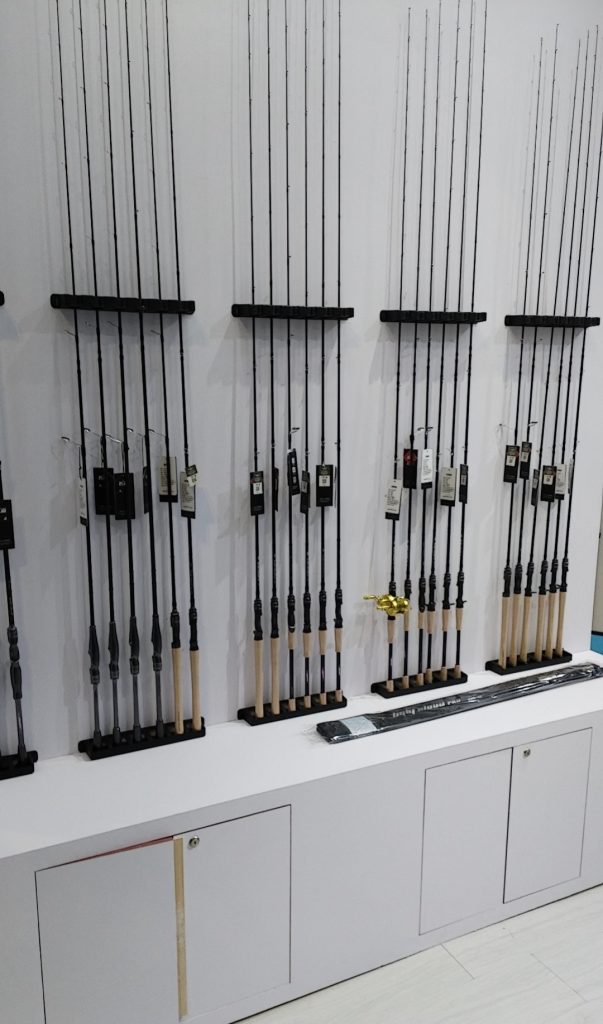
Building a private-label fishing rod brand requires more than placing a logo on an existing product. Buyers need to define the intended fishing application, select suitable rod specifications, confirm components, review samples, and establish clear requirements for branding and packaging.
For international fishing tackle brands, importers, distributors, and sporting goods retailers, OEM sourcing can provide a way to develop products under their own brand identity while working with an established supplier’s available manufacturing and customization capabilities.
However, the success of an OEM project depends heavily on communication. A vague product brief can lead to misunderstandings about rod specifications, logo placement, packaging, or production expectations.
This guide explains how to organize an OEM fishing rod project in China, from the initial product concept to sample approval, quality inspection, and international shipment.
1. What Is OEM Fishing Rod Manufacturing?
OEM stands for Original Equipment Manufacturing.
In a fishing tackle project, OEM generally refers to producing products according to a buyer’s agreed requirements, potentially including the buyer’s brand identity, specifications, and packaging.
The precise scope depends on the supplier and the project agreement.
Some buyers may want to apply their own logo to an existing rod model. Others may require changes to the handle, components, appearance, specifications, or packaging.
These are different levels of customization and should be discussed separately.
OEM vs. ODM: What Should Buyers Understand?
OEM and ODM are commonly used in international manufacturing discussions.
An OEM project may involve producing a product to a buyer’s specified requirements, while ODM generally refers to a supplier offering an existing design or developing a product design for the buyer.
In practice, suppliers may offer different combinations of these services.
Before starting a project, clarify:
-
Whether the product is an existing model or requires design changes.
-
Which specifications are controlled by the buyer.
-
Which components or materials are available.
-
Who prepares the technical drawings or artwork.
-
Whether the supplier can support the requested customization.
-
How product design changes will be approved.
Do not assume that every supplier offers the same OEM or ODM capabilities.
2. Define Your Fishing Rod Product Concept Before Contacting a Supplier
A clear product concept helps suppliers understand what you intend to develop.
Begin by identifying the customer group, fishing application, and product category.
Identify Your Target Customers
Consider whether the product is intended for:
-
General recreational anglers.
-
Freshwater fishing enthusiasts.
-
Saltwater fishing customers.
-
Lure fishing specialists.
-
Sporting goods retailers.
-
Fishing tackle distributors.
-
Private-label online stores.
The intended customer influences the product specifications, appearance, packaging, and product range.
Select the Rod Category
Possible product categories include:
Spinning fishing rods
Designed for compatible spinning reels and available in different lengths, powers, actions, and applications.
Casting fishing rods
Designed for compatible casting reels, with corresponding reel seat and guide configurations.
Telescopic fishing rods
Designed to collapse into a shorter storage length, making portability and packaging important purchasing considerations.
Carbon fiber fishing rods
Often selected for applications where reduced weight and responsiveness are important product characteristics.
The correct category should be determined by the intended application rather than by branding preferences alone.
3. Prepare a Technical Specification for Your OEM Fishing Rod
One of the most important parts of an OEM project is documenting the product specifications.
A product description such as “premium carbon fishing rod with custom logo” is not sufficient to establish a consistent production reference.
The specification should identify the features that matter to the buyer.
Rod Length
Specify the required length and measurement unit.
If the product is telescopic, include the intended collapsed length where relevant.
For multi-piece rods, identify the number of sections.
Power and Action
Power describes the force required to bend the rod, while action describes where the rod primarily bends under load.
Common power classifications include Light, Medium, Medium Heavy, and Heavy.
Common action descriptions include Fast, Moderate Fast, Moderate, and Slow.
These classifications can vary between designs, so confirm the intended performance and relevant line and lure ratings.
Material and Blank Construction
Specify whether you require carbon fiber, fiberglass, or a composite construction.
If the supplier uses material-grade designations, ask for clarification about what the designation means and how it relates to the proposed blank.
Do not rely on a carbon grade number alone as proof of finished-product performance.
Guides and Reel Seat
Confirm the intended reel configuration and corresponding components.
For example, spinning and casting rods use different reel arrangements and guide configurations.
If the project requires a specific guide design, reel seat, or component appearance, document it in the specification.
Handle and Grip
Specify the preferred handle material, shape, length, color, and finish.
If the design is based on an existing sample, identify which features must remain unchanged and which may be modified.
Product Markings
Confirm which information should appear on the rod, including:
-
Brand name or logo.
-
Model number.
-
Rod length.
-
Power and action.
-
Line rating.
-
Lure rating.
-
Other agreed product information.
Ensure the printed details match the approved specification.
4. Custom Fishing Rod Logo: Artwork, Placement and Approval
Branding is often one of the first customization requirements discussed in an OEM fishing rod project.
However, logo customization involves more than sending a brand image to a supplier.
The artwork, placement, size, color, and application method should be confirmed before production.
Prepare Suitable Logo Artwork
Provide a clear, high-resolution logo file.
Where possible, use a vector format so the artwork can be resized without losing clarity.
If the logo contains multiple colors, specify the intended colors and confirm how they will appear on the selected rod finish.
Confirm Logo Placement
Possible branding locations depend on the rod design and available application methods.
Discuss the intended placement on the blank, handle area, or other suitable product surface.
The supplier should confirm whether the requested position is feasible for the selected model.
Review the Branding Proof
Before approving production, request a visual proof or physical sample showing the logo’s appearance.
Check:
-
Spelling and capitalization.
-
Logo proportions.
-
Placement.
-
Color.
-
Size.
-
Alignment.
-
Surface finish.
A small artwork error can affect the appearance of an entire branded order, so approval should be documented.
5. Custom Fishing Rod Design: What Can Be Discussed?
Customization possibilities depend on the selected model and the supplier’s available components and production arrangements.
Buyers should separate essential requirements from optional preferences.
Handle Design
Handle customization may involve material, shape, length, color, and grip appearance.
When requesting changes, explain the intended fishing application and target customer.
Blank Appearance
Buyers may discuss blank color, decorative wrapping, finish, and branding presentation.
Any requested changes should be checked against the selected product’s construction and available options.
Guides and Reel Seat
Component requirements should be defined according to the intended reel configuration and product specifications.
Do not request a component change without confirming its compatibility with the overall rod design.
Product Range Development
A private-label brand may require several models with different lengths, powers, actions, or intended applications.
Each model should have its own specification sheet.
This reduces the risk of confusion when multiple products are quoted, sampled, or produced together.
6. OEM Fishing Rod Samples: The Most Important Approval Stage
A sample provides an opportunity to review the actual product before confirming bulk production.
For a customized fishing rod, sample approval should cover both technical and visual requirements.
What to Inspect on a Sample
Rod dimensions
Check the length, section count, and other specified measurements.
Blank finish
Inspect the surface for visible irregularities, scratches, or inconsistent coating.
Guide alignment
Check guide position, wrapping, and visible component defects.
Reel seat
Confirm compatibility with the intended reel and inspect its operation.
Handle
Review the grip material, shape, dimensions, and finish.
Section connections
For multi-piece rods, inspect fit and assembled alignment.
For telescopic rods, check extension and retraction.
Branding
Confirm logo size, placement, color, spelling, and appearance.
Packaging
Check the packaging dimensions, protection, artwork, and product information.
Create a Written Sample Approval Record
Once the sample is accepted, document the agreed specifications and appearance.
The approval record should identify the model and any relevant sample version.
If a later change is proposed, confirm whether it requires another sample or updated approval.
This is particularly important when the order includes custom components or printed packaging.
7. Custom Fishing Rod Packaging for Private-Label Brands
Packaging contributes to product protection, brand presentation, storage, and transportation.
For fishing rods, the long product dimensions and exposed components require particular attention.
Individual Packaging
Depending on the product and buyer requirements, packaging may include:
-
Protective sleeves.
-
Individual cartons or boxes.
-
Product labels.
-
Printed brand information.
-
Product specification cards.
-
Other agreed accessories.
Confirm which items are included in the quotation.
Custom Printed Packaging
If you require branded packaging, provide the artwork and required dimensions.
Confirm the following before production:
-
Brand logo.
-
Product name.
-
Model number.
-
Product specifications.
-
Color and layout.
-
Required language.
-
Packaging material.
-
Quantity per carton.
Do not approve packaging based only on a general visual description when exact dimensions or printed details matter.
Export Carton Requirements
Before shipment, confirm:
-
Carton length, width, and height.
-
Number of rods per carton.
-
Gross weight.
-
Packing arrangement.
-
Protective materials.
-
Shipping marks.
These details are useful when arranging international freight and estimating shipment requirements.
For long fishing rods, packaging should be suitable for the product dimensions and expected handling conditions.
8. Quality Control for OEM Fishing Rod Production
A private-label project should establish quality requirements before production begins.
The objective is to ensure that the delivered products match the approved specifications and agreed acceptance criteria.
Establish Product Standards
Document the requirements for:
-
Product dimensions.
-
Material and components.
-
Blank appearance.
-
Guide alignment.
-
Reel seat and handle.
-
Section connections.
-
Logo and printing.
-
Packaging.
-
Product markings.
The criteria should be specific enough to inspect.
Inspect Against the Approved Sample
Use the approved sample and written specification as references.
A photograph may help communicate appearance, but it does not replace technical documentation or physical inspection.
Agree on Inspection Timing
Discuss when inspection will take place and how any identified discrepancies will be handled.
Depending on the project, buyers may arrange checks during production or before shipment.
Any specialized performance testing should use an agreed method and appropriate safety precautions.
Keep Production Records
For repeat orders, retain:
-
Approved product specification.
-
Sample approval record.
-
Logo artwork.
-
Packaging artwork.
-
Purchase order.
-
Inspection records.
-
Final product photographs, where available.
These records help communicate changes and maintain consistency across future orders.
9. How to Request an OEM Fishing Rod Quotation
A detailed inquiry helps suppliers understand the project and identify which requirements need confirmation.
Include the following information.
Information |
Details to Provide |
|---|---|
Product category |
Spinning, casting, telescopic, or other |
Target application |
Intended fishing environment and customer |
Rod length |
Required length and unit |
Power and action |
Preferred classifications |
Line and lure rating |
Required specifications, if known |
Material |
Carbon, fiberglass, or composite preference |
Components |
Guides, reel seat, handle, and other requirements |
Branding |
Logo artwork, placement, and colors |
Packaging |
Individual packaging and export carton requirements |
Quantity |
Estimated quantity per model |
Destination |
Importing country |
Sample |
Whether a customized sample is required |
Also ask the supplier to clarify:
-
Available product models.
-
Customization feasibility.
-
MOQ for each model or customization arrangement.
-
Sample availability and applicable charges.
-
Quotation scope.
-
Estimated production schedule.
-
Payment terms.
-
Shipping arrangements.
Do not assume that customization, packaging, samples, or freight are included unless the quotation confirms them.
10. A Practical OEM Fishing Rod Development Process
A structured process can help buyers manage the project from concept to shipment.
Stage 1: Product Planning
Define the target customer, intended application, product category, and desired specifications.
Stage 2: Supplier Discussion
Share the product brief and confirm which requirements are feasible.
Stage 3: Quotation and Customization Review
Clarify product configuration, MOQ, branding, packaging, sample arrangements, and commercial terms.
Stage 4: Sample Development
Review the physical sample and identify any necessary changes.
Stage 5: Final Approval
Approve the product specifications, logo, packaging, and other project details in writing.
Stage 6: Bulk Production
Proceed according to the agreed purchase order and production schedule.
Stage 7: Quality Inspection
Inspect the products against the approved requirements and agreed acceptance criteria.
Stage 8: Export Preparation
Confirm packaging, carton details, shipping marks, documentation, and freight arrangements.
Stage 9: Repeat Order Planning
Retain the approved specifications and records to support future orders.
11. Common OEM Fishing Rod Mistakes to Avoid
Providing Only a Logo Without Product Specifications
A logo identifies the brand, but it does not define the product.
Provide the rod specifications and intended application separately.
Assuming Every Model Supports the Same Customization
Available options may differ between product models.
Confirm customization feasibility before finalizing the quotation.
Approving Artwork Without Checking the Physical Sample
A digital proof may not fully represent the appearance of the final product.
Where practical, inspect a physical sample before bulk production.
Changing Specifications After Approval Without Documentation
Changes to components, dimensions, branding, or packaging should be recorded and approved.
Otherwise, the buyer and supplier may be working from different product requirements.
Ignoring Packaging Until Shipment
Packaging affects product protection, dimensions, branding, and freight planning.
Confirm the packaging arrangement before production is finalized.
Frequently Asked Questions
1. What is the difference between OEM and ODM fishing rods?
OEM generally involves producing a product according to agreed buyer requirements, while ODM commonly involves a supplier offering or developing a product design. The exact scope varies by supplier. Buyers should confirm design responsibility, customization options, specifications, and approval procedures before starting a project.
2. Can I order fishing rods with my own logo and packaging?
Custom logos and packaging may be available depending on the supplier, selected model, and project requirements. Confirm artwork, placement, colors, packaging specifications, applicable quantity requirements, and sample approval directly with the supplier.
3. What information is needed to start an OEM fishing rod project?
Prepare the rod type, intended fishing application, length, power, action, material preference, components, estimated quantity, branding requirements, packaging preferences, and destination country. If some specifications are undecided, explain your target customers and intended product use.
4. Should I approve a sample before bulk production?
A physical sample allows you to review dimensions, finish, guides, reel seat, handle, section connections, logo appearance, and packaging. For customized orders, keep the approved sample and written specifications as references for production.
5. How can I maintain consistent quality in repeat OEM fishing rod orders?
Retain the approved product specifications, sample approval record, branding artwork, packaging artwork, purchase order, and inspection criteria. Confirm any proposed changes before production so that future orders follow the agreed product requirements.
Contact a Fishing Rod Supplier for OEM and Private-Label Inquiries
Are you developing a private-label fishing tackle brand or sourcing customized fishing rods for wholesale distribution?
Guangzhou Fishing Tackle Co., Ltd is listed on Vlefooena as a China-based fishing tackle supplier. Its supplier profile describes fishing rod product categories including spinning rods, casting rods, telescopic rods, and carbon fiber fishing rods, along with OEM/ODM and customization inquiries.
International buyers can contact the supplier through Vlefooena to discuss product specifications, logo requirements, packaging, samples, and quotations.
When submitting your inquiry, include:
-
Your preferred fishing rod category.
-
Technical specifications or product references.
-
Estimated order quantity.
-
Logo artwork and branding requirements.
-
Packaging preferences.
-
Target market and destination country.
-
Sample or bulk production requirements.


No reply content