
Plastic Pallet Factory
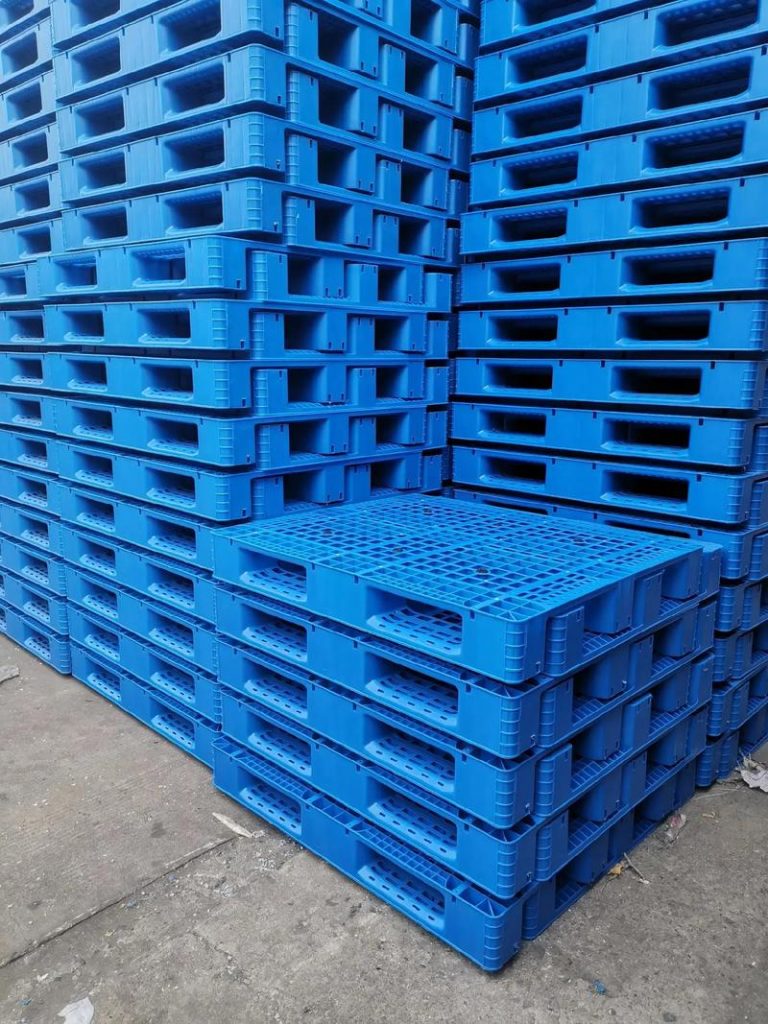
Let’s be honest—when the quarterly procurement report lands on your desk and the pallet line item is glowing red again, it’s not just frustrating. It’s predictable.
You’re not buying pallets wrong. You’re probably just buying them the way everyone else does: getting three quotes, picking the lowest unit price, and calling it a day.
But here’s what that approach is actually costing you: up to 20–35% in avoidable overspend over a 3-year cycle.
As a direct plastic pallet manufacturer working with logistics teams, 3PLs, and warehouse operators across 30+ countries, we’ve seen the same budget leaks repeat themselves. The good news? They’re all fixable.
Here are 5 manufacturer-grade strategies to bring your pallet procurement back under budget—without sacrificing quality or safety.
The Real Reason Your Pallet Budget Keeps Blowing Up
Before we get to the fixes, let’s name the problem. Most procurement teams focus on unit price and ignore total cost of ownership (TCO). That’s like buying a truck based only on the sticker price and ignoring fuel, maintenance, and resale value.
| What You’re Tracking | What You’re Missing |
|---|---|
| Unit price per pallet | Replacement frequency (how many times you rebuy) |
| Upfront freight cost | Return logistics and reverse supply chain |
| Initial load capacity | Performance degradation over time |
| Supplier quoted lead time | Stockout downtime and emergency air freight |
The strategies below attack each of these hidden costs directly.
Strategy #1: Right-Spec, Not Over-Spec
The single biggest budget killer we see? Buying heavy-duty pallets for light-duty applications.
A common scenario: a warehouse manager specifies 1,500 kg racking-load pallets “just to be safe.” But 70% of their SKUs never exceed 400 kg. They’re paying a 40% premium for capacity they’ll never use.
What manufacturers recommend instead:
| Application | Actual Load Need | Right-Spec Model | Savings vs. Over-Spec |
|---|---|---|---|
| Floor stacking (max 3-high) | 500–800 kg static | 3-runner light-duty HDPE | ~35% |
| Conveyor transport | 200–400 kg dynamic | 9-leg nestable, thin-wall | ~42% |
| Export one-way | Single trip, 300 kg | Cost-optimized export model | ~50% |
| High-rack racking | 1,000–1,500 kg | Steel-reinforced heavy-duty | Baseline (correct spec) |
🔑 Pro tip: Send your manufacturer your actual load data—not your “worst-case scenario” estimate. The right factory will spec you down to save you money. If they don’t, they’re not engineering for you; they’re upselling you.
Strategy #2: Share the Mold, Slash the Tooling Cost
Custom pallet sizes usually mean custom mold costs—anywhere from $8,000 to $30,000 depending on size and complexity. But here’s what most buyers don’t know:
Many manufacturers already have 20–40 standard molds in-house. If your required size is within ±5–10 cm of an existing mold, you can often use it with minor modifications—or no modification at all.
Cost comparison:
| Approach | Tooling Cost | Unit Price (1,000 pcs) | Best For |
|---|---|---|---|
| Full custom mold | $15,000–$30,000 | Lowest (high volume) | 10,000+ units/year |
| Modify existing mold | $2,000–$5,000 | Slightly higher | 2,000–10,000 units/year |
| Use standard mold as-is | $0 | Standard pricing | Any volume |
🔑 Pro tip: Always ask: “Do you have a standard mold close to 1200×1000mm (or your target size)?” You’d be surprised how often the answer saves you five figures.
Strategy #3: Optimize the Resin Blend for Your Environment
Virgin HDPE costs roughly 2–3× more than recycled regrind. But you don’t need 100% virgin for every application. Smart manufacturers blend:
| Environment | Recommended Blend | Why | Cost Impact |
|---|---|---|---|
| Cold storage / freezer (-20°C to -30°C) | 40–50% virgin + 50–60% high-grade regrind | Prevents brittle cracking | Baseline |
| Ambient warehouse (15–25°C) | 20–30% virgin + 70–80% regrind | Excellent durability, lower cost | Save 15–20% |
| Outdoor yard storage | 30% virgin + UV stabilizers + 70% regrind | UV protection without full virgin cost | Save 12–18% |
| Food-grade / pharma | 100% virgin FDA-approved resin | Compliance requirement | Premium (necessary) |
🔑 Pro tip: If your supplier can’t tell you the exact virgin-to-regrind ratio, you’re either overpaying or getting a lower-quality blend than promised. Transparency here = real savings.
Strategy #4: Switch to Nestable or Rackable Hybrid Designs
Transportation and return logistics often account for 25–30% of total pallet program costs. The design you choose dramatically affects this:
Nestable 9-leg pallets:
-
Nest 60+ units per stack (vs. 20 for rackable)
-
Cut return freight by up to 65%
-
Ideal for: one-way shipping, export, reverse logistics loops
Rackable 3-runner pallets:
-
Full perimeter base for edge racking
-
Can be used as display pallets (retail floor ready)
-
Eliminate need for separate display platforms = one fewer SKU to buy
🔑 Pro tip: Many operations benefit from a mixed fleet—nestables for outbound shipping, rackables for in-house racking. Your manufacturer can help you calculate the exact ratio to minimize total system cost.
Strategy #5: Negotiate Volume Tier Pricing with a Rolling 12-Month Commit
Most buyers negotiate per-PO. Manufacturers think in annual volume. The difference?
| Commitment Type | Discount Level | Manufacturer Benefit |
|---|---|---|
| Single PO, 500 units | 0–5% off | One-off production run, setup waste |
| Single PO, 2,000 units | 8–12% off | Better raw material buy, efficient run length |
| Rolling 12-month, 5,000+ units | 15–22% off | Production planning, raw material forward contracts, mold amortization spread |
🔑 Pro tip: Even if you can’t commit to a full annual volume upfront, ask for “forecast pricing.” Share your projected 12-month usage, and many factories will extend better per-unit pricing based on good-faith volume—especially if you’re a repeat buyer.
The 20% Savings Reality Check
Here’s what these strategies look like when combined for a mid-sized 3PL operation (5,000 pallets/year):
| Cost Driver | Before Optimization | After Applying Strategies | Annual Savings |
|---|---|---|---|
| Unit purchase cost | $28/pallet × 5,000 = $140,000 | $22/pallet × 5,000 = $110,000 | $30,000 |
| Replacement rebuys (premature failure) | $45,000 | $12,000 | $33,000 |
| Freight (return logistics) | $22,000 | $9,000 | $13,000 |
| Total Annual Spend | $207,000 | $131,000 | $76,000 (37% reduction) |
That’s not a typo. 37% total cost reduction—driven by smarter specs, not cheaper quality.
Why Manufacturer-Direct Makes These Strategies Possible
You can’t execute most of these strategies through a distributor. Here’s why:
| What You Need | Distributor | Direct Manufacturer |
|---|---|---|
| Custom resin blend adjustment | ❌ Can’t modify | ✅ In-house compounding |
| Mold library access | ❌ Doesn’t own molds | ✅ 30+ molds on hand |
| Load-based spec recommendation | ❌ Sells what’s in stock | ✅ Engineers to your data |
| Annual volume pricing | ❌ Markup on markup | ✅ Factory-direct tier pricing |
| Sample testing before bulk order | ❌ Limited flexibility | ✅ Free samples, pilot runs |
Stop Overpaying. Start Spec’ing Smart.
If your pallet budget is bleeding, the fix isn’t “buy cheaper.” It’s buy engineered—with a manufacturer who treats your total cost of ownership as seriously as you do.
👉 Request a free TCO audit from our team. Send us your current pallet specs, annual volume, and operating conditions. We’ll show you exactly where you’re overspending—and what the optimized solution looks like.
No pressure. No inflated quotes. Just the same engineering advice we give our longest-standing clients.


No reply content