When you are looking for a plastic bucket manufacturer, the lowest unit price is rarely the most important factor.
A plastic bucket may look like a simple product, but the manufacturing details behind it can significantly affect durability, leakage resistance, stacking performance, appearance, shipping cost, and long-term purchasing stability.
For importers, wholesalers, packaging distributors, retailers, paint companies, food businesses, chemical manufacturers, agricultural suppliers, and private-label brands, choosing the right manufacturer means looking beyond the bucket itself.
You need to understand the material, capacity, mold, production process, lid design, handle, printing, packaging, quality control, MOQ, lead time, and total landed cost before placing a bulk order.
This guide explains how to evaluate a plastic bucket manufacturer and how to prepare a better purchasing request.
What Does a Plastic Bucket Manufacturer Actually Produce?
A professional plastic bucket manufacturer normally does more than inject plastic into a mold.
Depending on the factory and product requirements, manufacturing may involve:
Raw material selection
Injection molding
Mold development
Lid production
Handle assembly
Color matching
Logo printing
In-mold labeling
Heat-transfer printing
Screen printing
Product inspection
Packaging
Carton packing
Export preparation
The manufacturing process can also vary according to the intended application.
A small household bucket, a food packaging pail, a paint bucket, and a chemical container may look similar, but their requirements can be very different.
That is why buyers should identify the intended application before requesting a quotation.
PP or HDPE: Which Material Should You Choose?
Material selection is one of the first questions to discuss with a manufacturer.
Polypropylene, commonly called PP, is widely used for plastic containers and buckets because it offers a useful combination of rigidity, chemical resistance, weight, and processing characteristics.
HDPE, or high-density polyethylene, is also widely used where toughness and impact resistance are important.
The right material depends on the application.
For example, buyers may need to consider:
What will be stored inside the bucket?
Is the product food-related?
Will the bucket be exposed to chemicals?
Will it be transported over long distances?
Will the container be stacked?
Will it be reused?
Does it need strong impact resistance?
Does the destination market have specific material requirements?
Do not simply tell a factory that you need a “plastic bucket.”
Tell the manufacturer what the bucket will be used for.
That gives the factory a much better basis for recommending the appropriate material and structure.
How to Choose the Right Plastic Bucket Capacity
Plastic buckets are available in many capacities, from small containers to large industrial pails.
Common commercial requirements may include:
1L
2L
3L
5L
10L
15L
18L
20L
25L
30L
The correct capacity depends on the product being stored and how customers will use the container.
For example, a 5L bucket may be practical for household or small commercial products, while a 20L bucket may be more appropriate for paints, coatings, lubricants, chemicals, agricultural products, or bulk materials.
Do not select capacity only according to the volume number.
The internal dimensions, opening size, bucket height, bottom diameter, lid design, and stacking configuration also matter.
Round, Square, or Oval Plastic Bucket?
Shape affects both usability and logistics.
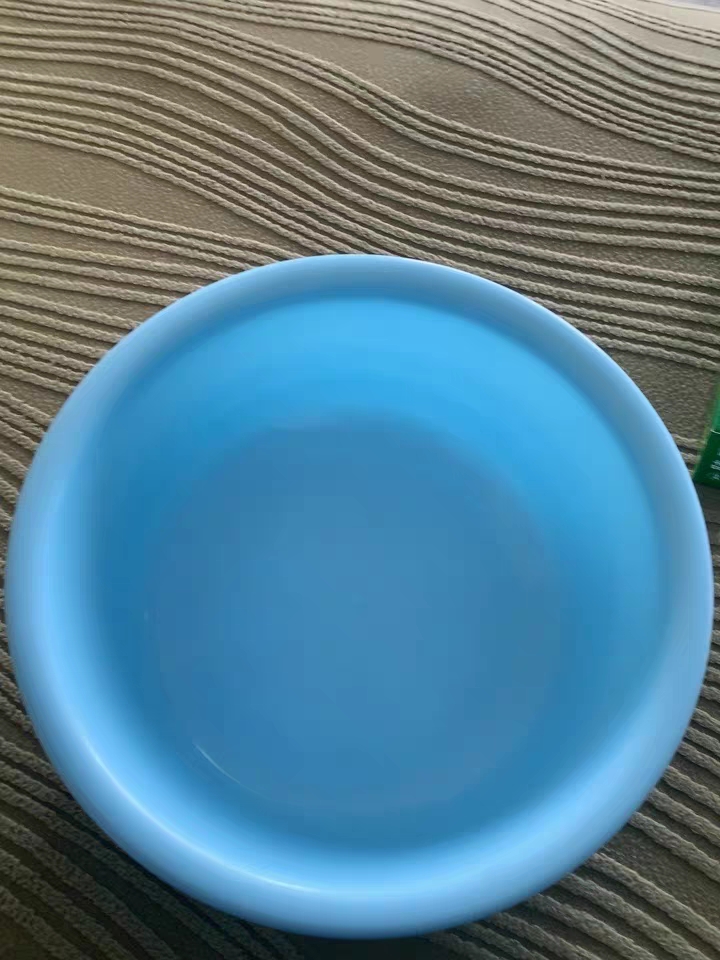
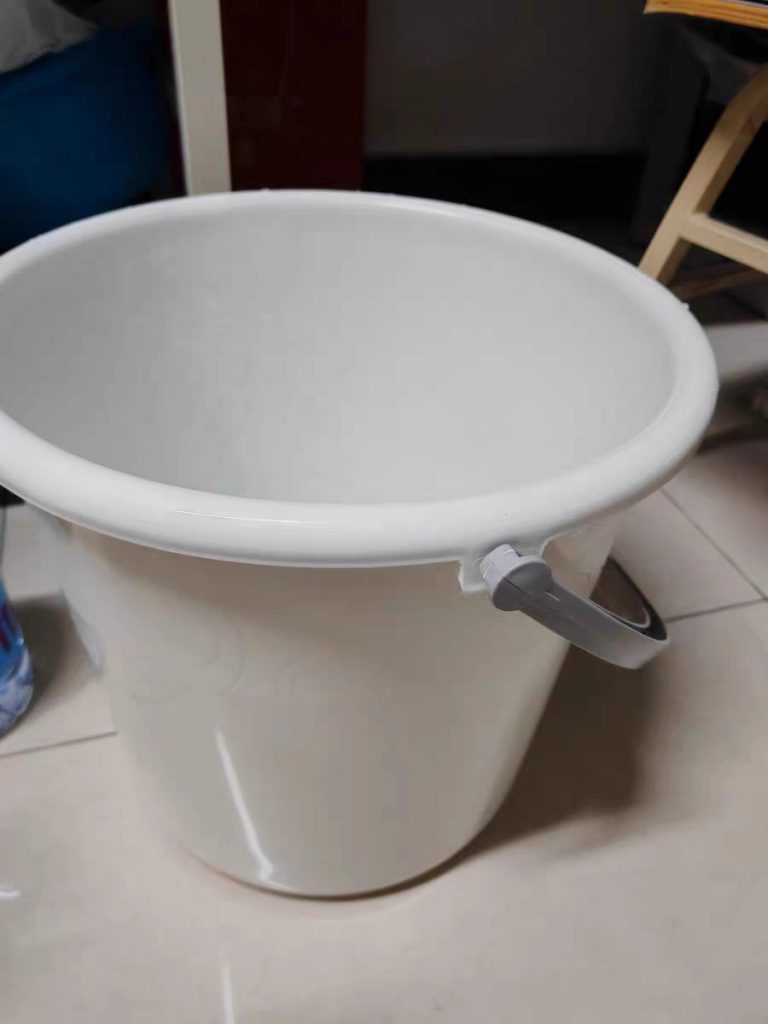
Round Plastic Buckets
Round buckets are widely used because they are relatively simple to manufacture and convenient for carrying and pouring.
They are commonly used for:
Household products
Paint
Food packaging
Chemicals
Agricultural products
General storage
Square Plastic Buckets
Square or rectangular buckets can make better use of warehouse and transportation space.
They may be useful when:
Stacking efficiency is important
Shelf space is limited
Products need a larger printable surface
Transportation volume needs to be controlled
Oval Plastic Buckets
Oval designs can provide a different balance between appearance, handling, and storage space.
The right shape should be selected according to the product, filling process, storage method, and final customer experience.
Injection Molding Is the Core Manufacturing Process
Most rigid plastic buckets are produced through injection molding.
The basic process involves heating plastic material and injecting it into a mold under controlled conditions.
After the plastic cools and solidifies, the molded product is removed from the mold.
However, the quality of the final bucket depends on much more than simply having an injection molding machine.
Important factors include:
Mold quality
Injection pressure
Temperature control
Cycle time
Material consistency
Wall thickness
Cooling
Machine condition
Operator control
Inspection procedures
A manufacturer with good equipment but poor process control may still produce inconsistent products.
For bulk buyers, production consistency is just as important as the appearance of the first sample.
Why Mold Quality Matters
The mold is one of the most important investments in a customized plastic bucket project.
If you need a new shape, special dimensions, custom lid, unusual handle, or proprietary design, the manufacturer may need to develop a new mold.
Before approving a mold, ask:
Who owns the mold?
What is the mold cost?
How long does mold development take?
How many cavities does the mold have?
What is the expected mold life?
What happens if the mold needs modification?
Can the mold be transferred to another factory?
Are future maintenance costs included?
These questions are particularly important for OEM projects.
A cheap mold quotation may not necessarily be the best choice if the mold requires frequent maintenance or produces inconsistent dimensions.
How to Evaluate Plastic Bucket Wall Thickness
Wall thickness directly affects product weight, rigidity, material consumption, and cost.
A thicker bucket is not automatically better.
If the design is unnecessarily heavy, you may pay more for:
Raw material
Product weight
Packaging
Transportation
Storage
At the same time, reducing material too aggressively can create problems such as:
Deformation
Cracking
Poor stacking performance
Weak handles
Poor impact resistance
Lid-fitting problems
The objective is to find the right balance between material usage and performance.
For this reason, buyers should provide the intended application and performance requirements instead of specifying only a target weight.
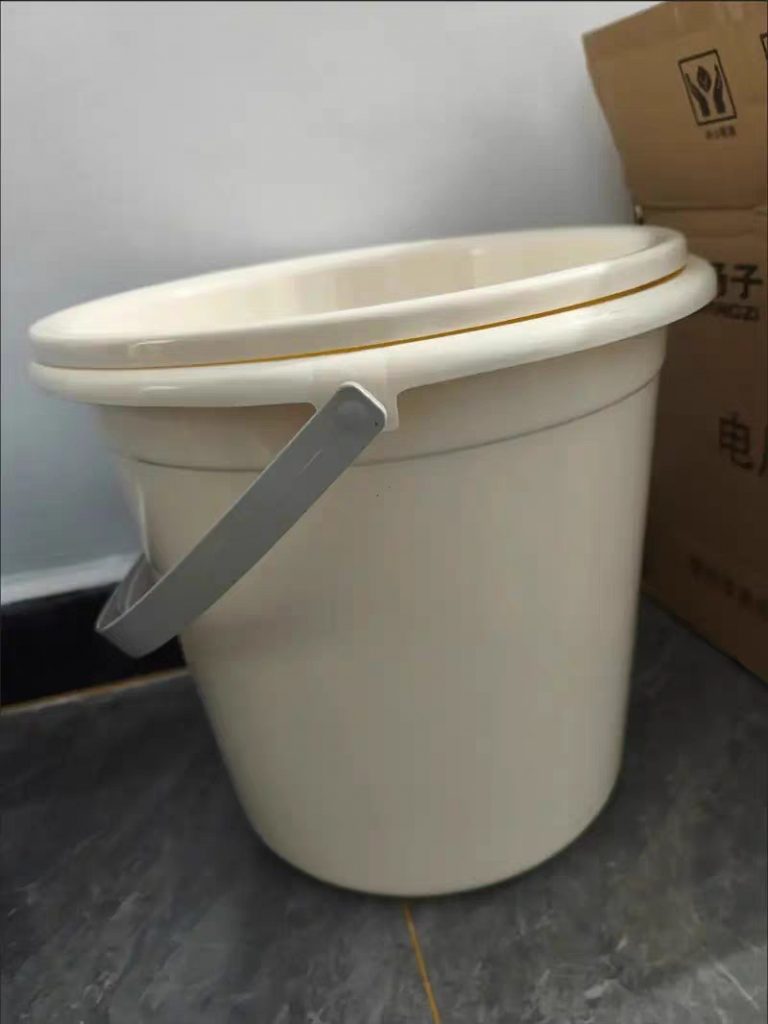
The Lid Is More Important Than Many Buyers Realize
A bucket body can be excellent while the lid creates the biggest problem.
Depending on the application, the lid may need to provide:
Tight closure
Leak resistance
Dust protection
Moisture protection
Tamper evidence
Easy opening
Repeated opening and closing
For liquid or semi-liquid products, sealing performance is particularly important.
Ask the manufacturer how the lid and bucket are matched and whether sealing tests are performed.
If the bucket is intended for export, transportation testing should also be considered because vibration, stacking pressure, temperature changes, and handling can expose weaknesses that are not obvious during normal use.
Handles Should Be Tested, Not Just Viewed
The handle is another component that deserves attention.
A bucket can have a strong body but still be inconvenient or unsafe if the handle is poorly designed.
Check:
Handle material
Handle thickness
Connection points
Grip design
Load-bearing capability
Resistance to repeated use
Metal or plastic handle options
For heavy-duty applications, ask the manufacturer to explain how the handle connection is tested.
Do not evaluate the handle only from product photographs.
Custom Plastic Bucket Manufacturing
Many commercial buyers do not want a standard bucket.
They want a product that represents their own brand.
Customization can include:
Bucket color
Lid color
Handle color
Logo
Printing
Label
Packaging
Dimensions
Shape
Lid design
Handle design
Mold
Product structure
Common printing approaches include screen printing, heat-transfer printing, and in-mold labeling.
The best method depends on the artwork, quantity, surface requirements, durability expectations, and budget.
For large-volume branded products, printing and labeling should be discussed before the final quotation.
OEM vs ODM Plastic Buckets
These terms are often used together, but they are not exactly the same.
OEM
OEM usually means producing according to the buyer’s specified design or requirements.
The buyer may provide:
Dimensions
Drawings
Logo
Color
Packaging
Material requirements
Existing product specifications
The factory then produces according to the approved requirements.
ODM
ODM generally involves a greater level of manufacturer participation.
The manufacturer may provide:
Existing designs
Product structures
Mold options
Product recommendations
Design modifications
Manufacturing solutions
For buyers without their own engineering team, an experienced ODM manufacturer can reduce development time.
What Should You Put in a Plastic Bucket RFQ?
A vague request such as:
“Please quote plastic buckets.”
will usually produce a weak comparison.
A better RFQ should include:
Product: Plastic Bucket Application: Food / Paint / Chemical / Agricultural / Household / Other Capacity: ___ L Shape: Round / Square / Oval / Custom Material: PP / HDPE / Manufacturer recommendation Color: ___ Lid: Required Handle: Plastic / Metal / Other Logo: Required / Not required Printing: Screen / Heat Transfer / IML / Other Packaging: Standard / Custom Quantity: ___ units Target Market: ___ Delivery Destination: ___ OEM/ODM: Required / Not required Sample: Required / Not required
The more complete the RFQ, the easier it is for a manufacturer to provide a meaningful quotation.
How Much Does a Plastic Bucket Cost?
There is no universal factory price.
The price depends on:
Capacity
Material
Product weight
Wall thickness
Shape
Lid
Handle
Mold
Printing
Packaging
Order quantity
Customization
Production location
Shipping terms
Online marketplace listings can show very different prices even for buckets that appear similar because specifications and quantities may not be identical.
For a serious bulk purchase, buyers should request a factory quotation based on their actual specification rather than using a generic online price as the final purchasing benchmark.
MOQ for Plastic Bucket Orders
MOQ can vary significantly depending on the product.
Standard buckets may have a relatively straightforward production process, while customized buckets may require:
Special colors
Custom printing
New molds
Custom packaging
Special materials
Special lids
Special handles
These requirements can increase the minimum economical production quantity.
Instead of asking only:
“What is your MOQ?”
also ask:
“What is the MOQ for my exact customization?”
This distinction can make a significant difference.
How to Check Plastic Bucket Quality
A professional inspection should examine more than appearance.
Important inspection points include:
Appearance
Check for:
Scratches
Deformation
Black spots
Color inconsistency
Injection defects
Flash
Surface damage
Dimensions
Check:
Height
Diameter
Capacity
Lid dimensions
Handle position
Wall thickness where required
Mechanical Performance
Depending on application, evaluate:
Impact resistance
Load-bearing performance
Handle strength
Stacking performance
Drop resistance
Sealing
For products that require closed storage, check:
Lid fit
Leakage
Seal consistency
Opening and closing performance
Printing
For branded buckets, inspect:
Logo position
Color accuracy
Print clarity
Adhesion
Scratch resistance
Quality requirements should be defined before mass production, not after the goods arrive.
Food-Grade Plastic Buckets Require Extra Attention
If the bucket will directly or indirectly package food, buyers should not assume that every plastic bucket is automatically suitable.
Ask the manufacturer for documentation relevant to:
Raw material
Intended food-contact application
Production process
Applicable market requirements
Testing
Product configuration
The exact requirements depend on the destination market and intended use.
A manufacturer may offer both general-purpose and food-related products, so the buyer should clearly identify the application during the quotation stage.
Chemical and Industrial Applications Need Different Requirements
Buckets used for chemicals, coatings, lubricants, adhesives, or agricultural products may face different requirements from household storage buckets.
Important questions include:
What chemical will be stored?
What concentration is involved?
What temperature will the container experience?
How long will the product remain inside?
Is leakage prevention critical?
Will the container be stacked?
Does transportation involve special requirements?
The manufacturer should evaluate material compatibility and container structure according to the actual application.
How to Compare Two Plastic Bucket Manufacturers
Suppose Factory A offers a lower price than Factory B.
Do not choose Factory A immediately.
Compare:
Factor
Factory A
Factory B
Material
Capacity
Product weight
Wall thickness
Lid
Handle
Mold
Printing
MOQ
Sample
Quality control
Production time
Packaging
Carton size
OEM/ODM
Documentation
Shipping terms
After-sales support
Only after these factors are normalized should you compare the final price.
Why the Cheapest Plastic Bucket May Cost More
This sounds contradictory, but it happens frequently in international purchasing.
A cheaper bucket may have:
Lower material weight
Simpler lid
Weaker handle
Less packaging
Lower printing quality
Higher defect rate
Poorer stacking efficiency
Higher shipping volume
The factory price may be lower while the total cost of ownership is higher.
This is why experienced buyers look at total purchasing cost instead of unit price alone.
Shipping Plastic Buckets From China
Plastic buckets are relatively bulky compared with their unit value.
This makes logistics efficiency important.
Before ordering, request:
Carton dimensions
Units per carton
Net weight
Gross weight
Number of cartons
Total volume
Loading quantity
Shipping term
Some buckets can be nested to reduce shipping volume.
If the design allows nesting, the manufacturer should explain how many empty buckets can be stacked together and how lids and handles affect the packing configuration.
For large orders, a small improvement in packing efficiency can have a meaningful effect on freight costs.
What Makes a Good Plastic Bucket Manufacturer?
A reliable manufacturer should be able to answer practical questions about the product rather than simply send a catalog.
Look for evidence of:
Stable production
Suitable injection molding equipment
Mold capability
Material control
Quality inspection
Consistent dimensions
Customization capability
Sample development
Reasonable MOQ
Clear quotations
Realistic lead times
Export experience
Technical communication
The manufacturer’s ability to explain why a particular material, structure, or production method is appropriate for your application is often more valuable than a long product list.
Questions to Ask Before Placing an Order
Before selecting a plastic bucket factory, ask:
What material do you recommend for my application?
What is the exact product weight?
What is the wall thickness?
What is the actual usable capacity?
What lid options are available?
What handle options are available?
Can you provide samples?
Can you customize the color?
Can you print my logo?
What printing methods are available?
Can you make a new mold?
Who owns the mold?
What is the MOQ for my customization?
What is the production lead time?
What quality checks are performed?
Can you provide relevant product documentation?
What are the carton dimensions?
How many units fit in one carton?
What shipping terms do you offer?
What happens if part of the shipment has quality problems?
A factory that answers these questions clearly is much easier to evaluate than one that only provides a price.
Plastic Bucket Manufacturer Selection Checklist
Before placing a bulk order, confirm:
Product
Capacity confirmed
Material confirmed
Dimensions confirmed
Weight confirmed
Wall thickness confirmed
Shape confirmed
Lid confirmed
Handle confirmed
Customization
Color confirmed
Logo confirmed
Printing method confirmed
Packaging confirmed
Mold ownership confirmed
Artwork approved
Quality
Sample approved
Dimensions checked
Lid tested
Handle tested
Leakage checked where applicable
Appearance standard confirmed
Inspection requirements confirmed
Commercial
MOQ confirmed
Unit price confirmed
Mold cost confirmed
Printing cost confirmed
Packaging cost confirmed
Payment terms confirmed
Incoterms confirmed
Logistics
Carton size confirmed
Units per carton confirmed
Gross weight confirmed
Total volume confirmed
Shipping cost estimated
FAQ
How do I find a reliable plastic bucket manufacturer?
Start by defining your application, material, capacity, shape, lid, handle, quantity, and customization requirements. Then compare manufacturers based on production capability, sample quality, quality control, MOQ, lead time, documentation, and total cost.
What material is best for plastic buckets?
PP and HDPE are both widely used, but the best material depends on the application. Food, chemical, paint, agricultural, and household applications may require different material and performance considerations.
Can a plastic bucket manufacturer make custom sizes?
Many manufacturers can support custom dimensions, shapes, colors, printing, lids, handles, and molds. The feasibility and cost depend on the design and order quantity.
Can I put my logo on a plastic bucket?
Yes. Depending on the product and production method, manufacturers may offer screen printing, heat-transfer printing, in-mold labeling, or other branding methods.
What should I send a manufacturer to get an accurate quotation?
Provide capacity, material, dimensions, shape, lid, handle, color, logo, printing method, packaging, quantity, application, target market, and delivery destination.
Is a sample necessary before a bulk order?
For customized or large-volume orders, a sample is strongly recommended. It allows you to check dimensions, appearance, lid fit, handle strength, printing, and overall product quality before mass production.
What affects the price of a plastic bucket?
Major factors include material, product weight, capacity, mold, lid, handle, printing, packaging, order quantity, customization, and shipping terms.
How can I reduce the cost of plastic buckets?
Instead of simply asking for a lower unit price, consider optimizing product weight, packaging, nesting efficiency, mold design, printing method, order quantity, and shipping configuration while maintaining the required performance.
Final Thoughts
Choosing a plastic bucket manufacturer is ultimately a manufacturing and supply-chain decision, not simply a product-shopping decision.
A reliable factory should be able to produce the required bucket consistently, explain the material and structure, provide an appropriate mold solution, control quality, support customization, and give you a quotation that clearly reflects the actual product you are buying.
The most effective purchasing process is:
Define the Application → Specify the Bucket → Select the Material → Request Samples → Verify Manufacturing Capability → Confirm Customization → Check Quality → Compare Quotations → Calculate Landed Cost → Approve Mass Production
If you are buying standard plastic buckets, focus on consistency, price, packing efficiency, and delivery.
If you are developing a private-label product, pay much more attention to mold ownership, printing, color consistency, packaging, sample approval, and long-term production stability.
And if the bucket will be used for food, chemicals, paint, agricultural products, or other specialized applications, the product requirements should be defined before the quotation is finalized.
The right plastic bucket manufacturer is not necessarily the factory with the lowest price.
It is the factory that can consistently produce the right material, right structure, right capacity, right quality, and right cost for your market.


No reply content