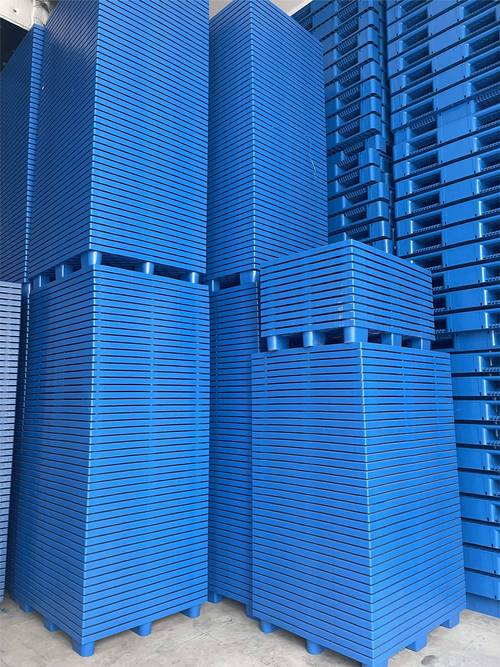
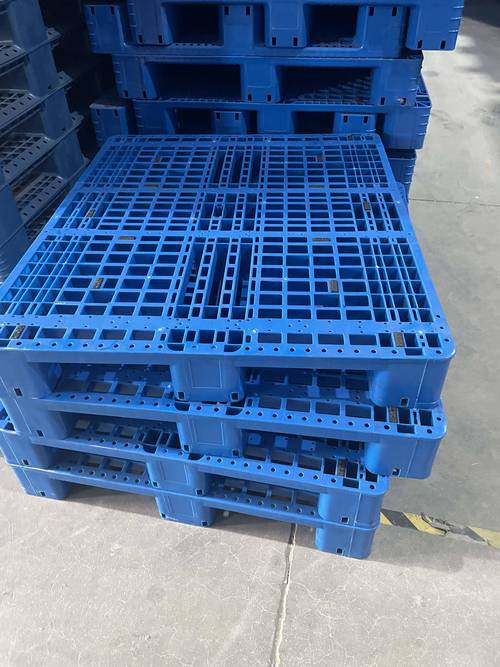
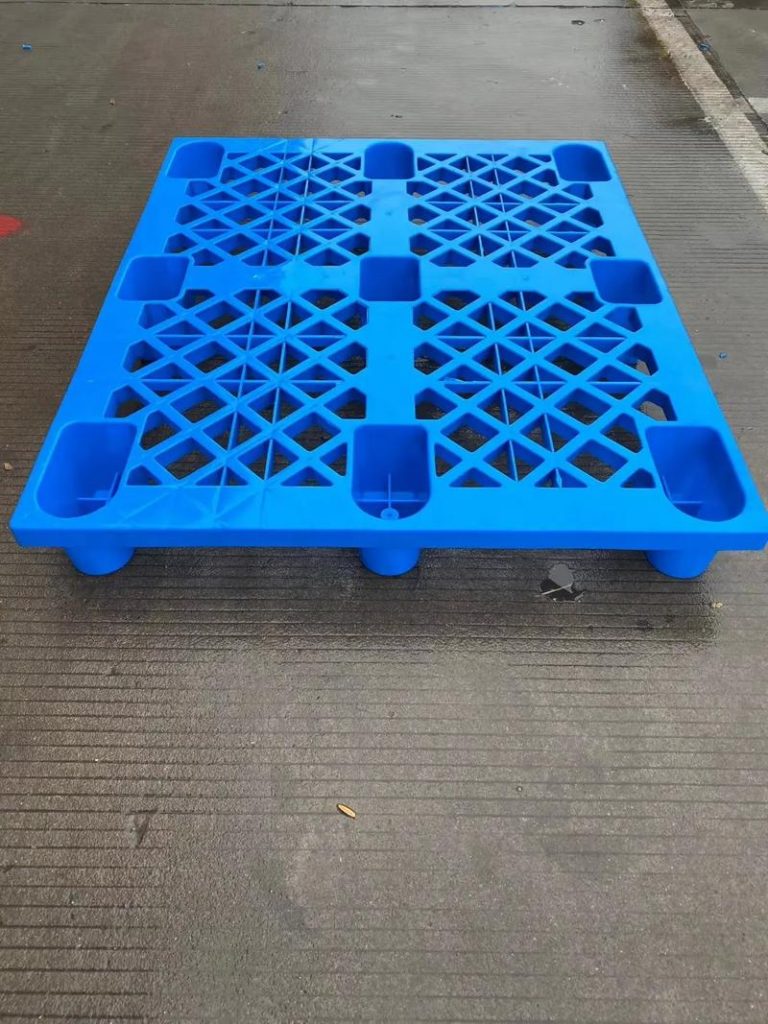
When buying plastic pallets in bulk, the biggest mistake is to compare factories only by price.
A plastic pallet that costs a few dollars less may not actually be cheaper if it has the wrong load rating, unsuitable dimensions, poor stiffness, weak fork-entry areas, or cannot work with your warehouse equipment. For export shipments, the wrong pallet can also increase container space, handling problems, and replacement costs.
That is why choosing a plastic pallet manufacturer should start with your operating requirements rather than a supplier’s product catalog.
A serious purchasing process should answer several practical questions:
-
What load will the pallet carry?
-
Will it be stored on the floor or in a rack?
-
Will forklifts or pallet jacks enter from two sides or four sides?
-
Is the pallet for one-way export or repeated circulation?
-
Does the application require food-grade or hygienic materials?
-
Will it be used in cold storage or high-temperature environments?
-
Does it need to work with conveyors or automated warehouses?
-
Do you need standard pallets or custom OEM production?
Once these requirements are clear, comparing manufacturers becomes much easier.
What a Plastic Pallet Manufacturer Actually Produces
A professional plastic pallet manufacturer normally produces pallets for different handling and storage conditions rather than one universal design.
Common products include:
-
Nestable plastic pallets
-
Stackable plastic pallets
-
Rackable plastic pallets
-
Heavy-duty industrial pallets
-
Hygienic plastic pallets
-
Food-grade pallets
-
Export pallets
-
Closed-deck pallets
-
Open-deck pallets
-
Double-sided pallets
-
Three-runner pallets
-
Six-runner pallets
-
Nine-leg pallets
-
Anti-static plastic pallets
-
Custom OEM plastic pallets
The differences are not simply cosmetic.
The deck structure, bottom runners, material formulation, wall thickness, reinforcement, dimensions and molding design all affect how a pallet behaves under load.
For example, a pallet that works well for lightweight export cargo may be completely unsuitable for warehouse racking. Similarly, a pallet designed for general industrial use may not be the right choice for a food-processing environment where cleaning and hygiene are important.
Start With the Load, Not the Pallet Size
One of the most important details when requesting a quotation is load capacity.
Manufacturers commonly distinguish between:
Static load
The weight the pallet can support while sitting on a flat floor without movement.
Dynamic load
The weight the pallet can carry while being moved by a forklift or pallet jack.
Racking load
The weight the pallet can support when placed on warehouse rack beams.
These three numbers can be very different.
A pallet advertised as having a high static capacity does not automatically mean it can safely carry the same weight in a rack.
For example, a procurement team may require:
1,200 kg dynamic load and 1,000 kg racking load.
That is much more useful to a manufacturer than simply saying:
“We need a strong pallet.”
Load ratings should therefore be discussed together with the actual support conditions, rack span, handling equipment and cargo distribution. Current industry buyer guides also emphasize static, dynamic and racking loads as separate selection criteria.
HDPE or PP: Which Material Should You Choose?
Material selection is another area where buyers often focus too much on price.
Two common materials are HDPE and PP.
HDPE
HDPE is widely used for industrial and hygienic plastic pallets because it offers good impact resistance, moisture resistance and durability.
It can be suitable for:
-
General warehousing
-
Export logistics
-
Food and beverage handling
-
Cold-chain applications
-
Chemical-related logistics
-
Heavy-duty pallet designs
PP
PP is also widely used in pallet manufacturing and can provide good rigidity and dimensional stability.
It may be appropriate for:
-
Warehouse pallets
-
Industrial applications
-
Reusable logistics
-
Lightweight and medium-duty designs
-
Customized pallet projects
The correct choice depends on the complete application.
Temperature, impact, load, recycling requirements, hygiene requirements and pallet structure all matter. A manufacturer should therefore recommend the material based on your operating environment rather than simply offering the cheapest resin.
Some manufacturers also offer recycled resin for applications where the performance and regulatory requirements allow it. For food, pharmaceutical or other sensitive applications, the exact material specification and compliance documentation should be confirmed before ordering.
The Size Must Match Your Logistics System
A pallet is not simply a platform for holding products.
Its dimensions affect:
-
Container utilization
-
Truck loading
-
Warehouse aisle space
-
Rack compatibility
-
Conveyor compatibility
-
Forklift operation
-
Product arrangement
-
Storage density
Common international pallet dimensions include 1200 × 1000 mm, 1200 × 800 mm, 1100 × 1100 mm and 1200 × 1200 mm, but the correct size depends on your market and logistics system.
Before ordering, provide the manufacturer with:
-
Pallet length
-
Pallet width
-
Pallet height
-
Cargo dimensions
-
Cargo weight
-
Loading pattern
-
Container or truck requirements
-
Rack dimensions, if applicable
If your cargo is already packed in cartons, calculate how many cartons should fit on each pallet before selecting the pallet.
This can prevent a surprisingly expensive problem: buying a pallet that is technically strong enough but wastes valuable space.
Nestable, Stackable or Rackable?
These three designs serve different purposes.
Nestable Plastic Pallets
Nestable pallets are designed to fit inside each other when empty.
This can significantly reduce the space required for storage and return transportation.
They are often considered when:
-
Empty pallet transportation is important
-
Export shipping costs need to be controlled
-
Warehouse space is limited
-
The pallet is used for lighter or medium-duty applications
Stackable Plastic Pallets
Stackable pallets are designed to remain stable when loaded pallets are stacked.
They are useful when floor storage is the primary requirement.
Rackable Plastic Pallets
Rackable pallets are designed for warehouse racking systems.
They normally require greater structural rigidity because the pallet may be supported only at specific points.
If your pallets will be stored in racks, tell the manufacturer the rack type and support conditions before requesting a quotation.
Do not simply choose a pallet because its catalog says “heavy duty.”
Injection Molding Quality Matters More Than Buyers Expect
Most industrial plastic pallets are produced using molding processes such as injection molding.
The manufacturing process affects consistency across large orders.
When evaluating a manufacturer, ask:
-
What injection molding machines are used?
-
What is the maximum molding capability?
-
Is the mold owned and maintained by the factory?
-
How often is the mold inspected?
-
How is material controlled?
-
Are production samples retained?
-
How are dimensions checked?
-
How are load tests performed?
-
How are defective pallets separated?
A good pallet should not only look strong.
The critical question is whether thousands of pieces can maintain consistent dimensions and performance.
For large B2B orders, consistency is often more valuable than an impressive sample.
Do Not Ignore the Pallet Mold
If you are ordering a standard pallet, mold availability is relatively straightforward.
Custom OEM projects are different.
A custom pallet may require:
-
New mold development
-
Engineering drawings
-
Prototype sampling
-
Mold testing
-
Structural modifications
-
Load testing
-
Production approval
Before paying for a custom mold, clarify:
Who owns the mold?
Where is the mold stored?
Can another factory use it?
What happens if the supplier stops producing the pallet?
How many production cycles is the mold designed for?
Who pays for mold modification?
These details should be included in the commercial agreement.
A low pallet unit price is not necessarily a good deal if the buyer loses control of an expensive custom mold.
Steel Reinforcement Can Change the Economics
For heavy-duty rackable pallets, manufacturers may use steel reinforcement inside the pallet.
This can increase structural strength, but it also increases:
-
Pallet weight
-
Material cost
-
Manufacturing complexity
-
Transportation cost
Therefore, reinforcement should not be added simply because “more steel is better.”
The correct approach is to calculate the actual rack load and support conditions.
If the pallet only needs to carry 500 kg in a warehouse application, paying for a heavily reinforced design may unnecessarily increase your cost.
On the other hand, if the pallet must repeatedly carry heavy loads in warehouse racks, under-specifying reinforcement can create a much more expensive problem.
Food-Grade Plastic Pallets Need More Than a “Food Grade” Label
Food and pharmaceutical buyers should be particularly careful.
A manufacturer may offer a hygienic pallet, but the buyer still needs to confirm whether the actual material, product model and intended application meet the requirements of the destination market.
Important questions include:
-
What resin is being used?
-
Is virgin resin required?
-
What food-contact documentation is available?
-
Does the documentation apply to the exact pallet model?
-
Is the deck easy to clean?
-
Can water and dirt accumulate in the structure?
-
What cleaning chemicals will be used?
-
What operating temperature is expected?
Closed or smooth decks can be useful where easy cleaning is important. Some current hygienic pallet products are specifically designed around food, pharmaceutical and cleanroom applications.
Do not treat a certificate shown on a supplier’s website as sufficient by itself. Ask for the actual document and verify its scope.
Export Pallets Have a Different Cost Structure
If you are importing pallets from China, the factory price is only part of the calculation.
Your actual landed cost may include:
Product price + packaging + inland transportation + export charges + ocean freight + insurance + destination charges + customs-related costs + local delivery
Plastic pallets are also relatively large compared with their unit value.
This makes container utilization extremely important.
For example, a pallet that is slightly cheaper per piece may require more container space. Another pallet may cost more but nest more efficiently and reduce the freight cost per unit.
Therefore, when comparing quotations, ask the manufacturer for:
-
Pallet dimensions
-
Pallet weight
-
Quantity per container
-
Packaging method
-
Loading quantity for 20GP
-
Loading quantity for 40HQ
-
Estimated production lead time
-
Shipping port
The product price alone does not tell you the real cost.
How to Compare Two Plastic Pallet Manufacturers
Suppose Factory A offers a pallet at a lower price than Factory B.
Do not immediately choose Factory A.
Build a comparison sheet like this:
Item |
Factory A |
Factory B |
|---|---|---|
Material |
||
Size |
||
Pallet weight |
||
Static load |
||
Dynamic load |
||
Racking load |
||
Deck type |
||
Base structure |
||
Fork entry |
||
Steel reinforcement |
||
MOQ |
||
Mold cost |
||
Sample cost |
||
Production lead time |
||
Container quantity |
||
Quality inspection |
||
Compliance documents |
||
OEM customization |
||
Payment terms |
||
Landed cost |
This immediately exposes differences hidden behind the unit price.
What a Professional RFQ Should Include
Instead of sending:
Please quote your plastic pallets.
Send a detailed requirement.
For example:
Product: Plastic Pallet
Size: 1200 × 1000 × 150 mm
Material: HDPE or recommended material
Application: Warehouse and export logistics
Dynamic Load: 1,500 kg
Static Load: 4,000–5,000 kg
Racking Load: 1,000 kg
Entry: Four-way
Deck: Closed deck
Color: Black
Logo: Customized
Quantity: 1,000 / 3,000 / 5,000 pcs
Destination: [Your country/port]
Requirement: Sample before bulk production
Then ask the manufacturer to confirm whether the proposed design can meet those requirements.
This creates a much more meaningful quotation comparison.
How to Verify a Plastic Pallet Manufacturer Before Ordering
A supplier can have a professional website without actually manufacturing the pallets.
Before placing a large order, investigate the factory itself.
1. Confirm the legal company information
Check the registered company name and whether the supplier’s quotation, contract and bank information are consistent.
2. Ask for factory information
Request:
-
Factory address
-
Production photos
-
Injection molding equipment
-
Warehouse photos
-
Quality-control process
-
Production capacity
-
Main pallet models
3. Request a real sample
A sample allows you to check:
-
Weight
-
Dimensions
-
Surface quality
-
Fork entry
-
Deck structure
-
Warping
-
Burrs
-
Color consistency
-
Welds or reinforcement
-
Logo quality
4. Test the pallet under real conditions
If the pallet will carry 1,000 kg in a rack, test it under a similar load and support configuration.
A factory’s theoretical specification is not a substitute for testing under your actual operating conditions.
5. Check production consistency
For large orders, inspect production samples rather than approving only the first sample.
A manufacturer needs to demonstrate that the production run can maintain the same specifications.
MOQ Should Be Evaluated Together With Your Business Model
MOQ varies considerably depending on whether you buy:
-
Standard pallets
-
Custom colors
-
Custom logos
-
Custom molds
-
Food-grade pallets
-
Special dimensions
-
Reinforced pallets
For standard models, a factory may already have an existing mold.
For a custom pallet, the mold and engineering cost can become a major part of the project.
If your annual demand is only a few hundred pieces, a completely custom pallet may not be economically attractive.
If you purchase tens of thousands of pallets every year, custom tooling may make much more sense.
The correct question is not:
“What is your lowest MOQ?”
It is:
“What purchasing volume makes this pallet economically efficient for our operation?”
When OEM Plastic Pallets Make Sense
OEM production becomes attractive when the buyer needs something that standard pallets cannot provide.
Possible customization includes:
-
Custom dimensions
-
Custom color
-
Company logo
-
Molded-in branding
-
RFID integration
-
Anti-slip features
-
Special deck design
-
Special runner structure
-
Steel reinforcement
-
Customized packaging
OEM should begin with an engineering requirement, not just a logo.
If the pallet has to work with an automated warehouse, conveyor system, rack or special forklift equipment, those technical requirements should be included at the beginning of the project.
Some current manufacturers explicitly offer customization involving size, color, logo, reinforcement and automation-related requirements.
The Cheapest Plastic Pallet Is Often Not the Lowest-Cost Pallet
Imagine two pallets:
Pallet A: $20
Pallet B: $25
At first glance, A looks better.
But suppose A:
-
Has a lower load rating
-
Requires replacement more frequently
-
Cannot be used in your rack system
-
Uses more container space
-
Has a higher damage rate
-
Cannot be cleaned efficiently
While B:
-
Meets your required load
-
Works with existing equipment
-
Has better dimensional stability
-
Can be reused for longer
-
Fits your container loading plan
The $5 difference is no longer the important number.
For reusable logistics equipment, buyers should consider total cost of ownership rather than only purchase price. Current procurement guidance also emphasizes lifecycle cost, load performance and application compatibility when selecting industrial plastic pallets.
Questions to Ask a Plastic Pallet Manufacturer
Before placing a bulk order, ask the manufacturer:
-
What material will be used?
-
Is the material virgin or recycled?
-
What is the pallet weight?
-
What are the static, dynamic and racking load ratings?
-
Are these ratings tested or theoretical?
-
What are the exact pallet dimensions?
-
Is the pallet stackable or nestable?
-
Is it suitable for warehouse racking?
-
Does it support four-way forklift entry?
-
Can it work with pallet jacks?
-
What temperature range is recommended?
-
Can the pallet be used in cold storage?
-
Can you provide a sample?
-
What is the MOQ?
-
Is OEM production available?
-
What is the mold cost?
-
Who owns the mold?
-
What is the production lead time?
-
How many pallets fit into a 20GP and 40HQ container?
-
What quality inspection is performed before shipment?
A manufacturer that gives clear technical answers is generally easier to evaluate than one that only sends a price list.
Plastic Pallet Manufacturer Selection Checklist
Before making your final decision, confirm all of the following:
Product
-
Correct dimensions
-
Correct weight
-
Correct deck design
-
Correct runner structure
-
Correct material
Performance
-
Static load confirmed
-
Dynamic load confirmed
-
Racking load confirmed
-
Forklift compatibility confirmed
-
Pallet-jack compatibility confirmed
Manufacturing
-
Real production facility
-
Appropriate molding equipment
-
Stable raw-material control
-
Quality inspection process
-
Production consistency
Commercial
-
Competitive unit price
-
Reasonable MOQ
-
Clear mold ownership
-
Transparent payment terms
-
Acceptable lead time
Logistics
-
Container loading quantity confirmed
-
Export packaging confirmed
-
Shipping port confirmed
-
Estimated landed cost calculated
Compliance
-
Required documents available
-
Documentation matches the exact model
-
Material requirements confirmed
-
Destination-market requirements reviewed


No reply content