
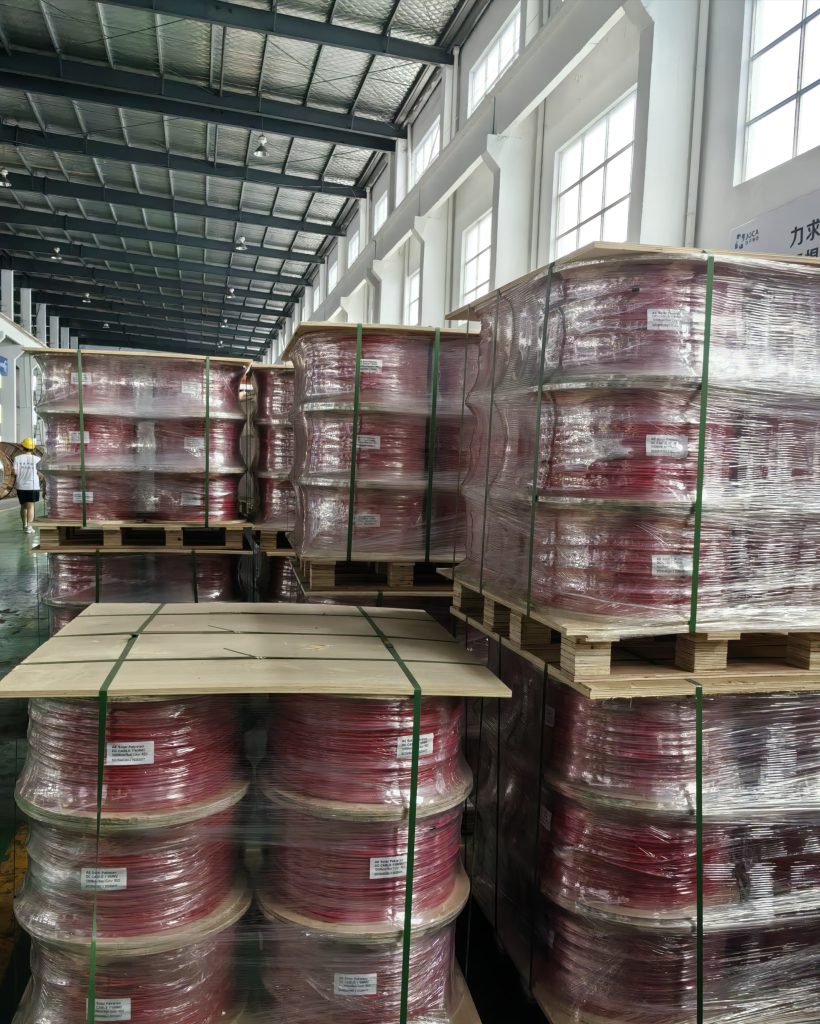
When buying electrical wire from China, many importers focus first on conductor size, copper content, voltage rating, and price. Insulation material is often treated as a secondary detail. In reality, the choice of insulation has a direct impact on performance, installation method, temperature resistance, fire behavior, lifespan, and total cost of ownership.
PVC remains the most widely used insulation material for building wires and many industrial cables. However, other materials such as XLPE, PE, EPR, and special compounds are also common in specific applications. Understanding the differences helps buyers select the right product and avoid specification mismatches.
### Why Insulation Material Matters
Insulation performs several critical functions:
– Electrical isolation between conductors and from earth
– Mechanical protection of the conductor
– Resistance to heat, moisture, chemicals, and environmental stress
– Influence on fire performance and smoke generation
– Determination of maximum operating temperature and current-carrying capacity
Choosing the wrong insulation can lead to premature aging, reduced current capacity, installation difficulties, or non-compliance with project or local standards.
### PVC Insulation – The Most Common Choice
**PVC (Polyvinyl Chloride)** is the standard insulation for most 450/750V building wires (BV, BVR, H07V-U, H07V-R, etc.).
**Advantages of PVC:**
– Low cost and widely available
– Good electrical insulation properties for low-voltage applications
– Easy to process and color
– Adequate mechanical strength for fixed installation
– Suitable for a wide range of general-purpose building and industrial wiring
**Typical limitations:**
– Standard PVC is usually rated up to 70°C continuous operating temperature
– Can become stiff in low temperatures
– Releases corrosive gases and denser smoke when burning (compared with some low-smoke materials)
– Not ideal for continuous high-temperature or outdoor UV-exposed applications without additional protection
**Best suited for:**
Residential and commercial building wiring, fixed installation inside conduits or trunking, general low-voltage power and lighting circuits.
### XLPE Insulation – Higher Temperature and Performance
**XLPE (Cross-linked Polyethylene)** is commonly used in power cables (especially 0.6/1kV and above) and some industrial applications.
**Advantages of XLPE:**
– Higher continuous operating temperature (usually 90°C)
– Better thermal aging resistance
– Higher current-carrying capacity for the same conductor size
– Good mechanical and chemical resistance
– Lower dielectric losses
**Limitations:**
– Generally more expensive than PVC
– Less flexible than some other materials
– Requires different manufacturing and jointing techniques
**Best suited for:**
Power distribution cables, industrial power circuits, applications requiring higher temperature ratings or better long-term thermal performance.
### PE and Other Polyolefin Insulations
**PE (Polyethylene)** and related polyolefin compounds are used in certain control, signal, and special-purpose cables.
**Key characteristics:**
– Excellent electrical properties
– Good moisture resistance
– Can be formulated for low-smoke or halogen-free requirements
– Temperature rating depends on the specific compound
These materials are less common for standard building wires but appear in data, control, and specialized industrial cables.
### EPR and Rubber-Based Insulations
**EPR (Ethylene Propylene Rubber)** and similar elastomeric compounds offer high flexibility and good thermal performance.
**Advantages:**
– Excellent flexibility even at low temperatures
– Good heat and weather resistance
– Suitable for flexible and trailing cables
**Limitations:**
– Higher cost than PVC
– Different processing and installation considerations
**Best suited for:**
Flexible power cables, welding cables, mining cables, and applications requiring repeated bending or movement.
### Comparison Overview
| Property | PVC | XLPE | PE / Polyolefin | EPR / Rubber |
|——————————-|———————-|———————-|———————-|———————-|
| Typical max operating temp | 70°C | 90°C | Varies (often 70–90°C) | 90°C or higher |
| Cost | Low | Medium–High | Medium | High |
| Flexibility | Moderate | Lower | Moderate | High |
| Fire / smoke behavior | Standard (can be improved) | Better in many formulations | Can be low-smoke | Depends on compound |
| Common applications | Building wires | Power cables | Control / special | Flexible / industrial|
| Suitability for fixed building wiring | Excellent | Less common | Limited | Limited |
### What Buyers Should Consider When Choosing Insulation
1. **Application and installation method**
Fixed building wiring → PVC is usually sufficient and cost-effective.
Higher temperature or power distribution → XLPE may be preferred.
2. **Operating temperature and current load**
Higher continuous temperature allows higher current-carrying capacity or longer life under thermal stress.
3. **Fire and safety requirements**
Some projects require low-smoke, halogen-free, or flame-retardant compounds. Standard PVC may not meet these requirements.
4. **Environmental conditions**
Outdoor exposure, UV, chemicals, oil, or extreme temperatures may require special compounds.
5. **Cost vs. performance balance**
PVC offers the best cost-performance ratio for most general building applications. Premium materials are justified only when the application demands them.
6. **Local standards and project specifications**
Always confirm the required standard (IEC, BS, UL, national codes) and whether the insulation material is accepted for the intended use.
### Practical Advice for Importers
– Do not assume all “PVC wires” are the same. Ask for the temperature rating, compound type, and applicable standard.
– When comparing quotations, verify that the insulation material and performance level are identical.
– For projects with fire safety or high-temperature requirements, request detailed material data sheets and test reports.
– Clearly state the required insulation type in your RFQ to avoid receiving a lower-specification product.
### Conclusion
PVC remains the dominant and most economical insulation material for 450/750V building wires and many general-purpose cables. XLPE, PE, and rubber-based compounds offer superior performance in temperature, flexibility, or specialized environments, but at higher cost and with different application scopes.
The correct choice depends on the actual operating conditions, project requirements, and local standards—not solely on price. Buyers who clearly specify the insulation material, temperature rating, and performance needs in their RFQ are far more likely to receive suitable quotations and consistent product quality.
If you are sourcing PVC-insulated building wires or comparing insulation options for a specific project, define the technical requirements first, then request detailed quotations from manufacturers who can meet those specifications.


No reply content