
Introduction: Why Reverse Umbrellas Changed the Umbrella Industry
For decades, umbrella design remained largely unchanged. Most umbrellas focused on materials and size improvements, but the core opening and closing logic stayed the same. Reverse umbrellas represent one of the few structural innovations that genuinely changed how an umbrella behaves in real-world use.
Originally developed to address common user frustrations—wet floors, dripping water, limited control when entering vehicles—reverse umbrellas are now widely adopted in urban commuting, retail, promotional branding, and functional lifestyle markets.
From a manufacturing perspective, reverse umbrellas require more precise structural engineering, higher assembly accuracy, and stricter quality control than conventional umbrellas. This article examines reverse umbrellas from a professional factory and technical standpoint, offering insight for international buyers, distributors, and brand owners.
What Is a Reverse Umbrella?
A reverse umbrella (also called an inverted umbrella) opens and closes in the opposite direction of a traditional umbrella. Instead of folding inward, the wet surface folds inside, trapping moisture and preventing water from dripping onto floors, vehicles, or clothing.
Core Functional Characteristics
- Inverted closing mechanism
- Inner wet surface containment
- Self-standing base design
- Enhanced control in confined spaces
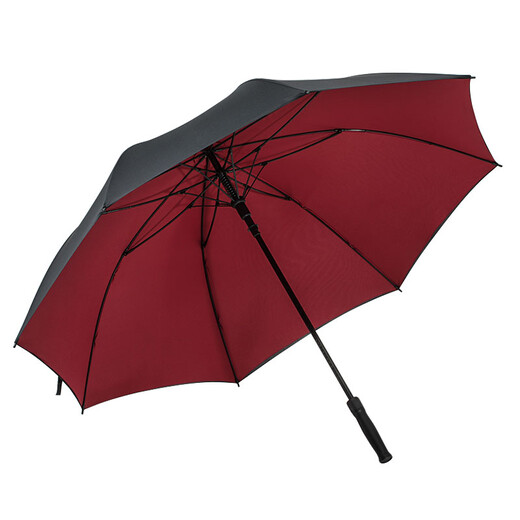
- Dual-layer canopy structure (in most models)
Reverse umbrellas are commonly used in city commuting, car entry/exit scenarios, offices, retail environments, and promotional gifting, where cleanliness and convenience matter.
Manufacturing Perspective: How Reverse Umbrellas Are Engineered
1. Canopy Construction and Fabric Selection
Unlike standard umbrellas, reverse umbrellas often use a double-layer canopy system, which directly impacts fabric choice and sewing accuracy.
Common Fabric Configurations
| Fabric Type | Technical Properties | Application |
|---|---|---|
| Polyester 190T–210T | Durable, cost-efficient | Standard reverse umbrellas |
| Pongee Fabric | High density, smooth surface | Premium models |
| Double-Layer Fabric | Wind pressure release, water containment | High-performance |
| UV-Coated Fabric | UPF 30+ / 50+ | Sun & rain dual-use |
Waterproof Performance
- Standard requirement: ≥ 1,000 mm hydrostatic pressure
- Premium reverse umbrellas: ≥ 1,500–2,000 mm
Because water is folded inward, stitch sealing quality becomes more critical than in conventional umbrellas.
2. Frame and Rib System Engineering
The inverted opening structure places different stress patterns on ribs and joints.
Rib Materials
- Fiberglass ribs – flexibility and wind absorption
- Steel ribs – structural stability
- Hybrid ribs – balanced strength and elasticity
Reverse umbrellas typically use 8 or 10 ribs, arranged to maintain symmetrical tension during inverted folding.
Shaft Design
- Steel shaft for rigidity
- Fiberglass shaft for lightweight balance
- Anti-corrosion surface treatment
3. Inverted Opening Mechanism
The defining feature of reverse umbrellas is the reverse folding geometry.
Key engineering considerations:
- Reinforced rib joints to prevent torsion
- Controlled folding radius to avoid fabric stress
- Precision spring alignment for smooth operation
Most professional reverse umbrellas are manual open / manual close, as automatic systems significantly increase mechanical failure risk in inverted designs.
Technical Specifications Table (Reference)
| Parameter | Typical Range |
|---|---|
| Open Diameter | 105 cm – 120 cm |
| Closed Length | 80 cm – 85 cm |
| Weight | 420 g – 650 g |
| Rib Count | 8 / 10 |
| Shaft Diameter | 10 mm – 12 mm |
| Waterproof Rating | ≥ 1,000–2,000 mm |
| Wind Resistance | Level 6–8 |
| UV Protection | UPF 30+ / 50+ |
| Opening System | Manual (Reverse Close) |
Reverse Umbrellas vs Conventional Umbrellas (Professional Comparison)
| Feature | Reverse Umbrella | Conventional Umbrella |
|---|---|---|
| Closing Direction | Inward (wet side inside) | Outward |
| Drip Control | Excellent | Poor |
| Car Entry Use | Highly practical | Inconvenient |
| Floor Cleanliness | High | Low |
| Structural Complexity | High | Low |
Conclusion:
Reverse umbrellas solve functional problems, not aesthetic ones. Their value is practical rather than decorative.
Reverse Umbrellas vs Folding Umbrellas
| Aspect | Reverse Umbrella | Folding Umbrella |
|---|---|---|
| Portability | Medium | High |
| Dry Storage | Excellent | Poor |
| Mechanical Complexity | Medium | High (auto types) |
| Urban Commuting | Excellent | Good |
| Long-Term Durability | High | Medium |
Reverse umbrellas are often chosen by users who prioritize cleanliness and control over compact size.
Handle Design and Ergonomics
Many reverse umbrellas feature C-shaped handles, allowing hands-free carrying.
Common handle options:
- C-handle ABS plastic
- Rubber-coated ergonomic handles
- Straight EVA foam handles
Ergonomic considerations include:
- Grip pressure distribution
- Balance when standing upright
- Ease of use in narrow spaces
OEM & Customization Capabilities
Professional manufacturers offer customization for reverse umbrellas, though design constraints are stricter than standard umbrellas.
Branding Options
- Panel logo printing
- Inside canopy branding
- Handle logo embossing
- Sleeve and packaging branding
Structural Customization
- Rib count optimization
- Shaft thickness adjustment
- Single-layer vs double-layer canopy
- Anti-wind joint reinforcement
Packaging
- Individual fabric sleeve
- Retail gift box
- Bulk export cartons
- Eco-friendly paper packaging
Quality Control and Testing Standards (E-E-A-T Core)
Because of their structural complexity, reverse umbrellas require more intensive QC.
Mechanical Testing
- Open/close cycle test (≥ 3,000 cycles)
- Rib joint torsion resistance test
- Shaft alignment verification
Environmental Testing
- Wind resistance simulation
- Waterproof spray testing
- UV aging exposure
Visual & Functional Inspection
- Symmetry of inverted fold
- Stitch consistency
- Handle attachment security
Factories operating under ISO 9001 quality systems, with third-party inspections (SGS, BV), provide strong trust signals for global buyers.
Global Applications of Reverse Umbrellas
- Urban Commuters
- Office & Commercial Buildings
- Hotels & Corporate Facilities
- Promotional & Lifestyle Brands
- Retail Chains
Reverse umbrellas are especially valued in indoor-outdoor transition environments, where cleanliness matters.
Why International Buyers Choose Reverse Umbrella Manufacturers with Experience
- Lower defect rates in complex structures
- Consistent inverted folding performance
- Better fabric tension control
- Reliable customization execution
- Stable long-term supply capability
Frequently Asked Questions (FAQ)
Q1: Are reverse umbrellas more durable than standard umbrellas?
Structurally, yes—when properly manufactured. However, poor-quality reverse umbrellas fail faster due to joint stress, making factory experience critical.
Q2: Do reverse umbrellas work in strong wind?
High-quality reverse umbrellas with fiberglass ribs perform well under Level 6–8 wind conditions.
Q3: Are reverse umbrellas suitable for promotional branding?
Yes. Their unique structure attracts attention and offers large printable surfaces.
Q4: Why are most reverse umbrellas manual instead of automatic?
Automatic systems add complexity and increase failure risk in inverted folding designs.
Q5: What is the typical MOQ for custom reverse umbrellas?
MOQ generally ranges from 500 to 1,000 units, depending on customization and materials.
Conclusion
Reverse umbrellas represent a functional innovation in an otherwise mature product category. Their inward-folding structure, improved cleanliness, and enhanced usability make them highly relevant for modern urban lifestyles and professional environments.
From a manufacturing perspective, reverse umbrellas demand precision engineering, experienced assembly, and strict quality control. For international buyers, partnering with a qualified reverse umbrella manufacturer ensures consistent performance, reliable supply, and long-term product value in competitive global markets.


No reply content