

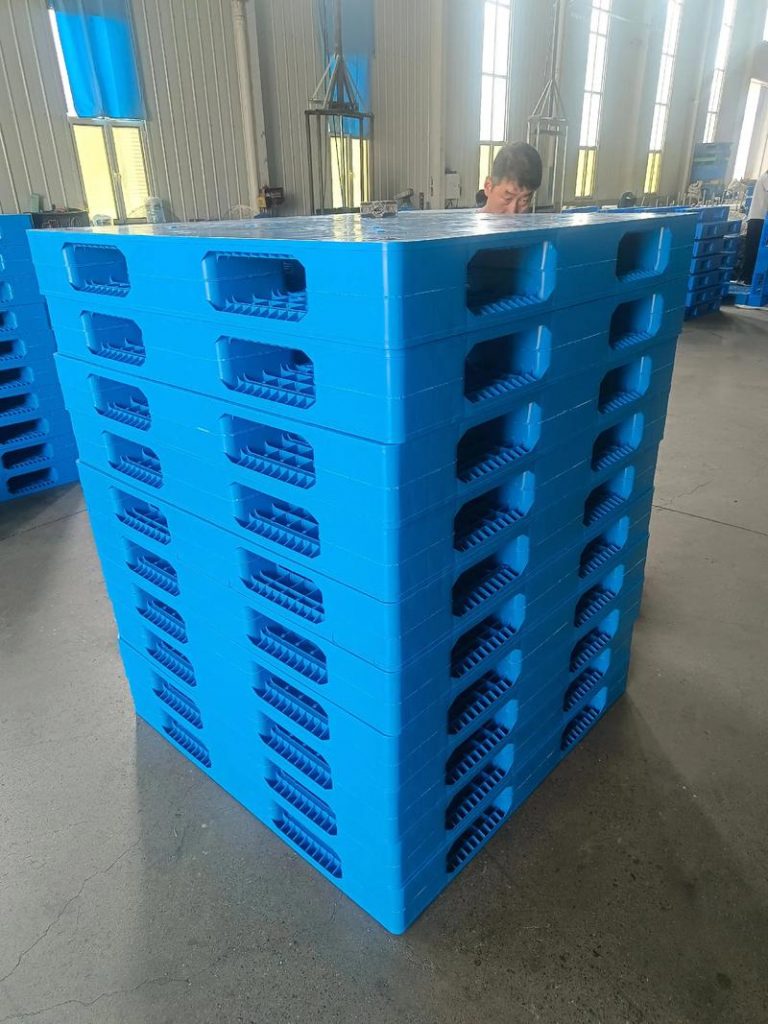
In an era where supply chain disruptions, safety incidents, and regulatory fines can cripple operations, compliance is no longer a checkbox—it’s a strategic imperative. For material handling equipment like pallets, adherence to industry standards isn’t just about avoiding penalties; it’s about guaranteeing the safety of workers, protecting goods, and optimizing efficiency. Two benchmarks stand above the rest: RMI (Rack Manufacturers Institute) compliance for storage safety and ISO (International Organization for Standardization) certification for global consistency. Together, these standards define what it means to have a pallet that performs reliably under pressure. This article explores how RMI & ISO compliant plastic pallets deliver unmatched safety, efficiency, and peace of mind for businesses committed to operational excellence.
Part 1: Understanding Compliance—Why RMI and ISO Matter
1.1 RMI Compliance: Safeguarding Racking and Storage
-
Distribute Loads Evenly: Prevent concentrated stress on racking beams, which can cause catastrophic collapses.
-
Maintain Dimensional Stability: Avoid warping or deformation under heavy, static, or dynamic loads.
-
Withstand Dynamic Forces: Perform reliably during forklift lifting, lowering, and transport.RMI compliance is non-negotiable for facilities using selective, drive-in, push-back, or cantilever racking—systems that account for 80% of high-bay warehouses. A non-compliant pallet can compromise an entire racking system, risking millions in damages and endangering lives.
1.2 ISO Certification: Global Consistency and Performance
-
ISO 8611: Defines standard pallet dimensions (e.g., 1200x1000mm Euro pallet, 48×40” North American pallet) and tolerances.
-
ISO 2234: Specifies static load tests (pallet resting on the ground) to ensure structural integrity.
-
ISO 14855: Covers dynamic load tests (pallet in motion via forklift) to simulate real-world handling.
-
ISO 18613: Addresses environmental considerations, including recyclability and chemical resistance.ISO certification ensures pallets perform consistently across borders, simplifying global trade and reducing the risk of mismatched equipment in multinational operations.
1.3 The Risks of Non-Compliance
-
Racking Collapses: Uneven load distribution or weak structures can trigger catastrophic failures.
-
Product Damage: Warped or unstable pallets lead to damaged goods, increasing return rates.
-
Regulatory Fines: Failure to meet OSHA (Occupational Safety and Health Administration) or EU safety standards can result in hefty penalties.
-
Operational Delays: Inconsistent dimensions complicate automated systems (e.g., AGVs, robotic palletizers).
Part 2: Engineering Compliance—How Plastic Pallets Meet RMI & ISO Standards
2.1 Material Selection: The Foundation of Compliance
-
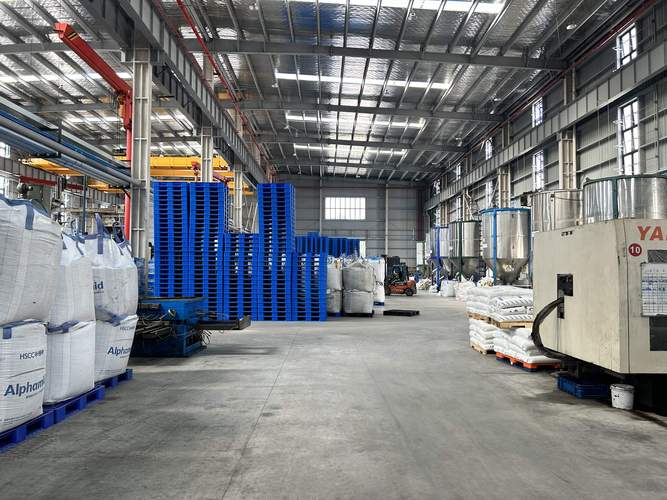
Consistency: Uniform molecular structure ensures predictable performance across batches—unlike wood, which varies in density and strength.
-
Durability: Resistance to impact, moisture, and chemicals prevents deformation, a key factor in passing RMI’s dynamic load tests.
-
Recyclability: Meets ISO 18613’s environmental guidelines, supporting circular economy goals.
2.2 Structural Design: Precision for Safety and Efficiency
-
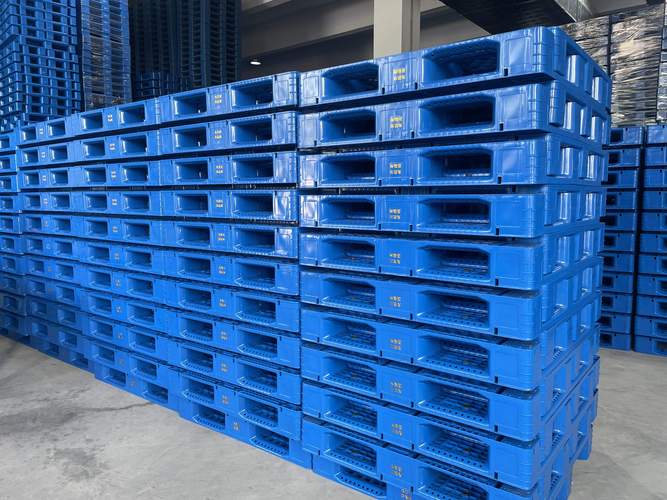
Reinforced Ribbing: Thickened ribs at load-bearing points (e.g., deck-grid intersections, leg bases) distribute stress evenly, preventing “dishing” under heavy static loads (a critical RMI requirement).
-
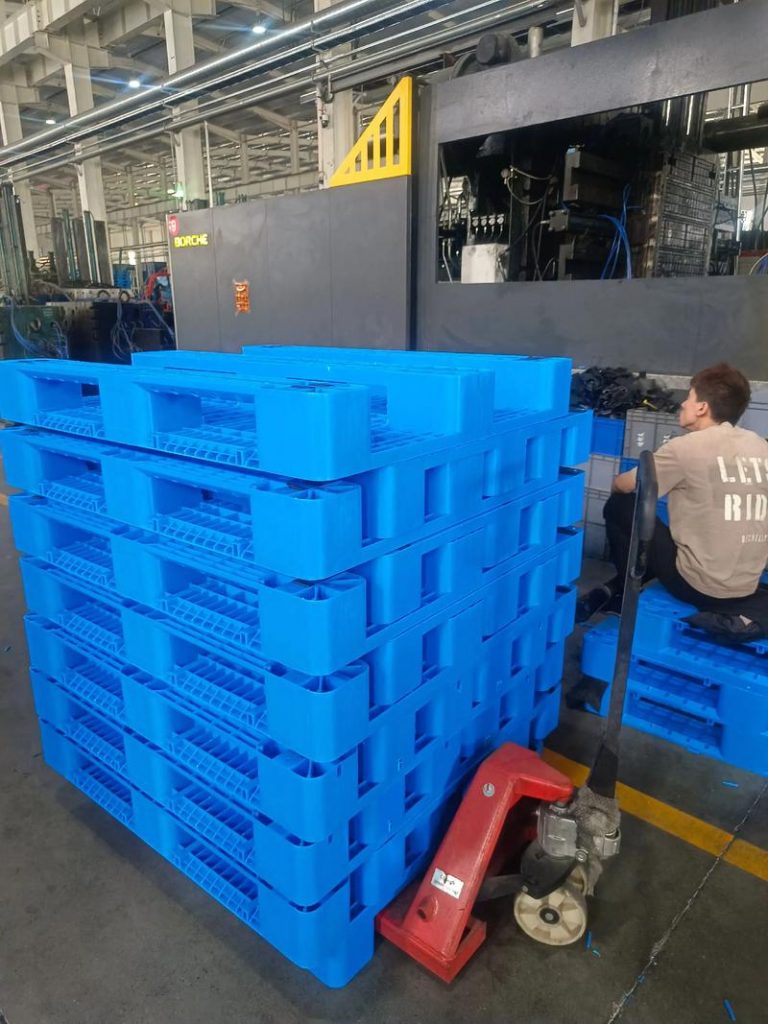
Four-Way Entry: Precision-cut pockets for forklift tines on all sides ensure smooth engagement, reducing jolts during dynamic load tests (ISO 14855).
-
Uniform Dimensions: Molded to ISO 8611 tolerances (±2mm), ensuring compatibility with racking systems and automated equipment worldwide.
-
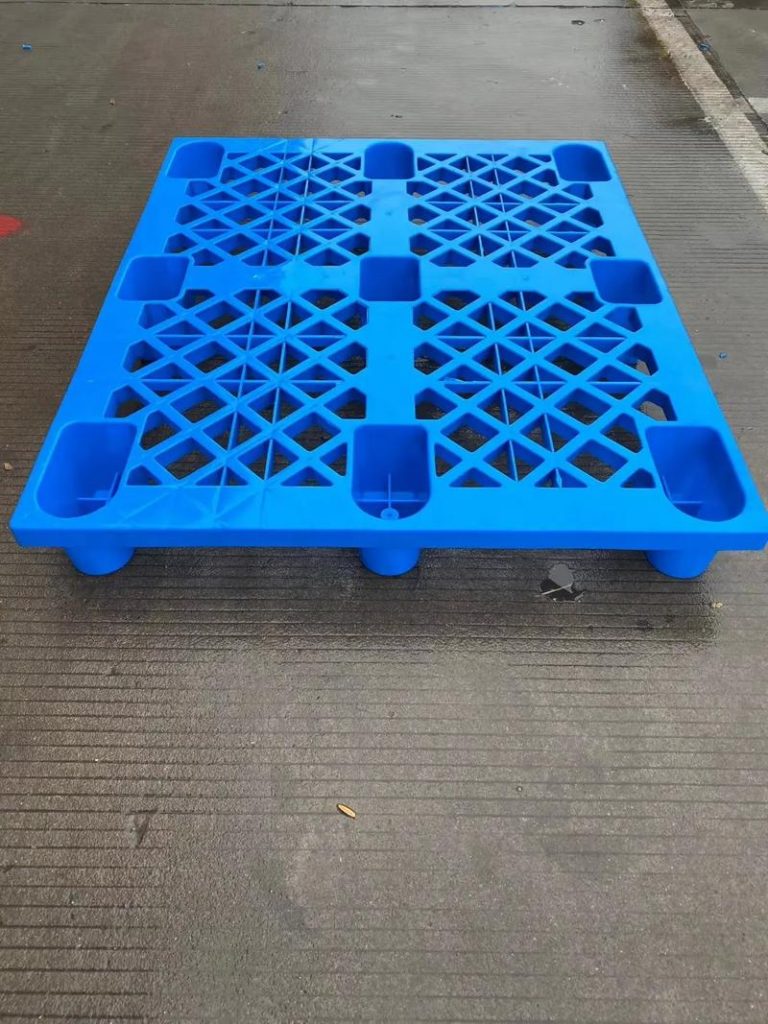
Deck Options: Grid decks (for ventilation/drainage) or solid decks (for stability) are tested to ISO 2234 static load standards (up to 8,000 kg for heavy-duty models).
2.3 Rigorous Testing: Proving Compliance in the Lab
-
RMI Racking Tests: Pallets are loaded to 125% of their rated capacity and placed in racking systems for 24 hours to check for deformation.
-
ISO Dynamic Tests: Pallets undergo 10,000+ lift/lower cycles with a forklift to simulate 5 years of use, ensuring no cracks or structural failure.
-
Environmental Testing: Exposure to extreme temperatures (-40°C to 80°C), UV radiation, and chemical sprays confirms durability in harsh conditions.
Part 3: The Dual Benefits—Safety and Efficiency in Material Transport
3.1 Enhancing Safety: Protecting People and Products
-
Worker Safety: Plastic pallets have no nails, splinters, or sharp edges—common hazards with wood. Smooth, rounded corners reduce puncture risks, while stable stacking (verified by RMI tests) prevents collapses.
-
Load Stability: Reinforced structures and even load distribution (per RMI guidelines) minimize shifting during transport, reducing the risk of cargo falling and injuring workers.
-
Hygiene: Non-porous plastic surfaces resist bacteria and mold, critical for food/pharma applications where contamination can lead to recalls or regulatory action.
3.2 Boosting Efficiency: Streamlining Logistics
-
Faster Handling: ISO-compliant dimensions ensure compatibility with global racking and forklifts, eliminating time wasted on adjustments. Four-way entry allows forklifts to access pallets from any side, cutting handling time by 20–30%.
-
Reduced Downtime: Durable plastic (tested to ISO 14855) lasts 5–10x longer than wood, minimizing replacement and repair downtime.
-
Lower TCO: While upfront costs are 2–3x higher than wood, compliant plastic pallets deliver 40–60% lower total cost of ownership (TCO) over 5 years due to longer life, reduced labor, and fewer accidents.
Part 4: Key Applications—Industries That Depend on RMI & ISO Compliance
4.1 Warehousing and Distribution
-
High-Bay Racking: RMI compliance ensures pallets won’t collapse in 20–30-foot-tall racking systems, protecting inventory worth millions.
-
Automated Systems: ISO 8611 dimensions guarantee compatibility with AGVs and robotic palletizers, enabling 24/7 fulfillment.
4.2 Food and Beverage
-
Hygiene Compliance: Meets FDA and EU 10/2011 standards for food contact; easy cleaning prevents bacterial growth.
-
Cold Chain: HDPE pallets withstand -40°C freezers (ISO temperature testing) without becoming brittle.
4.3 Pharmaceuticals and Healthcare
-
Sterile Transport: Non-porous surfaces and ISO-certified cleanliness support GMP (Good Manufacturing Practice) compliance.
-
Traceability: Molded-in RFID slots (optional) enable real-time tracking, critical for regulated supply chains.
4.4 Export and Global Logistics
-
ISPM 15 Exemption: Plastic pallets avoid wood’s fumigation requirements, speeding up cross-border shipments.
-
Universal Compatibility: ISO dimensions ensure pallets work in Europe, Asia, and the Americas, simplifying global trade.
4.5 Manufacturing and Automotive
-
JIT Delivery: Lightweight plastic (30–50% lighter than wood) speeds line-side replenishment, supporting lean manufacturing.
-
Heavy Loads: Glass-reinforced PP pallets handle 5,000+ kg dynamic loads (RMI-tested) for engine parts and machinery.
Part 5: Choosing the Right RMI & ISO Compliant Pallet—A Buyer’s Guide
5.1 Verify Certifications
-
Request proof of RMI membership (for rack safety) and ISO 8611/2234/14855 certification from the manufacturer.
-
Check for industry-specific compliance (e.g., FDA for food, GMP for pharma).
5.2 Match Load Requirements to Standards
-
Dynamic Load: Choose a pallet rated for 1.5x your heaviest unit load (per ISO 14855).
-
Static/Racking Load: Opt for 4x dynamic load capacity (RMI recommendation) for high-bay storage.
5.3 Assess Environmental Needs
-
Temperature: HDPE for cold storage (-40°C); PP for hot washdowns (80°C).
-
Chemicals: Confirm resistance to acids, oils, or solvents in your facility (ISO 18613).
5.4 Evaluate Deck and Foot Design
-
Grid Deck: For ventilation/drainage (perishables, wet environments).
-
Solid Deck: For stability with bagged goods or automation.
-
Leg Style: 9-leg for nesting/stability; 4-leg for low-profile racking.


No reply content