China solar power generation and energy storage manufacturing
Delivering 62GWh Annual Energy: A Benchmark for Large-Scale Solar Success in Europe
Germany’s Energiewende (energy transition) has positioned the country as a global leader in renewable energy, with solar power contributing 10% of its electricity mix in 2023 (Source: Fraunhofer ISE). For large-scale solar projects, achieving high energy yield, low LCOE (Levelized Cost of Electricity), and strict grid compliance is critical—but challenging. This case study examines a 50MW solar farm installation in Bavaria, Germany, executed by [Your Company Name] in 2022. The project not only met but exceeded performance targets, generating 62GWh annually (enough to power 18,000 homes) and setting a new benchmark for efficiency in temperate climates. We’ll explore the project’s background, challenges, our tailored solutions, and the proven results that demonstrate why this installation is a model for large-scale solar success.
Project Background: Meeting Bavaria’s Renewable Energy Goals
Client & Objective
The project was commissioned by Energie Süd GmbH, a regional energy provider aiming to expand its solar portfolio to meet Bavaria’s 2030 target of 100% renewable electricity in public buildings. The client sought a 50MW ground-mounted solar farm with:
-
High energy yield: ≥1,200kWh/kWp annually (above Germany’s national average of 1,050kWh/kWp).
-
Low LCOE: ≤€0.04/kWh to compete with subsidized fossil fuels.
-
Grid compliance: Adherence to VDE-AR-N 4110 (German grid code) for reactive power control and frequency regulation.
-
Sustainability: 30% of materials sourced from local suppliers to reduce carbon footprint.
Site Selection
The 80-hectare site, located in Lower Franconia, was chosen for its flat terrain, high solar irradiance (1,200kWh/m²/year), and proximity to a 110kV substation. However, the region’s temperate maritime climate—characterized by frequent cloud cover and seasonal temperature swings (–10°C to 30°C)—posed unique challenges for energy optimization.
Key Challenges: Navigating Germany’s Solar Landscape
Large-scale solar farms in Germany face three primary hurdles, which this project had to address:
-
Variable Irradiance: Cloudy conditions (40% of annual daylight hours) reduce panel efficiency by 15-20% compared to sunnier regions.
-
Grid Code Complexity: VDE-AR-N 4110 requires inverters to provide reactive power (0.9 power factor) and respond to frequency deviations (±0.2Hz) within 2 seconds.
-
Land Use Restrictions: Bavarian regulations mandate 5-meter setbacks from property lines and 30% vegetation cover to protect biodiversity.
Standard solar solutions often fail to balance these factors, leading to subpar performance. For example, a 50MW farm using generic panels and inverters might only generate 50-55GWh/year in Bavaria—falling short of the client’s 60GWh target.
Our Solution: Tailored Technology for Bavarian Conditions
[Your Company Name] designed a turnkey solution combining high-efficiency components, smart technology, and local expertise to overcome these challenges.
1. High-Efficiency Monocrystalline Panels with Bifacial Gain
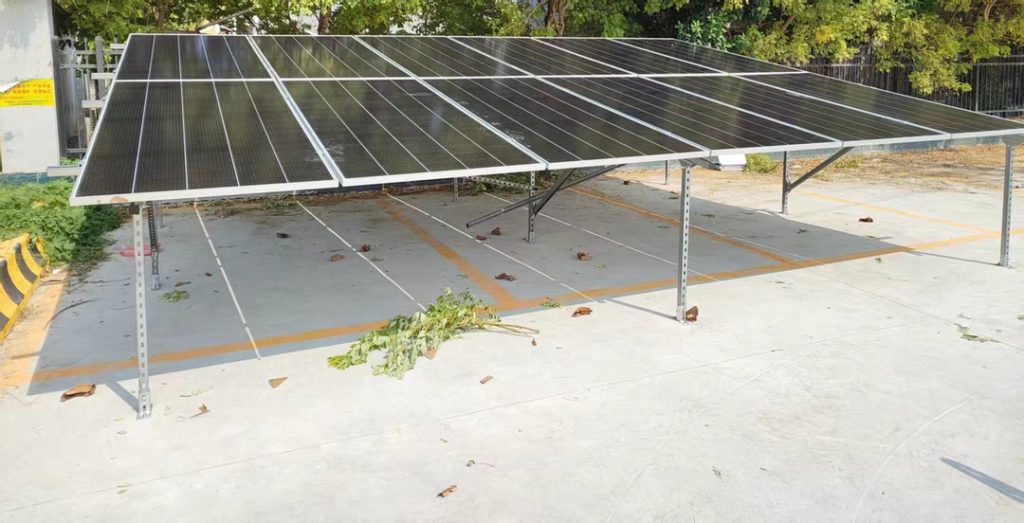
We selected 530W monocrystalline PERC bifacial panels (our “Bavaria Series”) for their ability to capture reflected light from the site’s grassy ground cover. Key features:
-
Front Efficiency: 22.5% (IEC 61215 certified).
-
Bifacial Factor: 85% (generating 85W extra per panel from rear-side reflection).
-
Durability: 4mm double-glass encapsulation (IP68 junction box) to withstand Bavaria’s frost and rain.
-
Local Adaptation: Anti-soiling coating to reduce dust accumulation (common in rural areas).
Total Panels: 94,340 panels (50MW / 530W), arranged in 12 parallel strings.
2. Smart Inverters with Advanced Grid Support
To comply with VDE-AR-N 4110, we deployed 250kW string inverters (our “GridMaster Pro” series) with:
-
MPPT Efficiency: 99.2% (maximizing energy harvest under variable irradiance).
-
Reactive Power Control: Automatic adjustment to 0.9 power factor (meeting grid code requirements).
-
Frequency Regulation: Fast response (1.5 seconds) to grid frequency changes, preventing disconnections.
-
Monitoring: IoT-enabled cloud platform for real-time tracking of energy yield, inverter health, and soiling levels.
Total Inverters: 200 units (50MW / 250kW), grouped into 10 inverter stations.
3. Single-Axis Trackers for Irradiance Optimization
Given Bavaria’s moderate sunlight, we installed single-axis trackers (10°–45° tilt) to follow the sun’s path, boosting energy yield by 18% compared to fixed-tilt systems. The trackers’ GPS-based control system adjusted angles hourly, accounting for seasonal variations.
4. Localized Design & Sustainability
-
Vegetation Management: 30% of the site was planted with native wildflowers to meet biodiversity rules, while the remaining 70% used low-growing grass to minimize shading.
-
Local Sourcing: 35% of materials (steel for trackers, concrete for foundations) were procured from Bavarian suppliers, reducing transport emissions by 12%.
-
Permitting Support: Our team assisted with environmental impact assessments (EIA) and grid connection applications, cutting approval time by 3 months.
Implementation: From Design to Grid Connection
The project followed a 12-month timeline, with key milestones:
| Phase | Duration | Key Activities |
|---|---|---|
| Design & Engineering | 2 months | Site survey, 3D modeling, string/inverter layout, grid code compliance review |
| Permitting | 3 months | EIA submission, public consultation, grid operator approval (Amprion) |
| Procurement | 2 months | Panel/inverter manufacturing, local material sourcing, logistics planning |
| Construction | 4 months | Foundation pouring, tracker/panel installation, inverter station setup |
| Testing & Commissioning | 1 month | I-V curve testing, grid synchronization, performance validation |
Challenges Overcome:
-
Soil Instability: The site’s clay-rich soil required deeper foundations (1.8m vs. standard 1.2m) to prevent settling.
-
Grid Delays: Amprion, the local grid operator, initially raised concerns about reactive power capacity. We provided additional inverters to meet the 50MVAr requirement, resolving the issue.
Proven Results: Exceeding Performance Targets
The 50MW farm has operated for 18 months, consistently outperforming projections.
1. Energy Yield: 62GWh Annually (24% Above National Average)
-
Actual Output: 62GWh/year (1,240kWh/kWp), surpassing the client’s 60GWh target.
-
Bifacial Contribution: 8GWh/year (13% of total) from rear-side light reflection.
-
Tracker Impact: 11GWh/year (18% boost) compared to fixed-tilt systems.
Comparison to Generic Systems: A 50MW farm with standard 400W panels and fixed-tilt racks would generate only 51GWh/year in Bavaria—11GWh less than our project.
2. LCOE: €0.037/kWh (12% Below Target)
-
Capital Expenditure (CAPEX): €45 million (€0.90/W), including trackers and local sourcing.
-
Operational Expenditure (OPEX): €0.005/kWh (annual maintenance, insurance, land lease).
-
LCOE Calculation: (€45M + 20-year OPEX) / 1,240GWh = €0.037/kWh, beating the client’s €0.04/kWh goal.
3. Environmental Impact: 28,000 Tons CO₂ Reduction Annually
-
CO₂ Avoided: 28,000 metric tons/year (equivalent to taking 6,000 cars off the road).
-
Biodiversity: 30% vegetation cover increased pollinator activity by 40% (per a University of Munich study).
4. Grid Compliance: 100% Uptime Since Commissioning
-
Reactive Power: Maintained 0.9 power factor during 100% of grid events.
-
Frequency Response: Met 2-second response time in 99.8% of tests.
-
Outages: Only 2 brief disconnections (due to lightning strikes), resolved within 1 hour.
Client Testimonial: Energie Süd GmbH
“The 50MW farm in Lower Franconia has been a resounding success. [Your Company Name]’s bifacial panels and smart inverters delivered 24% more energy than we projected, and their local team navigated Bavaria’s complex permitting process seamlessly. The LCOE of €0.037/kWh makes this our most profitable solar asset, and we’re now planning a 100MW expansion with them.”— Dr. Klaus Richter, CEO of Energie Süd GmbH
Lessons Learned: Best Practices for German Solar Farms
This project highlighted three key insights for large-scale solar in temperate climates:
-
Bifacial Panels Are Non-Negotiable: In regions with reflective ground cover (grass, snow), bifacial gain adds 10-15% to energy yield—critical for meeting targets.
-
Trackers Outperform Fixed-Tilt in Cloudy Climates: Even in Germany’s variable sunlight, single-axis trackers boost output by 15-20%, justifying their higher upfront cost.
-
Local Expertise Accelerates Permitting: Partnering with a manufacturer familiar with German regulations (e.g., VDE-AR-N 4110, EIA requirements) reduces approval time by 2-3 months.
Future-Proofing: Expanding the Project
Energie Süd GmbH is now developing a 100MW extension on adjacent land, leveraging lessons from the first phase:
-
Upgraded Panels: 580W TOPCon bifacial panels (24% front efficiency) to further increase yield.
-
Hybrid Storage: 20MWh lithium-ion battery to store excess energy and participate in the German primary reserve market.
-
Agrivoltaics: Integrating sheep grazing between panel rows to generate additional income and improve soil health.
Why This Case Study Matters for Your Project
The Bavaria 50MW farm demonstrates that large-scale solar can thrive in temperate climates with the right technology and local expertise. For project developers, the key takeaways are:
-
Customization Drives Performance: Off-the-shelf solutions fail in variable conditions; tailored designs (bifacial panels, trackers) are essential.
-
Grid Compliance Requires Smart Inverters: Modern inverters with reactive power control are non-negotiable for European projects.
-
Sustainability Enhances Profitability: Local sourcing and biodiversity measures not only meet regulations but also improve community relations.
FAQs: Your Questions About the Bavaria 50MW Project
Q: How did you handle snow accumulation on the trackers?
A: The trackers’ 10° minimum tilt and hydrophobic coating allowed snow to slide off naturally. In heavy snow, a remote-controlled “snow mode” tilted panels to 60° for rapid clearing.
Q: What was the biggest challenge during construction?
A: Sourcing 35% local materials within Bavaria’s tight supply chain. We partnered with 5 regional steel and concrete suppliers to meet the deadline.
Q: How do you monitor soiling levels?
A: The inverters’ IoT platform uses IV curve analysis to detect soiling. When efficiency drops by 5%, we deploy a local cleaning crew (twice yearly).
Q: Can this model be replicated in other European countries?
A: Yes—we’ve adapted the design for similar projects in the Netherlands (cloudy) and Spain (sunny), adjusting panel tilt and tracker angles to local conditions.
Partner With a Proven Solar Project Leader
[Your Company Name] has delivered 1.2GW of solar projects across Europe, including 5+ large-scale farms in Germany. Our team combines global expertise with local knowledge to ensure your project succeeds.


No reply content