Container House Co., Ltd
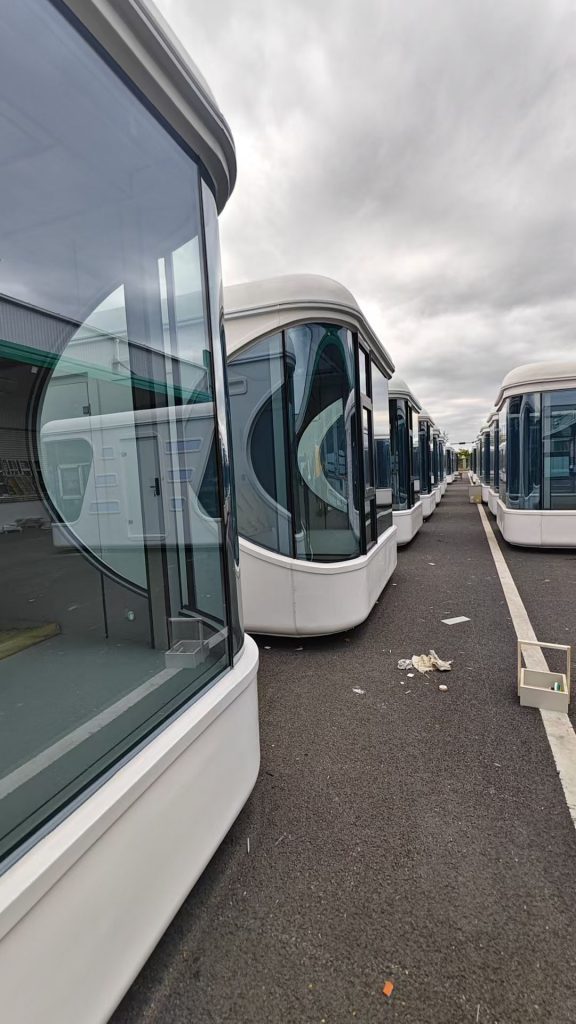
Mobile space capsule houses—also called pod homes, apple cabins, starry-sky rooms, or modular capsule units—have become one of the fastest-growing products in global glamping, resort, and compact-living projects. China is the dominant manufacturing base, with established clusters in Guangdong, Henan, Shandong, Jiangsu, Zhejiang, and Shanghai, and suppliers ranging from large automated factories to small trading offices that repackage other people’s products.
For international buyers, the technology looks exciting but the purchasing process can feel risky. This article answers the problems buyers actually face and gives a practical workflow for choosing a reliable Chinese manufacturer.
Problem 1: “I don’t know if the supplier is a real factory or a middleman”
Many listings on marketplaces and social media look like manufacturers. In reality, some are trading companies that add margin, slow down engineering communication, and cannot control production quality.
What to do
-
Ask for the Chinese business license and check whether “manufacturing” or “production” is in the business scope. If it only says sales, trading, consulting, or technology services, treat it as a reseller.
-
Request a live factory video or third-party video inspection, not just rendered photos.
-
Ask for the factory address, then verify with maps, satellite view, and—if possible—a paid on-site visit or SGS/BV inspection.
-
Request production evidence: welding lines, insulation filling, glass processing, QC forms, and finished-unit storage.
-
For serious projects, shortlist suppliers with documented monthly capacity, such as dedicated capsule producers including GLAMNI, Luban Cabin, Volferda, BST, VESSEL, ETONG, Zcamp, and similar export-oriented brands.
Problem 2: “The price quotes vary too much and I can’t compare them”
One supplier quotes USD 18,000; another quotes USD 35,000 for a similar-looking pod. The cheaper unit may use thinner steel, low-density insulation, non-tempered glass, or undocumented electrical parts.
What to do
Ask every supplier to quote on the same specification sheet:
-
External dimensions, internal usable area, dead weight
-
Frame material and thickness: hot-dip galvanized steel or aviation/ship-grade aluminum shell
-
Wall system: PU foam, rock wool, EPS, or composite panel; total thickness; U-value target
-
Glass: tempered or laminated, double/triple glazing, Low-E coating, 3C/CE/IGCC-type certification depending on market
-
Roof waterproofing, drainage slope, gutter design, and door/window gasket material
-
HVAC, electrical voltage, socket standard, breaker panel, lighting, smart controls
-
Bathroom: toilet brand, shower system, waterproof tray, same-floor drainage if required
-
Certifications, packing method, FOB/EXW/CIF/DDP terms, lead time, warranty
A fair factory price depends on size and finish. Some standard export capsule units are quoted in broad ranges such as about USD 28,000–38,000 FOB, before ocean freight and duties, while smaller or simpler pods can be lower and luxury panoramic units much higher. Always compare specification, not photo style.
Problem 3: “Will it be allowed in my country? Certifications are confusing”
A futuristic look does not automatically mean the unit is legal for residential or hospitality use.
What to do
Match certifications to the destination market:
-
European Union: CE marking relevant to the product’s applicable directives/standards; request model-specific documentation, not only a company certificate.
-
United Kingdom: CE may still be discussed for some products, but UKCA can be required depending on application; confirm with a local approval consultant.
-
United States: there is no single “capsule CE.” Focus on UL-listed electrical components, local building/factory-built housing rules, plumbing/mechanical codes, and fire safety for rental use.
-
Australia/New Zealand: structural, electrical, plumbing, and fire compliance vary by state; ask for relevant standards and third-party test reports.
-
Middle East/Asia/Africa: requirements differ by country; request ISO 9001/14001/45001 system certificates, material test reports, and local engineer stamping if needed.
Also ask the manufacturer for structural calculations, insulation test data, fire-rated material declarations, electrical schematics, plumbing diagrams, and foundation load drawings. These documents are often what your local authority or engineer will request.
Problem 4: “I’m afraid of leaks, condensation, and poor insulation”
This is the most common operational complaint after delivery. Low-grade capsules may use thin walls, cheap sealant, and ordinary glass, causing summer overheating, winter heat loss, mold, and electrical risks.
What to do
Specify performance, not just materials:
-
Cold climates: 75–100 mm PU composite as a baseline; colder regions may need 150–200 mm walls, upgraded glazing, double heating backup, and thermal-break frames.
-
Hot/desert climates: 150 mm composite insulation and triple Low-E glass can substantially reduce AC load.
-
Coastal sites: marine-grade aluminum or treated steel, 316 stainless hardware, salt-spray test reports, and anti-corrosion coating.
-
Waterproofing: sloped roof, continuous gutter, EPDM/TPO or polyurethane detailing, factory water-spray test video, and inspected bathroom tray.
-
Glass: tempered/laminated with thermal-break frames; request brand, thickness, and certification. For China-made tempered glass, 3C marking is a common domestic requirement; export units should still meet destination glazing standards.
Problem 5: “Shipping looks simple online, but I’m worried about logistics”
Most capsule houses do not fold into a standard box. Wide panoramic units may exceed normal container internal widths, requiring flat-rack, open-top, or out-of-gauge transport. Damage during lifting and transit is a real risk.
What to do
-
Ask the supplier for packed dimensions, weight, center of gravity, lifting points, and recommended transport mode.
-
For complete pods: flat rack or special trailer may be needed; for modular flat-pack: 40HQ containers may be possible but require local assembly labor.
-
Compare “fully assembled delivery” vs “knock-down delivery” based on local crane cost, skilled labor cost, and project timeline.
-
Use an experienced freight forwarder familiar with HS code 9406 prefabricated buildings; confirm port handling, crane availability, inland trucking, road-width permits, and customs documents.
-
Request export packaging details: steel framing protection, corner guards, glass padding, moisture-proof wrapping, and shock labels.
Problem 6: “I don’t know if the manufacturer can do my custom layout”
Many buyers want a specific bedroom-bathroom-kitchenette flow, brand color, smart controls, off-grid solar, or cliff-side foundation system. Some factories only sell fixed molds.
What to do
Share a simple brief before asking for quotes:
-
Site conditions: altitude, wind speed, snow load, seismic zone, humidity, temperature range
-
Purpose: hotel/resort/Airbnb/office/showroom/permanent home
-
Target guests and beds
-
Must-have views, skylights, terrace, stairs, accessibility
-
Power source: grid 110V/220V/230V, solar+battery, generator
-
Water and sewage: municipal, septic, greywater, off-grid
-
Branding: logo, exterior film, interior theme
Good Chinese capsule manufacturers can usually customize exterior color, interior layout, bathroom package, lighting, AC, smart locks, curtains, and energy systems. Deep structural changes or fully new shapes take longer and cost more; typical standard-model production is around 30–45 days, while complex custom projects can exceed 60 days, plus shipping and installation.
Problem 7: “After I pay, will anyone support me?”
A capsule is not a piece of furniture. Electrical faults, sealant failures, glass issues, and bathroom leaks need a accountable partner.
What to do
Before signing, define:
-
Warranty split: structure, shell, glass, electrical, plumbing, smart systems, appliances
-
Spare parts list and recommended stock for multi-unit projects
-
Remote troubleshooting by video and response time in your timezone
-
Local installer manual, exploded drawings, and multilingual labels
-
References from operating projects in similar climate and business model
-
Contract clauses for pre-shipment inspection, defect liability, and replacement parts
Reasonable buyers should expect structure/shell coverage measured in years and appliance/electrical coverage separately; do not accept vague “lifetime support” without defined parts and labor terms.
A practical shortlist workflow
-
Define project: number of units, climate, budget landed, target opening date.
-
Send one specification sheet to 5–8 factories; reject suppliers who only reply with catalogs.
-
Verify factory license, certifications, and live production video.
-
Request references in your region or similar climate.
-
Order one sample unit or conduct a supervised factory acceptance test before bulk order.
-
Lock drawings, materials, certifications, packing, and warranty into the contract.
-
Arrange freight, customs broker, foundation contractor, and on-site commissioning together—not after the pod arrives.
Which type of Chinese manufacturer fits you
-
Large resort / multiple units: choose factories with automated lines, project management, CE/ISO systems, and proven export packing—examples include GLAMNI, BST, Luban Cabin, Guose, and CIMC modular affiliates for bigger integrated projects.
-
Luxury glamping / panoramic design: evaluate VESSEL, Zcamp, Volferda, BOITO-MINGSU, and similar design-driven pod brands.
-
Smart/off-grid/tech parks: ask ETONG, Beijing Space-Home-type suppliers, or custom integrators for IoT, solar, and battery options.
-
Cost-sensitive bulk camps: compare standardized apple cabins and container-based capsules, but still enforce steel thickness, insulation, and waterproofing specs.
-
Strict regulated markets: prioritize suppliers that provide model-specific CE/UL/UKCA documentation, structural calculations, and third-party inspection.
Final answer for buyers
The biggest problems when buying a Chinese mobile space capsule house are not the photos—they are invisible specifications: frame thickness, insulation performance, glass quality, electrical compliance, waterproofing, honest shipping dimensions, and after-sales responsibility. If you standardize the specification, verify the factory, request market-specific certifications, and inspect before shipment, Chinese manufacturers can deliver high-design pods at competitive cost with predictable quality.
If you tell me your country, site climate, number of units, target budget landed, and whether it is for hotel/resort/home use, I can turn this into a ready-to-send RFQ template and a factory screening checklist.


No reply content