Container House Co., Ltd
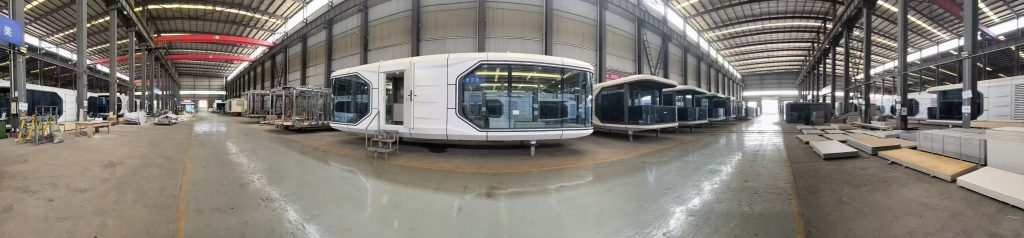
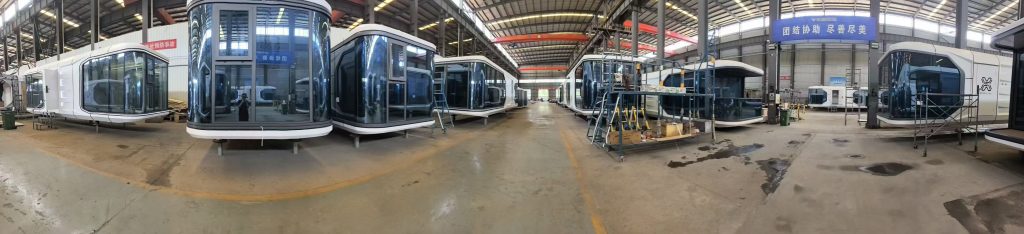
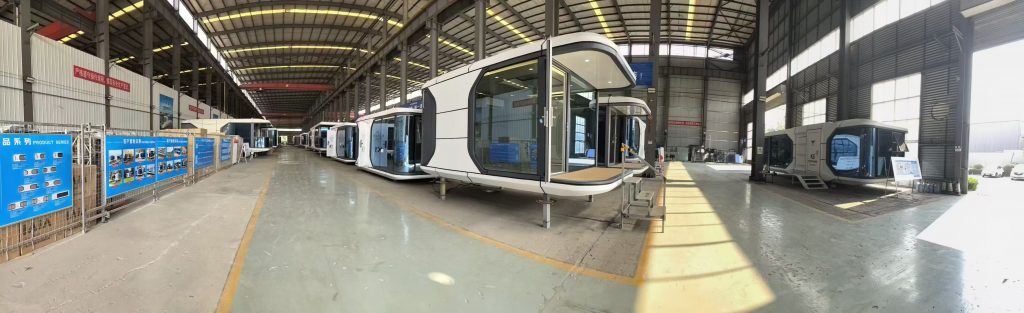
1. What exactly defines a “mobile home” from a Chinese supplier? Is it the same as a tiny house?
In the Chinese manufacturing context, “Mobile Homes” usually refer to two distinct categories: Park Homes (Static Caravans) and Modular Prefabricated Houses.
-
Park Homes: Built on a steel chassis with wheels for transport, designed for long-term placement in parks or resorts. They comply with residential building codes (like ANSI A119.5 in the US).
-
Prefab Modular: Factory-built modules transported on flatbed trucks and craned onto a permanent foundation.
-
Tiny Houses: Usually smaller, often on trailers, focusing on minimalist living.
-
Key Distinction: Chinese suppliers are experts in “Volumetric Construction,” meaning they build the entire box (including plumbing and electrics) in a factory setting to minimize on-site labor.
2. Which regions in China are the best for sourcing mobile homes?
Unlike the scattered clusters for consumer goods, mobile home manufacturing is concentrated in specific industrial zones:
-
Guangdong Province (Foshan/Dongguan): The high-end hub. Factories here produce park models for the Australian and North American markets, focusing on luxury finishes and thermal efficiency.
-
Jiangsu & Zhejiang Provinces: Known for steel structure engineering. They excel in large-scale modular projects like worker camps or apartment complexes.
-
Shandong Province: The cost-effective zone. Good for basic site offices or temporary housing, though the finish may be more utilitarian.
3. What are the standard structural materials, and which should I choose?
The “skeleton” determines the lifespan and insulation properties.
-
Light Gauge Steel (LGS): The industry standard. It uses cold-formed steel sections. It’s anti-termite, earthquake-resistant, and recyclable. Best for permanent or long-term housing.
-
Shipping Container Conversions: Using Corten steel containers. Highly durable but requires significant insulation work to prevent condensation and heat transfer.
-
Sandwich Panels (EPS/Rockwool/PU): Used for walls. Rockwool offers the best fire resistance, while Polyurethane (PU) offers the highest thermal insulation (R-value) but at a higher cost.
4. How do Chinese suppliers handle international building codes and wind loads?
This is the most critical technical question. A generic Chinese design might not withstand a hurricane in Florida or snow loads in Canada.
-
Wind Rating: You must specify the required wind speed rating (e.g., 90 mph vs. 150 mph). Factories will reinforce the chassis and anchoring points accordingly.
-
Snow Load: If you are in a snowy region, the roof trusses need to be engineered for specific weights (e.g., 40 lbs/sq ft).
-
Certification: Ask for engineers’ stamps. For the US, look for compliance with HUD Code or IRC (International Residential Code). For Europe, look for CE marking regarding structural integrity.
5. What is the typical lead time from deposit to delivery?
Mobile homes are complex engineering projects, not just products.
-
Design & Engineering Approval: 2-4 weeks (Crucial: Get a local engineer to review their drawings).
-
Factory Production: 4-8 weeks depending on customization.
-
Sea Freight: 4-6 weeks (to major ports).
-
Total Estimate: Plan for 3 to 4 months from payment to arrival. Rush orders often lead to installation manuals being missing or electrical fittings being incorrect.
6. How are these homes packaged and shipped?
They are not shipped fully furnished.
-
Flat-Pack: Walls and roof panels are packed flat to maximize container space (requires more assembly time on-site).
-
Completed Modules: The house is built complete and loaded onto a flat rack container or a low-bed trailer. This reduces on-site labor but increases shipping volume costs.
-
Tip: Always ask for the “Loading Plan” to see exactly how many units fit into a 40HQ container.
7. What are the hidden costs beyond the ex-factory price?
-
Foundation Costs: Even “mobile” homes need a prepared pad, piers, or concrete blocks.
-
Utility Connections: The factory provides “rough-ins” (pipes and wires sticking out), but local plumbers/electricians must connect them to the grid.
-
Import Duties: Mobile homes often have different HS Codes (Harmonized System Codes) than construction materials, leading to higher tariffs in some countries.
-
Crane Rental: Unless it’s a tiny house on a trailer, you will need a crane to lift the modules off the truck.
8. Can I customize the floor plan, or am I stuck with catalogs?
Chinese factories are highly flexible due to their in-house CAD teams. You can usually:
-
Move interior non-load-bearing walls.
-
Upgrade windows (double-glazed Low-E glass is recommended for energy efficiency).
-
Change exterior cladding (vinyl, wood-grain aluminum, or cement fiber board).
-
Note: Major structural changes (moving bathrooms) incur re-engineering fees.
9. How do I manage the quality of plumbing and electrical components?
Since you cannot easily swap a toilet after it arrives, specify the brands.
-
Strategy: Request “Western Standard” fittings. For example, specify “Schneider” or “ABB” for breakers, and “R&T” or “Geberit” for concealed cisterns.
-
Voltage: Ensure the factory wires the home specifically for your country’s voltage (110V for US/Japan, 220V/240V for EU/AUS).
10. What after-sales support should I expect?
A reputable supplier will provide:
-
Installation Manual: Detailed step-by-step with diagrams (not just generic photos).
-
Video Support: A dedicated WeChat/WhatsApp contact for real-time video troubleshooting during assembly.
-
Spare Parts Kit: A box included in the shipment containing extra faucets, fuses, and sealants.


No reply content