
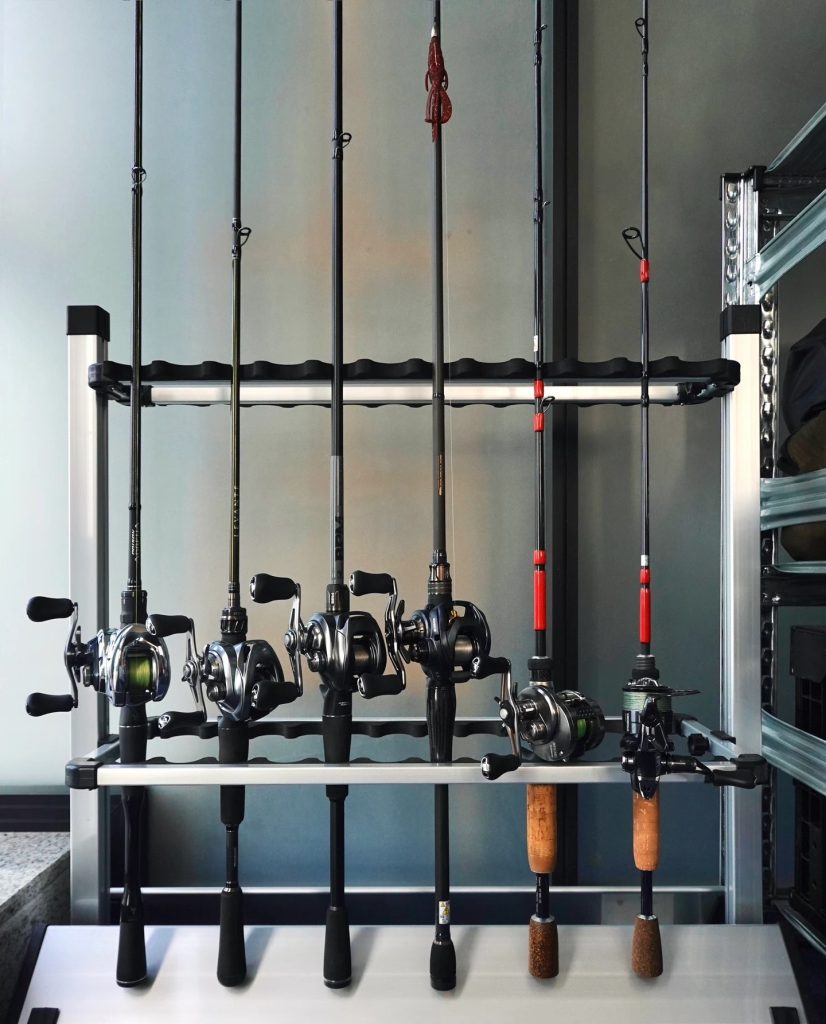
Spinning Rod vs. Casting Rod: Which Fishing Rod Should Importers Choose?
When sourcing fishing rods for wholesale distribution, one of the first decisions is whether to purchase spinning rods, casting rods, or a combination of both.
Although these two rod types may look similar at first glance, they are designed for different reel arrangements and fishing applications. Their guide configurations, reel seats, handling characteristics, and intended users can differ significantly.
For importers, fishing tackle distributors, sporting goods retailers, and private-label brands, understanding these differences is essential before requesting quotations or approving samples.
Choosing the right product range is not simply a matter of selecting the most popular-looking model. Buyers need to consider their target customers, fishing conditions, product specifications, retail positioning, and the practical requirements of international sourcing.
This guide explains how spinning rods and casting rods differ, what specifications buyers should compare, and how to prepare a more accurate wholesale or OEM purchasing request.
1. What Is a Spinning Fishing Rod?
A spinning fishing rod is designed to work with a spinning reel, which is typically mounted beneath the rod.
Spinning reels use a fixed spool and a rotating bail mechanism to manage fishing line during casting and retrieval.
Spinning rods are used in many freshwater and saltwater applications, depending on their design, components, and specified operating range.
For wholesale buyers, spinning rods may be relevant to product ranges serving recreational anglers, general fishing retailers, and specialist tackle distributors.
Common Characteristics of Spinning Rods
A spinning rod typically features:
- A reel seat designed for a spinning reel.
- Guides arranged for the intended spinning reel configuration.
- A blank designed around the rod’s specified line and lure ratings.
- A handle suited to the intended grip and fishing application.
- Available configurations in different lengths, powers, actions, and section counts.
The exact specifications vary between models and manufacturers.
What Should Importers Consider?
When evaluating spinning rods, buyers should confirm the intended fishing application rather than relying on a generic description such as “universal fishing rod.”
For example, a rod intended for light freshwater lure fishing may have different requirements from a heavier model intended for larger lures or saltwater applications.
The product specification should identify the intended use, line rating, lure rating, power, action, and other relevant details.
2. What Is a Casting Fishing Rod?
A casting rod is designed for use with a compatible casting reel, such as a baitcasting reel.
The reel is generally mounted above the rod, and the guide arrangement is designed around that configuration.
Casting rods are commonly associated with lure fishing applications where anglers use compatible casting equipment and control the spool during casting.
Common Characteristics of Casting Rods
A casting rod generally includes:
- A reel seat compatible with the intended casting reel.
- A guide arrangement suited to the casting configuration.
- A blank designed for specified line and lure ratings.
- A handle designed for the intended grip and operation.
- Defined power and action characteristics.
Some casting rods include a trigger-style grip beneath the reel seat, although the exact design depends on the model.
What Should Importers Consider?
Casting rods should be evaluated together with their intended reel type and fishing application.
Buyers should not assume that a casting rod and spinning rod with identical lengths are interchangeable.
Their reel seats, guide configurations, and intended operating characteristics may differ.
For private-label projects, the approved sample should clearly identify the intended reel configuration.
3. Spinning Rod vs. Casting Rod: Key Differences
The following comparison can help buyers organize their product requirements.
| Purchasing Factor | Spinning Rod | Casting Rod |
|---|---|---|
| Reel arrangement | Spinning reel mounted beneath the rod | Casting reel mounted above the rod |
| Guide configuration | Designed for spinning reel use | Designed for casting reel use |
| Common applications | General freshwater and saltwater fishing, depending on model | Casting applications using compatible casting reels |
| Reel seat | Spinning reel compatible | Casting reel compatible |
| Buyer considerations | Intended line, lure, and fishing conditions | Reel compatibility, line, lure, and intended application |
| OEM requirements | Confirm handle, guides, reel seat, and specifications | Confirm reel seat, guide layout, grip, and specifications |
Neither category is automatically suitable for every customer.
The correct selection depends on the intended fishing application, customer experience, product range, and market requirements.
4. Which Rod Type Should Wholesale Buyers Purchase?
Instead of selecting products based only on general market assumptions, importers should define the customers they intend to serve.
For General Fishing Tackle Retailers
Retailers serving a broad customer base may consider offering both spinning and casting models, provided there is sufficient demand and a clear product distinction.
A useful assortment can be organized by:
- Rod type.
- Intended fishing application.
- Length.
- Power and action.
- Line and lure ratings.
- Price positioning.
- Portability and packaging.
Clear product descriptions help customers understand which rod is compatible with their equipment.
For Specialist Fishing Tackle Distributors
Specialist distributors may require a more focused assortment with distinct technical specifications.
For example, a distributor serving lure fishing customers may request several models with different lengths, power ratings, actions, and lure ranges.
In this situation, buyers should request detailed specification sheets and physical samples before confirming the assortment.
For Private-Label Fishing Brands
Private-label buyers should establish the intended product identity before discussing final customization.
A brand targeting beginner anglers may have different design requirements from one serving experienced lure fishing customers.
The purchasing brief should explain the intended audience, fishing application, product specifications, visual design, and packaging expectations.
5. How to Compare Fishing Rod Specifications
A reliable comparison requires more than matching product names.
Two rods described as “carbon spinning rods” may differ in material construction, blank design, components, and intended application.
The following specifications should be reviewed together.
Rod Length
Length influences handling, casting characteristics, storage, and suitability for different fishing environments.
Buyers should confirm the measurement unit and whether the stated length refers to the fully assembled rod.
Power
Power describes the amount of force required to bend the rod.
Common classifications include Ultra Light, Light, Medium, Medium Heavy, Heavy, and Extra Heavy.
These classifications are useful for comparison, but the exact performance can vary between designs and manufacturers.
Action
Action describes where the rod primarily bends under load.
Common descriptions include Fast, Moderate Fast, Moderate, and Slow.
For purchasing purposes, action should be reviewed alongside the intended lure range, line rating, and fishing application.
Line and Lure Ratings
Line and lure ratings help define the intended operating range of the rod.
For OEM orders, confirm that the ratings shown on the rod, product label, packaging, and specification sheet are consistent.
Material Construction
Carbon fiber, fiberglass, and composite constructions are used in different fishing rod designs.
Carbon fiber rods are commonly considered where reduced weight and responsiveness are important product characteristics.
However, the material label alone does not establish finished-product performance.
Buyers should review the complete construction description and evaluate a physical sample.
6. What Should Buyers Inspect Before Approving a Sample?
A sample review should examine the complete fishing rod rather than only its appearance.
Reel Seat Compatibility
Confirm that the reel seat is designed for the intended reel type.
Check the locking mechanism, fit, finish, and general assembly.
Guide Alignment
Inspect the guides for consistent alignment along the blank.
Check guide frames, inserts, wrapping, and visible finishing defects.
Blank Surface
Look for scratches, visible damage, uneven coating, or obvious surface irregularities.
For branded products, also confirm the expected finish and appearance.
Handle and Grip
Check the handle dimensions, grip material, surface finish, and comfort.
If the product is intended for a specific customer segment, the handle design should reflect that intended use.
Joint Construction
For two-piece or multi-piece models, inspect the section connection and assembled alignment.
For telescopic rods, check extension and retraction.
Printed Specifications
Confirm that the product markings match the approved specifications.
This is particularly important for private-label orders, where inaccurate ratings or product descriptions may create customer complaints.
7. OEM Customization: What Can Buyers Discuss With Suppliers?
OEM fishing rod projects may involve branding, appearance, components, and packaging.
The exact customization options should be confirmed with the supplier before production.
Logo and Branding
Discuss:
- Logo artwork and file format.
- Logo placement.
- Printing or application method.
- Color requirements.
- Product labeling.
- Sample approval.
Request a visual proof or physical sample where appropriate.
Handle and Component Design
Depending on the product and supplier’s available options, buyers may discuss handle materials, grip shapes, colors, reel seat configurations, and guide arrangements.
Any changes should be documented in the approved product specification.
Packaging
Packaging may include protective sleeves, individual boxes, labels, and export cartons.
Confirm the packaging arrangement and artwork before approving the final order.
For international shipments, consider both retail presentation and protection against handling damage.
8. How to Source Spinning and Casting Rods From China
A structured sourcing process helps buyers communicate clearly and compare quotations consistently.
Step 1: Define Your Product Range
Identify whether you need spinning rods, casting rods, or both.
Specify the intended fishing application and target customers.
Step 2: Prepare Technical Requirements
List the preferred rod length, power, action, line rating, lure rating, material, section count, and component requirements.
If some details are undecided, explain the intended application and request available options.
Step 3: Request a Detailed Quotation
Ask the supplier to clarify:
- Product model and specifications.
- Material and component configuration.
- Customization options.
- Packaging.
- Sample availability and applicable charges.
- Minimum order quantity, if applicable.
- Production lead time, once confirmed.
- Payment terms.
- Shipping terms and quotation validity.
Compare quotations using equivalent specifications.
Step 4: Evaluate Samples
Inspect the physical product for dimensions, finish, guide alignment, reel seat compatibility, handle construction, and overall assembly.
For OEM projects, confirm branding and packaging as well.
Step 5: Approve the Purchase Specification
Record the final model, quantity, specifications, customization, packaging, commercial terms, and inspection requirements.
The approved sample and written specification should be used as references for the order.
Step 6: Confirm Shipping and Import Requirements
Before shipment, confirm carton dimensions, packing quantity, gross weight, shipping marks, and agreed freight arrangements.
Clarify who handles export documentation, destination customs clearance, duties, taxes, and final delivery.
9. Common Sourcing Mistakes to Avoid
Treating Spinning and Casting Rods as Interchangeable
Their reel arrangements and guide configurations differ.
Always confirm compatibility with the intended reel.
Comparing Only by Rod Length
Length alone does not establish whether two products have equivalent specifications or applications.
Review power, action, ratings, materials, and components together.
Choosing Only by Material Description
A carbon fiber label does not describe every aspect of the finished rod.
Review construction details and sample quality.
Approving a Product Without a Physical Sample
Photographs may not reveal guide alignment, joint fit, reel seat operation, or actual finish quality.
Where practical, approve a physical sample before bulk production.
Leaving OEM Details Unconfirmed
Logo placement, colors, packaging, and product markings should be documented before production.
10. How to Request a Wholesale Fishing Rod Quotation
To help a supplier understand your requirements, include the following information in your inquiry:
| Required Information | Example of What to Provide |
|---|---|
| Rod category | Spinning rod, casting rod, or both |
| Intended application | Freshwater lure fishing, saltwater use, or other |
| Length | Preferred length and unit |
| Power and action | Required rating or intended performance |
| Line and lure rating | Target specifications, if known |
| Material | Carbon fiber or composite preference |
| Sections | One-piece, two-piece, or other |
| Quantity | Estimated order quantity |
| Customization | Logo, colors, handle, and packaging |
| Destination | Importing country |
| Sample | Whether a sample is required |
Providing these details makes it easier to discuss suitable models and identify any specifications that need further confirmation.
Frequently Asked Questions
1. What is the main difference between a spinning rod and a casting rod?
The primary difference is their intended reel configuration. Spinning rods are designed for spinning reels, generally mounted beneath the rod, while casting rods are designed for compatible casting reels mounted above the rod. Their reel seats and guide arrangements are configured accordingly.
2. Can I use a spinning reel on a casting rod?
A spinning reel is not generally intended for a casting rod’s standard reel and guide configuration. Buyers should select a rod designed for the reel type and intended application rather than assuming the two configurations are interchangeable.
3. Should wholesale buyers purchase spinning rods or casting rods?
The decision depends on the target customers, fishing applications, product range, and market requirements. Buyers should define their customer profile and compare the technical specifications of suitable models before deciding on an assortment.
4. What specifications should I provide when requesting a fishing rod quotation?
Provide the rod type, intended application, length, power, action, line and lure ratings where applicable, material preference, section count, estimated quantity, customization requirements, and destination country.
5. Can spinning rods and casting rods both be customized for private-label brands?
OEM customization may be available for both categories, subject to the supplier’s capabilities and the specific product design. Buyers should confirm logo placement, components, colors, packaging, sample approval, and final specifications directly with the supplier.
Contact a Fishing Rod Supplier for Wholesale and OEM Inquiries
Are you sourcing spinning rods, casting rods, or carbon fiber fishing rods for wholesale distribution or a private-label fishing tackle brand?
Guangzhou Fishing Tackle Co., Ltd is listed on Vlefooena as a China-based fishing tackle supplier. Its supplier profile describes product offerings that include spinning rods, casting rods, telescopic rods, and carbon fiber fishing rods, along with OEM/ODM and customization inquiries.
International buyers can contact the supplier through its Vlefooena profile to discuss product specifications, samples, customization requirements, and quotations.
When submitting an inquiry, include your preferred rod type, estimated quantity, target market, technical requirements, and branding or packaging needs.


No reply content