
Introduction: The Resilience of the East Asian Trade Lane
In the global economy of 2026, the trade corridor between China and Japan remains a cornerstone of international commerce. Despite shifting geopolitical tides, the bilateral trade volume between these two powerhouses continues to thrive, driven by high-tech manufacturing, automotive parts, and the explosive growth of cross-border e-commerce.
For businesses navigating this route, the logistical landscape has transformed. It is no longer just about moving containers; it is about navigating a complex web of digital customs, environmental mandates, and evolving trade agreements. As a freight forwarder operating on the front lines, I present this definitive guide to mastering the China-Japan supply chain in 2026.
1. The RCEP Factor: Leveraging the “Zero-Tariff” Era
We are now four years into the full implementation of the Regional Comprehensive Economic Partnership (RCEP). For the first time in history, China and Japan are part of the same multilateral free trade agreement, and the results in 2026 are profound.
Strategic Duty Reduction
By early 2026, many categories of electronic components, specialized textiles, and processed food products have reached their “Year 5” tariff reduction milestones. As your forwarder, our primary value is ensuring that your Certificate of Origin (CO) is not just a piece of paper, but a precision tool for tax optimization.
Market Insight: Utilizing the RCEP “Back-to-Back” Certificate of Origin allows goods to be consolidated in hubs like Shanghai or Ningbo before being split for different Japanese ports (Tokyo, Osaka, Nagoya) without losing their preferential tax status.
2. Navigating the 2026 Regulatory Shift: Export Controls
A critical development in early 2026 (specifically starting January 6th) is China’s updated Export Control on Dual-Use Items destined for Japan.
Compliance is Non-Negotiable
The new regulations focus on items that could have both civilian and military applications—ranging from high-end sensors and specialized chemicals to aerospace components.
- The Forwarder’s Role: We now perform mandatory “End-User and End-Use” (EUEU) verification before booking.
- Impact on Timelines: Standard commercial goods remain unaffected, but anything in the high-tech or industrial chemical sector may require an extra 3–5 days for MOFCOM licensing. Partners who ignore these checks risk severe penalties and cargo seizures.
3. Shipping Modes: Speed, Cost, and Sustainability
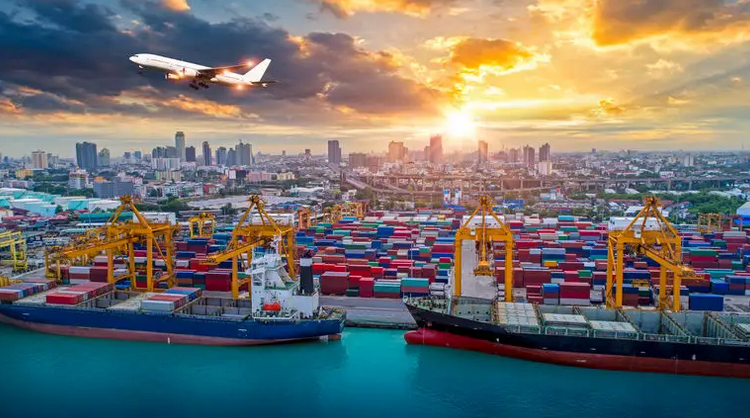
The 2026 freight market is characterized by overcapacity in ocean lanes, which has led to highly competitive rates for shippers.
A. Ocean Freight: Competitive and Greener
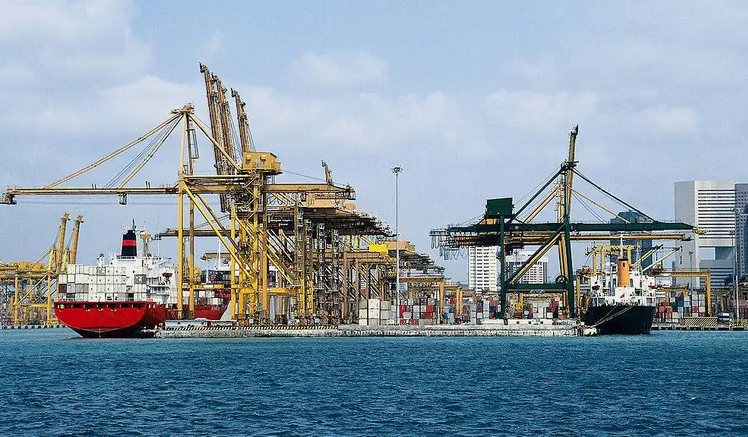
As of February 2026, 20-foot container rates from Shanghai to Tokyo have stabilized around $275–$300, while 40-footers hover near $450–$500.
- LCL Innovation: For smaller e-commerce sellers, our “Green LCL” lanes utilize LNG-powered vessels, helping Japanese importers meet their Scope 3 emissions reporting requirements.
- Direct Routes: New high-speed sea lanes from Qingdao to Hakata now offer transit times as short as 36 hours, rivaling air freight for time-sensitive retail goods.
B. Air Freight: The Just-in-Time Engine
With the 2026 semiconductor boom, air cargo from Shenzhen (SZX) and Guangzhou (CAN) to Narita (NRT) is essential for the tech sector.
- Cost Efficiency: Large-volume rates (1,000 kg+) remain attractive at approximately $1.50 per kg.
- The E-commerce Surge: Platforms like Temu and AliExpress have saturated traditional air capacity, leading us to recommend Charter-LCL options for more predictable delivery windows.
4. The “Japan 2024 Problem” and 2026 Last-Mile Realities
The logistics industry is still feeling the effects of Japan’s “2024 Logistics Problem”—the shortage of truck drivers due to overtime caps. In 2026, this has matured into a sophisticated Multimodal Last-Mile system.
Coastal Shipping and Rail
To bypass the driver shortage in Japan, we increasingly use Coastal Feeder Vessels to move cargo from major hubs like Busan or Tokyo to regional ports like Sendai or Niigata.
- The Benefit: It reduces the reliance on long-haul trucking, lowers carbon footprints, and ensures that your goods don’t sit in a warehouse waiting for a driver that isn’t coming.
5. Digital Customs: The AFR and NACCS Integration
Japan’s customs system—NACCS (Nippon Automated Cargo and Port Consolidated System)—is now fully integrated with AI-driven risk assessment.
Advanced Filing Rules (AFR)
The 24-hour rule (filing manifest data 24 hours before vessel departure from China) is stricter than ever. In 2026, automated “No-Load” notices are issued instantly if the data is incomplete. Our digital platform integrates directly with NACCS to provide:
- Real-time Manifest Validation: Detecting HS Code errors before they reach the Japanese border.
- Paperless Invoicing: Reducing the “Clearance Bottleneck” at the Port of Yokohama.
6. Future Trends: Automation and the Circular Economy
As we look toward the remainder of 2026, two trends are reshaping the China-Japan route:
- Autonomous Port Terminals: Ports like Shanghai’s Yangshan and Tokyo’s Oi terminal now use 5G-enabled autonomous guided vehicles (AGVs), significantly reducing “dwell time” for containers.
- Circular Logistics: We are seeing a 15% increase in “Reverse Logistics”—shipping recyclable components and refurbished electronics from Japan back to China for processing, requiring specialized “Hazardous Waste” handling expertise.
Conclusion: Expertise You Can Trust
Logistics between China and Japan in 2026 is no longer a commodity service; it is a high-stakes game of data accuracy, regulatory compliance, and carbon management. A delay of one day in the Yellow Sea can ripple through a “Just-in-Time” production line in Toyota City or a retail launch in Ginza.
As your freight forwarder, we don’t just book space on a ship. We provide the compliance shield and the digital transparency you need to win in the Japanese market.
2026 Quick Reference Table: China to Japan
|
Mode |
Transit Time |
Cost (USD Approx.) |
Strategic Best Use |
|---|---|---|---|
|
Sea FCL (20′) |
5–10 Days |
$275 – $300 |
Machinery, Furniture, Bulk Parts |
|
High-Speed Sea |
1.5–3 Days |
$$ |
Seasonal Fashion, High-turnover Tech |
|
Air Freight |
5–12 Hours |
$1.50/kg |
Semiconductors, Medical, Samples |
|
Eco-LCL |
7–12 Days |
$10/CBM |


No reply content