
China Custom Furniture Factory
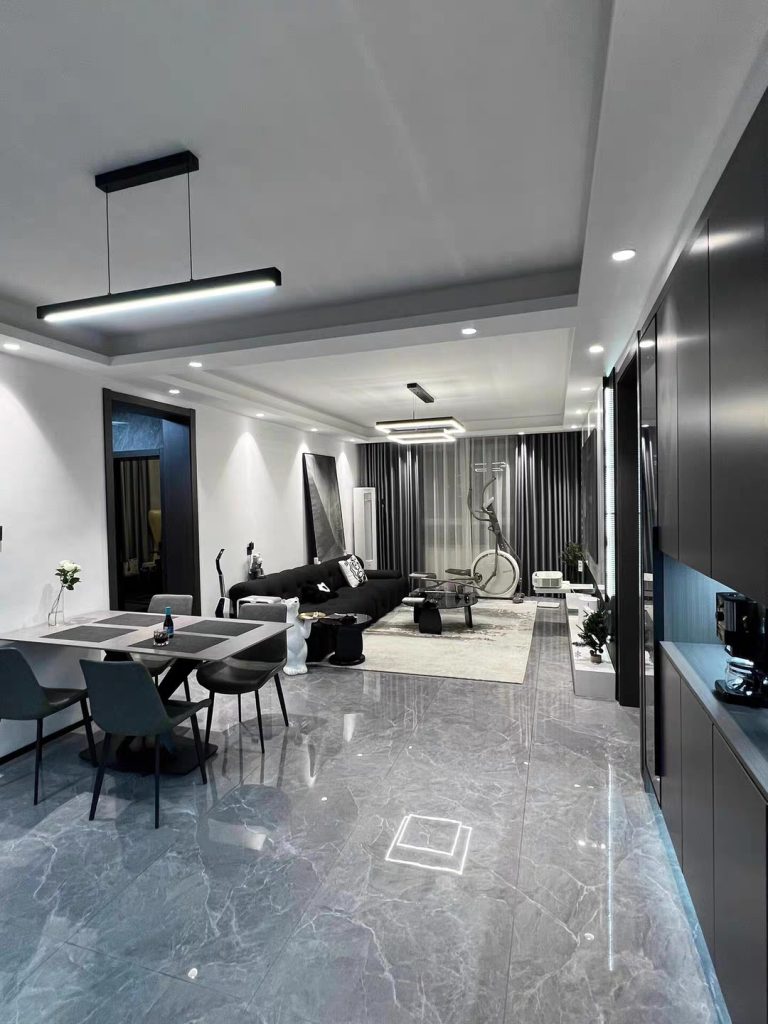
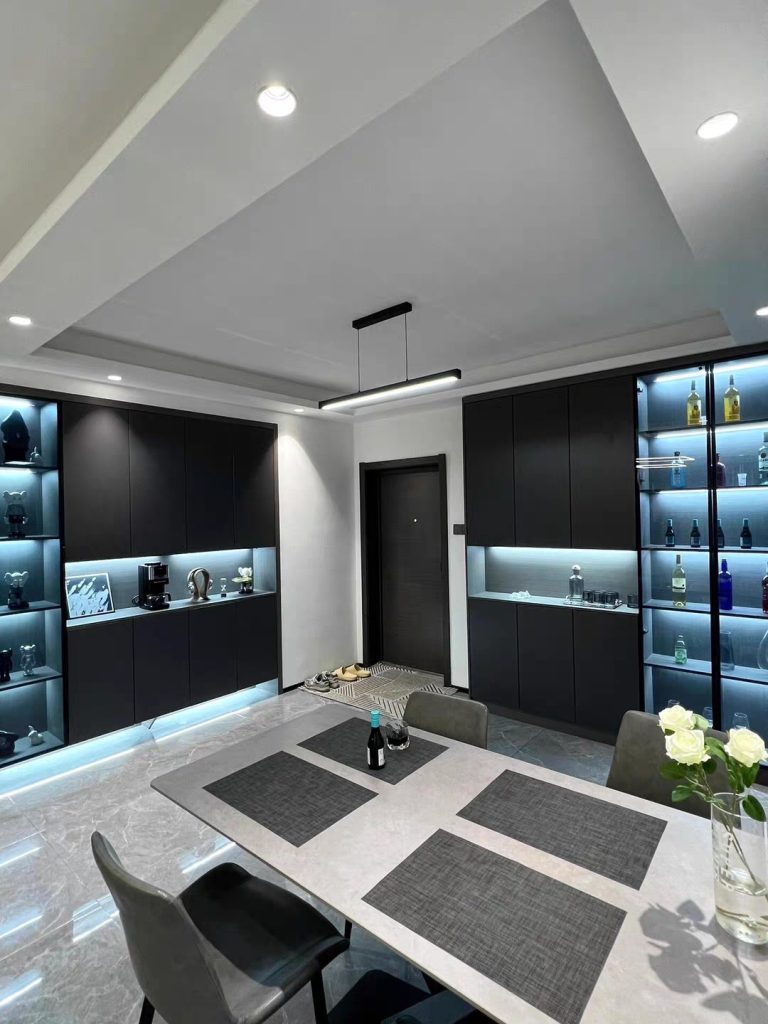
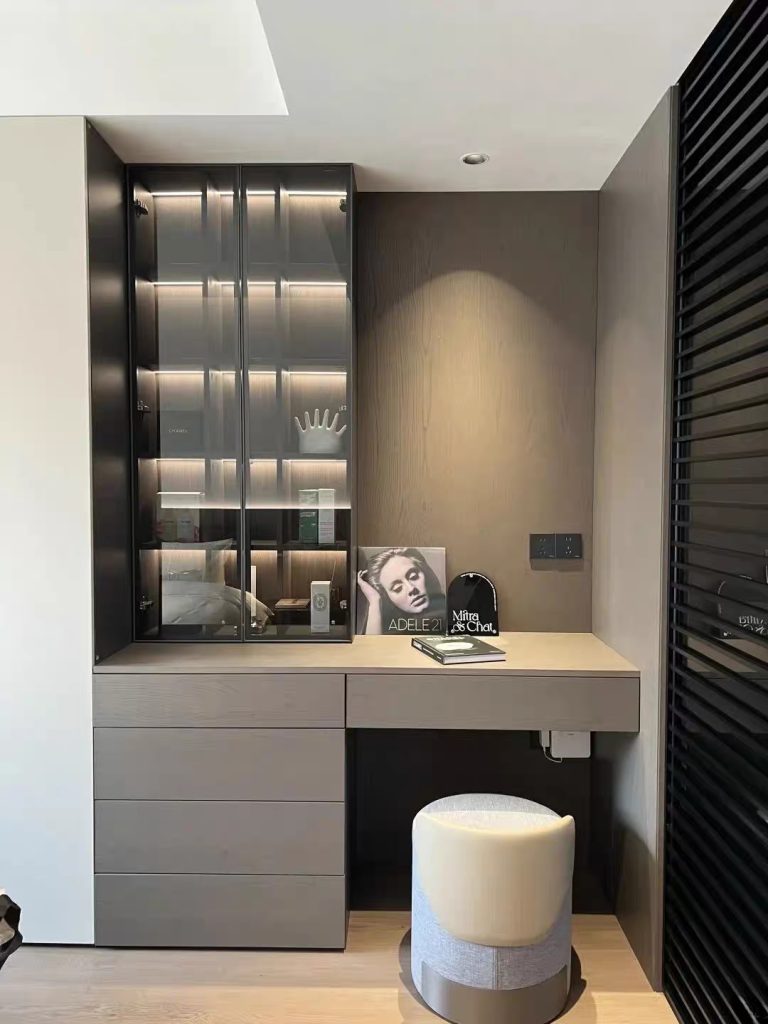
Let’s be blunt. If you’re reading this, you’re likely a procurement officer, a kitchen studio owner, or a developer looking for a kitchen furniture supplier. You’ve probably stared at hundreds of catalogs featuring glossy photos of pristine white kitchens with zero fingerprints and perfect lighting.
Then, six months after installation, the customer calls: the laminate is peeling near the kettle, the drawer bottoms are sagging, and the soft-close hinges sound like a gunshot.
I’m Marco Li, and I run a manufacturing facility in Foshan, Guangdong. We don’t just make “cabinets”; we manufacture the most abused furniture in any home. The kitchen isn’t a showroom; it’s a warzone of steam, grease, impacts, and temperature swings.
After 18 years in this business, I’m going to tell you what your current supplier is hiding from you.
1. The Core Lie: “Solid Wood” vs. “Wood-Based Panels”
Every supplier will tell you their kitchens are made of “solid wood.” Unless you are spending $50,000+ per kitchen, this is a lie. High-end custom kitchens use solid wood for doors and frames, but the cabinet boxes themselves are almost always engineered wood. And that’s a good thing.
The Truth About Particleboard (Chipboard):
Cheap suppliers use standard particleboard. It’s basically wood chips glued together. It’s heavy, brittle, and swells up like a sponge if it gets wet. We refuse to use it.
-
Our Standard: We use High-Density Fiberboard (HDF) for painted doors and Moisture-Resistant Particleboard (MR Grade) for cabinet boxes. MR board has a green dye in it and is treated with wax emulsions to repel water. If you put a glass of water on an MR board, it beads off. On standard particleboard, it soaks in.
The Edge Banding Scandal:
The weakest point of any cabinet is the edge. This is where moisture attacks.
-
Cheap Method: Using PVC edge banding glued on with EVA hot-melt adhesive. It looks fine for a year, then starts peeling.
-
Our Method: We use Laser Edge Banding or PUR (Polyurethane Reactive) adhesive. PUR creates a chemical bond with the board that is virtually impossible to peel off. We also use ABS edging instead of PVC. ABS is non-toxic, more flexible, and doesn’t discolor over time.
2. The Hardware: Where Kitchens Go to Die
You can have the most beautiful walnut veneer in the world, but if your hardware fails, the kitchen is junk. Most suppliers treat hardware as an afterthought. They buy the cheapest hinges and drawer slides they can find.
Hinges:
A cheap hinge is made of thin steel. It rusts in humid kitchens and loses tension. We only use cold-rolled steel hinges with a nickel-plated finish. We test them for 80,000 open/close cycles. That’s equivalent to opening your cabinet door 10 times a day for 20 years. We also insist on six-way adjustable hinges. This allows the installer to perfectly align the doors on-site. Cheap hinges don’t adjust; they just hang there.
Drawer Slides:
The difference between a good slide and a bad one is the load capacity.
-
Side-Mount Slides: Cheap, but only rated for 35kg. They wobble.
-
Undermount Slides (Hidden Slides): This is what we use for high-end kitchens. They are rated for 50kg+, feature full extension (you can see everything in the drawer), and have true soft-close mechanisms.
The Test: Ask your supplier for the weight rating of their drawer slides. If they don’t know, they are buying the cheapest available.
3. Finishes: Paint, Laminate, or Veneer?
The finish determines the maintenance and longevity of the kitchen.
Paint (Polyurethane vs. Lacquer):
Spray-painted kitchens are popular, but the type of paint matters. Cheap factories use nitrocellulose lacquer. It dries fast but is brittle and yellows quickly. We use polyurethane-based paints. They are tougher, more scratch-resistant, and maintain their color for decades.
Laminate (Melamine):
Laminate is the workhorse of the kitchen industry. It’s durable and easy to clean. However, cheap laminate has a thin wear layer. We use HPL (High-Pressure Laminate) with a wear layer of at least 0.8mm. You can slam a hot pan on it (don’t try this at home) and it won’t leave a mark.
Thermofoil (PVC Foil):
This is the “Shaker-style” door you see everywhere. It’s a thin layer of PVC vacuum-pressed onto an MDF core.
-
The Failure Point: Heat. If a supplier uses a low-quality PVC foil, it will shrink and peel away from the edges of the door near the oven. We use German Renolit foils and a membrane press with precise temperature control to prevent this.
4. The Supply Chain: Lead Times and the “Cut List”
Ordering kitchen furniture is not like ordering a sofa. It’s a precision engineering project.
The Cut List: Every kitchen starts with a cut list—a diagram of every single panel, hole, and groove. A mistake here costs thousands. We use CNC nesting machines programmed with Cabinet Vision software. This eliminates human error. The machine cuts 100 identical panels with 0.1mm accuracy.
Lead Time Reality:
If a supplier tells you they can deliver a custom kitchen in 15 days, they are lying. Here is the real timeline:
-
Engineering & Drafting: 3-5 days.
-
Material Procurement: 5-7 days.
-
CNC Cutting & Edge Banding: 3-4 days.
-
Assembly & QC: 4-5 days.
-
Packaging: 2 days.
Total: 17-23 days for a standard kitchen. Expedited orders are possible, but they cost more because they disrupt the production flow.
5. Packaging: The “Flat-Pack” vs. “Assembled” Debate
How your kitchen arrives matters.
-
Flat-Pack (RTA – Ready to Assemble): This is cheaper to ship because you can fit more in a container. The downside is that the customer has to assemble it. This leads to errors and stripped screws.
-
Pre-Assembled: We ship most of our kitchens fully assembled. The cabinet boxes are glued and dowelled together at the factory. It costs more in shipping (volume), but the quality is guaranteed. The installer just has to screw the cabinets to the wall.
The Packaging: We use A-grade honeycomb cardboard and reinforce the corners with plywood. We also include a “hardware bag” for each cabinet, clearly labeled with the cabinet number. Nothing is more frustrating than an installer searching for a missing hinge screw.
6. Certifications: CARB2 and EPA
If you are selling in North America, you must comply with CARB2 (California Air Resources Board Phase 2) standards. This regulates formaldehyde emissions from composite wood products.
-
The Risk: If you import a kitchen without CARB2 certification, US Customs can seize your shipment.
-
Our Practice: All our MR particleboard and MDF is sourced from mills with valid CARB2 and EPA TSCA Title VI certifications. We provide the documentation with every shipment.
7. Who Is This For?
We are not the supplier for IKEA-level budgets. We are the supplier for developers building mid-to-high-end apartments, kitchen studios serving discerning clients, and contractors who need reliability.
If you are tired of dealing with suppliers who disappear when there’s a problem, let’s talk. We provide:
-
Free 3D Renderings: We help your clients visualize the space.
-
Detailed Engineering Drawings: No guesswork for the installers.
-
Lifetime Warranty on Hardware: We stand behind our Blum and Hettich components.


No reply content