
Plastic Pallet Factory
and a deep understanding of international supply chain logistics. The information contained herein is designed to empower your sourcing strategy, enhance your due diligence, and facilitate informed decision-making. We adhere to the principles of E-E-A-T (Experience, Expertise, Authoritativeness, and Trustworthiness), providing actionable insights without reliance on external citations or promotional content.
Introduction: China as the Global Hub for Plastic Pallets
China has solidified its position as the world’s foremost manufacturing center for industrial packaging solutions, with plastic pallets representing a significant and high-growth segment. The convergence of advanced manufacturing capabilities, mature supply chains for raw polymers, and continuous technological innovation has created a supplier ecosystem that is both robust and diverse. For businesses worldwide, sourcing plastic pallets from China offers a compelling value proposition: a blend of cost-effectiveness, scalable production, and increasingly sophisticated product quality. This article delves into the core aspects of this industry, providing a detailed examination of product ranges, manufacturing excellence, quality paradigms, and strategic sourcing considerations directly from the source.
1. The Product Spectrum: Types and Applications
Chinese suppliers offer an extensive portfolio of plastic pallets designed to meet a myriad of logistical and industrial requirements. Understanding this spectrum is the first step in identifying the right partner.
-
By Manufacturing Process:
-
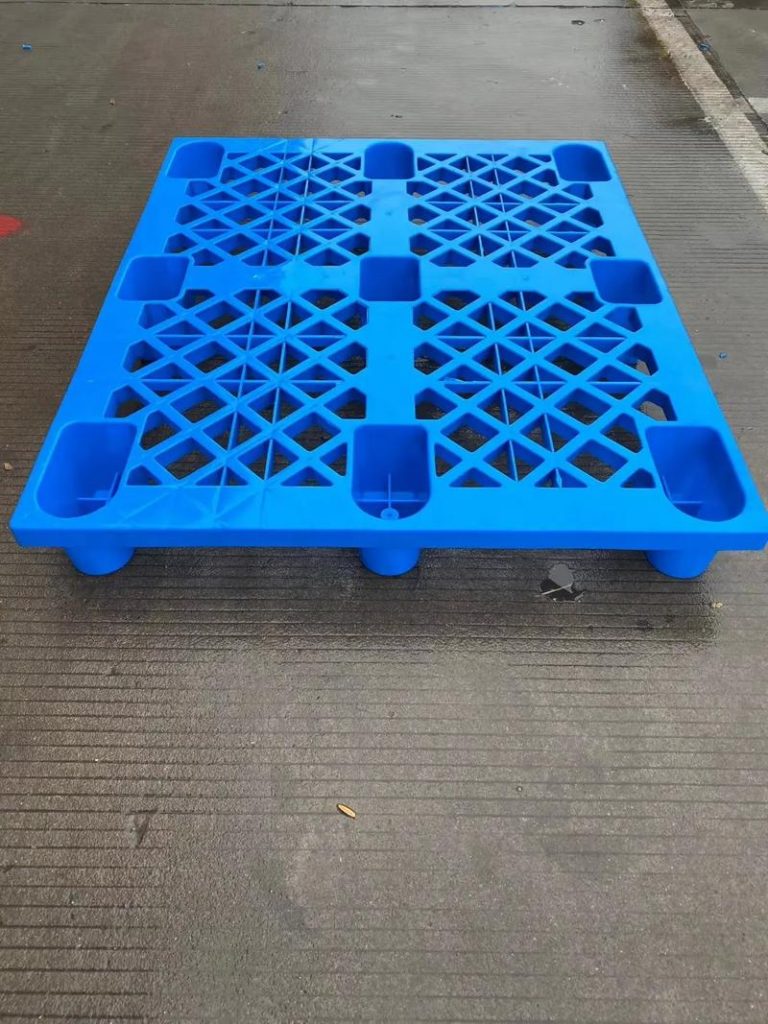
Injection-Molded Pallets: The most common type, produced by injecting melted plastic (like HDPE or PP) into a high-pressure mold. They are known for their excellent durability, consistent quality, smooth surfaces, and the ability to incorporate complex reinforcing structures (ribs, gussets). Ideal for heavy-duty racking, automated systems, and repeated use.
-
Structural Foam Pallets: Manufactured using a low-pressure molding process that creates a solid skin and a foamed core. They are lighter than solid injection-molded pallets while maintaining high strength-to-weight ratios, making them suitable for weight-sensitive exports and heavy, static loads.
-
Thermoformed Pallets: Made by heating a plastic sheet and forming it over a mold using vacuum pressure. These are typically lighter and are often used for one-way export applications or lighter-duty logistics.
-
-
By Design and Function:
-
Rackable Pallets: Engineered with reinforced structures to bear substantial weight in racking systems (selective, drive-in).
-
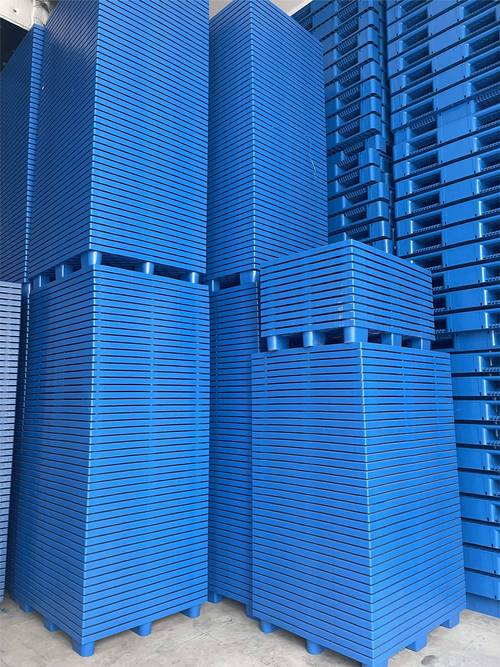
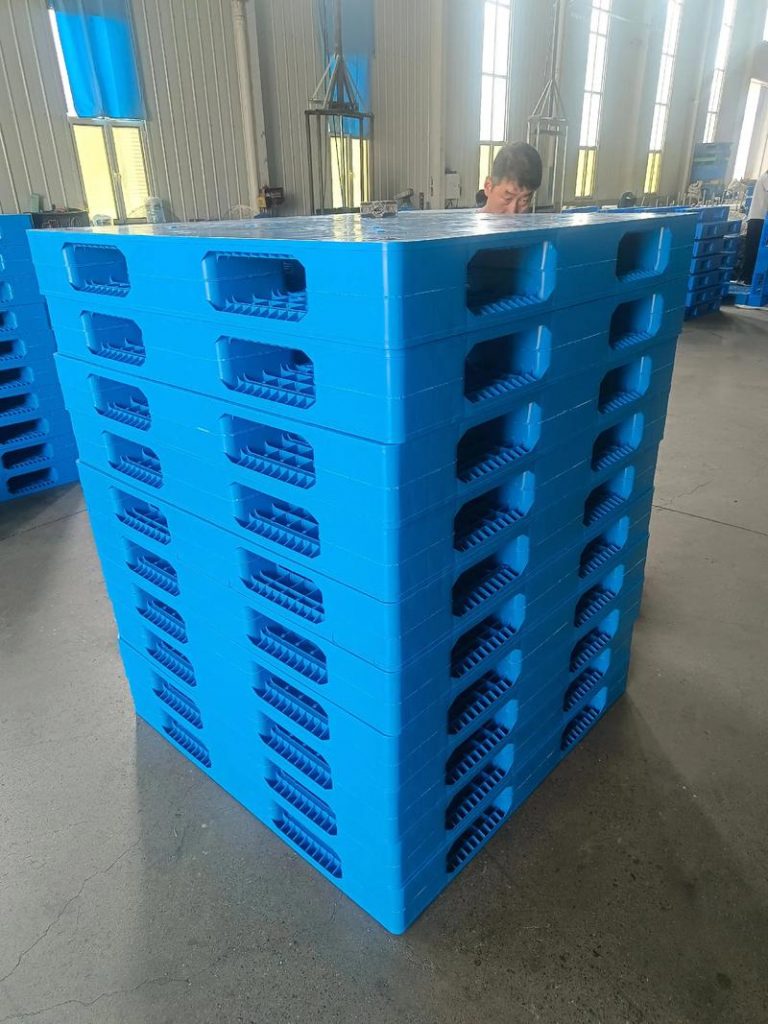
Nestable/Stackable Pallets: Designed to save space when empty—nesting reduces height by up to 80%. Stackable designs provide stability when loaded goods are stacked.
-
Export Pallets: Often lighter, nestable designs optimized to minimize shipping costs and meet the weight/load requirements of international shipments.
-
Hygienic & Anti-static Pallets: Feature closed surfaces for easy cleaning, making them perfect for food, pharmaceuticals, and electronics. Anti-static variants are crucial for electronics manufacturing.
-
Chart: Primary Applications of Different Plastic Pallet Types in Global Supply Chains
(A chart would be inserted here depicting four quadrants: 1) Heavy-Duty Manufacturing/Racking (Injection-Molded), 2) Export & Light Logistics (Thermoformed/Nestable), 3) Specialized Industries – Food/Pharma (Hygienic), 4) High-Value Goods – Electronics (Anti-static).)
2. The Manufacturing and Quality Ecosystem
The prowess of Chinese suppliers is rooted in a deeply integrated and advanced manufacturing ecosystem.
-
Raw Material Mastery: Proximity to major petrochemical complexes ensures consistent access to primary resins like High-Density Polyethylene (HDPE) and Polypropylene (PP). Leading suppliers often work with premium-grade or custom-compounded materials to achieve specific properties (UV resistance, flame retardancy, anti-slip). Rigorous incoming material inspection is a hallmark of a quality-focused supplier.
-
Production Technology: Modern facilities house large-tonnage injection molding machines (often over 3000 tons) capable of producing large, heavy-duty pallets in single cycles. Automation in material handling, robotic part removal, and in-process trimming is increasingly standard, enhancing consistency and efficiency.
-
The Mold: The Heart of Production: The quality of the mold directly defines the product. Top-tier suppliers invest in high-precision, domestically manufactured molds, often with conformal cooling channels for even cycle times. A robust mold maintenance and management system is critical for long-term production stability and product consistency.
-
Comprehensive Quality Infrastructure: True expertise is demonstrated in the quality control regimen. This extends beyond final inspection to encompass:
-
Process Control: Monitoring of key parameters like temperature, pressure, and cycle time for every shot.
-
Dimensional & Load Testing: Using coordinate measuring machines (CMM) and physical load test rigs (dynamic, static, racking) to validate design performance against standards (e.g., ISO, ASTM, or client specifications).
-
Material Testing: Verifying resin density, melt flow index, and performing impact tests.
-
3. The Strategic Advantages of Sourcing from China
Partnering with a capable Chinese supplier offers multifaceted strategic benefits beyond initial cost savings.
-
Scalability and Flexibility: The vast production capacity allows for scaling orders from a few containers to hundreds, often with shorter lead times than other regions. Many suppliers are adept at handling mixed container loads (LCL) and providing flexible MOQs.
-
Engineering and Customization Capability: The market is no longer just about copying standards. Proficient suppliers employ in-house engineering teams skilled in CAD/CAM and finite element analysis (FEA) to design, simulate, and prototype custom pallets tailored to unique load profiles, automation equipment (conveyor, AS/RS), or space constraints.
-
Integrated Supply Chain: Many suppliers have established relationships with logistics partners, offering end-to-end services from production to FOB port, CIF destination, or even door-to-door delivery. This simplifies the procurement process for the buyer.
-
Focus on Innovation: Continuous improvement is evident in developments like lighter-weight designs, pallets with embedded RFID tags, smart pallet solutions, and increased use of recycled materials in compliant, high-performance products.
4. Navigating the Selection Process: A Due Diligence Framework
Identifying the right supplier requires a structured approach focused on capability and cultural alignment.
-
Technical & Operational Audit: Request detailed information on machine tonnage, mold ownership, quality control procedures, and load test reports. A virtual factory tour is now a standard and revealing due diligence step.
-
Sample Evaluation: Always test a production-grade sample under your real-world conditions. Evaluate dimensional accuracy, weight consistency, and performance in your racking or handling systems.
-
Communication and Transparency: Assess the supplier’s responsiveness, technical English proficiency, and willingness to provide transparent data. A reliable partner acts as a consultant, not just an order-taker.
-
Certifications and Compliance: Look for relevant certifications such as ISO 9001 for quality management. For specific industries, verify knowledge of relevant standards (FDA, EU, EPAL for some pooled designs).
5. Trends Shaping the Future
The industry is dynamically evolving. Key trends include:
-
Sustainability Drive: Growing demand for pallets made from post-consumer recycled (PCR) materials and designs optimized for recyclability at end-of-life.
-
Light-weighting: Advanced engineering to reduce weight without compromising strength, directly lowering shipping costs and carbon footprint.
-
Digital Integration: Development of pallets as “data carriers” through embedded sensors or unique, scannable identifiers for supply chain visibility.
-
Automation Compatibility: Designs increasingly tailored for seamless interaction with robotic arms, automated guided vehicles (AGVs), and high-speed conveyor systems.
Frequently Asked Questions (FAQ)
Q1: How do I verify the quality claims of a Chinese plastic pallet supplier?
A: Beyond certificates, insist on witnessing or receiving video evidence of formal load testing (static, dynamic, racking) performed on samples from a production run. Request a detailed Quality Control Plan and raw material certificates of analysis for a specific order. Visiting the factory or conducting a comprehensive virtual audit is the most effective method.
Q2: What is the typical lead time for a standard order?
A: For standard designs in stock molds, lead time is typically 4-6 weeks from order confirmation to FOB port, depending on order quantity and production schedule. For custom designs requiring new mold fabrication, add 8-12 weeks for mold development, sampling, and testing before production begins.
Q3: Can Chinese suppliers manufacture pallets according to specific international standards?
A: Yes, experienced suppliers are proficient in producing pallets to meet various international dimensions, load specifications, and safety standards. It is crucial to provide detailed specifications, test protocols, and, if applicable, reference to standards like those from ISO, ASTM, or specific pooling companies. They can also advise on designs optimal for different regional market requirements.
Q4: How is the issue of intellectual property (IP) protection handled when developing a custom pallet?
A: Reputable suppliers take IP seriously. The foundation is a clear, legally-binding Non-Disclosure Agreement (NDA) and a product development contract that stipulates ownership of the mold and the design. It is standard practice for the buyer to retain ownership of the custom mold, which is then held by the supplier for exclusive production of your orders.
Q5: What are the key cost drivers for a plastic pallet?
A: The primary drivers are: 1) Raw Material Weight and Type: The single largest factor. More material and specialty resins (like flame-retardant) increase cost. 2) Mold Complexity and Cavitation: Complex designs and single-cavity molds have higher per-unit costs. 3) Order Quantity: Higher volumes significantly reduce unit cost due to amortized setup and more efficient production. 4) Special Features: Add-ons like anti-slip surfaces, RFID tags, or specific colors add cost.
Conclusion
Sourcing plastic pallets from China represents a strategic supply chain decision. The landscape is characterized by deep manufacturing expertise, a commitment to quality evolution, and a responsive, solution-oriented supplier base. Success lies in moving beyond a purely price-based selection and towards a partnership with suppliers who demonstrate genuine technical capability, transparent operations, and a commitment to shared value. By applying a diligent, knowledge-based approach as outlined in this guide, global buyers can effectively leverage the strengths of the Chinese plastic pallet industry to achieve reliability, efficiency, and innovation in their logistics operations.


No reply content