
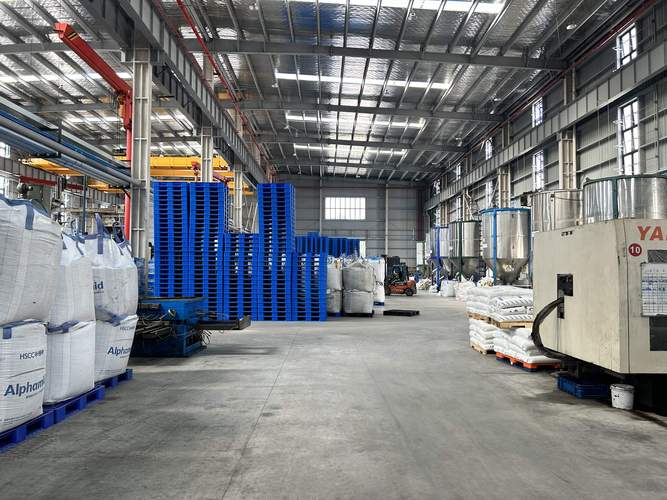
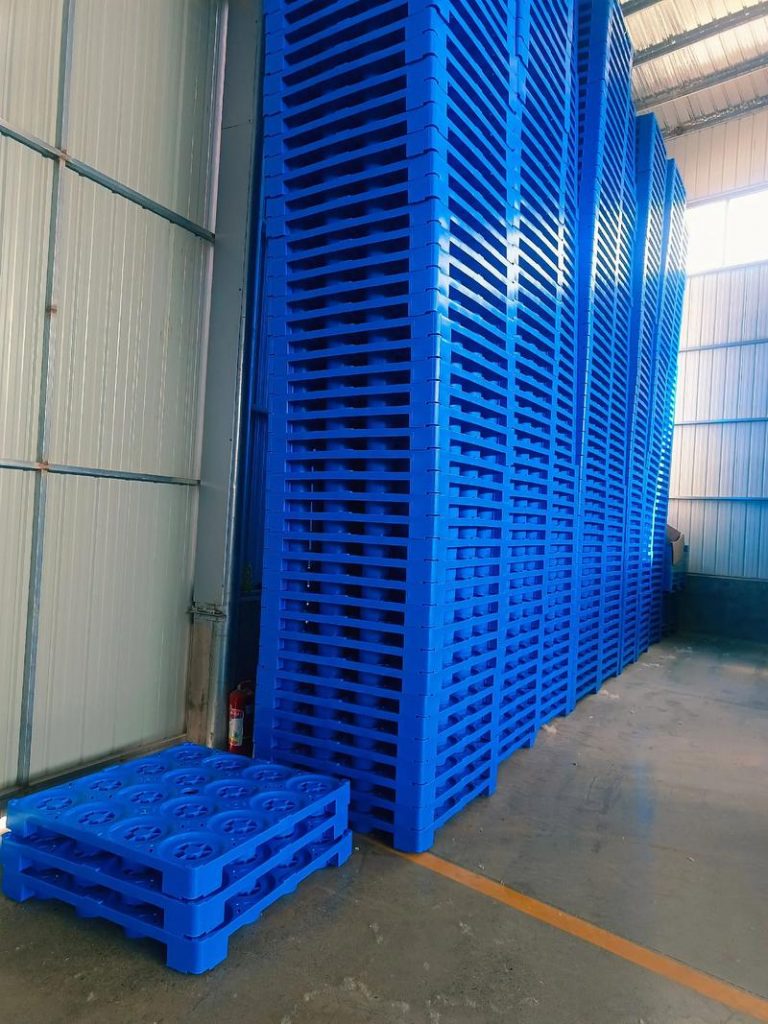
In the modern global supply chain, the pallet is no longer just a platform; it is a critical piece of logistics infrastructure. As a leading source manufacturer of plastic pallets, we recognize that our products are the foundation upon which multi-billion dollar industries rest. From automated cold storage in Scandinavia to heavy-duty chemical transport in Southeast Asia, the reliability of a plastic pallet can be the difference between operational fluidity and a costly logistical nightmare.
This article explores the technical rigor, material innovation, and manufacturing precision that define a world-class plastic pallet facility.
1. Material Mastery: The Science of High-Polymer Durability
The “Expertise” aspect of E-E-A-T begins with raw materials. A common misconception in the industry is that all plastic pallets are created equal. As a manufacturer, we categorize our material selection based on the specific mechanical stresses of the end-user environment.
Virgin HDPE vs. PP: Choosing the Right Polymer
- High-Density Polyethylene (HDPE): Our go-to for cold chain logistics. HDPE maintains its impact resistance at temperatures as low as -40°C. It is the industry standard for food and beverage applications due to its chemical stability.
- Polypropylene (PP): For high-rack warehousing where “creep” (long-term deformation) is a concern, we utilize PP. Its higher stiffness-to-weight ratio ensures that pallets remain flat under heavy loads for extended periods.
The Role of Impact Modifiers
To enhance the “Experience” of our users, we incorporate specialized additives. By adding UV stabilizers and impact modifiers, we ensure our pallets survive the “forklift abuse” that typically shatters lower-grade alternatives.
2. Advanced Manufacturing: Precision at Scale
Our factory utilizes state-of-the-art High-Pressure Injection Molding technology. With clamping forces ranging from 2,500 to 4,500 tons, we produce pallets with a level of structural uniformity that is impossible to achieve with smaller-scale equipment.
Internal Steel Reinforcement
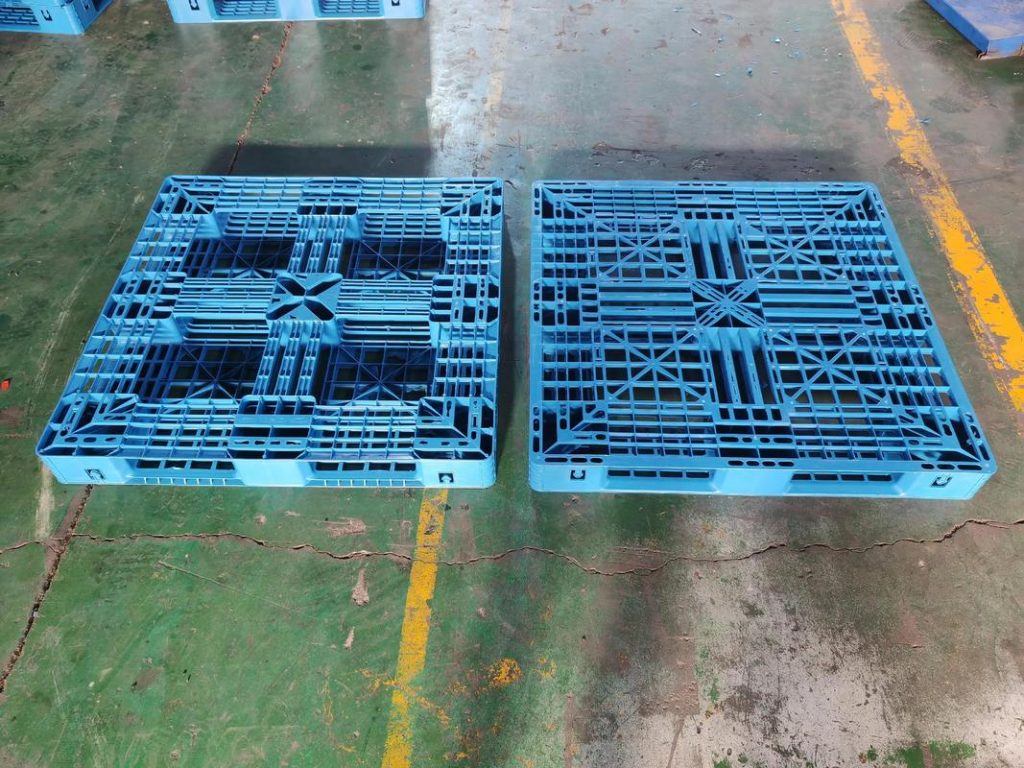
For heavy-duty racking requirements, we have pioneered the integration of internal steel pipes. These are encapsulated within the plastic during the molding process, allowing a pallet to support a static load of up to 6,000kg while remaining significantly lighter than a solid wood or metal alternative.
Gas-Assist Molding
To optimize the strength-to-weight ratio, we employ gas-assist injection molding. This creates internal hollow channels that act like the bones of a bird—reducing weight while significantly increasing structural rigidity and resistance to bending.
3. Authoritativeness: Compliance and Global Export Standards
In the world of international trade, “Trustworthiness” is backed by certification. Our manufacturing facility operates under a strict ISO 9001:2015 Quality Management System and ISO 14001 Environmental Management standards.
Why Plastic is the “Authority” in Export
Unlike wooden pallets, our plastic solutions are inherently ISPM-15 exempt. They do not require heat treatment or fumigation to cross international borders. This eliminates the risk of shipment delays at customs and ensures that your cargo is never quarantined due to pest infestation—a common and expensive issue with timber packaging.
4. The Rigorous Quality Control (QC) Protocol
A pallet’s “Experience” in the field is only as good as its performance in the lab. We maintain a dedicated testing center where every production batch must pass the following:
- Deflection Test: We place the pallet on a rack with a 1,500kg load for 48 hours. If the deflection exceeds 5mm, the batch is rejected.
- Corner Drop Test: Dropping a loaded pallet from 1 meter multiple times to simulate real-world forklift mishaps.
- Coefficient of Friction Analysis: Ensuring the anti-slip grommets and surface textures provide enough grip to prevent cargo sliding during sudden transit stops.
5. Sustainability: The Circular Economy
Modern manufacturing must be responsible. We have implemented a “Closed-Loop” recycling system. We encourage our clients to return pallets at the end of their 10-year lifespan. These are then reground and used to manufacture “Eco-Series” pallets for one-way shipping, ensuring that not a single gram of plastic becomes waste.
FAQ: Professional Guidance for Bulk Procurement
Q1: What is the real-world lifespan of a high-quality plastic pallet?
In a standard warehouse environment, a virgin HDPE pallet can last 10 to 15 years. In contrast, a wooden pallet typically requires repair after only 3 to 5 trips. This makes plastic a significantly better long-term investment.
Q2: How do I choose between a “Nestable” and a “Stackable” design?
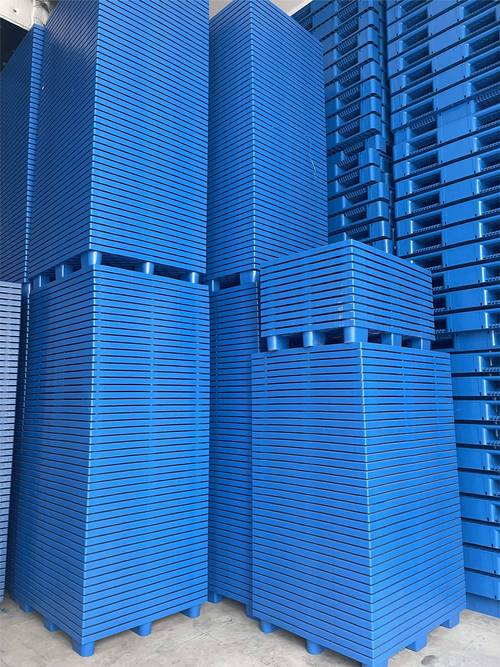
- Nestable: Best for return logistics or “closed-loop” systems where space on empty trucks is at a premium. They can save up to 75% of storage space when empty.
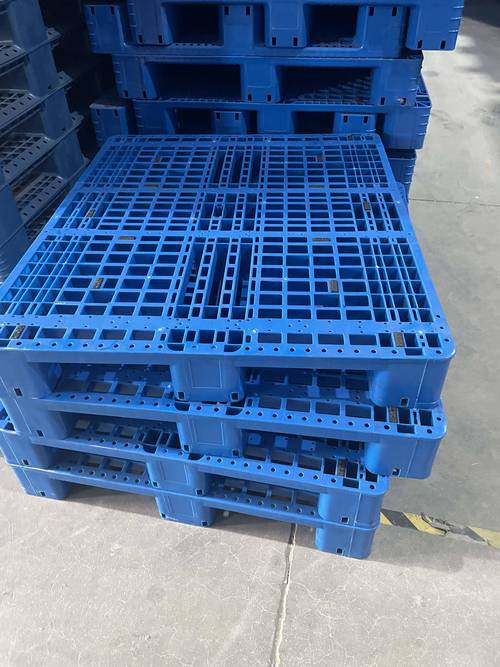
- Stackable: Required for high-rise racking or for stacking loaded pallets on top of one another (block stacking).
Q3: Are plastic pallets truly “Food-Grade”?
Yes, provided they are made from 100% Virgin HDPE. Our food-grade pallets feature a smooth, non-porous surface that prevents the growth of bacteria and can be high-pressure steam cleaned (up to 100°C) without warping.
Q4: Can we customize pallets for automated ASRS systems?
Absolutely. Automated Storage and Retrieval Systems (ASRS) require extreme dimensional accuracy. We can manufacture pallets with tolerances of ±1mm and integrated RFID tag slots for seamless digital tracking.
Q5: What is the typical lead time for a custom mold?
For unique sizes or designs, the mold-making process typically takes 45 to 60 days. However, for our standard range of over 50 sizes, we can begin shipping bulk orders within 10 to 14 days.
Conclusion: Partnering with a Manufacturer of Record
Choosing a plastic pallet manufacturer is an investment in your company’s operational safety and efficiency. By focusing on material integrity, precision engineering, and rigorous testing, we provide the “Authority” your supply chain deserves.
Would you like me to create a technical comparison table between HDPE and PP pallets for your different load-bearing categories


No reply content