
Dongguan PremiumGift BoxPackaging



The scene is achingly familiar: a closet crammed with flattened cardboard boxes, their faded holiday ribbons and dusty gift tags telling stories of Christmases past, birthdays forgotten, and anniversaries celebrated. Each box, once a vessel of joy, now represents a stubborn piece of household clutter—a square foot of wasted space that refuses to disappear. But what if the box itself could solve this problem? What if, after delivering its gift, it could fold itself away like a whisper, ready to be reborn for the next occasion? This is the promise of the innovative foldable gift box: a simple idea that is revolutionizing how we think about packaging, storage, and the very nature of giving.
I. The Spatial Dilemma: Why Our Homes Are Overflowing with Cardboard Ghosts
The modern home is a battleground of spatial efficiency. We buy furniture that converts from sofa to bed, install shelves that hide appliances, and subscribe to services that deliver everything from groceries to clothing. Yet, we remain tethered to one of the most inefficient inventions of the 20th century: the rigid, non-collapsible gift box.
The statistics are staggering. The average American family accumulates over 30 feet of unused gift boxes in a single year. In the UK, a 2025 survey found that 65% of households admit to hoarding boxes “just in case,” leading to what professional organizers term “cardboard chaos.” This isn’t just a minor inconvenience; it’s a symptom of a larger cultural disconnect between consumption and sustainability.
The problem is rooted in design. Traditional gift boxes are engineered for a single purpose: to contain a gift. Once opened, their structural integrity is compromised. The glued seams weaken, the corners lose their shape, and the box becomes a misshapen shell of its former self. The result is a cycle of waste: a new box is bought for every occasion, the old one is discarded or stored indefinitely, and the problem compounds with each passing year.
II. The Anatomy of Innovation: How Folding Boxes Work
The innovative foldable gift box is not merely a box that can be flattened. It is a feat of engineering that combines principles of origami, material science, and structural design to create a container that is both sturdy and supple.
A. The Hinge Mechanism: Flexibility Without Failure
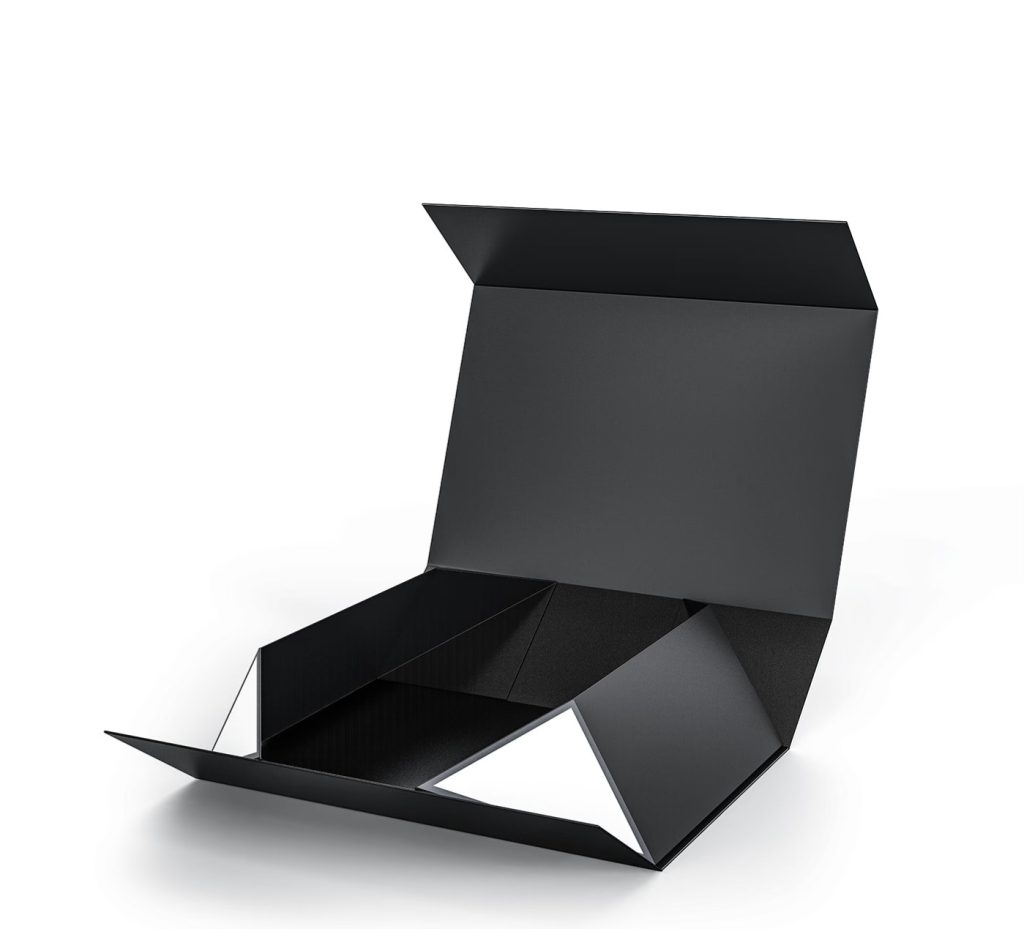
At the heart of the design is a sophisticated hinge system. Unlike traditional boxes with glued or stapled seams, foldable boxes use interlocking tabs and slots cut from a single sheet of high-density cardboard or recycled paperboard. These tabs bend and flex, allowing the box to collapse inward without tearing. The material is treated with a food-grade, water-resistant coating that prevents warping and maintains its shape, even in humid environments.
The genius lies in the precision of the cuts. Using computer-aided design (CAD) software, engineers calculate the exact angles and dimensions needed to create a structure that is both strong when assembled and flexible when folded. The result is a box that can be opened and closed hundreds of times without showing signs of wear.
B. The Compression System: From 3D to 2D in Seconds
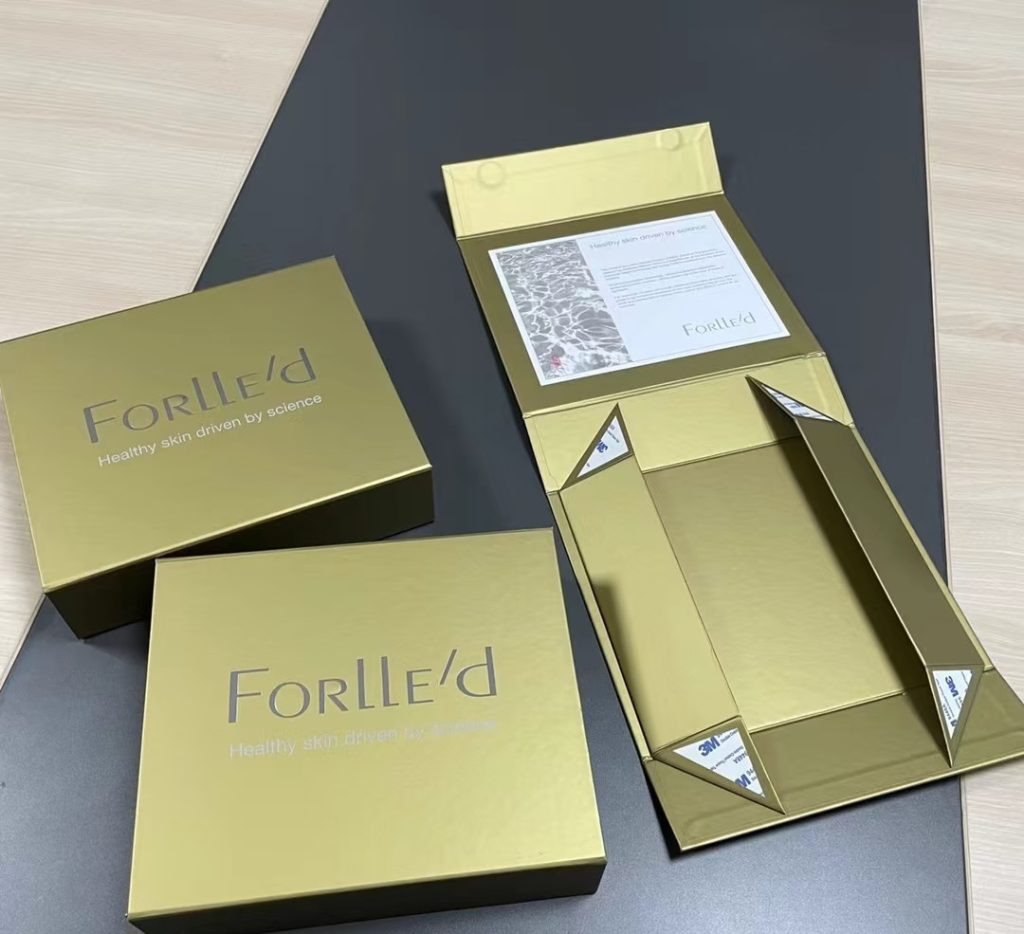
Collapsing the box is an intuitive process. A small tab, often located on the bottom panel, is pulled, releasing a series of internal supports. The sides of the box then fold inward, concertina-style, until the entire structure is reduced to a flat, letter-sized rectangle. A magnetic or Velcro strap secures the collapsed box, preventing it from springing open unexpectedly.
This transformation is not just about saving space; it’s about changing the user experience. The act of folding the box becomes a small, satisfying ritual—a moment of order in a chaotic world. It’s a physical expression of the idea that every object has a place, and that place can be reclaimed.
C. The Reassembly Ritual: A Return to Wholeness
Reassembling the box is just as easy. The flat pack is laid out, the sides are raised, and the tabs are slotted into place. A satisfying click often signals that the box is locked and ready for use. This process demystifies the act of assembly, making it accessible to anyone, regardless of their skill level.
III. The Human Stories: How Folding Boxes Are Changing Lives
Beyond the technical specifications, the true impact of foldable gift boxes is found in the stories of the people who use them.
A. The Long-Distance Couple: A Box for Every Occasion
For Sarah and David, a couple living on opposite coasts, the foldable box became a lifeline. Before, their long-distance relationship was punctuated by the stress of finding the “right” box for each occasion. Birthday, anniversary, Valentine’s Day—each required a new purchase, a new piece of clutter. Now, they own a set of three foldable boxes in different sizes. After David receives a gift, he collapses the box, slips it into a standard envelope, and mails it back to Sarah. She then reassembles it for the next occasion. The box travels back and forth, accumulating stamps and memories, a tangible symbol of their enduring connection.
B. The Eco-Conscious Parent: Teaching Sustainability
Maria, a mother of two, uses foldable boxes as a teaching tool. Her children receive gifts in these boxes, and Maria involves them in the folding and storing process. “It’s like a puzzle,” she says. “They love figuring out how to make it flat, and they’re proud to put it away.” By normalizing the reuse of packaging, Maria is instilling in her children a mindset of sustainability that extends beyond the toy box. The boxes themselves become toys—decorated with crayons, turned into forts, and imagined into spaceships.
C. The Disaster Relief Volunteer: Packing Hope
In the aftermath of a hurricane, volunteers faced the monumental task of distributing supplies to displaced families. Traditional cardboard boxes were impractical—too bulky to transport and easily damaged by rain. Foldable boxes, however, offered a solution. Volunteers packed relief kits—food, water, blankets—into the boxes, transported them to shelters, and distributed them. Once empty, the boxes could be folded and stacked, taking up minimal space in crowded warehouses. One volunteer recounted how a grandmother used an empty box to organize her grandchildren’s drawings, turning a symbol of loss into a tool for rebuilding.
IV. The Design Philosophy: Form Follows Function, Then Emotion
The creators of foldable gift boxes subscribe to a design philosophy that prioritizes human emotion. Every aspect of the box, from its texture to its sound, is considered.
A. The Sound of Satisfaction
There is a distinct sound associated with a quality foldable box: the soft crinkle of the cardboard as it compresses, the gentle snap of the locking tabs engaging. These sounds are engineered to be pleasing to the ear, turning a mundane chore into a sensory experience.
B. The Texture of Trust
The exterior of the box is coated with a soft-touch laminate that feels pleasant to the touch. It resists fingerprints and scratches, maintaining its pristine appearance even after multiple uses. The interior is lined with a subtle, undyed paper that protects the gift without distracting from it.
C. The Color of Calm
Instead of loud, seasonal prints, foldable boxes come in a palette of muted, sophisticated colors: slate gray, dusty rose, sage green. These hues are chosen to complement any home decor, ensuring that the box looks good whether it’s sitting under a Christmas tree or on a living room shelf.
V. The Environmental Argument: A Small Box with a Big Impact
The environmental benefits of foldable gift boxes are undeniable.
A. Reducing Landfill Waste
By promoting reuse, foldable boxes drastically reduce the amount of cardboard that ends up in landfills. A single foldable box can replace dozens of disposable boxes over its lifetime.
B. Lowering Carbon Footprints
Manufacturing and transporting rigid boxes requires significant energy. Foldable boxes, being lightweight and compact when shipped flat, have a much lower carbon footprint.
C. Encouraging a Circular Economy
Some companies have introduced take-back programs, where customers can return used boxes for a discount on new ones. These boxes are then sanitized, repaired if necessary, and reintroduced into the supply chain.
VI. The Future of Folding: Beyond the Box
The principles behind foldable gift boxes are inspiring innovation across industries.
A. Foldable Furniture
Imagine a chair that folds into the size of a briefcase, or a table that expands from a slim console to a dining surface. Designers are applying the same origami-inspired engineering to create furniture that adapts to our changing needs.
B. Emergency Shelters
Architects are developing foldable shelters for disaster zones, using the same interlocking panel designs to create durable, weatherproof structures that can be deployed quickly.
C. Medical Devices
In the medical field, foldable designs are being used to create portable diagnostic tools and compact prosthetics.
Conclusion: The Unfolded Future
The innovative foldable gift box is more than a clever piece of packaging. It is a small revolution in how we interact with the objects in our lives. It challenges the throwaway culture, promotes sustainability, and brings a moment of mindful satisfaction to the act of giving and receiving.
It reminds us that even the most mundane objects can be redesigned for a better world. That a simple fold can save space, reduce waste, and bring a smile to someone’s face. That the story of a gift doesn’t have to end when the box is opened; it can continue, folded neatly away, waiting to be unfolded again.
In a world that often feels too big, too fast, and too full, the foldable gift box offers a small piece of order. It is a reminder that we can always find a way to make more room—for joy, for memories, and for each other. And when we do, we discover that the most valuable things in life don’t take up space at all. They just need a little room to unfold.


No reply content