

Introduction: The Hub of the World
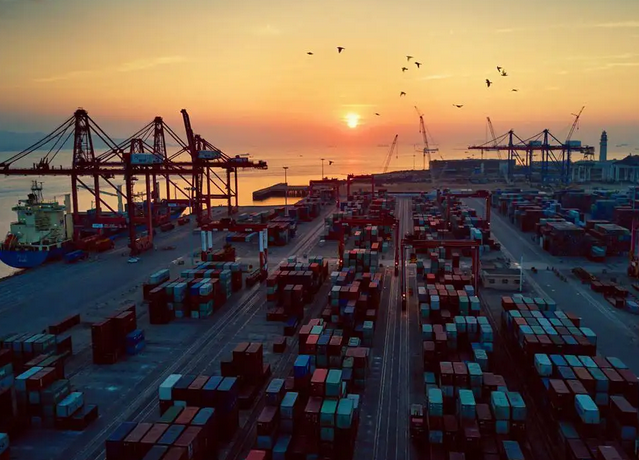
In the logistical landscape of 2026, the trade corridor between China and the United Arab Emirates (UAE) has become the most vital nexus connecting the East with the Middle East, Africa, and Europe. With non-oil trade volumes surging toward the $200 billion mark by 2030, the UAE—and particularly Dubai’s Jebel Ali—has moved beyond being a destination; it is the world’s most sophisticated transshipment laboratory.
As a freight forwarder on the front lines, I have watched the “Just-in-Time” model of the 2010s transform into the “Just-in-Case” resilience of the 2020s. For businesses shipping everything from new-energy vehicles (NEVs) to high-speed rail components and consumer electronics, the challenge is no longer just finding a vessel—it’s navigating a digital, green, and highly regulated trade ecosystem.
1. The 2026 Economic Engine: BRICS+ and Bilateral Growth
The year 2026 marks a new era in China-UAE relations. Following the UAE’s full integration into the BRICS+ framework, we have seen a significant streamlining of trade settlements.
- The Currency Factor: An increasing number of our clients are opting for RMB-Dirham (AED) direct settlements, bypassing USD volatility.
- The “Three New” Sectors: While textiles and machinery remain steady, the 2026 surge is driven by Electric Vehicles (EVs), Lithium Batteries, and Photovoltaic (Solar) systems. As your forwarder, our role has shifted toward managing “Class 9” hazardous materials compliance for these high-demand energy products.
2. Choosing Your Shipping Mode: The 2026 Strategy
In 2026, the geographical distance between China and the UAE is bridged by a “Tri-Port” strategy: Jebel Ali (Dubai), Khalifa Port (Abu Dhabi), and Port Khalid (Sharjah).
A. Ocean Freight: The Scalability Champion
Ocean freight remains the most cost-effective method for bulk and industrial goods.
- Current Rates (Feb 2026): We are seeing stabilized FCL rates. A 20ft container from Shenzhen to Jebel Ali currently hovers around $1,250–$2,100, while a 40ft High Cube (40HC) ranges from $1,850–$3,400.
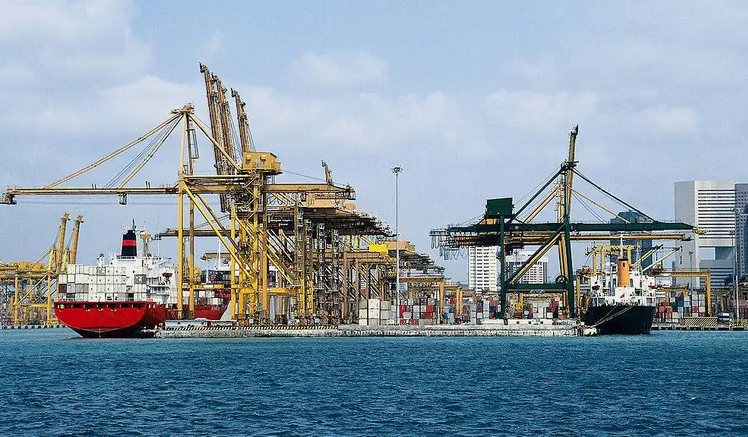
- The “Jebel Ali Advantage”: As the world’s most productive port, Jebel Ali’s automated terminals can now process mega-vessels in under 24 hours. For our LCL (Less than Container Load) clients, our consolidation hubs in Ningbo and Guangzhou offer weekly sailings with rates as low as $18 per CBM.
B. Air Freight: The Speed of Changi to Dubai
For the high-tech, luxury, and pharmaceutical sectors, air freight is the gold standard.
- The Market: In 2026, air freight rates from Shanghai (PVG) or Shenzhen (SZX) to Dubai (DXB) are approximately $6.10 per kg for high-volume cargo.
- Transit Time: 3–5 days door-to-door. With Dubai World Central (DWC) expanding, we now offer seamless “Air-to-Air” transshipment for goods bound for Africa via the UAE.
C. Multimodal: The “Sea-Air” Hybrid
One of our most popular products in 2026 is the Sea-Air hybrid. Goods arrive at Jebel Ali by sea and are trucked to DXB/DWC for air transport to Europe or Africa. This offers 50% of the cost of air freight with 50% of the speed of sea freight.
3. Navigating UAE Customs: The 5/5 Rule
UAE Customs is world-renowned for its “Paperless” efficiency, but the penalties for non-compliance have never been higher.
Standard Duties and VAT
As of 2026, the standard tax structure remains:
-
- Customs Duty: 5% of the CIF (Cost, Insurance, and Freight) value for most goods.
- VAT: 5% (Calculated on the CIF value + Customs Duty).
Strategic Note: Businesses that are VAT-registered in the UAE can often recover the import VAT through their quarterly returns, making it a “cash-flow” exercise rather than a pure cost.
Anti-Dumping and Special Duties
In 2026, the UAE has implemented stricter Anti-Dumping measures on specific Chinese exports, including certain ceramic sinks, lead-acid batteries, and aluminum alloys. As your forwarder, we provide a “Pre-Shipping Tariff Check” to ensure your goods aren’t hit with a 30–50% surprise duty upon arrival.
4. The Digital Frontier: AI and Blockchain in Forwarding
In 2026, a freight forwarder’s value is as much about bits as it is about boxes.
-
-
- Unified Customs: We utilize the UAE’s Unified Customs Platform, allowing for pre-clearance while the vessel is still in the Indian Ocean.
- Blockchain Bills of Lading (eBL): Gone are the days of lost paper documents. In 2026, 85% of our China-UAE shipments use eBLs, allowing for instant title transfer and cargo release.
- AI Route Optimization: We use predictive AI to detect port congestion in Singapore or Colombo, rerouting your cargo in real-time to avoid the “Blank Sailing” delays that plagued the industry in previous years.
-
5. Risk Management: The 2026 Outlook
No supply chain is without risk. For the China-UAE lane, we focus on:
-
-
- The CNY Surge: With Chinese New Year falling on February 17, 2026, January is a “Peak of Peaks.” Shippers who do not book 3–4 weeks in advance will face “Rolled Cargo” and 40% rate hikes.
- Climate and Humidity: The UAE’s extreme heat (reaching 50°C in Summer) means that sensitive cargo—electronics, cosmetics, and food—must be shipped in Reefer (Refrigerated) Containers or utilize thermal blankets to prevent “Container Rain.”
-
6. E-commerce: The DDP and DDU Revolution
The rise of TikTok Shop, Noon, and Amazon.ae has made the DDP (Delivered Duty Paid) model the most requested service for SMEs.
-
-
- The “Door-to-Door” Experience: We handle everything from the factory in Yiwu to the customer’s doorstep in Dubai or Abu Dhabi.
- Micro-Fulfillment: For high-frequency sellers, we provide bonded warehousing in the Dubai South (DWC) Free Zone. You ship in bulk to our warehouse, and we handle the “Last-Mile” delivery across the GCC within 24–48 hours.
-
7. Sustainability: The Green Shipping Corridor
As the UAE follows up on its “Net Zero 2050” goals, we are proud to offer “Green Logistics” solutions.
-
-
- Carbon Tracking: Our 2026 dashboards provide a per-shipment carbon footprint report.
- Sustainable Fuel: Many of our partner carriers (Maersk, CMA CGM) now offer methanol-powered vessels on the Asia-Gulf route, helping our clients meet their corporate ESG mandates.
-
Conclusion: Bridging the Dragon and the Falcon
Logistics between China and the UAE is a sophisticated dance of technology, law, and geography. As the UAE continues to position itself as the “Gateway to the World,” the businesses that succeed will be those with the most transparent and compliant supply chains.
As your freight forwarding partner, we don’t just move freight; we provide a risk-mitigation strategy. We manage the volatility of the sea, the complexity of the customs code, and the urgency of the market so that you can focus on your core mission: growing your brand in the world’s most dynamic trading hub.
Quick Reference: 2026 Shipping Guide (China to UAE)
|
Mode |
Transit Time |
Cost Level |
Best Suited For |
|---|---|---|---|
|
Sea (FCL – Jebel Ali) |
16–22 Days |
$ |
Construction, Machinery, Furniture |
|
Sea (LCL) |
18–25 Days |
$ |
SMEs, Fashion, Small Equipment |
|
Sea-Air Hybrid |
10–14 Days |
$$ |
Urgent Retail, High-Value Consumer Goods |
|
Air Freight |
3–7 Days |
$$$$ |
Electronics, Pharma, Samples |


No reply content