
Introduction: The Geopolitical and Economic Nexus
As we navigate 2026, Myanmar’s position in the global supply chain has shifted from a frontier market to a critical strategic node. For Chinese manufacturers and international businesses, the China-Myanmar Economic Corridor (CMEC) is the “short circuit” that bypasses the Malacca Strait, offering a direct gateway to the Indian Ocean.
As a freight forwarder, my role has evolved. We are no longer just booking space on trucks or ships; we are managing RCEP-driven tax optimizations, navigating TradeNet 2.0 digital hurdles, and choosing between sea, road, and the emerging rail networks. This guide explores the mechanics of this corridor in today’s high-tech, high-compliance environment.
1. The RCEP Factor: Harmonizing the Trade Lane
The Regional Comprehensive Economic Partnership (RCEP) entered its fifth year of maturity in 2026. For our clients, this is the most significant tool for cost reduction.
Preferential Tariffs and Form RCEP
Starting in May 2025, Myanmar fully implemented its reciprocal tariff reduction schedule.
- The Benefit: Nearly 90% of industrial goods traded between China and Myanmar now qualify for zero or reduced duties.
- The Forwarder’s Role: We ensure your Form RCEP is electronically filed through China’s GACC and synchronized with Myanmar’s MACCS (Automated Cargo Clearance System). In 2026, a “paperless” origin certificate can shave 48 hours off border wait times.
2. Choosing Your Mode: Sea, Land, or the New Rail
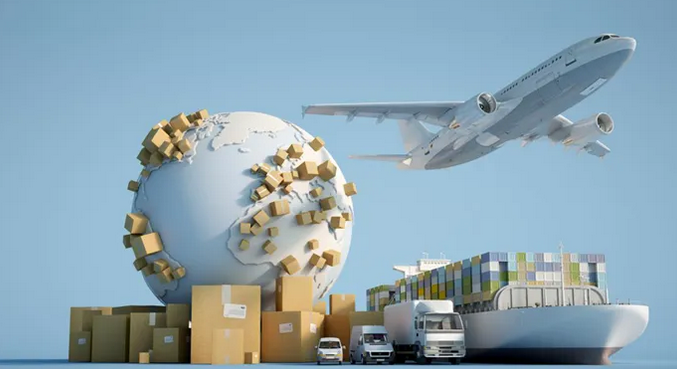
Myanmar offers a unique “Tri-Modal” landscape that allows shippers to balance cost, speed, and safety.
A. Ocean Freight: The Traditional Heavyweight
Ocean freight remains the most cost-efficient method for bulk commodities and heavy machinery.
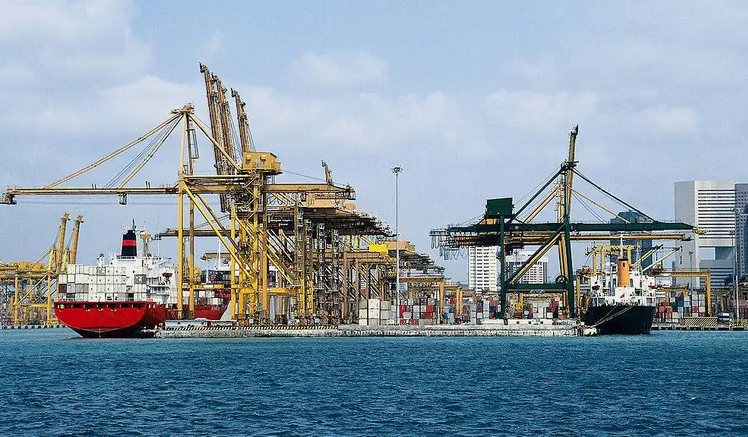
- Key Ports: Shipping from Shenzhen, Nansha, or Shanghai to Yangon (Thilawa).
- 2026 Rates: FCL rates have stabilized at roughly $500 per 20GP and $1,000 per 40HQ for the South China-Yangon route.
- Transit Time: 12–18 days. It is the best choice for construction materials and large-scale consumer goods.
B. Land Freight: The Border Expressway
The land route through Yunnan Province is the “expressway” of China-Myanmar trade.
- Key Border Crossings: The Ruili-Muse and Mengding-Qingshuihe ports are the primary gateways.
- Transit Time: 3–7 days (Door-to-Door from Kunming to Mandalay).
- Cross-Border Trucking (FTL/LCL): In 2026, we utilize GPS-locked trucks to navigate the mountainous terrain, providing real-time visibility that was impossible five years ago. This mode is ideal for electronics and seasonal fashion.
C. The Rail Revolution: The CMEC Rail Link
A major highlight of 2026 is the progress on the Mandalay-Muse railway.
- The “Iron Silk Road”: By connecting the Chinese rail network in Yunnan to the heart of Myanmar, we can now offer Multimodal Rail-Road solutions that are 30% cheaper than pure trucking and twice as fast as sea freight.
3. Navigating Myanmar Customs: TradeNet 2.0 and Licensing
Myanmar’s customs and trade environment underwent a massive digital overhaul on January 1, 2026, with the introduction of Announcement No. 4/2025.
The Import License Hurdle
- TradeNet 2.0: All import licenses must now be approved via the online Myanmar TradeNet 2.0 system.
- Strict Limits: Companies are restricted to one application per month per HS code. As your forwarder, we provide “Slot Management”—planning your shipments a month in advance to ensure your license is ready when the goods arrive at the border.
- Licensing Lifespan: Licenses are automatically canceled if not approved within 180 days. We manage this timeline to prevent “Dead Cargo” situations at the Ruili border.
Currency and Foreign Exchange
The Central Bank of Myanmar (CBM) recently relaxed regulations (Notification 2/2026). Exporters only need to convert 15% of earnings into MMK (down from 25%), which has stabilized the liquidity of the Kyat and made international payments for freight services more predictable.
4. Port Operations: Yangon vs. Thilawa
In 2026, the distinction between Myanmar’s ports is critical for your logistics strategy.
- Yangon Port: The traditional hub, closer to the city center, ideal for general retail and LCL cargo.
- Thilawa SEZ Port: A modern, deep-water facility. It is the preferred terminal for Industrial Equipment and Automotive shipments, offering faster clearance and better storage facilities for sensitive goods.
5. Risk Management: Security and Seasonality
Logistics in Myanmar requires a proactive approach to risk.
- Regional Security: The “Northern Myanmar” corridor remains sensitive. As forwarders, we monitor the Ruili-Muse crossing daily. If land routes are disrupted, we have “Emergency Sea-Switch” protocols to reroute cargo through the Port of Yangon within 24 hours.
- Monsoon Season: From June to September, heavy rains can impact land-freight transit times. We recommend All-Risk Cargo Insurance and specialized tarping for all land-based shipments.
6. E-commerce and Last-Mile Delivery
The rise of digital commerce in Myanmar has created a demand for specialized B2C logistics.
- Cash-on-Delivery (COD): Despite the digital push, COD remains the king of Myanmar e-commerce. We provide integrated “Ship-and-Collect” services.
- Consolidation Hubs: We operate warehouses in Guangzhou and Kunming where small parcels are consolidated into “Master Containers,” reducing the per-unit shipping cost for small sellers.
7. How to Choose Your 2026 Forwarder
In today’s market, a forwarder must be more than a booker; they must be a Compliance Officer. Look for:
- MACCS/TradeNet 2.0 Integration: Can they see your license status in real-time?
- Multimodal Capacity: Can they switch from land to sea if the border closes?
- Local Expertise: Do they have a physical office in Mandalay or Yangon to handle local “Red Tape”?
Conclusion: Bridging the Future
The China-Myanmar trade bridge is a testament to resilience and strategic growth. Whether you are shipping a container of solar panels to a factory in Bago or a pallet of textiles to a shop in Yangon, the key to success is compliance and agility.
As your freight forwarder, my mission is to simplify the complex. We handle the HS codes, the TradeNet filings, and the border logistics so that you can focus on building your brand in the world’s most strategic emerging corridor.
2026 Quick Reference: Shipping from China to Myanmar
|
Mode |
Route |
Transit Time |
Cost (Est. 2026) |
|---|---|---|---|
|
Sea Freight (FCL) |
South China to Yangon |
12–18 Days |
$500–$1,000 |
|
Land Freight (FTL) |
Kunming to Mandalay |
3–7 Days |
$1,200–$2,500 |
|
Multimodal Rail |
Chongqing to Muse (Rail) |
5–8 Days |
Competitive |
|
Air Freight |
SZX/CAN to RGN |
1 |


No reply content