Container House Co., Ltd
The Prefabricated Future: Why China’s Custom Modular Home Suppliers are Redefining Global Construction
Imagine a sprawling residential community in Western Canada, a boutique eco-lodge in the Scandinavian wilderness, and a multi-story student accommodation complex in urban Australia. On the surface, they share little in common. Yet, a remarkable thread connects them: their core structures were meticulously crafted, not amidst the noise and weather delays of their final locations, but within vast, climate-controlled facilities in China. This is the quiet revolution led by China’s custom modular home suppliers—a sophisticated industry moving far beyond simple container units to become the strategic partners for a faster, smarter, and more sustainable built environment worldwide.
From Basic Boxes to Bespoke Building Solutions
The global narrative around modular construction is shifting. Once perceived as a compromise for temporary or low-cost housing, it is now recognized as a superior methodology for quality, speed, and efficiency. China’s suppliers have been pivotal in this transformation. Their evolution began with exporting prefabricated components but has rapidly advanced to delivering fully customized, volumetric modules—entire sections of buildings complete with interior finishes, plumbing, electrical, and fixtures.
This shift from manufacturing products to providing building solutions is profound. Leading Chinese suppliers today operate as integrated Design for Manufacturing and Assembly (DfMA) partners. They collaborate with international architects, developers, and project owners from the earliest design phases, ensuring that aesthetic visions are translated into manufacturable, transportable, and rapidly assemblable modules. This requires a deep synthesis of architectural design, structural engineering, local building code compliance, and global logistics—a synthesis that has become their signature strength.
Core Competencies: The Engine of Precision
The value proposition of a top-tier Chinese modular supplier is built on four interconnected pillars of capability:
-
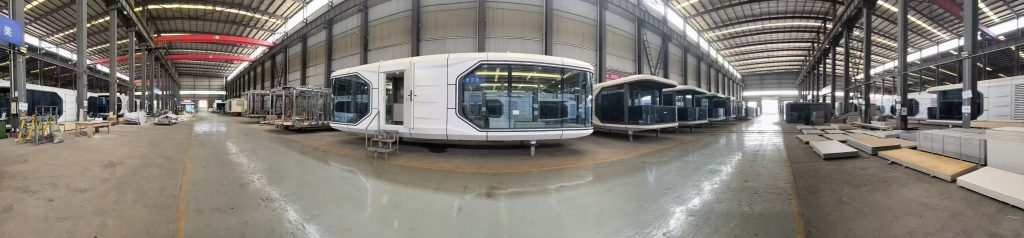
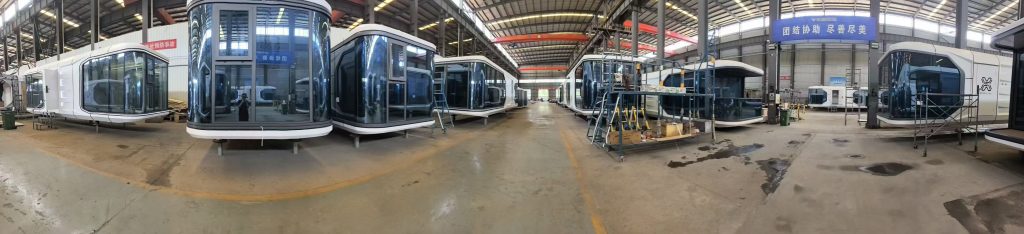
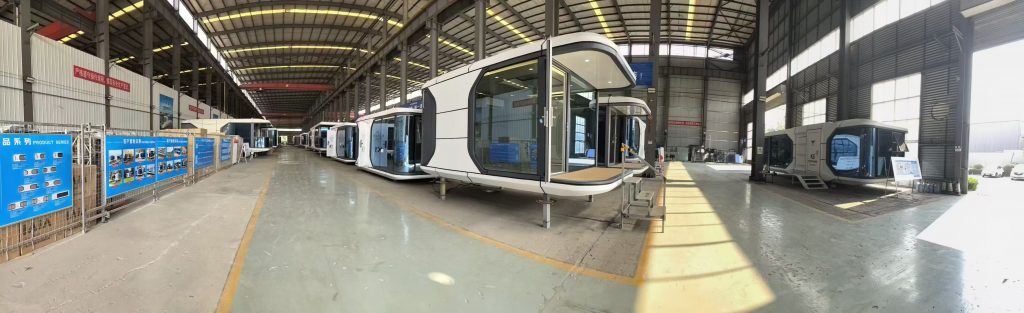
Industrialized Precision Manufacturing: At its core, the advantage is the factory environment. In facilities that resemble aerospace assembly lines more than traditional construction sites, precision is engineered into every step. Computer-controlled cutting and welding of steel frames ensure millimeter accuracy. Wall, floor, and ceiling panels are assembled in jigs, with integrated insulation, vapor barriers, and conduit for wiring installed before sealing. This controlled setting eliminates weather damage, reduces material waste by up to 70% compared to site-built methods, and allows for consistent, inspection-ready quality that is nearly impossible to achieve on-site.
-
Integrated Technology and Compliance: Modern modular construction is a digital-first process. Suppliers utilize advanced Building Information Modeling (BIM) to create a virtual twin of the entire project. This model coordinates every MEP (Mechanical, Electrical, Plumbing) system, clash-checks components, and generates precise fabrication data. Crucially, leading firms maintain in-house expertise in international building codes—from the IBC in the US to Eurocodes in Europe and the National Construction Code in Australia. They engineer their modules to not only meet but often exceed these standards, particularly in critical areas like seismic resilience, fire safety, and thermal performance, providing clients with certified, turnkey structural solutions.
-
End-to-End Project Orchestration: The true test of a modular project is not just factory production, but the seamless transition from factory floor to finished building. Elite suppliers have mastered this complex ballet. They design modules with logistics in mind, determining optimal size and weight for road and sea transport. They handle the entire international shipping, customs clearance, and port logistics process. On-site, they provide detailed Assembly Sequence Documents (ASDs) and can deploy their own supervisory teams to work with local crane operators and crews, ensuring a swift, safe, and precise stacking and connection process that can see a building enclosed in weeks, not months.
-
Material Sourcing and Sustainable Innovation: Leveraging China’s unparalleled manufacturing supply chain, these suppliers have access to a vast ecosystem of high-quality building materials at scale. This allows for significant cost advantages without compromising on specifications. Furthermore, they are at the forefront of sustainable construction innovation. This includes the use of recycled steel, low-VOC interior materials, advanced phase-change materials for thermal mass, and integration of renewable energy systems like pre-installed solar roof panels. The factory process itself is inherently less wasteful and less disruptive to the building site’s local ecology.
The Strategic Partnership: A New Model for Development
For overseas clients, engaging with a Chinese modular supplier is a collaborative, phased partnership that redefines the traditional construction timeline.
-
Phase 1: Feasibility and Co-Design: The process begins with a collaborative review of architectural plans. The supplier’s engineering team advises on modularization strategy—how to “chunk” the design into transportable units that maximize efficiency and structural integrity. This phase optimizes the design for manufacturing, identifying cost and time savings while respecting the architectural intent. A fixed-price proposal with a clear timeline is established at this stage.
-
Phase 2: Parallel Processes – The Critical Advantage: This is where the modular method delivers its greatest benefit: concurrency. While site work (foundation, utilities) begins in the destination country, module fabrication proceeds in parallel in China. This overlap can slash overall project timelines by 30-50%. During fabrication, the client receives weekly progress reports with photos and videos, offering unprecedented transparency and control.
-
Phase 3: Precision Logistics and Swift Assembly: The supplier manages the complex shipment of modules, often in a carefully sequenced order matching the assembly plan. On-site, with the foundation ready, modules are craned into place, connected, and sealed. The building is made weather-tight in a matter of days. This “just-in-time” delivery and rapid assembly drastically reduce local labor costs, site management overhead, and neighborhood disruption.
-
Phase 4: Completion and Long-Term Support: Following mechanical connections and a commissioning process, the project achieves completion in a fraction of the time. Reputable suppliers offer robust warranties on the structure and systems and provide comprehensive Operation and Maintenance manuals for the client.
Navigating Trends and Building the Future
The industry is dynamically adapting to global megatrends:
-
The Housing Affordability & Speed Crisis: For governments and developers facing acute housing shortages, modular construction from China offers a proven, scalable solution to deliver high-quality social housing, student dormitories, and workforce accommodations rapidly and within budget.
-
Resilience and Disaster Relief: The ability to deploy durable, permanent housing and medical facilities in weeks makes modular construction an invaluable tool for post-disaster recovery and for creating resilient community assets designed to withstand extreme weather.
-
The Rise of Smart, Sustainable Buildings: Modules are increasingly being fabricated as “chassis” for smart home technology. Pre-installed wiring for integrated IoT systems, energy management panels, and high-performance building envelopes are becoming standard offerings, creating buildings that are not only fast to build but are also cheaper to operate and future-ready.
-
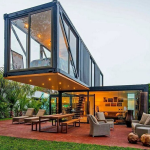
Luxury and Architectural Distinction: The market has moved decisively beyond bland, boxy designs. Suppliers are now executing complex architectural visions featuring high-end finishes, dramatic cantilevers, and mixed-material façades (e.g., combining modular concrete with timber cladding), proving that customization and design excellence are hallmarks of modern modular construction.
Conclusion: Partnering for a Transformative Build
Choosing to partner with a leading Chinese custom modular home supplier is a strategic decision that transcends sourcing. It is an embrace of a more efficient, controlled, and sustainable model of creating the built environment. These suppliers are not simply manufacturers; they are specialists in the science and logistics of building better, faster. For forward-thinking developers, architects, and governments, this partnership represents a powerful tool to mitigate risk, control costs, accelerate revenue generation, and meet ambitious sustainability targets. In an era defined by the urgent needs for climate resilience, housing accessibility, and construction innovation, China’s modular building suppliers have positioned themselves not as a cheap alternative, but as essential enablers of the future of construction, one precisely engineered module at a time.


No reply content