
Robot Vacuum Suppliers in Suzhou China

0. Framing the question correctly
When people ask about “Chinese robotic vacuum suppliers,” they usually mean one of three things:
-
The consumer-facing brands that sell on Amazon, in big-box retail, or on live-stream platforms.
-
The OEM/ODM factories that actually design, tool, mold, assemble, and box the machines.
-
The Tier-2/Tier-3 component & process suppliers—motors, pumps, batteries, sensors, optics, plastics, metals, adhesives, PCBA lines, test rigs, and certification partners—without which no robot ships at scale.
If you want a serious 3,000-word analysis, you have to treat the industry as a layered supplier network, not just a list of brand names. That’s what this piece does.
1. Why “China” dominates the supplier layer (and why it isn’t just cheap labor)
The popular story is “low cost.” The real story is integration density:
-
Precision plastics + high-speed automation: Robotic vacuums are mechanical devices with tight tolerances (gear trains, suspension wheels, brush housings, sealing paths). The Pearl River Delta (PRD) and parts of the Yangtze River Delta give you world-class injection molding, die-making, and surface finishing within short radii.
-
Motor & pump cluster effects: Small high-RPM brushless motors, gear-motors, water pumps, and valve assemblies are everywhere—because those same skills also serve power tools, personal care appliances, and automotive micro-mobility.
-
Sensing & optics supply: LDS/lidar-like rotating modules, structured-light components, IR cliff sensors, ToF, and camera modules sit near the broader phone/CCTV/auto-ADAS supply base.
-
Battery intimacy: Proximity to Li-ion cell production, BMS know-how, and pack assembly means fewer logistics shocks and faster qualification loops.
-
Embedded talent + EVT/DVT rhythm: The difference between a prototype and a mass-producible robot is reliability under dust, hair, heat, and drops. That learning lives in supplier organizations that have seen hundreds of SKUs.
So “made in China” here really means “designed, tooled, tested, and iterated inside a hyper-connected supplier web.”
2. Mapping the supplier stack: From system integrator down to raw process
To see the real power structure, draw the stack:
2.1 System level – ODM / JDM / OBM
Many “brands” are actually marketing, firmware UX, and app/platform layers sitting on top of an ODM or Joint-Design-Manufacturer that owns:
-
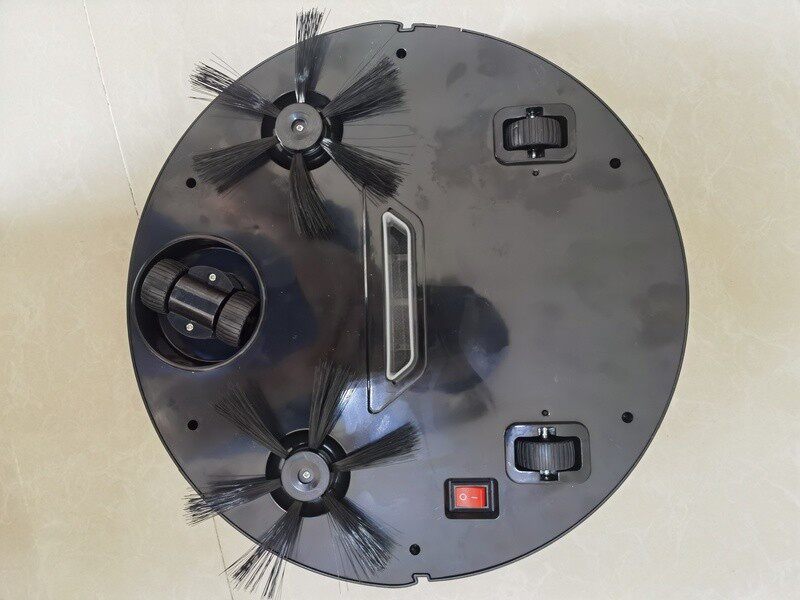
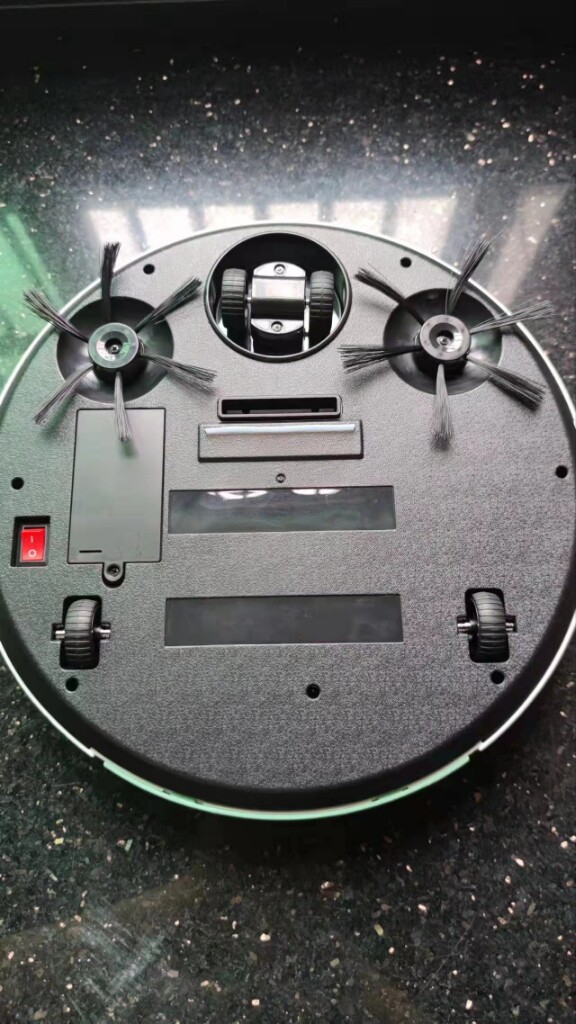
Mechanical architecture (wheel drive, suspension, brush-roll engagement, dust-bin airflow path)
-
Core navigation stack & sensor fusion (SLAM, occupancy mapping, obstacle avoidance)
-
Reliability architecture (MTBF logic, stress tests, lifecycle endurance)
-
Sourcing & vendor management
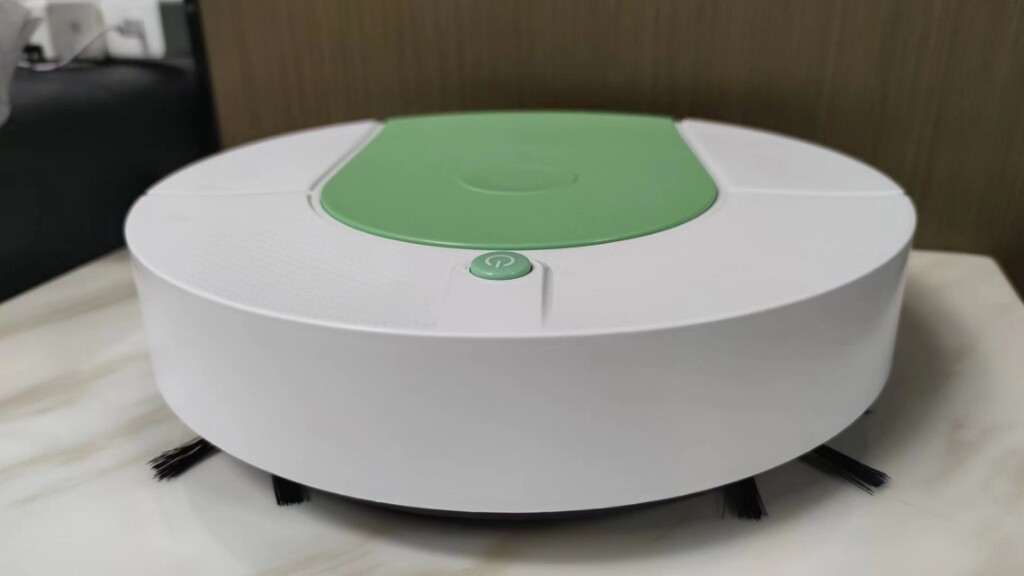
Some suppliers specialize in white-label platforms: you pick wheelbase size, dustbin vs auto-empty dock, mop-only vs vac+mop, and they hand you a mostly turnkey BOM and enclosure. Others do JDM: you co-develop IP, split firmware ownership, and differentiate via software personality, voice-integration, or cleaning algorithm tuning.
2.A Quick note on OBM (Original Brand Manufacturers)
There are also domestic players who do everything in-house—design, mold, SMT, final assembly, service network—and export under their own name. But even these “vertically integrated” firms still rely heavily on specialized sub-suppliers for magnets, bearings, laser diodes, lenses, polymer brushes, filtration media, and certification testing. No one is truly islands.
3. The critical Tier-2 subsystems (the suppliers that make the spec)
If you open a modern robot, the real supplier moats are invisible:
3.1 Drive & cleaning actuation
-
Brushless main motor (suction fan): High-RPM BLDC with impeller geometry tuned for pressure-vs-airflow tradeoffs; suppliers compete on acoustic signature, bearing life, and thermal margin.
-
Brush-roll motor & gearbox: A torque-dense gear-motor that survives jammed hair events; suppliers who can deliver consistent backlash control and lubrication stability win.
-
Side-brush & mop-drive micro-motors: Cheap on paper, but warranty killers if imbalance causes vibration that shakes screws loose over months.
-
Water pump & dosing valve: Vital for any mopping. The moat here is not “pump exists” but drip repeatability, anti-clog design, and material compatibility with hard water & cleaning agents.
Supplier truth: Cleaning performance is 30% software path planning, 70% air-path + brush mechanics + fluidics. The best suppliers obsess over turbulence, seal gaps, and brush-pile density.
3.2 Navigation & perception (the sensor fusion layer)
Every generation moves the arms race:
-
LDS (spinning lidar-style rangefinding) for fast loop closure & reliable room-scale mapping.
-
Low-profile solid-state ranging (ToF/radial arrays) for height-limited chassis.
-
Optical flow / downward tracking for odometry.
-
3D obstacle avoidance using stereo/structured-light/camera-AI hybrids.
The suppliers here aren’t just “sensor vendors.” They are:
-
Module assemblers who align optics, calibrate bias, and burn EEPROM constants per unit.
-
Calibration-rig operators (vibration tables, temp chambers, beam-alignment jigs).
-
Software partners providing SLAM primitives, localization filters, and dynamic-cost-map logic.
In practice, a capable supplier will maintain three parallel navigation SKUs:
-
Value (IR/cliff + gyro + bump + basic LDS)
-
Mainstream (fast LDS + optical flow + smarter obstacle detection)
-
Premium (multi-modal perception + AI-class segmentation for shoes/cords/pet waste)
That tiered approach is why Chinese supply houses can flood multiple price brackets simultaneously.
3.3 Power & energy systems
-
Battery pack assembly: Usually 18650/21700-based or pouch packs, with BMS handling balancing, over-discharge, and temperature derating.
-
Contact charge vs dock-plate alignment: The dock is a separate electromechanical product; suppliers who nail spring-force, wipe-clean contacts, and corrosion resistance own the after-sales curve.
-
Auto-empty docks / water-refill docks: These introduce compressors, cyclones, float switches, solenoid valves, and UV/ozone debates. The supplier winners are the ones who treat the dock as a second robot, not an accessory.
3.4 Plastics, seals, filtration, and wear items
-
HEPA media sourcing & pleat geometry
-
High-abrasion brushes & squeegee lips
-
Door-lip wheel ramps & carpet-transition climb angles
-
Acoustic foams & damping grommets (because noise complaints drive returns)
These look commodity, but they decide whether a SKU ages gracefully or becomes a returns disaster.
4. The PRD “factory OS”: How suppliers actually ship volume without quality collapse
When you hear “China can iterate fast,” this is what it means mechanically:
4.1 Tooling velocity
-
Multi-cavity molds, hot-runner systems, and in-house toolrooms let suppliers go from T0 to stable CPK in weeks, not quarters.
-
Local EDM, CNC, and surface-texture shops mean design changes don’t stall because a texture plate or ejector pin needs adjusting.
4.2 SMT + functional test culture
-
High-mix SMT lines handle mainboards, dock boards, display/flex assemblies.
-
FCT (Functional Circuit Test) and ICT (in-circuit) are paired with end-of-line “clean-run” stations where robots drive a mapped loop, measure current curves, check suction delta, and log sensor offsets.
-
Good suppliers keep a golden-reference fleet—robots pulled weekly from line, run 200+ hours, teardown-audited, then compared against vibration/acoustic fingerprints.
4.3 Reliability labs as supplier gatekeepers
You can tell a mature supplier by its lab, not its showroom:
-
Drop/dust/hair tangle/thermal chamber/humidity soak
-
Wheel traction pull-tests on carpet grades
-
Brush-roll stall-current & thermal trip validation
-
Dock misalignment abuse (push it half-off, retry, repeat)
-
ESD & surge on charging pins
These labs exist because the retail channel punishes early failure hard: one bad batch on a major platform can kill a brand for years.
5. Commercial models: How suppliers make (and sometimes lose) money
5.1 The margin map
-
White-label / low-price platforms: Margin lives in standardization, shared tooling, and pushing volume through a proven chassis. Risk is commoditization + support overhead.
-
Mid/high ODM & JDM: Margin comes from architecture ownership—if the supplier controls the dock mechanism, the airflow core, and the calibration IP, they become hard to replace without redesign costs.
-
Component specialists: Make money by being the only shop that can hold tolerance on a pump, a gear train, or an optical alignment consistently enough for a global recall-free launch.
5.2 MOQ, tooling, and the “hidden” costs
Buyers often underestimate:
-
Tooling amortization & steel class (you want hardened steel for high-volume brush housings)
-
Spare-part commitments (filters, side brushes, bins, wheels): suppliers must plan 3–5-year continuity
-
Certification re-runs when you change even a gasket, a motor winding, or a dock contact profile
-
After-sales logistics: cross-border RMA is where slim margins evaporate
The strongest supplier relationships are built on total-landed-quality, not the lowest ex-works price.
6. Export & compliance: The supplier capabilities that keep robots legal abroad
A big part of the “China supplier” story is certification readiness:
-
Electrical safety: CB scheme, IEC/UL paths for battery & charger (including battery containment logic).
-
EMC/RF: FCC/CE for Wi-Fi/Bluetooth, plus immunity under motor-noise conditions (brushless PWM can be brutal if grounding/shielding is lazy).
-
Material & eco: RoHS/REACH, packaging compliance, battery transport rules (UN38.3, MSDS, packaging instructions).
-
Dock safety: Anti-pinch, creep-motion limits, and ensuring auto-empty docks don’t aerosolize dust into unsafe zones without filtration.
Sophisticated suppliers bake these into DFC (Design for Compliance) so you don’t discover six weeks before launch that a motor driver radiates past a limit.
7. Innovation cycles: Why the supplier base keeps leapfrogging itself
The industry runs on 12–18 month platform cycles with rolling firmware updates. What drives the next leap isn’t “more suction number,” it’s:
-
Air-path efficiency + quieter high-static fans (so people actually run them at night)
-
Better obstacle semantics (not just “see object,” but “decide: step over, go around, avoid pet waste, lift mop”)
-
Dock ecosystems: auto-empty, mop-wash + dry, water-refill, detergent dosing—each adds pumps, valves, and hygiene requirements
-
Serviceability: clip-in wheels, user-replaceable brushes, accessible hair-cut ports → lower returns
Suppliers who can turn those into reliable BOMs win the retail shelf.
8. Risks inside the supplier network (what buyers & partners should watch)
8.1 Over-spec’d marketing vs under-engineered details
A classic failure模式:
-
Marketing sells “6000Pa” (meaningless without airflow & seal context)
-
But the dust-flapper hinge wears, or the brush-end cap backs out after 40 cycles
-
Returns spike, firmware patches pile up, and the model quietly dies
Good suppliers push back on spec theater and protect the unglamorous bits: fasteners, snap-fit retention, strain reliefs, and cable routing near moving parts.
8.2 Patent & IP tension
As the tech diffuses, navigation patents, dock mechanisms, brush-roll geometries, and UI/UX become friction points in cross-border sales. Mature suppliers maintain:
-
Freedom-to-operate reviews
-
Defensive publication or controlled licensing posture
-
Clean room designs for contested mechanisms
If you’re sourcing, insist on documented FTO awareness and a paper trail for why a mechanism looks the way it does.
8.3 Supply shocks & BOM volatility
Copper windings, magnetic materials, cells, and certain polymers move in price. The supplier’s job is:
-
Dual-source critical items (with revalidation)
-
Keep safety margins wide enough that a minor batch variance doesn’t break drop-test or thermal specs
-
Manage EOL on connectors/ICs without silent downgrades
9. How to evaluate a Chinese robotic vacuum supplier (practical checklist)
If your goal is procurement, joint development, or private-label, don’t start with glossy renders. Start here:
-
Walk the failure modes, not the featuresAsk: Show me the last three 10,000-cycle brush-tangle reports and the corrective action. The answers reveal competence faster than any demo run on a polished showroom floor.
-
Ask who owns the docking architectureThe dock is reliability-central. If the supplier treats it casually, your returns will not be casual.
-
Demand a DFC & test-plan reviewYou want to see: EMI pre-scans with motors running, dust-ingress plan, bin-seal validation, and charging-pin corrosion plan.
-
Push on spare-part economicsFilters, side brushes, mop cloths, and rollers are recurring revenue and churn drivers. A supplier who can’t quote a 3-year spare roadmap isn’t thinking like a durable business.
-
Check software governanceOTA pipeline, version tagging, rollback safety, privacy handling for any camera-based navigation, and app-permission discipline. This is where “hardware houses” either grow up or crack.
10. The strategic outlook: What “supplier dominance” will look like next
Looking ahead, the supplier edge is likely to shift further toward:
-
System-level reliability as brand (quietness, no-hair-jam frustration, docks that don’t smell)
-
Multi-function docks becoming the true differentiator (wash, dry, empty, refill, detergent—each step is a supplier mastery game)
-
AI perception commoditizing—which means competition moves downstream into mechanical cleanliness: airflow stability, brush self-maintenance, and odor/hygiene design
-
Regional compliance & sustainability reporting shaping BOM choices (more traceability, more documentation, more “boring” back-office excellence)
In that world, the winners won’t be whoever shouts loudest about suction numbers. They’ll be the supplier organizations that can industrialize complexity without letting failure creep back in.
Closing
When you say “Chinese robotic vacuum suppliers,” you’re really talking about a dense, specialized ecosystem—motor people, mold people, optics people, pump people, battery people, test-rig people, and the program managers who keep all of it aligned across cost, compliance, and time-to-shelf. The reason the region leads isn’t mystery; it’s the accumulation of thousands of boring, decisive decisions made inside factories and labs so that a small disc can roll across a messy living-room rug, day after day, without becoming a customer-service nightmare.


No reply content