
Custom CNC Machining Parts Manufacturer in Dongguan China
China
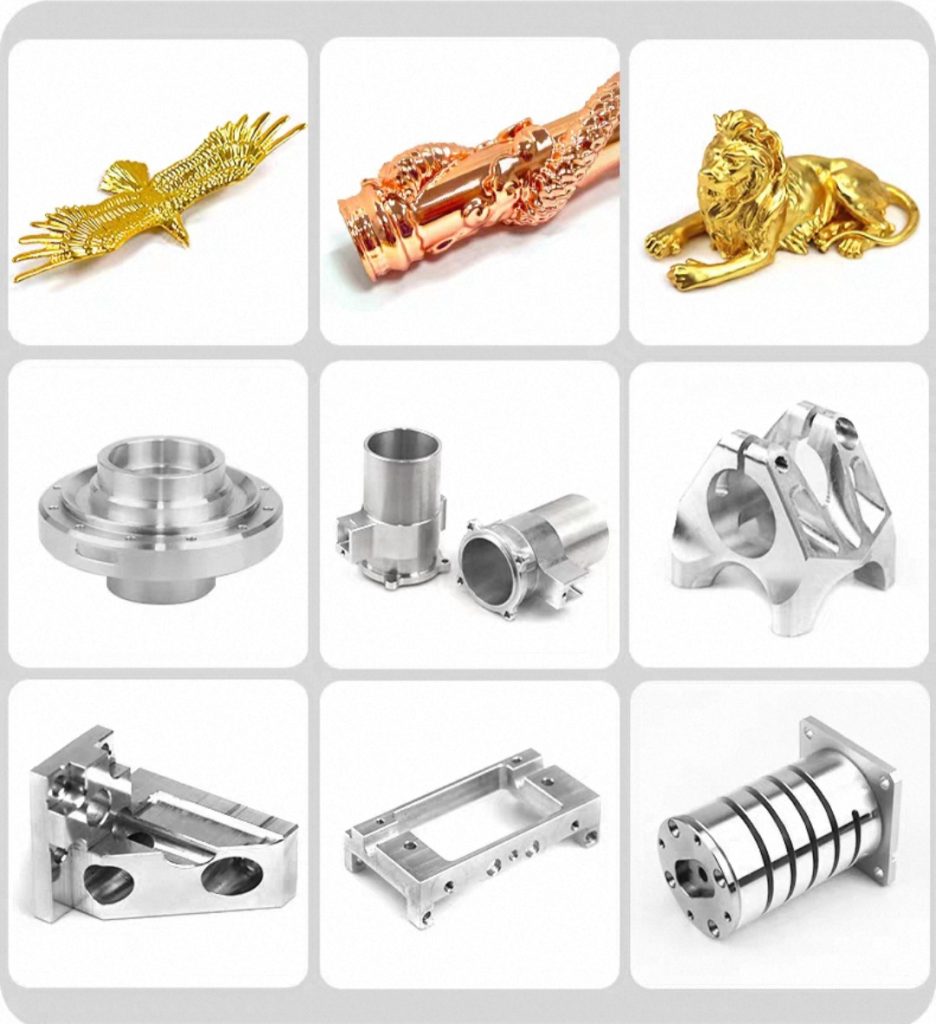
You need 30 pieces. Your supplier says the minimum order quantity is 500.
If you’ve ever been in this position — whether as a hardware startup founder trying to get a first production run out the door, an R&D engineer validating a design iteration, or a maintenance manager sourcing a discontinued replacement part — you know the frustration. You don’t need 500 pieces. You need 30. Ordering 500 means tying up thousands of dollars in inventory you won’t use for years, renting warehouse space, and watching your cash flow evaporate.
The traditional response from Western machine shops is predictable: “Our setup cost is the same whether we run 10 parts or 1,000. Below 250 pieces, the per-part price is too high to be worth our time.” It’s not malicious — it’s structural. Their business model is built around high-volume, long-run production. Low-volume work disrupts their scheduling, eats into their margins, and clogs their queue.
But here’s what they won’t tell you: there’s an entire tier of Chinese CNC factories built specifically to handle low-volume, high-mix orders profitably. These aren’t job shops doing you a favor by taking a small order — they’re manufacturers whose entire production system is designed around flexibility, fast changeovers, and batch sizes as small as 1 piece.
This article explains how they do it, what it costs, where the trade-offs are, and how to find a factory that will treat your 20-piece order with the same urgency as a 2,000-piece production run.
Why Western Suppliers Struggle with Low Volumes
To understand why MOQs exist, you need to look at how a typical Western CNC job shop prices and schedules work.
The Fixed-Cost Problem
Every CNC order carries a set of fixed costs that don’t change with quantity:
Fixed Cost Component |
Typical Range (US/EU Shop) |
|---|---|
CAM programming & toolpath generation |
$80 – $300 |
Fixture design & fabrication (soft jaws, custom plates) |
$150 – $800 |
Machine setup & first-article verification |
$120 – $250 |
Raw material procurement & cutting to size |
$50 – $200 |
If you order 500 pieces, these costs are spread across 500 units — adding perhaps $1.50–$3.00 per part. If you order 20 pieces, the same costs are spread across 20 units — adding $25–$75 per part. At that point, the shop is either losing money or charging you a price that feels outrageous.
Scheduling Economics
Most Western shops operate on a “batch and queue” model. They prefer to load a machine with a 4-hour or 8-hour run of identical parts. A 20-piece order might only take 45 minutes of spindle time — but it still requires a full setup, inspection, and paperwork. The machine is “down” for setup for nearly as long as it’s “up” cutting chips. That’s a utilization killer.
Material Sourcing Friction
Many Western shops don’t keep raw material in stock. They order from mills or distributors in minimum coil, plate, or bar lengths — often 12-foot bars or full 4×8 sheets. For a small order, they’re either paying cut-fees or buying excess material they may never use.
How Chinese Factories Make Low-Volume Work — Profitably
The factories that dominate the low-volume CNC segment in China have solved these problems through a combination of infrastructure, process design, and business model innovation.
1. High-Mix, Low-Volume Is the Default — Not the Exception
In manufacturing hubs like Dongguan, Shenzhen, and Kunshan, it’s common to find factories where the average order size is 15–80 pieces. Their entire operation is built around this reality:
-
Quick-change workholding systems (Schunk Vero-S, Erowa zero-point clamps) allow fixture swaps in under 60 seconds.
-
Standardized soft jaws are pre-machined and kept in racks, ready to be adapted for new parts in 20–30 minutes.
-
Digital job travelers (tablet-based production instructions) eliminate paper-based setup sheets and reduce changeover errors.
These shops don’t see a 30-piece order as a disruption. They see it as a Tuesday morning.
2. On-Demand Raw Material Access
In the Pearl River Delta and Yangtze River Delta, raw material wholesalers operate like hardware stores — but for industrial quantities. Need a 200×150×50mm block of 6061-T6? It’s cut from a plate and delivered to the factory floor within 2 hours. No minimum order, no mill lead time, no excess material sitting in inventory.
This eliminates one of the biggest MOQ drivers: material suppliers demanding full-bar or full-sheet purchases.
3. Tiered Production Lines
Sophisticated Chinese factories segment their floor into different cells based on order profile:
Production Cell |
Batch Size Focus |
Machine Type |
Typical Lead Time |
|---|---|---|---|
Prototype Cell |
1–5 pieces |
3-axis VMCs, manual mills |
2–3 days |
Low-Volume Cell |
10–100 pieces |
4-axis, 5-axis, automated tool changers |
5–10 days |
Bridge Production Cell |
100–500 pieces |
Pallet changers, lights-out capable |
10–18 days |
Mass Production Cell |
500+ pieces |
Multi-spindle, dedicated fixtures, automation |
20–35 days |
When you send a 30-piece order, it goes to the low-volume cell — not the mass production line. It’s not competing for machine time with high-volume jobs. This is how factories maintain both flexibility and efficiency.
4. Competitive Pressure Rewards Responsiveness
With thousands of CNC factories in Guangdong province alone, competition is intense. A factory that turns away small orders loses not just that order, but the relationship. Many factories actively court low-volume work because it’s a pipeline to future high-volume production. They know that today’s 30-piece prototype is tomorrow’s 3,000-piece production run — if they deliver.
The Cost Reality: Low Volume from China vs. High MOQ Local
Let’s put real numbers to this. Consider a custom aluminum 6061-T6 mounting plate with the following specs:
-
Dimensions: 120 × 80 × 12 mm
-
Features: 8 × M4 tapped holes, 2 precision locating pins, 1 deep pocket
-
Finish: Deburred, bead blasted
-
Quantity needed: 40 pieces
Cost Factor |
US Supplier (MOQ 300) |
Chinese Factory (MOQ 1, builds 40) |
|---|---|---|
Quoted unit price |
$28.50 (at 300 pcs) |
$62.00 (at 40 pcs) |
Setup / engineering fee |
$180 (amortized) |
$120 (amortized) |
Raw material (excess bought) |
$95 (full bar, 60% wasted) |
$28 (cut-to-size, zero waste) |
Shipping (domestic vs. DDP) |
$25 (domestic freight) |
$65 (DDP air express) |
Total cost for 40 pcs |
— (can’t order 40; forced to 300) |
$2,545 |
Total cost for 300 pcs |
$8,845 |
$18,720 (if scaled to 300) |
The key insight: At 40 pieces, the Chinese factory is the only viable option. At 300 pieces, the US supplier is cheaper per part — but you’re spending $8,845 upfront and sitting on 260 pieces of dead inventory. The Chinese factory’s total for 40 pieces is $2,545 — less than a third of the US 300-piece total.
And here’s the kicker: if you later need 300 pieces, the Chinese factory will quote $34–$38/part at that volume — still competitive, with no MOQ barrier to future reorders.
Case Study: Industrial Sensor Housing — 25 Pieces, Zero Inventory Risk
Part specs:
-
Material: Stainless Steel 304
-
Dimensions: 95 × 65 × 28 mm
-
Features: 4 × M3 threaded holes, 1 × Ø8H7 precision bore, IP67 sealing groove
-
Finish: Passivation, laser engraved serial number
-
Quantity: 25 pieces
-
End use: Field trial units for an IoT sensor startup
The problem: The startup’s US-based machine shop quoted $145/part at MOQ 250 ($36,250 total). The startup had $80,000 in seed funding and couldn’t justify spending nearly half of it on one component. They needed 25 units for field testing, not 250.
The Chinese factory solution:
Step |
Detail |
|---|---|
Supplier type |
Low-volume specialist in Dongguan, 15 CNC machines, dedicated prototype/low-vol cell |
Quote |
$78/part for 25 pieces (total $1,950) |
Lead time |
8 days ex-works (including passivation) |
Shipping |
DHL DDP to San Francisco, 3 days, $52 |
Total delivered cost |
$2,002 for 25 pieces |
Result |
Startup deployed field units on time, gathered customer feedback, iterated the design — and ordered a revised version (40 pieces) 4 months later |
The follow-up order: Because the relationship was established and the factory already had the CAM programs and soft jaws on file, the second order (revised design, 40 pieces) took 5 days and cost $68/part. No re-setup fee. No new fixture cost.
How to Find the Right Low-Volume Supplier
Not every Chinese CNC factory welcomes small orders. Many large-scale export manufacturers still enforce MOQs of 100–500 pieces. Here’s how to identify the ones that specialize in low-volume:
What to Look For
Signal |
What It Means |
|---|---|
Website mentions “prototype,” “low-volume,” or “bridge production” |
These are core service offerings, not afterthoughts |
No MOQ stated — or MOQ = 1 |
They’re set up for flexibility |
Quote turnaround under 12 hours |
They have dedicated quoting engineers and standardized costing |
Portfolio includes 1–50 piece orders |
They’re not just saying they do low-volume — they have proof |
Willing to quote multiple quantities (e.g., 10 / 50 / 200) |
They understand volume-price curves and are transparent about them |
In-house finishing or adjacent partnerships |
Anodizing, passivation, powder coating available without subcontracting delays |
What to Ask in Your RFQ
-
“What is your typical minimum order quantity for this part?” — If they say 100+, move on.
-
“Can you provide a quote at 10 pieces, 30 pieces, and 100 pieces?” — Tests their flexibility and pricing transparency.
-
“Do you charge a separate setup or engineering fee for low-volume orders?” — Some factories waive it; others itemize it. Know what you’re paying.
-
“How do you handle repeat orders? Are setup costs waived on reorders?” — A good factory will credit the initial setup against future volume orders.
Red Flags
-
MOQ negotiation feels like pulling teeth. If they’re reluctant to quote 20 pieces, they don’t want the business.
-
Quote is identical for 20 pieces and 200 pieces. They’re either padding the low-volume price or don’t understand cost structure.
-
No English-speaking project engineer. Communication friction on a 20-piece order will cost you more time than the parts are worth.
-
Require 100% upfront payment for new customers. Standard is 30% deposit / 70% before shipment. Full upfront on a small order is a sign they don’t trust you — or worse, you shouldn’t trust them.
Design Strategies to Reduce Low-Volume Costs
Since per-part costs are inherently higher at low volumes, smart design choices can bring the total down significantly:
1. Standardize Material Thicknesses
Specify standard plate or bar stock sizes (e.g., 12.7mm / 0.5″ or 25.4mm / 1″ for aluminum). Custom thicknesses require sawing from a thicker plate, adding cost and lead time.
2. Use Standard Threads
M3, M4, M5, #4-40, #6-32, #8-32 — these taps are in every tool crib. Special thread forms or non-standard pitches require special tooling that may not be justified for 20 pieces.
3. Avoid Tight Tolerances on Non-Critical Features
Every ±0.01mm callout adds inspection time. On a 20-piece order, that inspection time is a significant portion of total cost. Use ±0.05mm or ±0.1mm for non-critical dimensions.
4. Design for Single-Setup Machining
More setups = more fixture costs + more machine time. If you can redesign a feature so it’s accessible in one clamping, you can cut the per-part cost by 20–40% on low volumes.
5. Consider “As-Machined” Finish
Bead blasting, anodizing, and passivation add cost and lead time. For functional prototypes or internal components, “as-machined” (Ra 3.2) is often perfectly acceptable — and free.
Common Pitfalls in Low-Volume Sourcing
Pitfall |
How to Avoid It |
|---|---|
Hidden setup fees |
Ask for an itemized quote: material, machining, setup, finishing, packaging, shipping |
Surface treatment MOQs |
Some anodizing shops have 50-piece minimums. Confirm with your CNC supplier before specifying |
Color matching on small batches |
Anodizing color can vary between batches. For 20 pieces, slight variation is normal — don’t reject for cosmetic non-conformance unless it’s customer-facing |
Payment terms |
Never pay 100% upfront. 30/70 is standard. Some factories offer 30/60/10 (30% deposit, 60% before shipment, 10% after inspection) for established relationships |
Intellectual property concerns |
Use NDAs, work with export-focused factories (they protect IP to maintain their reputation), and avoid posting proprietary designs on public sourcing platforms |


No reply content