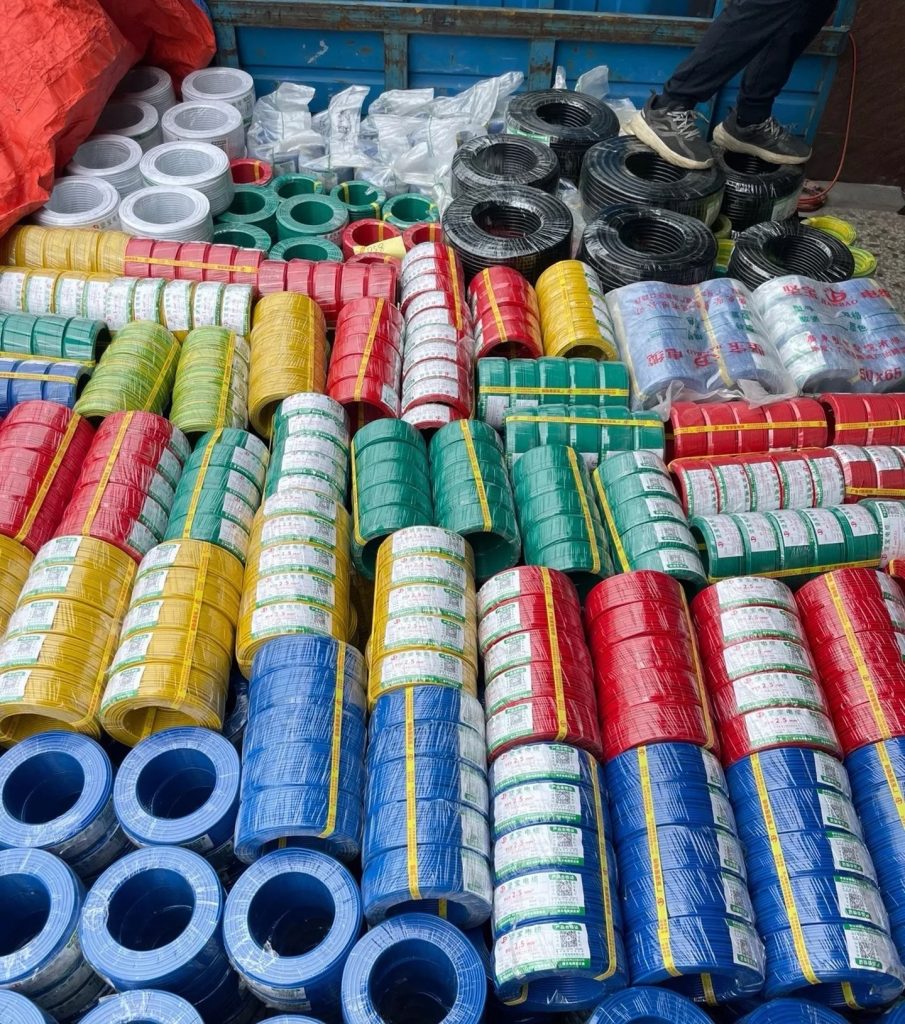
Navigating the Chinese industrial supply base for cable and wire products presents a classic risk-reward dilemma for global buyers. On one hand, China’s industrial wire and cable sector boasts the world’s most integrated supply chain, offering unmatched manufacturing speed, massive scale, and highly competitive pricing. On the other hand, the vast market range—from top-tier state-certified plants to small family-owned workshops—means that material quality, technical compliance, and trade execution can vary wildly.
For procurement managers, project engineers, and importers handling commercial, residential, or industrial power infrastructure, placing an import order involves much more than comparing unit costs per meter. A minor oversight in conductor cross-section, insulation compounding, or international certification can result in customs delays, failed site inspections, or disastrous thermal failure on-site.
Before issuing a Purchase Order (PO) or transferring a deposit to a Chinese cable manufacturer, evaluate these core operational and technical factors to ensure seamless trade and reliable material performance.
1. Conductor Material Integrity: Beyond the “Pure Copper” Label
Copper accounts for a dominant share of a standard cable’s bill of materials (BOM). Consequently, it is the primary target for cost-cutting by unethical suppliers.
┌────────────────────────────────────────────────────────────────────────┐
│                   CONDUCTOR MATERIAL SPECTRUM                          │
├────────────────────────────────────────────────────────────────────────┤
│  99.99% Oxygen-Free Copper (OFC) ──► Highest Conductivity & Safety    │
│  Electrolytic Tough Pitch (ETP)  ──► Standard Commercial Grade         │
│  Recycled/Impure Copper          ──► High Resistance & Overheating Risk│
│  Copper-Clad Aluminum (CCA)     ──► UNSAFE for Building Power Lines    │
└────────────────────────────────────────────────────────────────────────┘
The Oxygen-Free Copper (OFC) Standard
High-grade building wires and industrial cables require high-purity Oxygen-Free Copper (OFC) or Electrolytic Tough Pitch (ETP) Copper with a purity rating of 99.95% to 99.99%. High copper purity guarantees low DC resistance, high ductility, and optimal current-carrying capacity.
Spotting Undersized Conductors and CCA
- Nominal Cross-Section vs. Actual Resistance: Some factories sell “budget” wires that claim a nominal cross-section of 2.5 mm² but actually measure only 2.1 mm² to 2.2 mm². Always specify adherence to IEC 60228 Class 1 or Class 2 conductor resistance limits, rather than relying solely on physical diameter measurements.
- Copper-Clad Aluminum (CCA) Substitution: While CCA has valid niche applications (e.g., certain lightweight coaxial signal wiring), it is strictly unsafe for standard AC building distribution due to its high resistance, lower tensile strength, and vulnerability to galvanic corrosion at connection terminals. Ensure your contracts explicitly state: “100% Annealed Bare Copper Conductor; CCA strictly prohibited.”
2. Polymer Insulation Quality and Flame Retardancy
The insulation sheath protects the electrical system against environmental stress, moisture, abrasion, and thermal degradation. Evaluators must look closely at the polymer compounding quality.
Plasticizer Purity and Insulation Concentricity
Inexpensive PVC compounds often rely on high proportions of recycled plasticizers or excessive calcium carbonate filler. This makes the wire sheath brittle in cold climates and prone to cracking under tight bending radii. Furthermore, insulation must exhibit high concentricity—if the conductor sits off-center within the PVC sheath, the thinner wall side becomes an immediate point of dielectric breakdown under voltage spikes.
Fire Performance & Toxicity Ratings
Depending on destination building codes, verify whether your project calls for:
- Standard Flame Retardant (FR): Self-extinguishing under standard flame exposure (e.g., IEC 60332-1).
- Low Smoke Zero Halogen (LSZH / LSHF): Essential for public infrastructure (subways, high-rises, hospitals). In a fire, LSZH compounds release minimal non-corrosive smoke, giving occupants critical time to evacuate without inhaling toxic acid gases.
3. Factory Production Capability and Technical Verification
Distinguishing between genuine direct manufacturers and trading intermediaries is a critical step in Chinese sourcing.
A direct, well-capitalized manufacturing facility typically features continuous extruders, online laser diameter gauges, automatic coiling units, and an in-house high-voltage testing laboratory.
Buyers ──► Examine Factory Profiles ──► Direct Verification (e.g., China Cable and Wire)
  │                                           │
  ▼                                           ▼
Audit Technical Credentials ─────────► Review IEC / CE Test Reports
For instance, reviewing dedicated manufacturer hubs like the China Cable and Wire Manufacturing Co., Ltd. Profile gives buyers direct visibility into specialized factory operations, product ranges (such as BV, BVR, and 60227 IEC 01 standards), and structural export capabilities without dealing with unauthorized trading layers.
4. Certification & Customs Compliance Alignment
An import deal is only successful if the shipment clears destination customs smoothly and passes local grid authority audits.
- Target Market Standards: Verify that the factory holds verified test reports corresponding to your target market:
- Europe: CE, RoHS, CPR (Construction Products Regulation – EN 50575)
- International/Middle East/Africa: IEC 60227, IEC 60502, SASO/SABER, SONCAP
- North America: UL listing (essential for US/Canadian municipal building codes)
- Verify Certificate Validity: Always cross-reference test report certificate numbers directly with the issuing laboratory’s database (such as TÜV, SGS, Intertek, or DEKRA). Authentic manufacturers will readily provide clear, original test certificates with verifiable track numbers.
5. Commercial Terms, Quality Control, and Freight Execution
To maintain leverage throughout the purchasing cycle, establish a clear commercial framework before transferring funds.
The 30/70 Payment Rule & Quality Hold
The standard payment structure for Chinese industrial export is a 30% T/T deposit prior to production and a 70% balance payment due after completion. Contractually tie the final 70% payment to a successful Pre-Shipment Inspection (PSI) report conducted by an independent third-party auditor (or your own inspector).
Pre-Shipment Inspection Checklist
Instruct your inspection agent to test:
- Gross Coil Weight Uniformity: Weighing multiple 100m rolls across different batches quickly highlights potential conductor copper-cheating.
- Meter Mark Accuracy: Verify that the meter print on the outer sheath is clear, legible, accurate in spacing, and correctly lists your requested brand/specification.
- Packaging Integrity: Ensure inner coils are sealed in moisture-proof shrink wrap and packed into reinforced corrugated cartons or wooden reels suited for ocean container transport.
Recommended Sourcing & Trade Infrastructure Links
Establishing a resilient global procurement pipeline requires reliable trade tools, logistics channels, and verified supplier networks. Explore these essential resources:
- Direct Factory Showcase: Inspect specialized production capabilities, certifications, and technical product line-ups on the China Cable and Wire Manufacturing Co., Ltd. Hub.
- Global Trade Network: Source verified manufacturers and industrial suppliers across multiple market segments on the Global Trade Markets Portal.
- Industrial Manufacturer Directory: Connect with vetted OEM/ODM production facilities using the Verified Manufacturer Directory.
- Logistics & Customs Routes: Plan ocean freight, container loading, and customs documentation with the International Freight Forwarding Guide.
- Supply Chain Audit Best Practices: Learn how to conduct factory audits, verify business licenses, and perform pre-shipment inspections via the China Sourcing and Supplier Inspection Guide.
Frequently Asked Questions (FAQ)
How can I ensure a Chinese factory is not using recycled or impure copper?
Require the factory to provide a mill material certificate for the raw copper cathode/rod and specify a maximum conductor DC resistance limit (in \Omega/km at 20°C) per IEC 60228 in your purchase agreement. Have an independent inspector measure resistance on sample coils using a micro-ohmmeter prior to final shipment.
What is the typical Minimum Order Quantity (MOQ) for custom wire production?
For standard stock wires (e.g., standard colors of 1.5 mm² or 2.5 mm² BV wire), MOQs can be as low as 10 to 50 rolls (100m each). For custom jacket colors, special printing, or non-standard voltage insulation, factories usually require a minimum run based on extruder setup limits—typically 5,000 to 10,000 meters per line item.
Why do cable prices from different Chinese suppliers vary so drastically?
Price discrepancies usually stem from three factors:
- Conductor Weight & Purity: Lower quotes often hide undersized copper cross-sections or copper alloys.
- Polymer Grade: Pure virgin PVC vs. heavily filled recycled PVC scrap.
- Certification & Testing Costs: Fully compliant plants investing in ongoing TÜV/UL certifications and laboratory testing have higher overhead than uncertified regional workshops.
Should I choose FOB or CIF terms when ordering wire from China?
FOB (Free On Board) is generally recommended if you have an established relationship with a freight forwarder who understands heavy-cargo ocean container handling. Because copper wire is dense and heavy, optimizing container floor weight limits is critical. If you are new to importing, CIF (Cost, Insurance, Freight) or DDP (Delivered Duty Paid) can be simpler, provided you clearly specify destination port clearance terms.


No reply content