

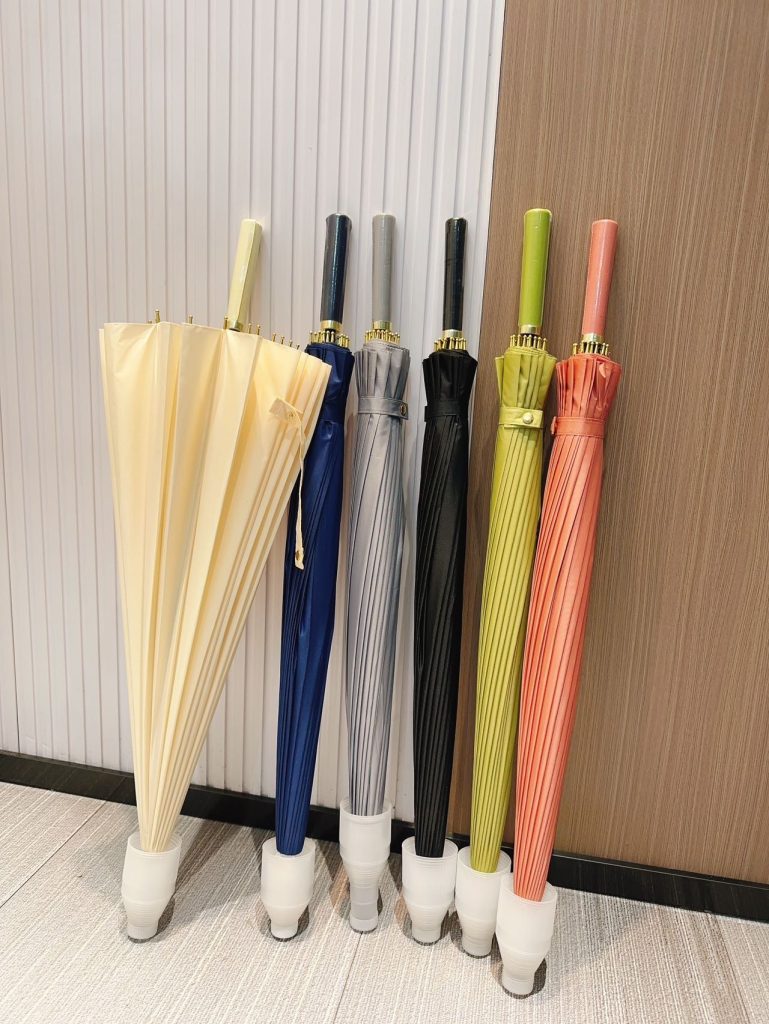

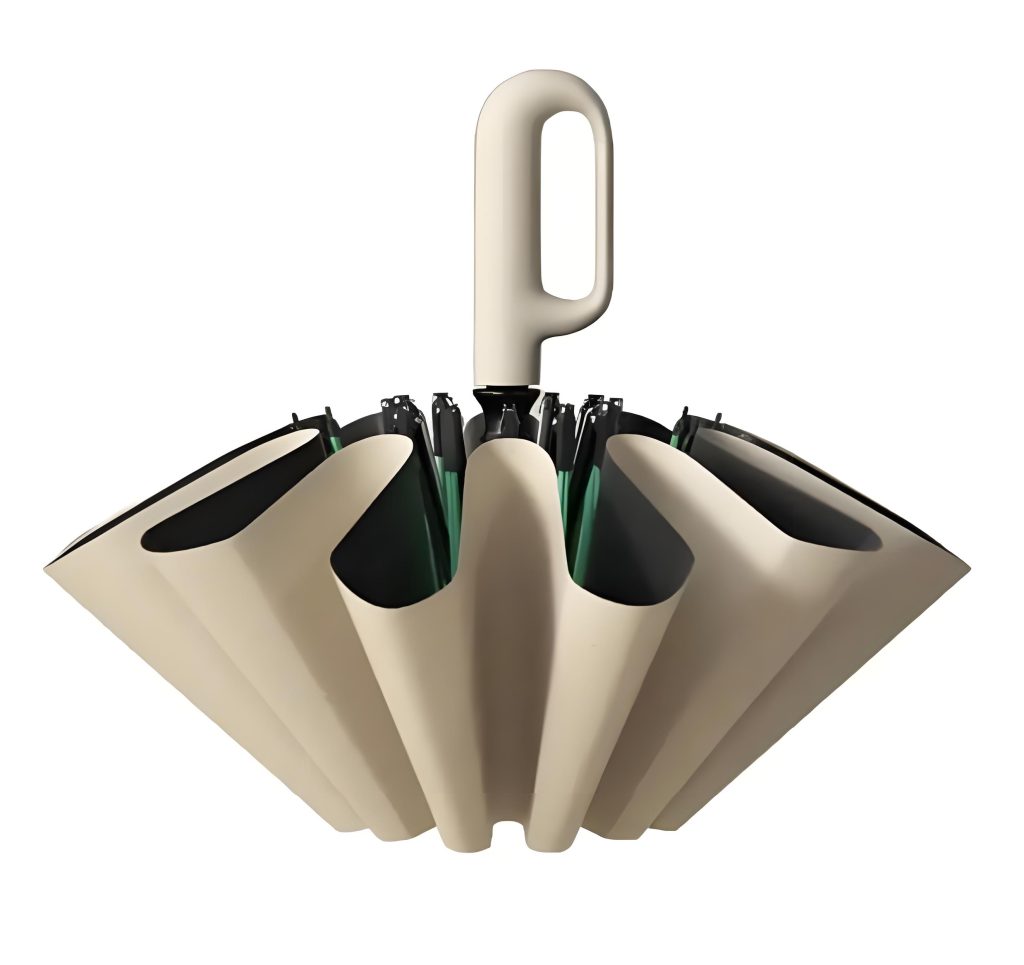
As we approach 2026, umbrellas are no longer perceived as mere accessories for rainy days. They have transformed into thoughtful combinations of fashion innovation, material engineering, ergonomic design, and functional reliability. This shift reflects broader consumer expectations: durability, lasting quality, aesthetic appeal, and optimized performance in diverse weather conditions.
This comprehensive forecast explores umbrella design trends across material science, structural engineering, user-centered ergonomics, and production excellence. Drawing on years of industry experience and rigorous quality systems, we present why 2026 will be the year of unparalleled umbrella advancement.
Part I: Material Revolution — The Core of Umbrella Performance
Materials are the foundation of umbrella quality. For 2026, the industry trend emphasizes high-density fabrics, advanced coatings, and lightweight yet robust structural components.
1. 300T High-Density Pongee Fabric: Stronger & Smarter
At the forefront of canopy innovation is 300T high-density pongee fabric. Compared to traditional 210T or 190T materials, 300T offers:
- Higher thread count → tighter weave → better water repellency
- Improved tensile strength, meaning fewer tears under wind stress
- Enhanced surface smoothness, reducing wet-stain marks
300T high-density fabric achieves superior water beading, allowing rainwater to roll off rather than soak in. This results in faster drying times and sustained appearance after repeated use.
Technical Benefits of 300T Fabric:
| Property | 300T High-Density Pongee |
|---|---|
| Thread Density | 300 threads per inch |
| Water Repellency | Excellent |
| Durability | High |
| Wind Resistance | Strong |
| Surface Smoothness | Premium |
The 300T canopy is often treated further with advanced finishes such as silicone or nano-coatings to enhance performance under heavy rain.
2. Black Silver Coatings (UV Reflective Protection)
Beyond rain, many consumers demand effective sun protection — especially in regions with high UV exposure. A leading trend is the application of black silver coatings on the canopy underside. This dual-layer coating reflects ultraviolet radiation and significantly increases shade performance.
Black Silver Coating Benefits:
- UV protection rating often ≥ UPF 50
- Reduced heat penetration
- Longer canopy life through reduced UV degradation
Consumers now select umbrellas as everyday sun shields, not just rain gear. Black silver technology positions umbrellas as year-round protective tools.
3. Fiberglass Rib Systems — Flexibility Meets Strength
Traditional steel ribs are heavy and susceptible to bending or snapping under stress. The shift toward fiberglass skeletal frameworks offers a performance advantage:
- High flexibility — can bend under wind load without permanent deformation
- Lightweight — contributes to overall lighter umbrella weight
- Corrosion resistance — ideal for humid and coastal environments
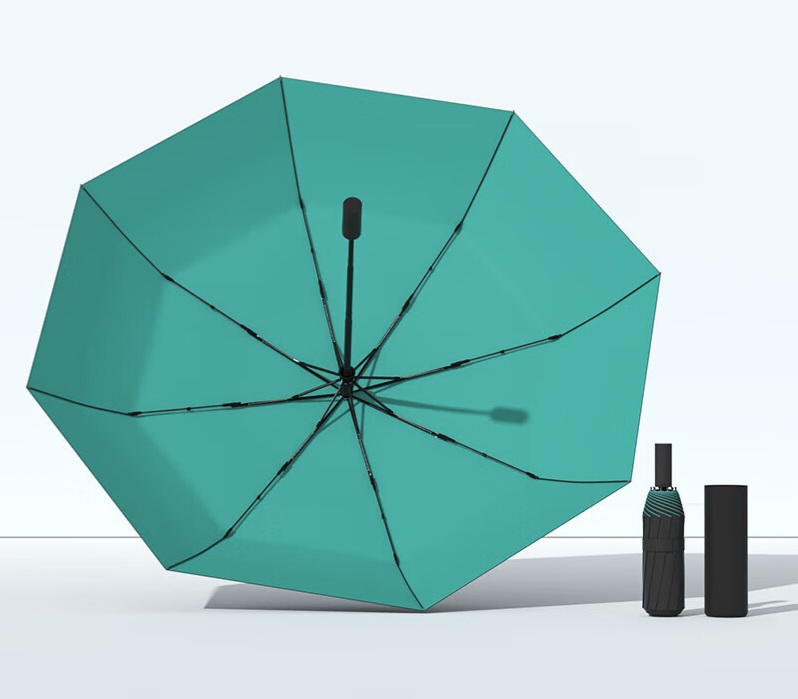
The design of the fiberglass rib system is an engineering achievement. Through controlled tensile curves and strategic reinforcement, we achieve an optimal balance of elasticity and robustness, dramatically reducing breakage.
Part II: Design Innovations to Solve the Pain Points
Umbrellas commonly fail in several areas:
- Broken ribs under gusty wind
- Leakage through seams or canopy material
- Uncomfortable or fragile handle designs
- Poor opening/closing mechanisms
Below, we explain how modern design upgrades address these.
1. Preventing Broken Ribs: Wind-Resilient Frame Engineering
A common customer complaint is umbrella failure during wind gusts. This often occurs when ribs are too rigid or poorly connected. Our solution combines:
- Advanced fiberglass ribs with optimized cross-section profiles
- Reinforced joint mechanisms that allow controlled flexing
- Stress-balanced perimeter stretchers
By engineering ribs that flex rather than break, we enable the umbrella to invert and return to shape without damage — a key requirement for unpredictable urban weather.
2. Leak-Proof Canopy Systems
Water penetration can occur at seams, tips, or canopy interfaces. To overcome leakage:
- High-density waterproof coatings are applied to all fabric surfaces
- Seam sealing technologies are used at high-stress junctions
- Hydrophilic surface treatments reduce water adherence
These enhancements substantially improve performance in long, heavy rainfall.
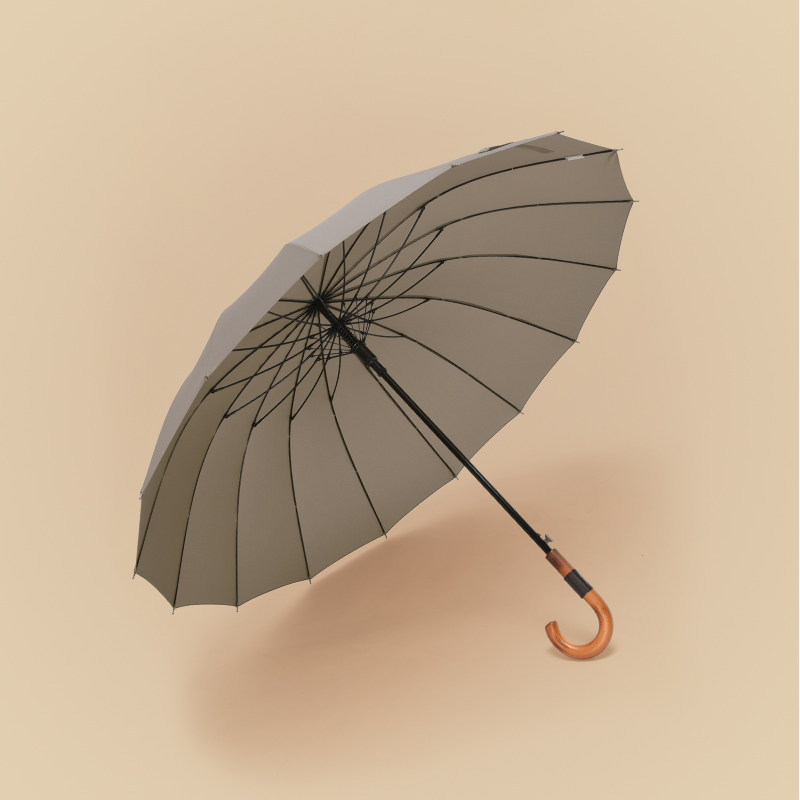
3. Handle Design: Ergonomics and Durability
Handle design might seem aesthetic at first glance, but in practice it shapes the user experience:
- Ergonomic grips reduce hand fatigue in extended use
- Anti-slip rubberized finishes offer stable hold in wet conditions
- Reinforced core structures resist breakage from impact
We prioritize handles that provide comfort and utility, even in extreme weather.
4. Smooth Opening & Closing Mechanisms
Ease of use is a silent differentiator. Users repeatedly open and close umbrellas, often with one hand. We incorporate mechanisms that:
- Require minimal force to operate
- Include silent, low-friction sliders
- Use corrosion-resistant springs and joints
This refined mechanism ensures reliability and long lifespan.
Part III: Factory Strength — Production Lines Built for Quality & Scale
Design innovations must be backed by manufacturing excellence. Below we outline how advanced production capabilities contribute to consistent product quality.
1. High-Automation Production Lines
Our facilities employ automated cutting, sewing, and assembly systems. This brings multiple advantages:
- Precision material cutting → consistent canopy tension
- Automated stitching → uniform seam quality
- Robotic assembly → reduced human error
Automated machinery ensures higher throughput with tightly controlled tolerances.
2. Daily Production Capacity & Scalability
Modern umbrella factories are designed for flexible production scaling:
- Multiple automated lines running concurrently
- Daily outputs in the tens of thousands of units
- Configurable setups for different product lines (compact, golf, fashion)
Such capacity supports both large-scale retail orders and bespoke custom productions.
3. Quality Control (QC) Systems at Every Stage
Quality assurance is more than final inspection — it’s integrated throughout the production process.
QC checkpoints include:
- Incoming Material QC — all fabrics, ribs, handles, and components are inspected upon arrival
- In-Process QC — dimensions, tension, and alignment are checked during assembly
- Pre-Packing QC — finished umbrellas are tested for open/close integrity, water repellency, and rib strength
We utilize digital measurement tools, tensile testing rigs, and automated defect detection wherever possible.
Part IV: 2026 Design Trends — What’s Next?
Umbrella design in 2026 will be shaped by consumer values: functionality, sustainability, personalization, and seamless integration into everyday life.
1. Sustainable Materials
There is growing demand for eco-friendly materials, such as:
- Recycled polyester canopies
- Bio-based resin ribs
- Handles from responsibly sourced wood or biodegradable polymers
Sustainability will no longer be optional — it will be expected.
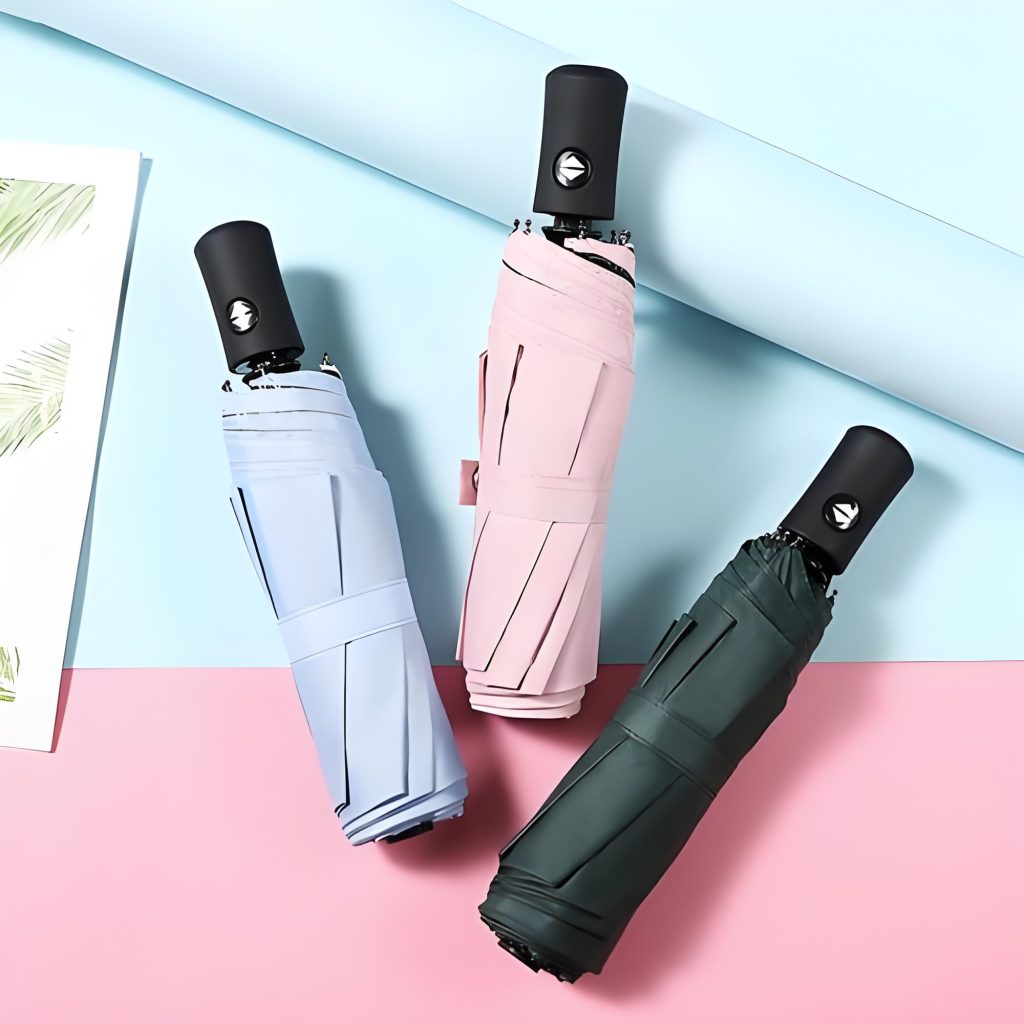
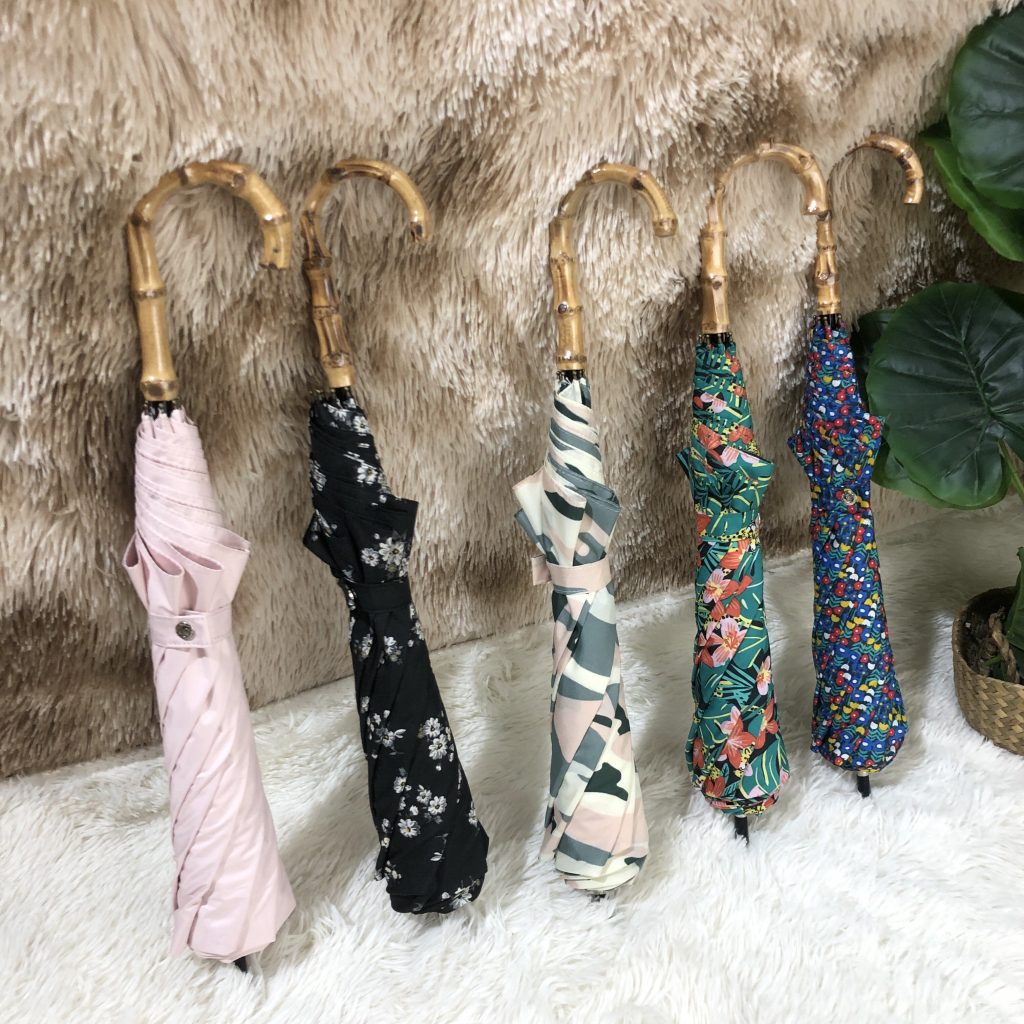
2. Customization & Personal Expression
Consumers want umbrellas that reflect identity. Popular custom features include:
- Personalized prints
- Limited-edition colorways
- Modular accessories (carrying cases, detachable grips)
Customization brings a sense of ownership and uniqueness.
3. Smart Umbrella Features
While still emerging, some umbrellas integrate:
- Weather sensors
- Bluetooth location trackers
- UV/temperature gauges
These features offer utility beyond traditional use.
Conclusion
The umbrella is evolving into a sophisticated blend of fashion, engineering, and functional excellence. In 2026, success in umbrella design depends on:
- Cutting-edge materials like 300T high-density fabrics and black silver coatings
- Robust structures using fiberglass ribs and stress-balanced frameworks
- Engineering solutions that eliminate common failures such as broken ribs and leaks
- Advanced production systems with automation and rigorous QC
By combining material science, ergonomic design, and manufacturing precision, umbrellas are poised to become essential weather companions that are reliable, durable, stylish, and deeply aligned with consumer needs.


No reply content